Gotu Kola (Centella asiatica) Leave’s Plant
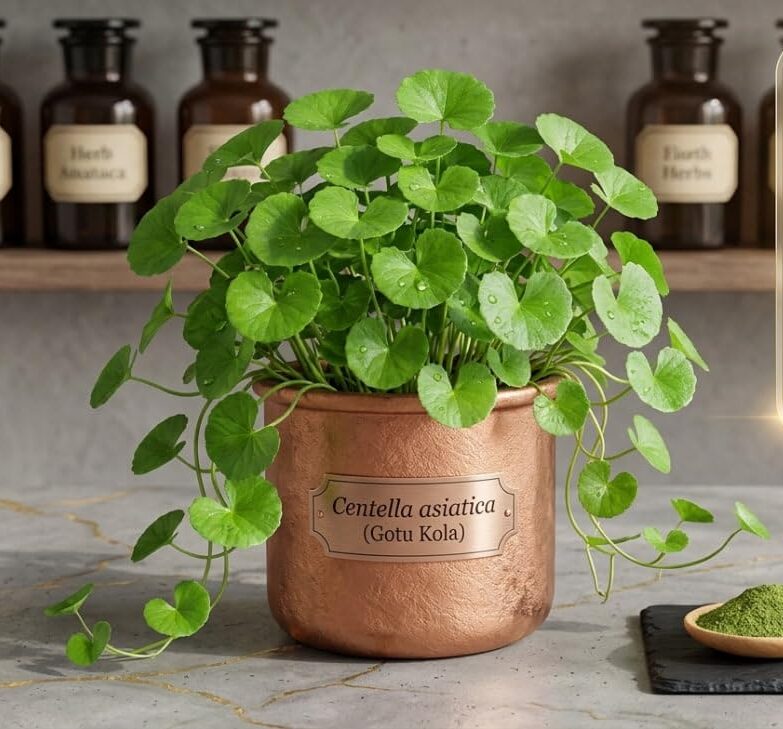
Bring a naturally refreshing and useful herb into your garden with Gotu Kola (Centella asiatica), a low-growing perennial herb known for its attractive rounded leaves and spreading growth habit.
Also commonly called Indian Pennywort, Asian Pennywort, Thankuni, Thankuni Pata, and Mandukaparni, Gotu Kola is a traditional leafy herb found across tropical and subtropical regions. Centella asiatica is an accepted botanical species belonging to the Apiaceae (carrot family) and naturally occurs in India and many other parts of the tropical Old World.
This live Gotu Kola plant is suitable for home gardens, kitchen gardens, balconies, terrace gardens, and containers where adequate moisture can be maintained.
🌿 About Gotu Kola Plant
Gotu Kola is a creeping perennial herb that naturally grows close to the ground. Its stems can spread across moist soil and may develop roots at the nodes, helping the plant gradually form a green ground-covering patch.
The plant is especially interesting for Indian home gardeners because Centella asiatica is naturally distributed in India and is adapted to tropical and subtropical conditions.
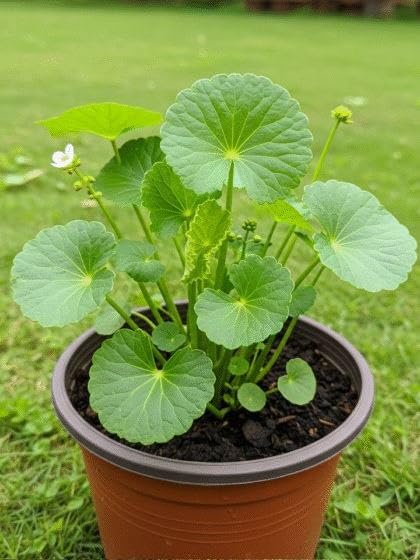
Its small, rounded to kidney-shaped leaves are the most recognizable feature of the plant.
🍃 Plant Characteristics
- Common Name: Gotu Kola
- Indian Common Names: Thankuni, Thankuni Pata, Mandukaparni, Indian Pennywort
- Botanical Name: Centella asiatica (L.) Urb.
- Family: Apiaceae
- Plant Type: Perennial creeping herb
- Growth Habit: Low-growing and spreading
- Leaf Type: Rounded to kidney-shaped leaves
- Suitable For: Home garden, kitchen garden, balcony, terrace and containers
- Climate: Tropical and subtropical
- Special Feature: Moisture-loving creeping herb
- Plant Use: Ornamental greenery and traditional leafy herb
Kew records Centella asiatica as a perennial species primarily associated with tropical and subtropical biomes.
🍃 Gotu Kola Leaves
The leaves are the main attraction of this plant. They are generally rounded or kidney-shaped, with a noticeable indentation at the base and scalloped or crenate margins. The leaves develop on relatively short shoots and give the plant a compact green appearance.
Under suitable conditions, the creeping stems can spread outward, making Gotu Kola useful as a low-growing herb for moist portions of a home garden.
For customers interested in growing their own fresh herbs, keeping a live plant at home can also be more convenient than purchasing dried leaves.
🌸 Flowers and Natural Growth
Gotu Kola produces small flower clusters close to the leaves. The flowers can have greenish-white to purplish coloration and are much smaller and less conspicuous than the foliage.
The plant’s main ornamental value comes from its dense green foliage and spreading habit rather than large flowers.
☀️ Sunlight Requirements
Gotu Kola prefers bright light with protection from intense heat, particularly in very hot Indian summers.
For home gardening:
- Morning sunlight is beneficial.
- Bright filtered or partial sunlight can work well.
- Protect young plants from harsh afternoon sun in extremely hot weather.
- In a terrace garden, some afternoon shade can help reduce moisture loss.
- Avoid keeping the plant continuously in a very dark location.
A location with good light and consistently moist growing conditions is generally more suitable than a dry, exposed position.
💧 Watering Requirements
Gotu Kola naturally occurs in moist environments, so regular moisture is important.
Water when the upper surface of the growing medium begins to lose moisture. During hot and dry weather, the plant may require more frequent watering.
Watering Tips
- Keep the soil consistently moist.
- Do not allow the plant to remain completely dry for long periods.
- Increase watering during hot summer weather.
- Reduce watering during prolonged rainy periods if the container already remains very wet.
- Make sure container drainage is appropriate.
Although Gotu Kola likes moisture, container-grown plants should still have a growing medium that allows excess water to move away.
🪴 Soil & Potting
Gotu Kola performs well in a moist, fertile and organic-rich growing medium.
For container gardening, you can use a mixture such as:
- Garden soil
- Well-decomposed compost or organic matter
- Cocopeat
- A small quantity of coarse material for drainage
The exact mixture can be adjusted according to your local climate and watering conditions.
Because this is a spreading herb, a wide container or shallow planter can be particularly useful as the plant grows outward.
🌱 Fertilizer & Nutrition
Gotu Kola does not need excessive fertilizer for normal home-garden growth.
For healthy foliage:
- Add mature compost periodically.
- Use a mild organic fertilizer when necessary.
- Avoid excessive nitrogen application.
- Water the plant after applying dry organic fertilizer.
- Reduce feeding if the plant is already growing vigorously.
A nutrient-rich growing medium with regular organic matter is generally sufficient for a home garden.
🌿 Spreading & Maintenance
One of the interesting characteristics of Gotu Kola is its creeping growth habit. Its stems can spread along the soil surface and may root at nodes under suitable moist conditions.
This makes regular trimming useful when growing the plant in a small container.
You can:
- Remove damaged leaves.
- Trim excessively long runners.
- Maintain the desired size.
- Remove old or unhealthy growth.
- Allow healthy runners to spread if you want a larger patch.
Regular harvesting of mature leaves can also help keep the plant compact when grown as a household herb.
🏡 Home Garden Suitability
Gotu Kola is a practical choice for gardeners looking for a low-growing leafy herb rather than a large tree or ornamental flowering plant.
It can be grown in:
- Home gardens
- Kitchen gardens
- Balcony gardens
- Terrace gardens
- Container gardens
- Wide pots
- Herb gardens
- Moist garden areas
- Small urban gardens
Its compact growth makes it suitable for gardeners with limited space.
🪴 Growing Gotu Kola in Containers
Gotu Kola can be grown successfully in pots when sufficient moisture, light and nutrition are provided.
For container growing:
Step 1: Choose a wide container with drainage holes.
Step 2: Fill it with fertile, moisture-retentive growing medium.
Step 3: Plant the Gotu Kola carefully without damaging the roots or stems.
Step 4: Water thoroughly after planting.
Step 5: Keep the pot in a bright location with suitable sunlight.
Step 6: Maintain regular moisture and remove unwanted dry growth.
A wider container is often more useful than a very deep, narrow pot because the plant naturally spreads sideways.
🌧️ Indian Climate & Seasonal Care
Gotu Kola is well suited to warm and humid growing conditions.
In many parts of India:
- Summer may require more frequent watering.
- Monsoon weather can provide naturally high humidity.
- During heavy rainfall, ensure containers do not remain stagnant for excessively long periods.
- In winter, watering can generally be adjusted according to local temperature and soil moisture.
- In very hot regions, partial shade can protect the plant from excessive heat stress.
Because local climate varies significantly across India, watering should always be adjusted according to your location, pot size, soil and weather.
🌿 Traditional Uses of Gotu Kola
Centella asiatica has a long history of use as a traditional food and herbal plant in South and Southeast Asian cultures. Scientific literature has also investigated its phytochemistry and possible biological effects.
However, traditional use should not be interpreted as a guarantee that the plant, leaves or preparations will prevent, treat or cure any disease.
If you intend to consume Gotu Kola regularly, particularly in concentrated preparations or supplements, consult a qualified healthcare professional first.
The U.S. National Library of Medicine’s LiverTox resource notes that rare cases of clinically apparent liver injury have been reported following use of Centella asiatica.
🌱 100% Chemical-Free / Organic Garden Fresh Claim
This product is described as 100% Chemical-Free / Organic Garden Fresh according to the seller’s cultivation and product description.
Please note that “organic” in this product listing should not be interpreted as a third-party organic certification unless a specific certification is separately stated.
For edible use, customers should always wash freshly harvested leaves thoroughly before consumption.
📦 Live Plant Delivery & Natural Variation
This is a live plant, so its appearance may naturally vary from the product photographs.
You may notice differences in:
- Leaf size
- Number of leaves
- Plant height
- Stem length
- Root development
- Natural spreading
- Leaf colour
- Seasonal growth
These variations are normal for living plants and can occur because of climate, season, transportation and growing conditions.
🚚 First Delivery by Blue Dart Air / Express
We aim to provide first delivery through Blue Dart Air / express courier where the destination and serviceable pincode permit.
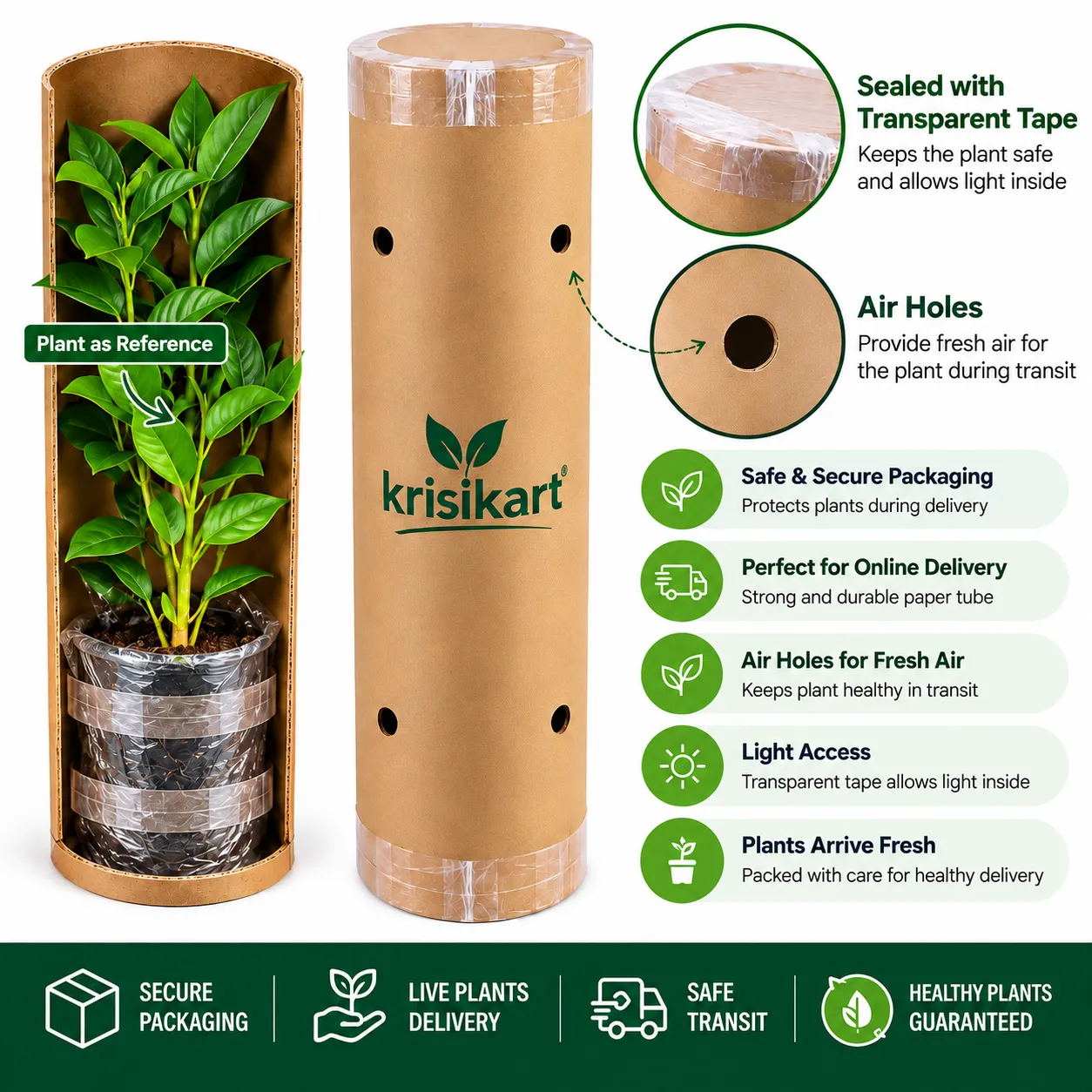
Live plants are carefully prepared for dispatch with suitable packaging to reduce movement and damage during transportation.
After receiving the plant:
- Open the package carefully.
- Place the plant in a bright, suitable location.
- Water according to the moisture condition of the growing medium.
- Allow the plant to recover from transportation.
- Gradually establish it in its permanent pot or garden location.
⚠️ Important Note
This is a living plant, not an artificial or dried herb product.
Plant size, leaf count and appearance can vary depending on season and availability.
If you purchase Gotu Kola specifically for culinary or traditional herbal use, correctly identify the plant as Centella asiatica and wash harvested leaves thoroughly before use.
Do not use the plant as a substitute for professional medical treatment or prescribed medication.
⭐ Why Choose Gotu Kola for Your Home Garden?
- 🌿 Genuine Centella asiatica live herb plant
- 🍃 Attractive rounded green leaves
- 🏡 Excellent option for home and kitchen gardens
- 🪴 Suitable for container and terrace gardening
- 🌱 Low-growing, spreading growth habit
- 💧 Enjoys consistently moist growing conditions
- 🇮🇳 Naturally distributed in India
- 🌿 Useful as a household leafy herb
- 🌱 Suitable for warm and humid Indian growing conditions
- 📦 Live plant carefully prepared for delivery
🔬 Botanical Information
| Botanical Detail | Information |
|---|---|
| Scientific Name | Centella asiatica (L.) Urb. |
| Family | Apiaceae |
| Genus | Centella |
| Plant Type | Perennial herb |
| Growth Habit | Creeping / spreading |
| Common Name | Gotu Kola |
| Other Names | Indian Pennywort, Asian Pennywort, Thankuni, Thankuni Pata, Mandukaparni |
| Native Range | Tropical & subtropical Old World to eastern Australia and the western Pacific |
| India | Naturally distributed |
| Garden Use | Herb garden, home garden, containers and moist garden areas |
Kew’s Plants of the World Online currently accepts Centella asiatica (L.) Urb. as the botanical name and places it in the family Apiaceae.
📚 Botanical Information & Further Reading
- Kew – Plants of the World Online: Centella asiatica — botanical identity, distribution and classification. Kew Plants of the World Online – Centella asiatica
- Kew – Centella asiatica General Information — botanical morphology and distribution information. Kew General Information – Centella asiatica
- PubMed – Ethnobotany, Phytochemistry and Pharmacological Features of Centella asiatica — scientific review of traditional uses and research. PubMed Scientific Review
- PubMed – Ethnobotany, Phytochemistry, Pharmacology and Toxicity of Centella asiatica — review covering botanical, traditional and safety research. PubMed Review on Centella asiatica
- NCBI LiverTox – Centella asiatica — information concerning traditional use and reported safety considerations. NCBI LiverTox – Centella asiatica
- PubMed – Safety Assessment of Centella asiatica Leaf Extract — published preclinical safety research. PubMed Safety Study













Reviews
There are no reviews yet.