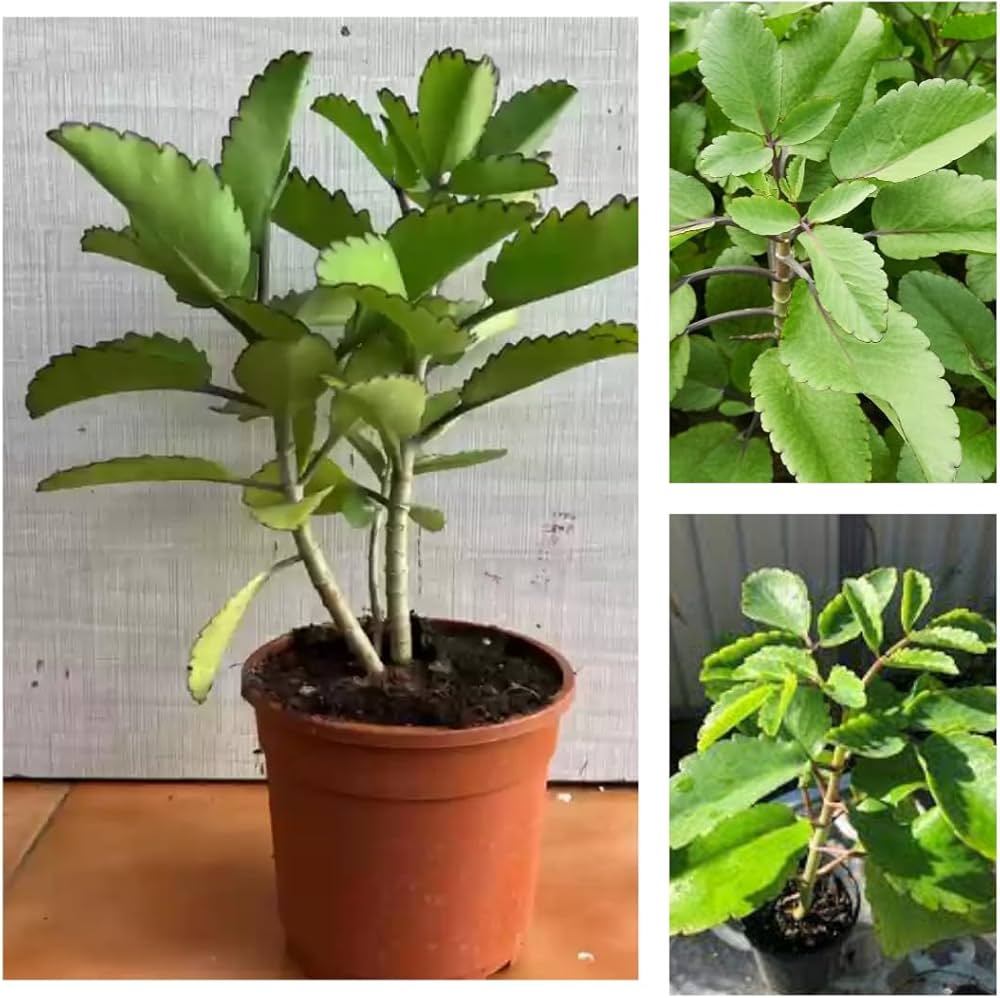
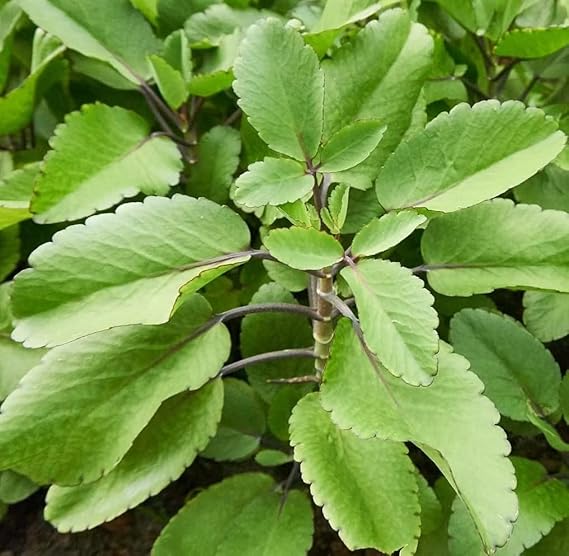

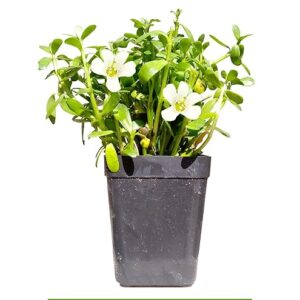
Patharchatta Live Plant (Bryophyllum pinnatum / Kalanchoe pinnata) with Pot
🌿 About the Plant
Patharchatta is a popular succulent-type plant grown in many Indian home gardens, balconies and terrace gardens. It is commonly known as Patharchatta, Pathar Chatta, Panfuti, Bryophyllum pinnatum, Kalanchoe pinnata and by several other regional names.
The botanical name Bryophyllum pinnatum is widely used in gardening and traditional plant references, while Kalanchoe pinnata (Lam.) Pers. is the currently accepted botanical name according to Plants of the World Online (Kew).
This plant belongs to the Crassulaceae family and has fleshy leaves that can store water. Its attractive foliage and relatively simple care requirements make it suitable for home gardens, balconies, patios and container gardening.
This listing includes a live Patharchatta plant supplied with a pot, making it convenient for customers who want to start growing the plant directly at home.
🌱 Plant Characteristics
- Common Name: Patharchatta / Pathar Chatta / Panfuti
- Common Botanical Name: Bryophyllum pinnatum
- Accepted Botanical Name: Kalanchoe pinnata (Lam.) Pers.
- Family: Crassulaceae
- Plant Type: Succulent perennial herb/subshrub
- Growth Habit: Upright, branching succulent
- Foliage: Fleshy green leaves
- Special Feature: Leaves can produce small plantlets along their margins
- Suitable For: Home garden, balcony, terrace, patio and containers
- Pot Included: Yes
- Delivery: Live plant
Kew describes Kalanchoe pinnata as a succulent subshrub and records Bryophyllum pinnatum as one of its synonyms. The species has also become established in many tropical and subtropical regions, including India.
🍃 Attractive Fleshy Leaves
The most distinctive feature of Patharchatta is its thick, fleshy foliage.
The leaves are generally green, smooth and somewhat succulent. Depending on the plant’s age and growing conditions, leaves may have different shapes, with lower leaves often being simpler and upper leaves becoming more divided.
One of the interesting characteristics associated with this plant is its ability to produce tiny plantlets along the notches of leaf margins. These small plantlets can eventually develop roots and grow into new plants when they become established.
This natural propagation habit is one reason Patharchatta is particularly interesting for home gardeners and people who enjoy growing plants from cuttings and plantlets.
☀️ Sunlight Requirements
Patharchatta grows well in bright light and partial sunlight.
For balcony and terrace gardening:
- Provide bright natural light.
- Gentle morning sunlight is beneficial.
- A few hours of direct sunlight can help maintain compact growth.
- In very hot summer conditions, protect the plant from harsh afternoon sun.
- Avoid keeping it permanently in a very dark indoor location.
If the plant has been delivered from a nursery and has been growing under shade, gradually introduce it to stronger sunlight rather than immediately placing it under intense full-day sun.
💧 Watering Requirements
Patharchatta has fleshy leaves and should not be kept constantly waterlogged.
A simple watering routine is:
- Check the upper layer of soil before watering.
- Water thoroughly when the soil has started to dry.
- Allow excess water to drain through the pot’s drainage holes.
- Avoid leaving the pot sitting in standing water.
- Reduce watering during prolonged rainy or cooler periods if the soil remains wet.
Overwatering is generally more problematic than occasional underwatering for succulent-type plants.
🪴 Soil & Potting
Use a well-draining potting mixture.
A practical home-gardening mix can contain:
- Garden soil
- Compost or well-decomposed organic matter
- Coarse sand
- Cocopeat or another material that improves aeration
The exact ratio is less important than ensuring that the final mixture does not remain saturated for long periods.
Always use a container with proper drainage holes.
🌿 Fertilizer & Nutrition
Patharchatta generally does not require heavy feeding.
During active growth:
- Use a mild balanced fertilizer occasionally.
- Compost or well-decomposed organic manure can be added in small quantities.
- Avoid excessive fertilizer.
- Do not fertilize immediately if the newly delivered plant is under transplanting or environmental stress.
A healthy growing plant with adequate light and well-drained soil normally requires only moderate nutrition.
🌸 Flowers
Mature plants can produce attractive terminal flower clusters. The flowers are tubular and may appear in hanging or branched clusters.
Flowering depends on the plant’s maturity, growing conditions, light, temperature and seasonal cycle. Therefore, flowering should not be considered guaranteed immediately after delivery.
Do not purchase the plant expecting a specific flowering date.
🏡 Home Garden & Balcony Suitability
Patharchatta is well suited to:
- Home gardens
- Balcony gardens
- Terrace gardens
- Patio areas
- Window-side gardening with sufficient light
- Container gardens
- Small succulent collections
- Beginner-friendly plant collections
Its fleshy foliage and interesting natural propagation habit make it an attractive addition to a mixed home garden.
For balconies, place the pot where the plant receives adequate natural light and where rainwater can drain freely.
🪴 Container & Terrace Gardening
Growing Patharchatta in a pot is convenient because its soil and watering conditions can be controlled more easily.
For balcony gardening:
- Choose a pot with drainage holes.
- Use a porous, well-draining growing medium.
- Keep the pot in a bright location.
- Rotate the pot occasionally for more even growth.
- Do not allow excess water to collect in the tray.
- Give the plant enough space as it develops.
A slightly larger container can be used when the plant becomes root-bound, but avoid unnecessarily oversized pots because they can retain excess moisture.
✂️ Pruning & Maintenance
Patharchatta is relatively simple to maintain.
Remove:
- Dead leaves
- Damaged foliage
- Weak or unwanted shoots
- Dried flower stalks when necessary
Pruning can also help maintain a manageable shape when the plant becomes too large for its balcony container.
The plantlets produced on mature leaves can be handled carefully if you want to propagate additional plants.
🌱 Natural Propagation
One of the most fascinating features of Kalanchoe pinnata is its ability to produce plantlets from leaf margins.
When mature leaf plantlets become sufficiently developed, they may be separated carefully and placed on suitable growing medium.
This makes Patharchatta an interesting choice for gardeners who enjoy plant propagation and growing new plants from existing foliage.
🌿 Traditional Use – Important Information
Patharchatta has a long history of traditional use in different regions, and the plant is sometimes marketed under traditional medicinal names.
However, traditional use should not be interpreted as proof that the plant can treat, cure or prevent any disease or medical condition.
This product is sold as a live ornamental/garden plant, not as a medicine. Do not consume the plant or use it as a home remedy without appropriate professional medical guidance.
🐶 Pet Safety
Kalanchoe species are listed by the ASPCA as toxic to dogs and cats, with bufodienolides identified as the toxic principles and possible signs including vomiting, diarrhea and, rarely, abnormal heart rhythm.
Because common names can sometimes be applied to different plants, keep this Patharchatta plant away from pets and prevent them from chewing or ingesting its leaves.
If accidental ingestion occurs, contact a veterinarian promptly.
📦 Live Plant Delivery & Natural Variation
This product is supplied as a live Patharchatta plant with pot.
Because live plants are living products, natural variation can occur in:
- Plant height
- Number of leaves
- Leaf size
- Branching
- Colour
- Growth stage
- Root development
- Overall shape
The plant you receive may therefore look slightly different from the product photographs.
Some leaves may also experience minor stress during transportation. With suitable light, watering and care, the plant can gradually adjust to its new environment.
🚚 First Delivery by Blue Dart Air / Express Courier
For eligible destinations and serviceable pincodes, the first delivery is intended to be sent through Blue Dart Air / express courier service to help reduce transportation time for the live plant.
Courier availability can vary by destination, serviceability and operational conditions.
⚠️ Important Note
- This is a live plant, not a seed packet.
- Pot size and plant size may vary according to availability.
- Plant appearance naturally changes with season and growing conditions.
- Avoid overwatering after delivery.
- Provide adequate light after receiving the plant.
- Do not keep the pot permanently submerged in water.
- Do not consume the plant as food or medicine.
- Keep the plant away from pets that may chew the foliage.
🌿 Why Choose Patharchatta for Your Home Garden?
Patharchatta is an interesting plant for Indian home gardeners because of its:
- 🌱 Fleshy, attractive foliage
- 🪴 Container-friendly growth
- ☀️ Suitability for bright balconies and terraces
- 🌿 Interesting natural plantlet production
- 🌱 Easy propagation potential
- 🏡 Attractive appearance in home gardens
- 🌿 Distinctive succulent growth habit
- 🪴 Convenient pot-grown format
🔬 Botanical Information
| Botanical Detail | Information |
|---|---|
| Accepted Scientific Name | Kalanchoe pinnata (Lam.) Pers. |
| Commonly Used Name | Bryophyllum pinnatum |
| Family | Crassulaceae |
| Genus | Kalanchoe |
| Plant Type | Succulent perennial herb/subshrub |
| Common Name | Patharchatta / Pathar Chatta / Panfuti |
| Primary Use in This Listing | Home gardening |
| Suitable Growing Method | Pot / container |
Kew’s Plants of the World Online currently accepts Kalanchoe pinnata and lists Bryophyllum pinnatum as a synonym.
📚 Botanical Information & Further Reading
- Kew – Plants of the World Online: Kalanchoe pinnata
- Kew – Bryophyllum pinnatum taxonomy
- Kew – Kalanchoe genus information
- ASPCA – Kalanchoe pet safety information
Grow Patharchatta in your balcony, terrace or home garden and enjoy its distinctive fleshy foliage and fascinating natural propagation habit.











![[New Stock] 100ml Pasura Exodus Plant Bio Simulant , Organic Pesticide for Insects](https://krisikart.com/wp-content/uploads/2026/01/71GyR4G1LTS-300x300.jpg)

Asmita kumari –
Plants are growing well after planting.
Will order more soon.
Ankana patil –
Paisa vasool purchase.
Plants are fresh and beautifull
Experience was really amazing.