Insulin Live Plant Rhizomes – Costus igneus Live Plant
Buy Insulin Plant (Costus igneus) Live Rhizomes Online
🌿 About the Plant
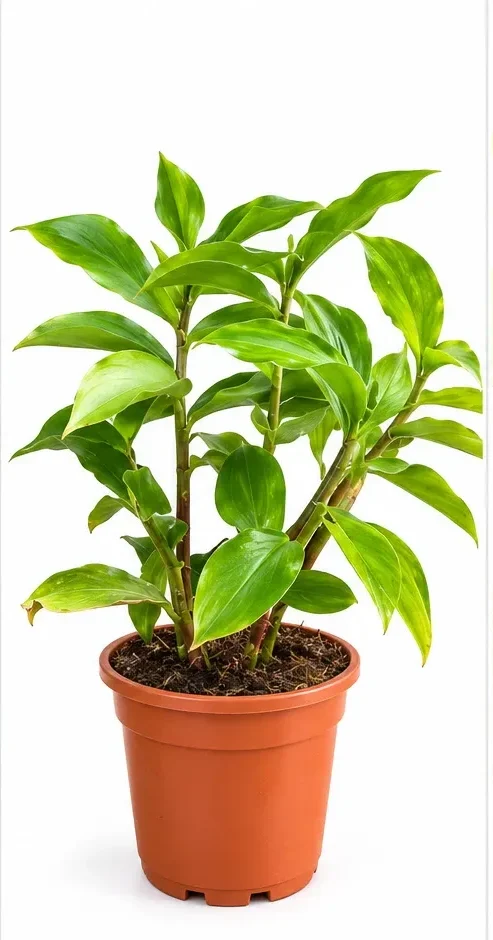
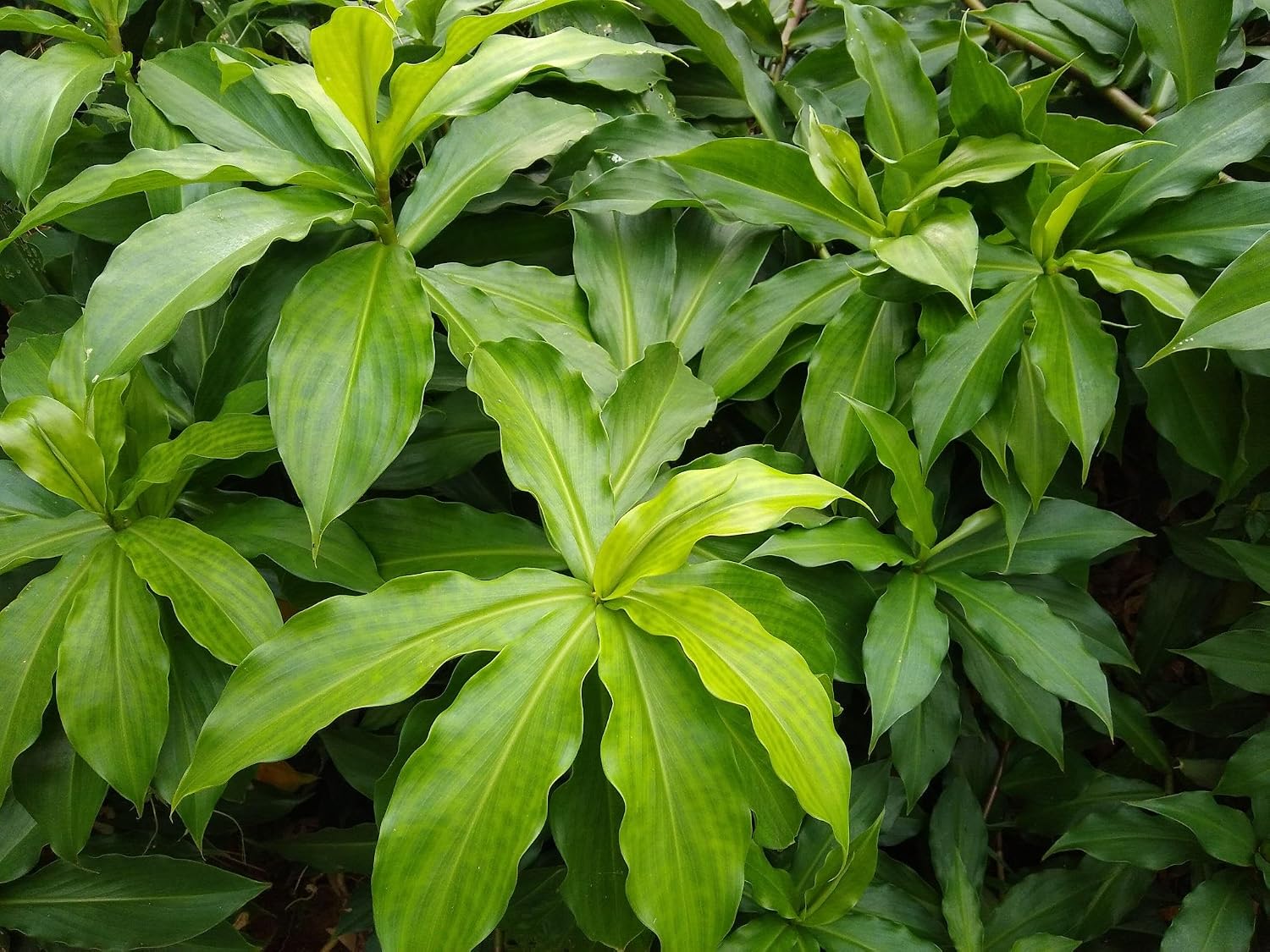
The Insulin Plant, commonly sold in India as Costus igneus, is an attractive tropical perennial known for its large green leaves, spiral arrangement and bright flowers. It is also commonly called Fiery Costus, Spiral Flag and Step Ladder Plant.
For botanical accuracy, the currently accepted name is Chamaecostus cuspidatus (Nees & Mart.) C.D.Specht & D.W.Stev. Kew lists Costus igneus N.E.Br. as a synonym of this species.
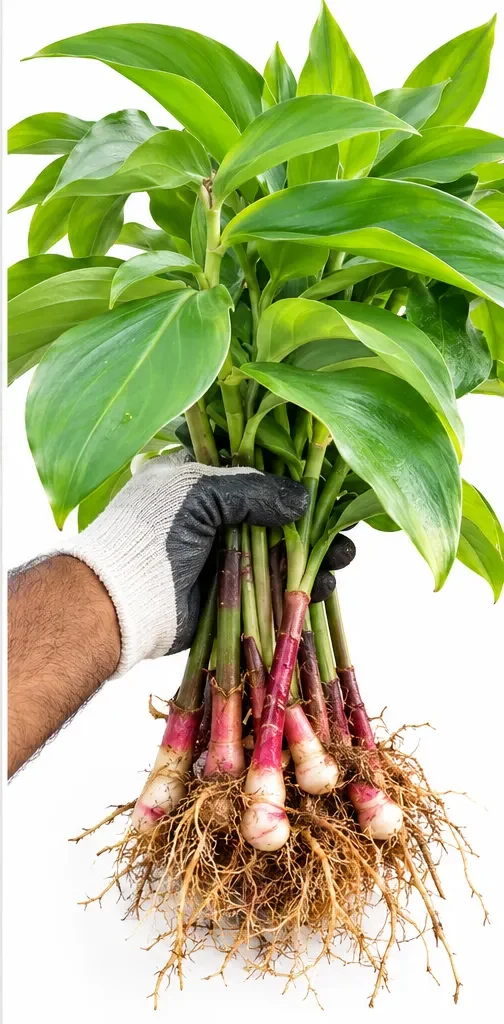
The plant belongs to the Costaceae family and develops from underground rhizomes. This makes rhizomes an appropriate propagation and planting material for establishing new plants.
The name “Insulin Plant” is widely used because the leaves have a history of traditional use in relation to blood-sugar management. However, this product should be considered a live ornamental/traditional-use plant, not a medicine or guaranteed treatment for diabetes.
🌱 Plant Characteristics
- Common Product Name: Insulin Plant
- Common Botanical Trade Name: Costus igneus
- Currently Accepted Botanical Name: Chamaecostus cuspidatus
- Family: Costaceae
- Common Names: Insulin Plant, Fiery Costus, Spiral Flag, Step Ladder Plant
- Plant Type: Tropical perennial herb
- Growth Habit: Upright and spreading
- Propagation: Rhizomes/stem material
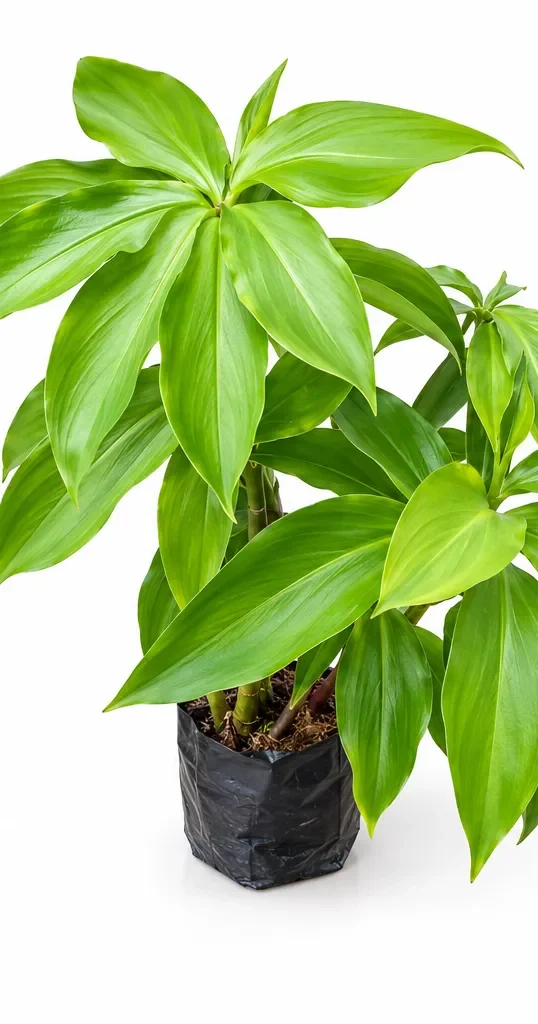
- Leaves: Large, smooth, fleshy-looking green leaves arranged spirally around the stems
- Flowers: Bright yellow to orange flowers in cone-like heads
- Main Uses: Ornamental gardening, tropical plant collections and traditional plant cultivation
Kew describes Chamaecostus cuspidatus as a rhizomatous geophyte growing primarily in wet tropical conditions.
🌿 Leaves & Foliage
The foliage is one of the most attractive features of the Insulin Plant.
Its large, smooth, dark-green leaves are arranged in a distinctive spiral pattern around the stems. Mature plants can form attractive clumps from underground rhizomes.
The foliage gives the plant a tropical appearance and makes it suitable for:
- Home gardens
- Herbal plant collections
- Tropical gardens
- Balcony gardens
- Terrace gardens
- Large containers
- Ornamental outdoor planting
The exact leaf size and colour can vary depending on plant age, sunlight, moisture and growing conditions.
🌸 Flowers
Established plants can produce attractive yellow to orange flowers.
The flowers appear in compact, cone-like heads and provide an additional ornamental feature beyond the foliage.
Flowering depends on:
- Plant maturity
- Temperature
- Sunlight
- Moisture
- Nutrition
- Growing conditions
A newly planted rhizome may first concentrate its energy on root and shoot development, so flowering should not be expected immediately after planting.
☀️ Sunlight Requirements
The Insulin Plant grows well in bright light and warm tropical conditions.
For home cultivation:
- Choose a bright outdoor location.
- Provide several hours of sunlight where possible.
- Morning and moderate direct sunlight can be beneficial.
- In extremely hot locations, some afternoon protection can help prevent excessive stress.
- Avoid keeping the plant permanently in a dark room.
- Indoor cultivation requires a very bright location near a suitable window.
A balance of good light, warmth and moisture generally supports healthy growth.
💧 Watering
This plant appreciates regular moisture, especially during active growth.
When planting the rhizome:
- Water the growing medium after planting.
- Keep the soil moderately moist while the rhizome establishes.
- Check the soil before watering again.
- Do not allow the planting medium to remain completely dry for long periods.
- At the same time, avoid prolonged stagnant water around the rhizome.
- Increase watering during hot and dry weather.
- Reduce additional watering during periods of heavy rainfall.
Good drainage remains important even though the plant prefers moist growing conditions.
🪴 Soil & Potting
Use a fertile, organic-rich and well-draining growing medium.
A practical container mix can contain:
- Garden soil
- Well-decomposed compost
- Cocopeat
- Coarse sand or perlite
The mix should retain enough moisture for the plant while allowing excess water to escape.
When planting rhizomes, avoid burying them excessively deep. Plant them at a suitable shallow-to-moderate depth and cover them with a layer of moist growing medium.
🌱 Fertilizer & Nutrition
Once established, the Insulin Plant can benefit from moderate nutrition.
Suitable options include:
- Well-decomposed compost
- Vermicompost
- Organic manure
- Balanced plant fertilizer
Apply fertilizer according to the manufacturer’s recommended dosage.
Do not heavily fertilize a freshly planted or stressed rhizome. Allow the planting material to establish first.
🌼 Flowering & Plant Development
The plant develops new shoots from its underground rhizome system.
During the establishment stage, you may initially see:
- Slow shoot emergence
- New leaves
- Gradual stem development
- Expansion of the rhizome clump
Once established under suitable conditions, the plant can develop into a spreading clump and may produce flowers.
Flowering is not guaranteed immediately after planting and depends on plant maturity, climate, sunlight, moisture and care.
🏡 Home Garden Suitability
The Insulin Plant is suitable for:
- 🏡 Home gardens
- 🌿 Herbal plant collections
- 🌱 Tropical gardens
- 🪴 Container gardening
- 🌤️ Balconies
- 🌿 Terrace gardens
- 🌳 Outdoor garden beds
- 🏢 Suitable bright outdoor commercial landscapes
It is particularly suitable for warm Indian climates where adequate moisture can be maintained.
🪴 Container / Terrace Gardening
The rhizomes can be planted in a sufficiently large container.
For container cultivation:
- Choose a pot with drainage holes.
- Use fertile, well-draining soil.
- Plant the rhizome at an appropriate depth.
- Keep the soil moderately moist.
- Provide good light.
- Protect the container from prolonged waterlogging.
- Repot or divide the rhizome clump when the plant becomes crowded.
A wider container can be useful because the plant can gradually form additional shoots from its rhizome system.
✂️ Pruning & Maintenance
The Insulin Plant generally needs simple maintenance.
- Remove completely dry leaves.
- Remove damaged stems when necessary.
- Cut old flowering stems after they finish if required.
- Remove unwanted or overcrowded shoots.
- Keep weeds away from the planting area.
- Maintain reasonable spacing between plants.
Avoid disturbing the rhizome unnecessarily while the plant is establishing.
🌳 Space Requirement
Although rhizomes are compact when supplied, the resulting plant can develop into a spreading clump.
When planting several rhizomes, provide enough space for:
- New shoots
- Leaf expansion
- Rhizome development
- Air circulation
- Future division
- Easy maintenance
Do not plant multiple rhizomes extremely close together if you want each plant to develop properly.
🌱 Special Cultivation Notes – Rhizome Planting
This listing is specifically for live Insulin Plant rhizomes.
After receiving the rhizomes:
- Open the package carefully.
- Inspect the rhizome for normal firmness and healthy appearance.
- Plant it in moist, well-draining soil.
- Keep the planted area warm and bright.
- Water moderately.
- Avoid excessive fertilizer during the initial establishment period.
- Allow time for new shoots to emerge.
A rhizome may not have visible leaves at the time of delivery. This does not necessarily mean that it is unsuitable for planting; shoot emergence depends on its condition and growing environment.
🌿 Traditional Use & Important Health Note
The Insulin Plant has become popular in India because of traditional interest in its leaves and their association with blood-sugar management. Scientific literature has investigated possible glucose-related effects, but research findings do not make the plant a replacement for prescribed diabetes treatment.
Therefore:
This product is sold as a live plant/rhizome for cultivation. It is not a medicine and should not be used as a substitute for prescribed diabetes treatment.
Anyone with diabetes or taking blood-glucose-lowering medication should speak with a qualified healthcare professional before consuming plant material for health purposes.
Do not advertise or assume that eating the leaves will cure diabetes, replace insulin, normalize blood sugar, or guarantee any medical result.
📦 Live Rhizome Delivery & Natural Variation
This is live planting material, so natural variation is expected.
The delivered rhizome may differ in:
- Size
- Thickness
- Number of buds
- Surface appearance
- Root development
- Moisture level
- Shoot development
A rhizome may experience temporary stress during packing and transportation.
After delivery:
- Plant it as soon as reasonably possible.
- Keep it in suitable growing conditions.
- Avoid prolonged exposure to direct hot sun before planting.
- Maintain appropriate moisture.
- Give the rhizome sufficient time to establish.
The supplied rhizome may not look exactly like the product photograph.
🚚 First Delivery by Blue Dart Air Courier
Krisikart.com will use Blue Dart Air/express courier as the first delivery option for eligible destinations and serviceable pincodes.
Blue Dart provides domestic express logistics services in India, including air transportation. Actual availability depends on the destination pincode and current courier service conditions.
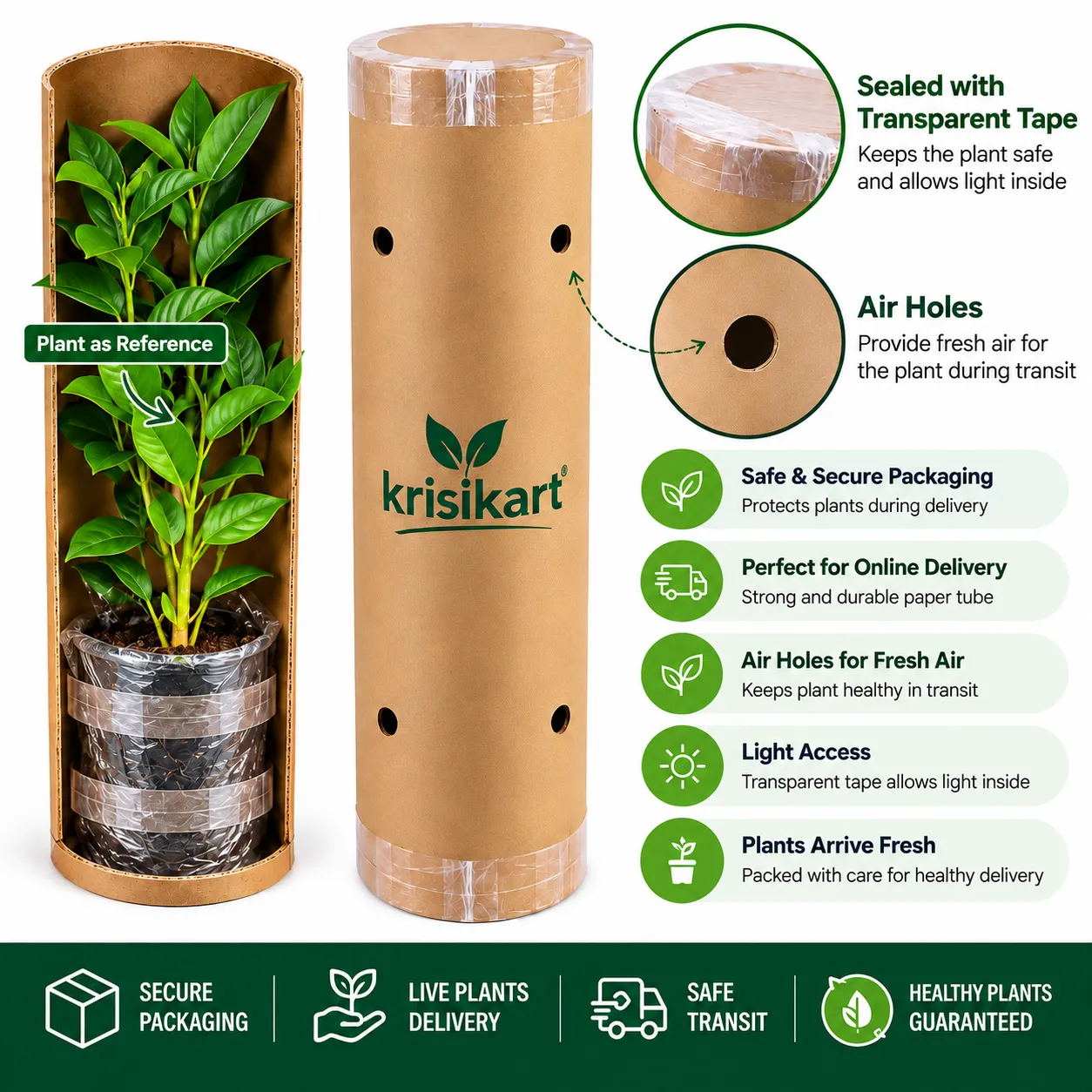
Because this listing contains live rhizomes, the planting material is packed carefully before dispatch to help reduce transportation stress.
⚠️ Important Note
- This listing is for live Insulin Plant rhizomes for planting.
- The commonly used name is Costus igneus.
- The currently accepted botanical name is Chamaecostus cuspidatus.
- Rhizome size and appearance can naturally vary.
- Shoot emergence is not guaranteed immediately after delivery.
- Flowering is not guaranteed immediately.
- Growth depends on temperature, sunlight, soil, moisture and care.
- The term “Insulin Plant” is a common/trade name and does not mean that the plant contains pharmaceutical insulin.
- Traditional use should not be interpreted as a medical treatment claim.
- Do not replace prescribed diabetes medication with this plant.
- Consult a healthcare professional before consuming plant material for a medical purpose.
🌱 Why Choose This Plant?
- 🌿 Popular Insulin Plant
- 🌱 Supplied as live rhizome planting material
- 🌴 Attractive tropical foliage
- 🌸 Beautiful yellow-orange flowers
- 🪴 Suitable for container gardening
- 🏡 Suitable for home gardens
- 🌿 Useful for herbal and botanical collections
- ☀️ Performs well in warm, bright conditions
- 🌱 Rhizomatous perennial growth
- 🇮🇳 Popularly cultivated in India
🌿 Botanical Information
- Common Product Name: Insulin Plant
- Commonly Sold Botanical Name: Costus igneus N.E.Br.
- Currently Accepted Botanical Name: Chamaecostus cuspidatus (Nees & Mart.) C.D.Specht & D.W.Stev.
- Family: Costaceae
- Common Names: Insulin Plant, Fiery Costus, Spiral Flag, Step Ladder Plant
- Plant Type: Rhizomatous perennial herb
- Growth Habit: Upright and spreading
- Leaves: Large, smooth, green and spirally arranged
- Flowers: Yellow to orange
- Rhizome: Underground perennial storage and propagation structure
- Native Range: Eastern Brazil
- Suitable Conditions: Warm, humid/tropical conditions with good light, moisture and well-draining soil
Kew specifically lists Costus igneus as a synonym of Chamaecostus cuspidatus, so both names are useful for customer-facing search while the accepted botanical name should be used for scientific accuracy.
🔗 Botanical Information & Further Reading
- Kew – Plants of the World Online: Chamaecostus cuspidatus — accepted botanical name, taxonomy and distribution.
- Kew – Costus igneus — taxonomic record showing Costus igneus as a synonym.
- Kew – Chamaecostus cuspidatus: General Information — botanical and ecological information.
- PubMed – Review on Insulin Plant — scientific literature discussing the plant and research into its traditional and pharmacological uses.
- NCBI – Costus pictus Taxonomy — taxonomic information for the distinct Costus pictus species.
- University of Santo Tomas – Insulin Plant Database — botanical description and common horticultural information.











Suvbhom malhotra –
very good plant recieved in Kolkata. thank teams krisikart
Rakesh Singh –
Packaging was safe and neat.
All 5 plants reached without any damage.