 Plastic Plant pot | Plastic Garden Pot for Plants
 Self Watering Planters | Self Watering Plant Pots For Plants
Grapes Plant (Vitis vinifera) | Red Globe Grapes Plant, Grape Vine
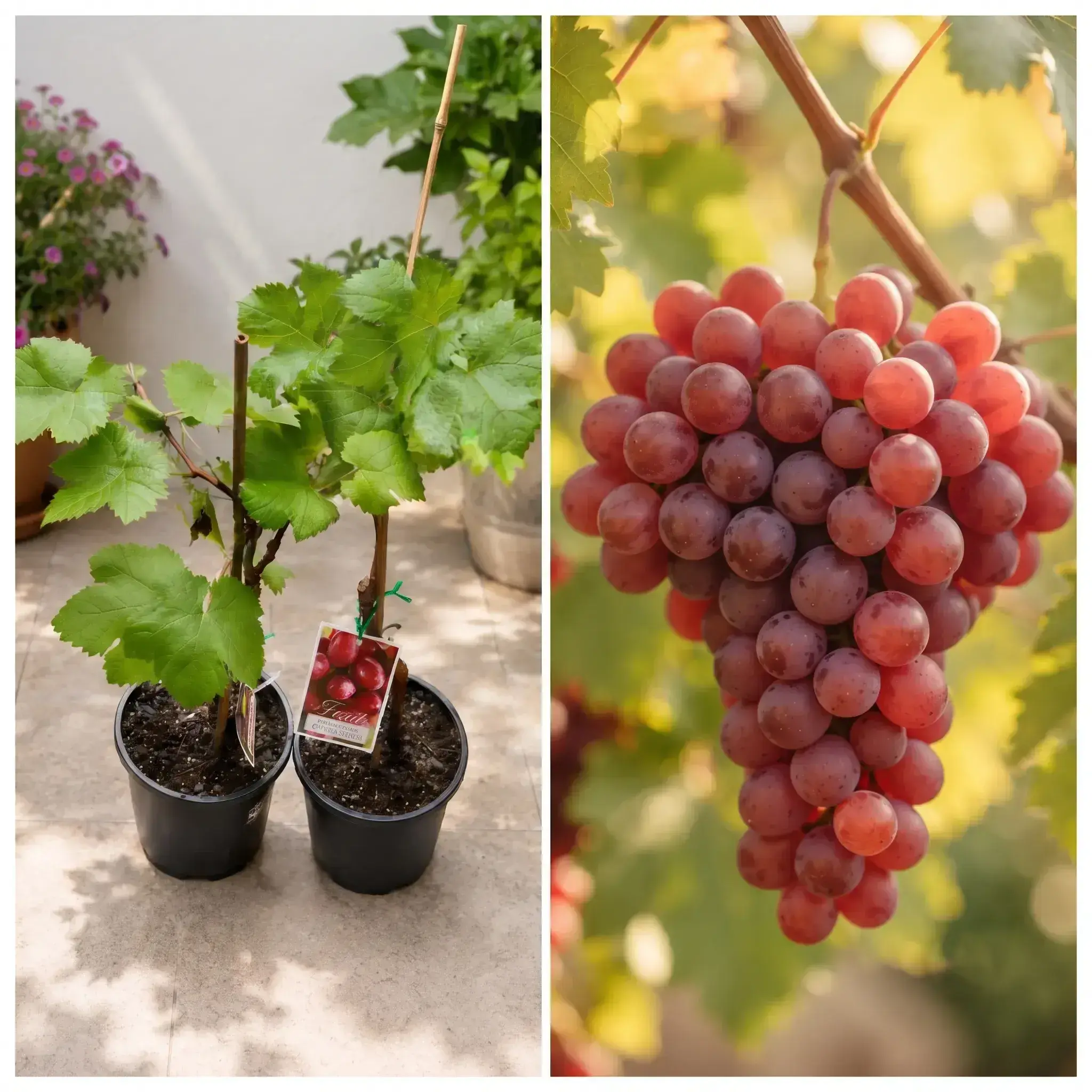
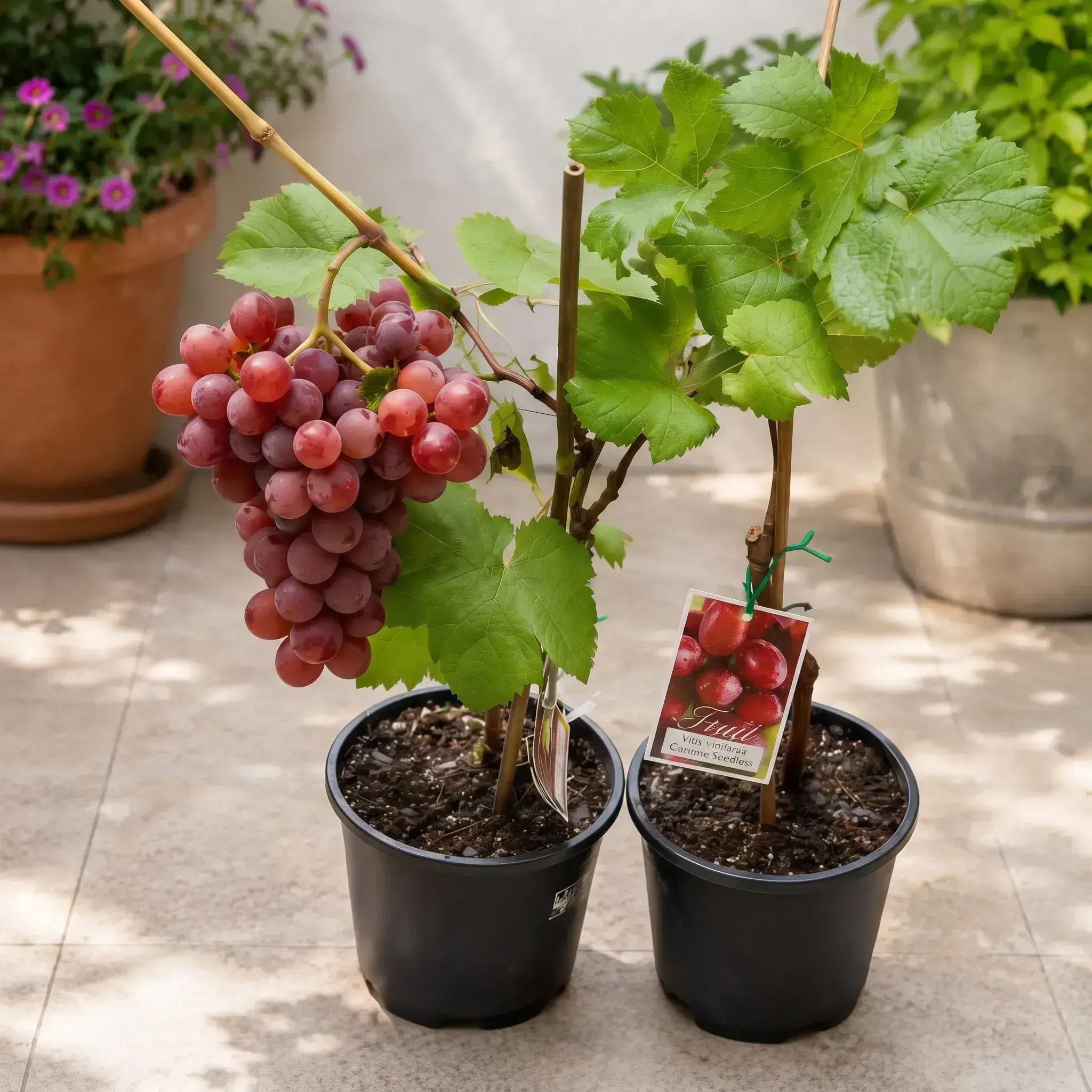
The Red Globe Grapes Plant, botanically classified as Vitis vinifera ‘Red Globe’, is a vigorous, fruit-bearing woody climbing vine prized for its lush lobed foliage and large hanging clusters of plump, ruby-red table grapes. Renowned among home gardeners and commercial vineyards alike, this classic cultivar produces big, round berries with crisp, sweet flesh and thin, appealing red skin.
Whether trained over a sunny terrace pergola, a backyard trellis, or a sturdy balcony railing in a deep container, a Grape Vine brings attractive seasonal shade alongside the reward of harvesting fresh bunches right at home. With full direct sunlight, well-drained soil, and annual winter pruning, the Red Globe Grapes Plant adapts well to warm Indian gardens.
Plant Highlights
- Product Name: Grapes Plant (Vitis vinifera) | Red Globe Grapes Plant, Grape Vine for Home Garden
- Common Name: Red Globe Grape, Table Grape, Grape Vine, Angoor (Hindi/Bengali), Draksha (Marathi/Kannada/Telugu)
- Botanical Name: Vitis vinifera
- Cultivar Identity: ‘Red Globe’ (Large-berried seeded table grape cultivar, commonly propagated via hardwood cuttings or grafting)
- Family: Vitaceae (Grape family)
- Plant Type: Deciduous perennial woody climbing vine (liana)
- Origin: Species native to the Mediterranean region, Central Europe, and southwestern Asia; ‘Red Globe’ cultivar bred in California and widely cultivated across India
- Flower Colour: Tiny, greenish-yellow flowers borne in branched panicles (clusters)
- Flower Fragrance: Lightly sweet and subtle
- Fruit Colour: Light rose-red to deep crimson-red with a natural whitish bloom when ripe
- Foliage: Alternate, large, palmate (3-to-5-lobed) bright green leaves with coarsely toothed margins and forked climbing tendrils
- Growth Habit: Vigorous woody vine climbing by coiled tendrils; requires a trellis, arbor, or wire support
- Mature Length: Vines typically grow 3 to 6 meters (10 to 20 feet) or more along supports; easily controlled through annual pruning
- Sunlight: Full direct sunlight (at least 6 to 8 hours daily)
- Watering: Moderate; water deeply when the top 3 to 5 cm of soil feels dry, ensuring fast drainage and keeping foliage dry
- Suitable For: Sunny home gardens, terrace pergolas, backyard trellises, large deep pots or grow bags with sturdy frames, and farmhouses
About the Red Globe Grapes Plant
Vitis vinifera belongs to the grape family Vitaceae and is the classic Old World grapevine cultivated for thousands of years for fresh table fruit, raisins, and juice. Within Indian viticulture—centered in Maharashtra (Nashik, Sangli, Solapur, Pune), Karnataka, Telangana, and Tamil Nadu—’Red Globe’ has become one of the most popular colored table grape varieties thanks to its large berry size, firm crisp bite, and attractive red bunches.
Nursery-grown Red Globe Grape Vines are propagated vegetatively from mature hardwood cuttings or grafted onto hardy, salt- and nematode-tolerant rootstocks (such as ‘Dog Ridge’). Vegetative propagation preserves the exact berry size, color, and sweetness of ‘Red Globe’ and allows vines to begin bearing within 2 to 3 years under proper sunlight and pruning.
Appearance and Growth Habit
The Red Globe Grapes Plant develops a twisting woody trunk covered in fibrous, shreddy brown bark as it matures, sending out long green shoots that harden into brown woody canes each year. Opposite the leaves along young shoots grow coiled, forked tendrils that wrap tightly around wires, bamboo stakes, or pergola slats for support.
Its broad, 3-to-5-lobed green leaves have coarsely toothed edges and create dense summer shade over an arbor. In winter, the vine naturally drops its leaves to enter seasonal dormancy before bursting with fresh green buds in spring.
Flowers and Flowering Season
The Grape Vine produces small, inconspicuous greenish-yellow flowers arranged in loose, branched panicles (clusters) opposite the leaves on new current-season shoots. Each tiny flower sheds a green cap (calyptra) at bloom, releasing a subtle sweet fragrance.
In tropical and subtropical Indian regions, flowering timing depends on pruning and local temperatures—typically occurring in late winter to spring (February to March) in northern and eastern plains, or following October pruning in western and southern grape belts.
Fruits and Harvest
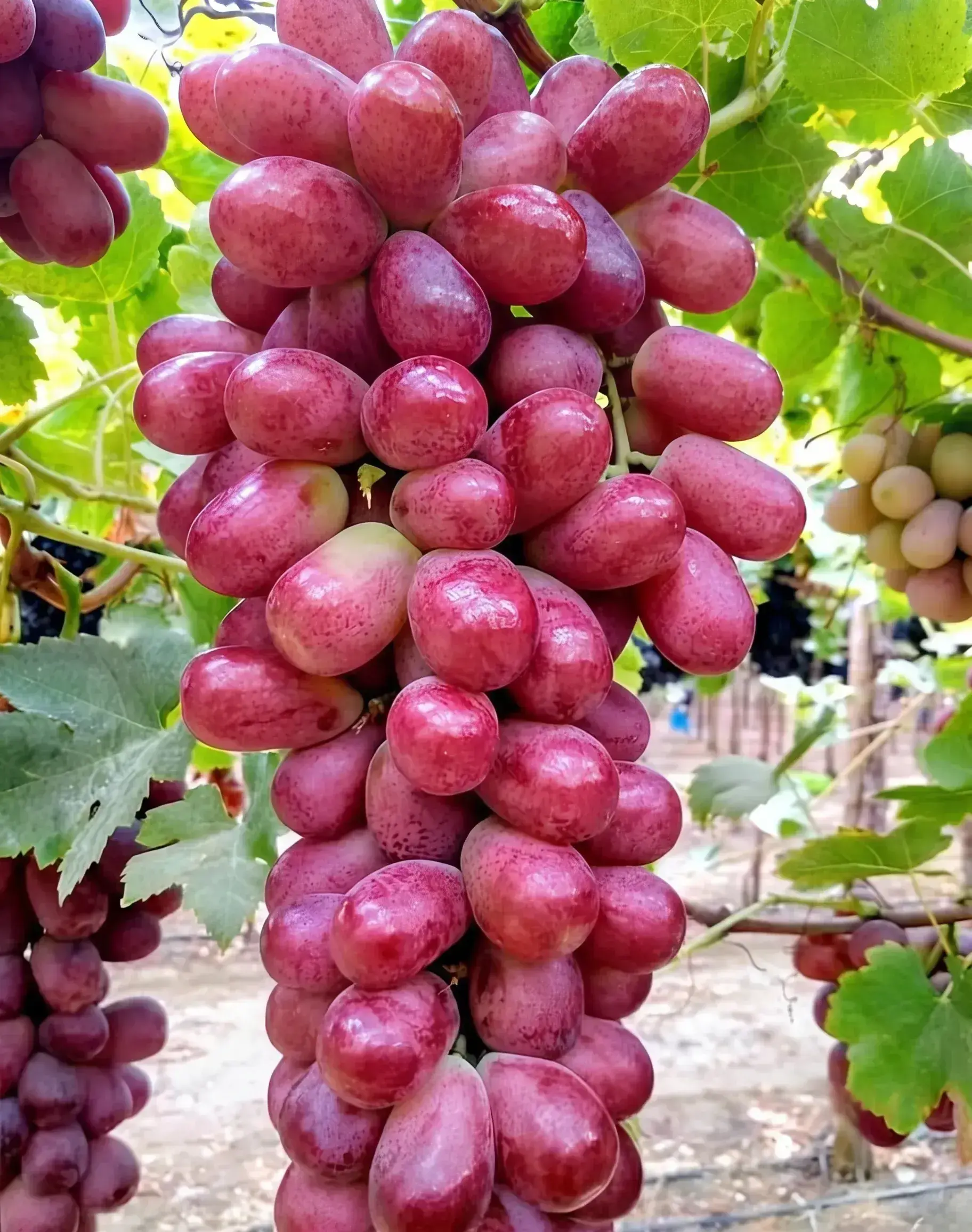
Following pollination, individual berries swell in large, conical hanging clusters, maturing roughly 3 to 4 months after bloom. Ripe Red Globe grapes are noticeably large and round (often 2.5 to 3 cm across), turning rose-red to deep crimson with crisp, juicy, sweet flesh containing a few seeds.
Pollination and Bunch Care
Vitis vinifera ‘Red Globe’ is self-fertile (producing perfect bisexual flowers), meaning a single outdoor Grape Vine can pollinate itself and produce full bunches without needing a second vine. Gentle thinning of overcrowded small berries inside a tight cluster—and protecting ripening bunches from birds with breathable mesh bags—improves berry size, uniform red color, and cleanliness.
Sunlight Requirements
A productive Red Globe Grapes Plant requires full, unobstructed sunlight for at least 6 to 8 hours every day. Intense direct sunlight is essential for sturdy cane ripening, flower bud formation, natural resistance to fungal mildew, and rich red color and sugar development in the grapes.
Planting in shaded or indoor locations leads to weak, spindly shoots, fungal leaf diseases, and little to no fruit set.
Watering Requirements
Once established, Vitis vinifera develops a deep root system and prefers deep, thorough watering followed by brief drying of the topsoil rather than frequent shallow sprinkling.
Watering During Establishment and Summer
During the first 3 to 4 weeks after planting, water every 2 to 3 days so the root zone stays evenly moist while roots anchor. During hot Indian summers, water potted vines every 2 to 3 days and ground-planted vines every 5 to 7 days whenever the top 4 to 5 cm of soil feels dry. Always water at the base of the soil—avoid wetting the leaves, which encourages fungal spots.
Watering During Monsoon, Winter, and Ripening
During the monsoon, pause manual watering when rainfall is regular and ensure water drains away fast. In winter when the vine drops its leaves and rests, water sparingly once every 12 to 15 days. Once grapes begin softening and turning red, reduce watering slightly so excess moisture does not dilute sweetness or cause berries to split.
Soil and Potting Requirements
The Grape Vine grows best in deep, fertile, fast-draining sandy loam or alluvial soil enriched with organic matter, with a slightly acidic to neutral pH between 6.0 and 7.5. Heavy, waterlogged clay soils suffocate roots and cause root rot.
Suggested Potting Mixture for Containers
For growing a Red Globe Grapes Plant in a large terrace container, prepare an airy, well-draining mix using 45% fertile garden soil, 25% well-decomposed cow dung manure or vermicompost, 20% coarse river sand or perlite, and 10% cocopeat, mixed with a handful of neem cake powder. Make sure the pot has multiple unobstructed drainage holes at the base.
Growing the Plant in the Indian Climate
Vitis vinifera adapts across many Indian regions—including Maharashtra, Karnataka, Telangana, Tamil Nadu, Punjab, Haryana, Uttar Pradesh, and West Bengal—when given full sun, good airflow, and timely pruning.
Summer Care
Grapes love warm, sunny spring and summer weather, which ripens berries with high sugar content. Apply a 4 to 5 cm layer of organic mulch (dry leaves or compost) around the root zone—keeping it clear of the main stem—to conserve moisture during peak summer heat.
Monsoon Care
In warm, high-rainfall regions such as Kolkata, West Bengal, and coastal India, heavy monsoon humidity increases the risk of fungal downy or powdery mildew on leaves. Train the vine openly on a high trellis for maximum air circulation, ensure rapid soil drainage, and prune away crowded interior shoots.
Winter Care
Cool winter weather triggers natural leaf fall and dormancy, which is healthy and necessary for a Grape Vine to reset for spring bud break. Do not worry when leaves turn yellow and drop in December or January—this is the ideal time for annual dormant pruning.
Temperature and Humidity
Vitis vinifera thrives in warm temperatures between 20°C and 38°C during the growing and ripening season, while tolerating cool winter rest temperatures down to 5°C or lower when dormant. Low to moderate humidity during flowering and fruit ripening produces the cleanest, sweetest bunches.
Fertilizer and Nutrition
Grape vines are moderate feeders that respond best to seasonal organic nutrition timed around pruning and berry development.
Apply 3 to 5 kg of well-rotted farmyard manure or vermicompost around ground-planted vines right after winter pruning (January or February) to fuel spring shoot and flower growth, and again in August or September. For potted vines, top-dress with 300 to 500 grams of vermicompost every 45 days during active spring and summer growth, supplemented with bone meal or rock phosphate and potassium-rich organic inputs such as wood ash or banana peel fertilizer during berry sizing. Avoid excess nitrogen fertilizer once berries begin coloring.
Growing the Plant in Pots
A Red Globe Grapes Plant can be grown successfully on a sunny terrace or balcony using a large, deep container—at least 18 to 24 inches wide and deep—paired with a sturdy vertical trellis, wall wire grid, or overhead pergola frame.
Because container roots have limited volume, regular compost feeding, consistent soil moisture, and disciplined annual pruning are essential to keep the vine balanced and productive.
Pruning and Maintenance
Annual pruning is the single most important secret to getting grapes from a home-garden Grape Vine, because fruit clusters grow exclusively on new shoots sprouting from one-year-old mature canes.
Training a Young Vine
During the first year, tie the strongest main stem upright to a sturdy bamboo stake until it reaches the top of your trellis or pergola, pinching off low side shoots along the trunk so it forms a clean main stem and two horizontal permanent arms (cordons).
Annual Dormant Pruning
Once each year during winter dormancy (January to early February in most of India, before new spring buds swell), prune back the previous season’s side canes to 3 to 5 healthy buds (“spurs”) each. Without annual pruning, the vine produces dense tangles of leaves with very few grape bunches.
Propagation
Named grape cultivars like ‘Red Globe’ are propagated vegetatively from dormant hardwood stem cuttings (25 to 30 cm pencil-thick canes with 3 to 4 nodes taken during winter pruning) or by grafting onto hardy grape rootstocks. Vegetative propagation preserves true Red Globe fruit size and flavor, whereas seed-grown grapevines do not grow true to type and take many years to bear.
Common Problems and Plant Care
Good air circulation, basal watering, and timely pruning prevent most common grapevine issues.
1. Powdery Mildew or Downy Mildew on Leaves
White powdery patches or yellowish-brown angular spots on leaves occur during humid, cloudy weather. Train the vine openly on a trellis for sunlight and airflow, avoid wetting leaves when watering, remove affected lower leaves, and apply diluted neem oil or wettable sulfur early if spotted.
2. Abundant Leaves but No Grape Bunches
This almost always happens when a Grape Vine is left unpruned, planted in partial shade, or overfed with high-nitrogen fertilizer. Prune side canes back to 3 to 5 buds in winter and ensure at least 6 to 8 hours of direct sun.
3. Bird Damage or Berry Splitting
As Red Globe grapes turn red and sweet, birds may peck the bunches, and sudden heavy watering can split ripe skins. Cover developing bunches with breathable organza or mesh fruit bags and keep watering even.
4. Leaf-Eating Beetles or Mealybugs
Inspect young spring shoots and woody bark crevices periodically. Rinse light mealybug clusters with water or spray diluted neem oil (3 to 5 ml per liter of water) in the cool evening hours.
Suitability for Home Gardens
The Red Globe Grapes Plant is ideal for sunny home gardens, backyard trellises, terrace pergolas, large deep containers with climbing supports, and farmhouses. Because it requires at least 6 to 8 hours of direct sunlight daily and a sturdy climbing structure, it is not suitable for indoor rooms or shaded balconies.
Safety and Important Information
Fresh Red Globe grapes are nutritious and safe for human consumption; wash harvested bunches thoroughly before eating. Important pet safety note: grapes and raisins (Vitis vinifera) are toxic to dogs (and potentially cats and ferrets) and can cause serious kidney injury even in small amounts—never allow dogs to eat fallen grapes or berries from the vine.
Live Plant Delivery Information
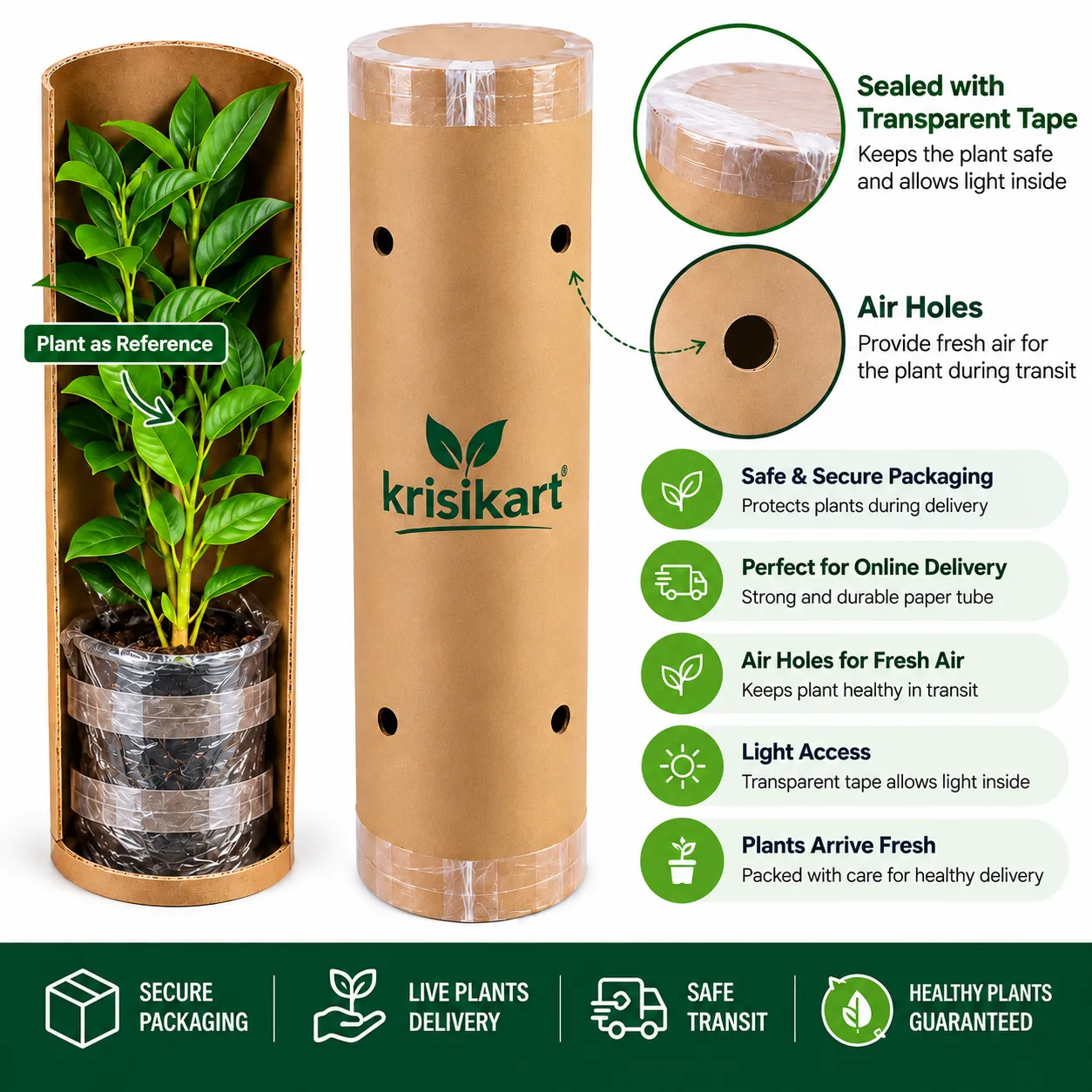
Live grape vines vary naturally in cane length, stem thickness, and leaf count—and during winter months, plants may naturally arrive dormant with few or no leaves before sprouting vigorously in spring. Mild transit stress can also occur during shipping, causing a few leaves to yellow or drop upon arrival.
Upon receiving your Red Globe Grapes Plant, place it in bright, filtered outdoor light for 3 to 4 days to recover before moving it into full direct sunlight next to a support stake or trellis. Check the soil moisture immediately and water gently if dry. Avoid applying fertilizers or pruning healthy shoots during the first 10 to 14 days while the vine acclimates.
Why Choose the Red Globe Grapes Plant for Your Garden?
Vigorous, ornamental on a sunny pergola, and rewarding when trained and pruned properly, the Red Globe Grapes Plant lets home gardeners harvest plump, crisp ruby-red table grapes right from their own yard or terrace. Given full direct sunlight, fast-draining soil, and annual winter pruning, Vitis vinifera ‘Red Globe’ thrives for decades.
Botanical Information and Further Reading
- Kew Science – Plants of the World Online: Vitis vinifera L.
- Royal Horticultural Society (RHS) – Vitis vinifera Plant Details
- ICAR – National Research Centre for Grapes (NRCG), Pune
- eFlora of India – Vitis vinifera Botanical Reference
- Royal Horticultural Society (RHS) – Growing and Pruning Grapes Guide
Frequently Asked Questions (FAQs)
1. What is the botanical name of the Red Globe Grapes Plant?
The accepted botanical name of the Red Globe Grapes Plant is Vitis vinifera ‘Red Globe’, and it belongs to the grape family Vitaceae.
2. Can I grow a Red Globe Grapes Plant in a pot on my terrace?
Yes, you can grow a Grape Vine on a sunny terrace in a deep 18-to-24-inch container or grow bag paired with a sturdy trellis or pergola frame for the vine to climb.
3. Does a Grape Vine need support to climb?
Yes, Vitis vinifera is a woody climbing vine with coiled tendrils and requires a trellis, arbor, wire fence, or pergola to support its shoots and hanging grape bunches.
4. How much sunlight does a Red Globe Grapes Plant need?
It needs full, direct sunlight for at least 6 to 8 hours every day for strong cane growth, disease resistance, and sweet, red-colored grapes.
5. Do I need two Grape Vines for pollination and fruit set?
No, Vitis vinifera ‘Red Globe’ is self-fertile, so a single outdoor Grape Vine can pollinate itself and produce fruit bunches on its own.
6. How long does a Red Globe Grapes Plant take to bear fruit?
Vegetatively propagated vines typically begin flowering and bearing grape clusters within 2 to 3 years of planting under full sun and proper annual pruning.
7. Why is my Grape Vine shedding all its leaves in winter?
Grape vines are naturally deciduous and drop their leaves in winter (December to January) to enter dormancy. This is completely normal and signals the best time for annual pruning.
8. Why does my Grape Vine grow lots of leaves but no grapes?
Lack of grapes is usually caused by skipping annual winter pruning, insufficient direct sunlight, or excess nitrogen fertilizer. Prune one-year-old side canes back to 3 to 5 buds in winter to stimulate fruiting shoots.
9. How often should I water my Grapes Plant?
Water deeply at the base whenever the top 3 to 5 cm of soil feels dry—typically every 2 to 3 days in pots during summer (every 5 to 7 days in open ground), reducing watering during monsoon and winter dormancy.
10. What is the best soil mix for growing grapes in containers?
A well-draining mix of 45% garden soil, 25% vermicompost or well-rotted cow dung manure, 20% coarse river sand or perlite, and 10% cocopeat works well.
11. Is the Red Globe Grapes Plant suitable for West Bengal and humid Indian climates?
Yes, it can grow in West Bengal and other warm regions when planted in full sun with fast-draining soil and trained openly on a high trellis for good air circulation during the monsoon.
12. Are grapes safe around pet dogs?
No, grapes and raisins are toxic to dogs—keep pets away from fallen berries and never feed grapes to dogs.
For More Information
Visit: krisikart.com
For Contact Visit:Contact Us
For Shopping Visit: Shop Page


Rakesh Gupta –
A reliable place to buy plants online.
I recommend Krisikart to everyone.