
 Plastic Plant pot | Plastic Garden Pot for Plants
 Self Watering Planters | Self Watering Plant Pots For Plants
Sugarcane Plant | Sugar Cane Tree (Saccharum officinarum) Plant
The Sugarcane Plant, (Saccharum officinarum) as the Sugar Cane Tree, is a fast-growing, tall perennial tropical grass cultivated for its thick, jointed, sucrose-rich stalks. Valued across Indian households for fresh chewing canes, homemade sugarcane juice, traditional rituals, and natural jaggery (gur) preparation, this high-yield sugarcane variety adds lush, bamboo-like tropical greenery to backyard gardens and sunny terraces.
Because a single planted Sugarcane Plant sends up multiple basal tillers that develop into a clump of sturdy canes, it offers strong productivity in a compact footprint. Whether planted directly in garden soil or grown in a deep, heavy container or grow bag on a sunlit rooftop, Saccharum officinarum rewards growers with rapid growth and sweet seasonal harvests.
Plant Highlights
- Product Name: Sugarcane Plant | Sugar Cane Tree (Saccharum officinarum) Plant – High-Yield Sugarcane Variety
- Common Name: Sugarcane, Sugar Cane, Noble Cane, Ganna (Hindi), Aakh (Bengali), Oos (Marathi), Karumbu (Tamil), Cheruku (Telugu)
- Botanical Name: Saccharum officinarum (cultivated Indian selections also include Saccharum hybrids)
- Family: Poaceae (Grass family)
- Plant Type: Tall, clumping perennial C4 grass
- Origin: Domesticated in New Guinea and tropical Southeast Asia; cultivated for millennia across the Indian subcontinent
- Flower Colour: Silvery-white to pinkish feathery terminal plume (arrow/panicle) when allowed to flower
- Foliage: Long, arching, strap-shaped green leaves with sharp, finely serrated margins and a prominent pale central midrib
- Growth Habit: Erect, clumping canes (culms) divided into distinct nodes and internodes, producing multiple basal shoots (tillers)
- Mature Height: Typically 2 to 4 meters (6.5 to 13 feet) tall with stalks 2.5 to 5 cm thick under favorable outdoor conditions
- Sunlight: Full direct sunlight (at least 6 to 8 hours daily)
- Watering: Moderate to high during active growth; prefers consistently moist, well-drained soil, reduced slightly before harvest to concentrate sugars
- Suitable For: Open home gardens, kitchen gardens, sunny terraces, deep containers or grow bags, and farmhouses
About the Sugarcane Plant
Saccharum officinarum belongs to the grass family Poaceae—making it a botanical cousin of bamboo, maize, and lemongrass rather than a woody tree. Originally domesticated from wild relatives in New Guinea and Southeast Asia thousands of years ago, sugarcane became one of India’s most important traditional crops, celebrated in both daily nutrition and festivals such as Makar Sankranti, Pongal, and Chhath Puja.
In Indian horticulture and agriculture, improved high-yield sugarcane varieties—many bred through research by institutions such as the ICAR Sugarcane Breeding Institute—combine thick, juicy, tender stalks with strong tillering ability and adaptability to Indian soils.
Appearance and Growth Habit
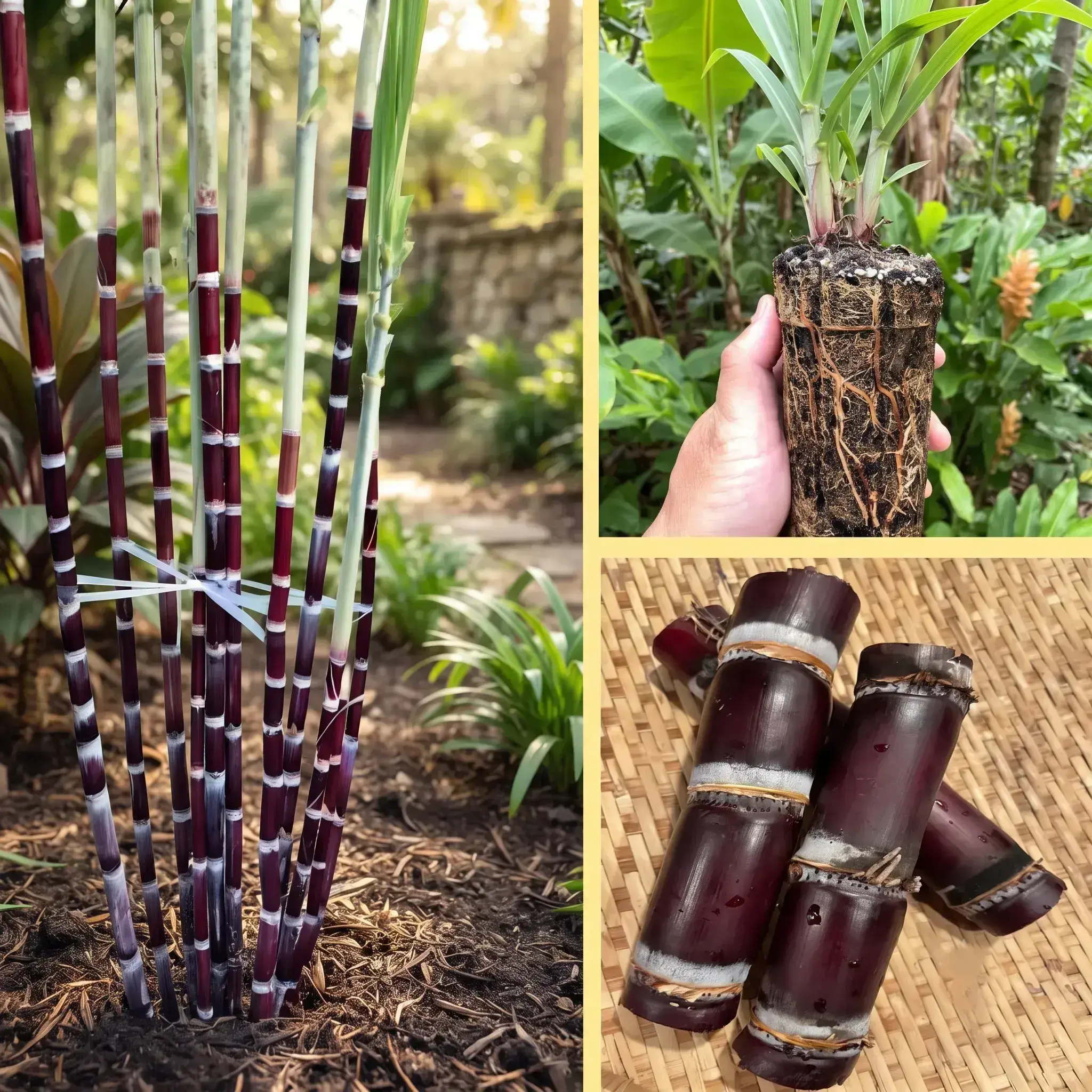
The Sugarcane Plant grows in dense upright clumps of stout, unbranched, cylindrical stalks (culms) divided into solid ring-like nodes and longer juice-filled internodes. Depending on the selection and sun exposure, stalk rinds range from yellowish-green and emerald green to reddish-purple, often dusted with a natural whitish waxy bloom.
Long, narrow, arching green leaves—measuring 60 to 120 cm long and 3 to 6 cm wide—clasp the stalk at each node with overlapping leaf sheaths. As lower leaves age and dry, they naturally loosen and can be stripped away to expose the ripening canes.
Flowering Characteristics
When mature sugarcane plants experience specific day-length and seasonal cues after 10 to 12 months of growth, they may send up a tall, feathery terminal flower panicle (known as “arrowing”) topped with silky pinkish-white spikelets.
In home gardens and farms, however, sugarcane is typically harvested before flowering begins, because flowering consumes stored sucrose from the stalk and makes the inner pith more fibrous.
Stalk Development and Harvest
Unlike fruit trees that bear apples or berries, the harvest of Saccharum officinarum is the thick, juicy stalk itself. Under warm, sunny conditions with adequate moisture and organic feeding, canes generally mature 10 to 14 months after planting.
How to Tell When Sugarcane Is Ready to Harvest
Mature canes turn yellowish-green or rich skin color, develop prominent eye buds at the nodes, produce a clear metallic sound when tapped with a finger, and snap cleanly at a node when bent. Cut mature stalks close to the soil line using a sharp knife or secateurs; leaving the underground stubble intact allows a second crop (“ratoon” crop) of fresh shoots to sprout from the roots.
Sunlight Requirements
As a tropical C4 grass, the Sugarcane Plant is strongly sun-loving and requires full, unobstructed sunlight for at least 6 to 8 hours every day. Intense direct sunlight powers photosynthesis and directly drives sucrose (sugar) accumulation inside the canes.
Growing sugarcane in shaded or indoor spaces results in thin, weak stalks with low sweetness and poor tillering.
Watering Requirements
Sugarcane needs steady, generous soil moisture during its vegetative growth and stalk-elongation phases, paired with good drainage so roots never rot in stagnant water.
Watering During Establishment and Summer
Keep the soil evenly moist during the first 3 to 4 weeks after planting so root shoots establish quickly. During hot Indian summers, potted plants often require watering every 1 to 2 days and ground-planted clumps every 3 to 5 days whenever the top 3 to 4 cm of soil dries out.
Watering During Monsoon and Pre-Harvest
During the monsoon, reduce or pause manual watering when rainfall is regular and ensure rainwater drains quickly away from the clump. In the final 3 to 4 weeks before harvesting mature canes, gradually reduce watering frequency—allowing the soil to dry slightly between waterings—which helps concentrate natural sugars in the juice.
Soil and Potting Requirements
Saccharum officinarum grows best in deep, fertile, well-draining loamy or alluvial soil enriched with organic matter, with a slightly acidic to neutral soil pH between 5.5 and 7.5. Heavy, waterlogged clay soils restrict root aeration and reduce cane sweetness.
Suggested Potting Mixture for Containers
This is a suggested potting mixture for growing a Sugarcane Plant in a deep pot or grow bag rather than a rigid scientific formula: blend 45% fertile garden soil, 30% well-decomposed cow dung manure or vermicompost, 15% coarse river sand or perlite, and 10% cocopeat, mixed with a handful of neem cake powder. Ensure the container has clear drainage holes at the base.
Growing the Plant in the Indian Climate
The Sugarcane Plant thrives across almost all warm tropical and subtropical plains of India, including Uttar Pradesh, Maharashtra, Karnataka, Tamil Nadu, Bihar, West Bengal, Odisha, Gujarat, Punjab, and Assam.
Summer Care
Sugarcane loves warm summer temperatures and grows rapidly when kept well watered. Apply a 4 to 5 cm layer of organic mulch (dry leaves or sugarcane trash) around the base of the clump to conserve soil moisture and suppress weeds.
Monsoon Care
In humid, high-rainfall regions such as Kolkata, West Bengal, and coastal India, monsoon is the grand growth phase when canes elongate rapidly. Earth up (mound) extra soil around the base of the stalks early in the monsoon so tall canes stay anchored against heavy rain and gusty winds.
Winter Care
Cool, dry winter weather slows vegetative height gain and helps ripen the canes with higher sugar content. Mature canes tolerate mild Indian winters easily, though severe freezing frost in far-northern areas can damage tender top leaves.
Temperature and Humidity
Saccharum officinarum thrives in warm temperatures between 25°C and 35°C (tolerating summer highs up to 40°C+) and performs well in moderate to high humidity. Growth slows considerably when temperatures drop below 15°C, and the plant is sensitive to prolonged frost.
Fertilizer and Nutrition
Because sugarcane produces large amounts of green foliage and thick canes, it responds well to regular organic feeding during its active growing months.
Mix generous well-rotted farmyard manure or vermicompost into the soil before planting, and top-dress every 30 to 45 days during spring and monsoon with vermicompost, cow dung manure, or diluted organic liquid fertilizers such as mustard cake or compost tea. Supplementing with potassium-rich organic inputs (such as wood ash or banana peel fertilizer) in late monsoon supports sturdy stalks and sweeter juice. Avoid heavy nitrogen feeding late in the season right before harvest.
Growing the Plant in Pots
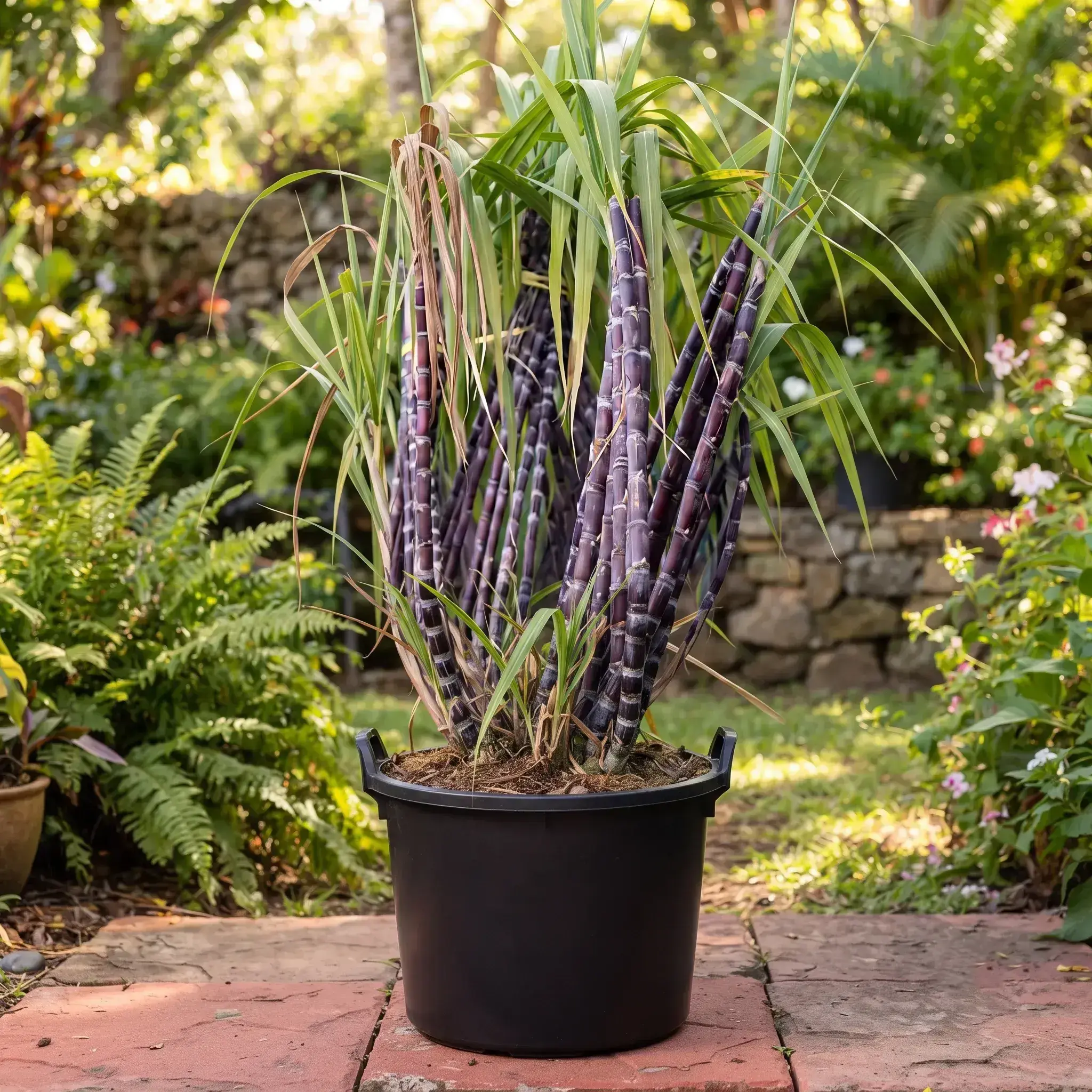
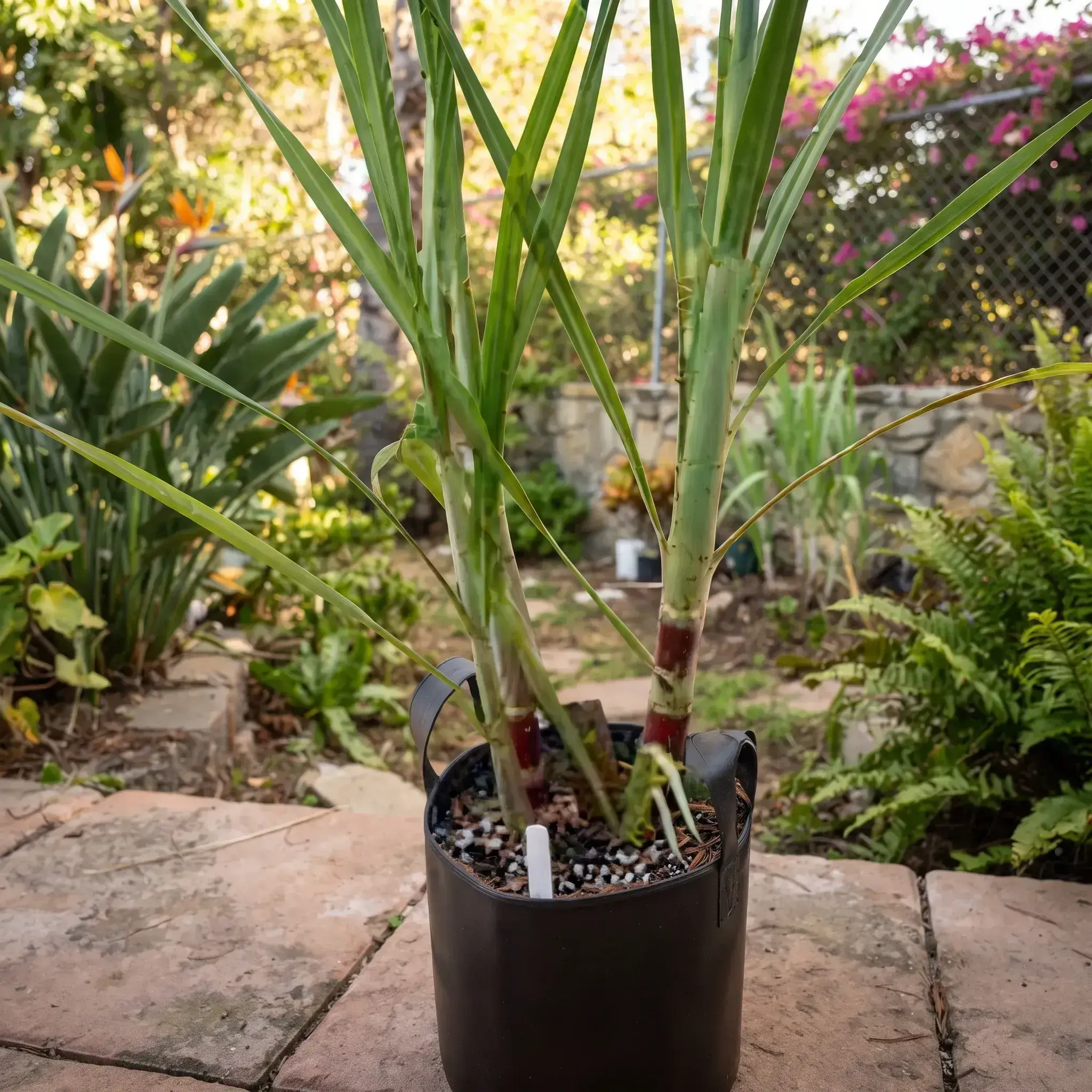
You can successfully grow a Sugarcane Plant on a sunny terrace or rooftop using a deep, wide container—such as an 18-to-24-inch heavy-duty grow bag, drum, or tub at least 15 to 18 inches deep—so the fibrous root mat has room to support tall stalks.
Place the container in a sheltered sunny spot or tie tall canes loosely to a sturdy stake or railing so strong monsoon winds do not topple the pot. Each pot can comfortably support 3 to 5 strong canes per clump.
Pruning and Maintenance
Sugarcane requires very little pruning, though two simple practices keep clumps neat and productive:
Detrashing Lower Dry Leaves
Once canes reach 1.5 meters or taller, gently pull or snip off old, yellowing, dried lower leaves from the bottom of the stalks every 6 to 8 weeks. Removing dry leaf sheaths improves airflow, deters mealybugs and borers, and exposes the canes to sunlight.
Earthing Up
Mounding soil 10 to 15 cm high around the base of the clump mid-season encourages strong prop roots and prevents tall stalks from lodging (leaning over).
Propagation
Sugarcane is propagated vegetatively from stem cuttings called “setts”—short sections of mature cane containing 1 to 3 healthy eye buds at the nodes. Lay setts horizontally 5 to 8 cm deep in moist, fertile soil with buds facing sideways; new shoots sprout from the node buds within 2 to 4 weeks in warm weather. After harvesting mature stalks, the remaining root crown naturally regrows a ratoon crop.
Common Problems and Plant Care
Routine inspection and clean detrashing prevent most common sugarcane garden issues.
1. Mealybugs or Scale Under Leaf Sheaths
Pinkish-white mealybugs sometimes hide inside tight lower leaf sheaths, secreting sticky honeydew that causes black sooty mold. Strip away old dry leaves to expose the nodes and spray diluted neem oil (3 to 5 ml per liter of water) in the cool evening hours.
2. Shoot or Internode Borers
Larvae of stem borers occasionally tunnel into young shoots, causing the central spindle leaf to dry up (“dead heart”). Cut out any affected shoot below the damaged point immediately and apply neem cake to the soil.
3. Lodging (Leaning Stalks) in Wind
Tall, heavy canes in shallow soil or pots can lean during monsoon storms. Earth up soil around the base and tie outer canes together or to a bamboo stake for support.
4. Yellowing Leaves
Uniform yellowing during active summer or monsoon growth usually signals nitrogen deficiency or dry soil, whereas yellowing in waterlogged pots indicates poor drainage. Adjust watering and top-dress with vermicompost.
Suitability for Home Gardens
The Sugarcane Plant is ideal for open home gardens, kitchen gardens, sunny terraces, deep rooftop grow bags, and farmhouse plots. Because it needs at least 6 to 8 hours of direct sunlight daily and grows 2 to 4 meters tall, it is not suitable for indoor rooms or low-light balconies.
Safety and Important Information
Fresh sugarcane stalks and juice are safe and widely consumed; always wash harvested canes thoroughly and peel off the tough outer rind before chewing or juicing. Note that sugarcane leaf edges and sheaths have microscopic silica teeth and fine hairs that can feel sharp or scratchy—wear full sleeves and gardening gloves when stripping dry leaves or harvesting canes.
Live Plant Delivery Information
Live plants are natural living organisms, so slight variations in height, cane thickness, tiller count, and leaf appearance are completely normal. Mild transit stress can occur during shipping, and a few older lower leaves may turn yellow or dry at the tips upon arrival.
Upon receiving your Sugarcane Plant, place it in bright, filtered outdoor light for 3 to 4 days to recover before moving it into full direct sunlight. Check the soil moisture immediately and water gently so the root ball is evenly damp. Avoid applying fertilizers, repotting right away, or cutting healthy green shoots during the first 10 to 14 days while the plant acclimates.
Why Choose the Sugarcane Plant for Your Garden?
Fast-growing, visually bold, and deeply rooted in Indian culinary and festive traditions, the Sugarcane Plant lets you harvest fresh, sweet canes right from your own backyard or sunny terrace. With full sunlight, steady moisture, and rich organic soil, Saccharum officinarum delivers rewarding clumps of juicy stalks year after year.
Botanical Information and Further Reading
- Kew Science – Plants of the World Online: Saccharum officinarum L.
- Royal Horticultural Society (RHS) – Saccharum officinarum Plant Details
- ICAR – Sugarcane Breeding Institute (SBI), Coimbatore
- eFlora of India – Saccharum officinarum Botanical Reference
- Useful Tropical Plants – Saccharum officinarum
Frequently Asked Questions (FAQs)
1. What is the botanical name of the Sugarcane Plant?
The accepted botanical name of the Sugarcane Plant is Saccharum officinarum, and it belongs to the grass family Poaceae.
2. Is Sugarcane actually a tree or a grass?
Despite being commonly searched as a “Sugar Cane Tree,” sugarcane is botanically a tall, clumping perennial tropical grass related to bamboo and maize.
3. Can I grow a Sugarcane Plant in a pot on my terrace?
Yes, you can grow sugarcane on a sunny terrace in a deep 18-to-24-inch container or grow bag filled with rich, well-drained soil, tying tall canes for wind support.
4. How much sunlight does a Sugarcane Plant need?
It needs full, direct sunlight for at least 6 to 8 hours every day to grow thick stalks and develop high natural sugar content.
5. How long does it take for a Sugarcane Plant to mature for harvest?
Under warm, sunny outdoor conditions with regular watering and organic feeding, canes are typically ready to harvest 10 to 14 months after planting.
6. Will my Sugarcane Plant grow back after I cut the stalks?
Yes, sugarcane grows back from the underground root crown after harvest—a practice known as “ratooning”—producing new shoots without needing to replant immediately.
7. How often should I water my Sugarcane Plant?
Keep the soil consistently moist during active spring, summer, and monsoon growth (every 1 to 2 days in pots, or every 3 to 5 days in open ground during summer), then reduce watering slightly 3 to 4 weeks before harvest to concentrate sweetness.
8. What is the best soil mix for growing sugarcane in containers?
A fertile, well-draining mix of 45% garden soil, 30% vermicompost or well-rotted cow dung manure, 15% coarse river sand or perlite, and 10% cocopeat works well.
9. Why should I remove dry lower leaves from the sugarcane stalks?
Stripping old, dry lower leaves (detrashing) improves air circulation around the canes, prevents mealybugs from hiding under leaf sheaths, and lets sunlight ripen the stalks.
10. How do I propagate new Sugarcane Plants at home?
Cut mature stalks into 1-to-3-node sections (“setts”) and plant them horizontally 5 to 8 cm deep in moist, fertile soil; new shoots sprout from the node buds within 2 to 4 weeks.
11. Is the Sugarcane Plant suitable for West Bengal and humid Indian states?
Yes, Saccharum officinarum thrives across West Bengal, Kolkata, Uttar Pradesh, Maharashtra, Karnataka, Tamil Nadu, and other warm Indian regions.
12. Can I keep a Sugarcane Plant indoors?
No, sugarcane requires intense direct outdoor sunlight and grows 2 to 4 meters tall, making it unsuitable for indoor rooms.
For More Information
Visit: krisikart.com
For Contact Visit:Contact Us
For Shopping Visit: Shop Page


Santhosh mishra –
Beautiful plants for my garden.
Thank you, Krisikart, for the excellent service.