 Plastic Plant pot | Plastic Garden Pot for Plants
 Self Watering Planters | Self Watering Plant Pots For Plants
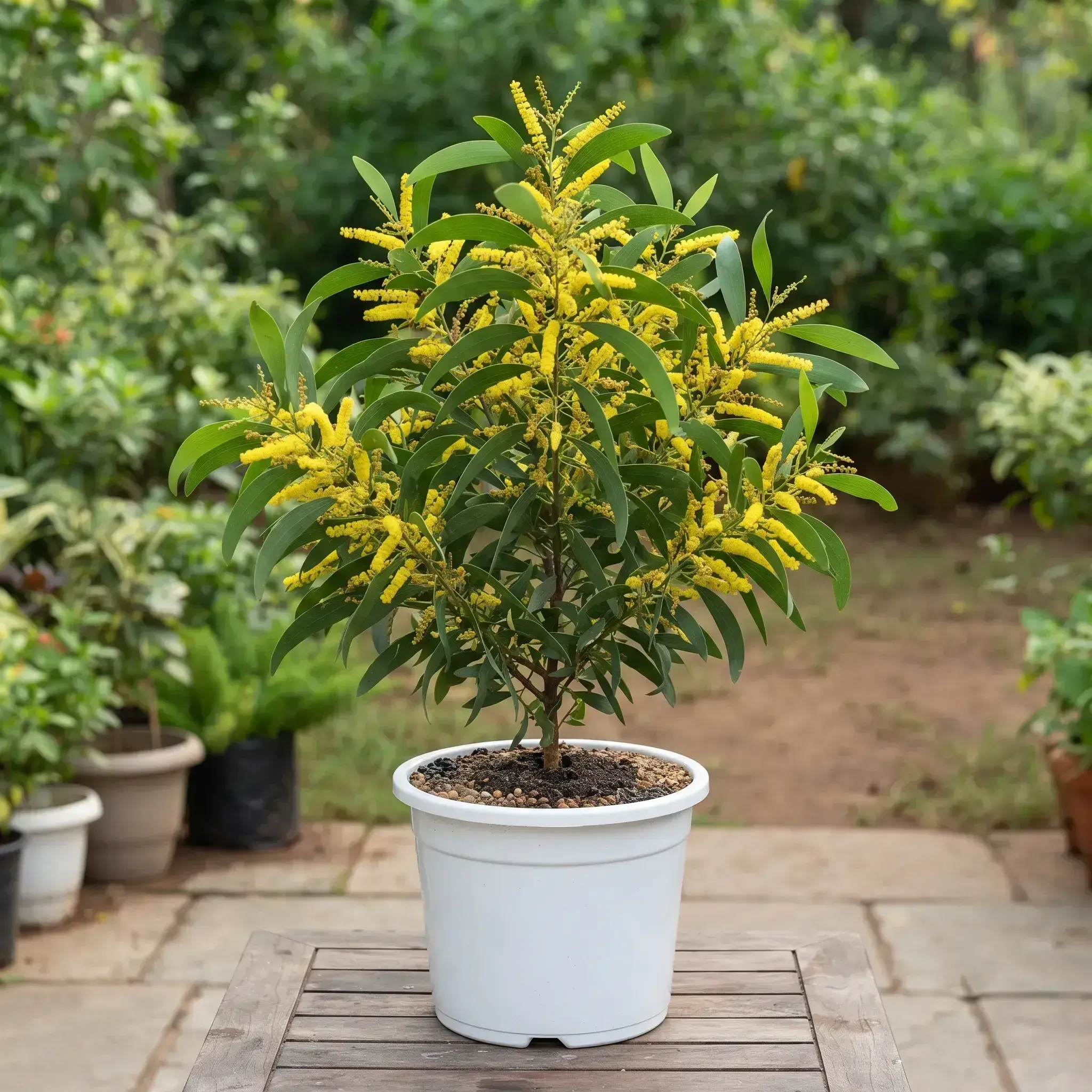
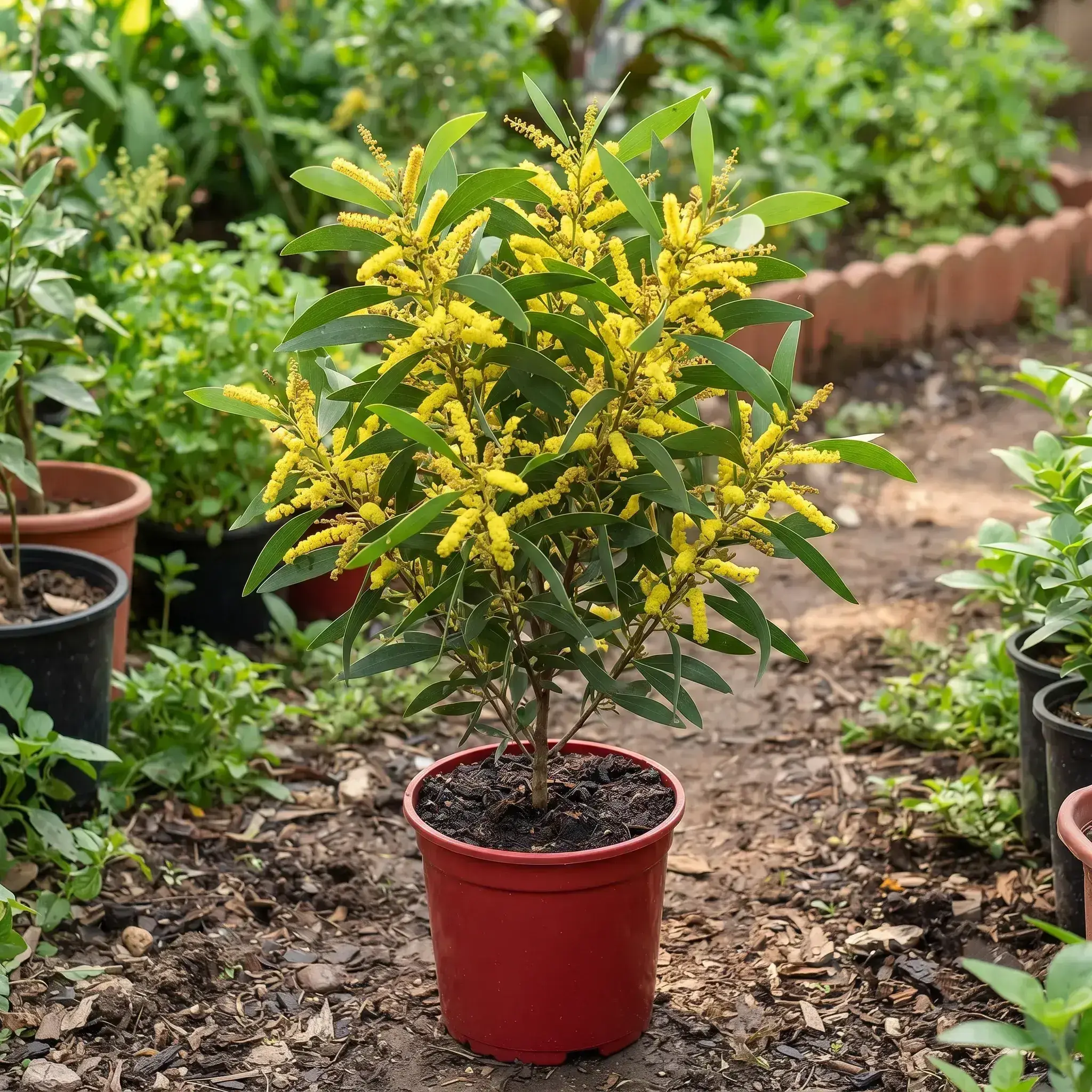
Akashmoni Tree – Earleaf Acacia (Acacia auriculiformis) / Australian Babul Plant
The Akashmoni Tree (Acacia auriculiformis), also known as Australian Babul, Earleaf Acacia, Sonajhuri and Australian Wattle.
Akashmoni is a popular tree in India, particularly in West Bengal, where it is commonly planted along roadsides, in gardens, on farms and in open landscapes. It is admired for its attractive green foliage, bright yellow flowers, spreading crown and ability to grow in a range of soil conditions.
Akashmoni is a good choice for spacious gardens, farmhouses, outdoor landscapes and shade-tree planting. However, it is naturally a medium-to-large tree and needs sufficient space to grow.
Plant Highlights
- Common Names: Akashmoni, Sonajhuri, Australian Babul, Earleaf Acacia, Ear-pod Wattle, Australian Wattle
- Botanical Name: Acacia auriculiformis
- Family: Fabaceae (Legume family)
- Plant Type: Evergreen flowering tree
- Native Origin: Northern Australia, Papua New Guinea and Indonesia
- Foliage: Dark-green, flattened, curved phyllodes
- Flower Colour: Bright yellow to yellow-orange
- Flower Type: Small flowers arranged in elongated spikes
- Fruit: Flat, twisted seed pods
- Light Requirement: Full sunlight
- Water Requirement: Moderate; more frequent watering while young
- Growth Rate: Fast
- Growth Habit: Upright trunk with a spreading crown
- Best For: Spacious home gardens, farmhouses, landscaping and shade planting
- Maintenance: Low to moderate
About the Akashmoni Tree
Akashmoni is an evergreen tropical tree belonging to the Fabaceae family. Its accepted botanical name is Acacia auriculiformis.
It is native to northern Australia, Papua New Guinea and Indonesia. The species has been introduced and widely planted in India, including West Bengal.
The tree is popular because it grows relatively quickly and can tolerate different soil conditions. It is also used in forestry, roadside planting, fuelwood production, shade planting and land rehabilitation.
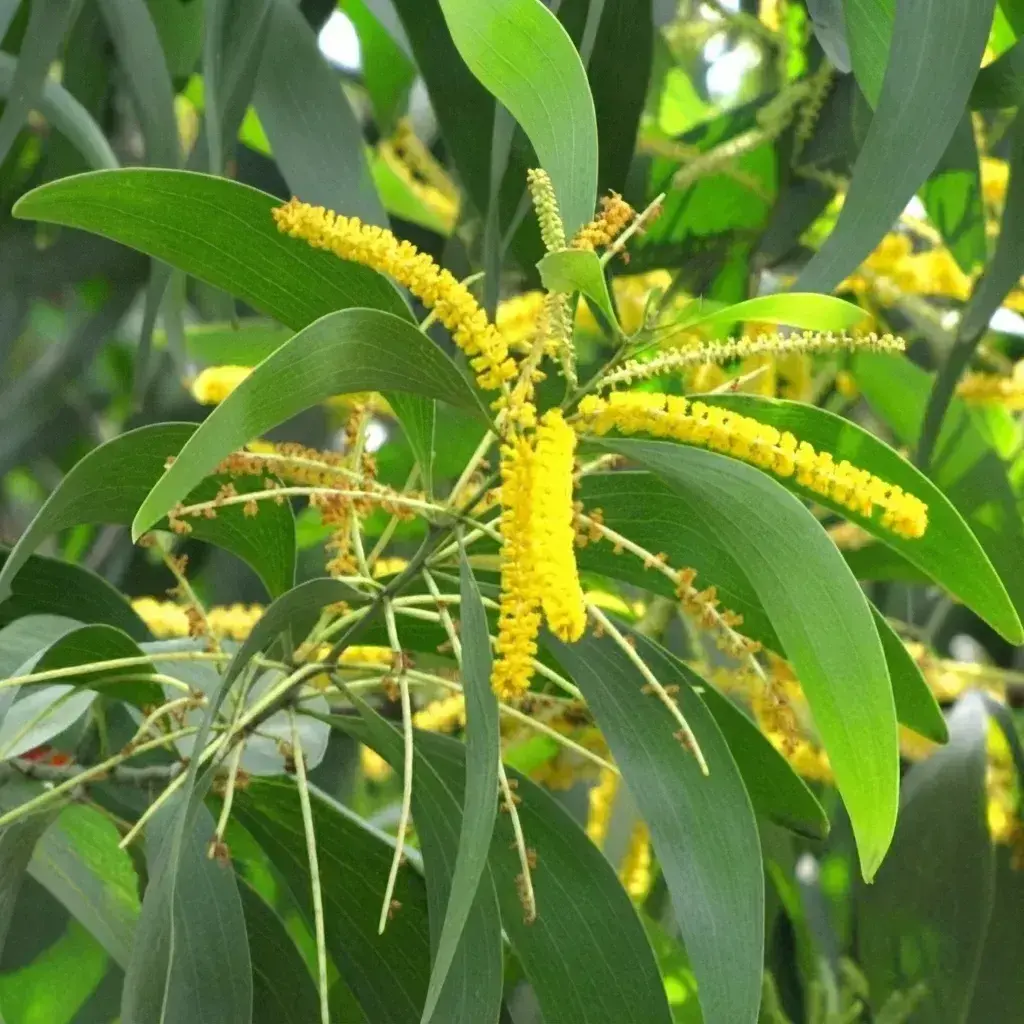
One interesting feature is that its apparent leaves are not ordinary leaf blades. They are flattened leaf stalks called phyllodes, which perform the function of leaves.
Appearance and Growth
The Akashmoni Tree has an attractive evergreen appearance.
- Long, flattened and slightly curved green phyllodes
- Dense green foliage
- Upright trunk with spreading branches
- Rounded or irregular crown
- Bright yellow flower spikes
- Distinctive twisted seed pods
The tree can grow approximately 15–30 metres tall under favourable conditions, although size varies with climate, soil and growing environment.
Its rapid growth makes it useful for landscaping and shade, but gardeners should consider its eventual size before choosing a planting location.
Flowers and Flowering Season
One of the attractive features of Akashmoni is its bright yellow flowering display.
Small, fluffy-looking yellow flowers develop in elongated spikes near the branches. The individual flowers have numerous fine stamens, giving the flower spikes a soft, brush-like appearance.
Flower characteristics:
- Bright yellow to yellow-orange colour
- Small flowers arranged in spikes
- Attractive, mildly fragrant floral display
- Visited by insects and other pollinators
Flowering time can vary with local climate and growing conditions. In parts of India, flowering may occur over an extended period.
After flowering, the tree develops flat seed pods. As they mature, the pods become twisted and split open, releasing dark seeds attached to orange-coloured structures.
Sunlight Requirements
Akashmoni is a sun-loving tree and grows best in full sunlight.
Suitable locations:
- Open home gardens
- Farmhouses
- Roadside planting areas
- Large outdoor landscapes
- Agricultural boundaries
- Spacious garden areas
Choose a location that receives several hours of direct sunlight each day. Insufficient sunlight can reduce healthy growth and flowering.
Young plants may need temporary protection from extreme heat while establishing, but the mature tree prefers an open, sunny location.
Watering Requirements
Akashmoni is relatively drought-tolerant once established, but young plants need regular watering to develop healthy roots.
Follow these guidelines:
- Water regularly during the establishment period.
- Keep the soil moderately moist while the plant is young.
- Reduce watering once the tree becomes established.
- Water during prolonged dry periods.
- Avoid continuous waterlogging around the roots.
Important for West Bengal: The monsoon season generally provides useful rainfall for Akashmoni growth. However, young plants should not remain in stagnant water for long periods.
Best Soil for Akashmoni Tree
Akashmoni is adaptable and can grow in different soil types, including sandy, loamy and lateritic soils.
A suitable planting mixture can include:
- 40% garden soil
- 30% mature compost or well-decomposed organic manure
- 20% loamy soil or leaf mould
- 10% coarse sand for drainage
The tree can tolerate relatively poor soil once established, but fertile, well-drained soil supports better early growth.
It is also capable of forming a symbiotic relationship with nitrogen-fixing bacteria, helping it grow in soils with relatively low nitrogen availability.
Avoid planting young trees in locations where water remains stagnant for long periods.
Temperature and Indian Climate
Akashmoni prefers warm tropical and subtropical conditions.
It can grow well in many parts of India, including West Bengal, Odisha, Assam and other warm regions.
For healthy development:
- Provide full sunlight.
- Water young plants regularly.
- Allow sufficient space for the crown and roots.
- Improve drainage in waterlogged locations.
- Protect young plants from prolonged dryness.
- Avoid planting where frost or severe cold is common.
The warm climate and seasonal rainfall of West Bengal are generally suitable for this tree.
Fertilizer Requirements
Akashmoni is relatively adaptable and does not need heavy fertilization once established.
For young plants:
- Mix mature compost into the planting soil.
- Apply well-decomposed organic manure periodically.
- Use a balanced tree fertilizer only when necessary.
- Avoid excessive nitrogen fertilization.
- Keep fresh manure away from direct contact with the trunk.
Because Akashmoni is a leguminous tree capable of nitrogen fixation, it may obtain some of its nitrogen through its root association with bacteria.
Growing Akashmoni in Pots
A young Akashmoni plant can be grown temporarily in a large container, but it is not a suitable permanent small-pot tree.
The species naturally develops into a medium-to-large tree with a spreading crown and root system.
If growing it in a container:
- Choose a large, sturdy pot with drainage holes.
- Use fertile, well-draining soil.
- Provide full sunlight.
- Water regularly while it establishes.
- Repot when the roots become crowded.
- Plan for eventual planting in an open garden.
For long-term growth, planting in the ground is preferable.
Best Places to Plant Akashmoni Tree
Home Garden: Plant it in a spacious outdoor garden where it can develop without interfering with buildings.
Farmhouse: It is suitable for open properties and agricultural landscapes.
Roadside Landscaping: Akashmoni is widely used for roadside and avenue planting in suitable locations.
Garden Boundary: It can be planted along suitable property boundaries, provided there is enough distance from buildings and infrastructure.
Open Landscape: Its spreading crown makes it useful as a shade and ornamental tree.
Avoid planting it too close to houses, boundary walls, overhead wires, underground utilities or narrow pathways.
Pruning and Maintenance
Akashmoni generally requires basic maintenance, especially during its early growth.
- Remove dry or damaged branches.
- Remove weak or crossing branches when necessary.
- Develop a strong branch structure while the tree is young.
- Remove unwanted shoots near the base.
- Inspect branches periodically for damage.
- Avoid excessive pruning.
The tree can develop weak branch attachments and may be susceptible to branch breakage in strong winds. Proper early structural pruning can help improve its form.
For large or mature trees, use a qualified tree-care professional for major pruning.
Propagation
Akashmoni is commonly propagated through seeds.
Seed propagation method:
- Collect mature, dry seed pods from a healthy tree.
- Remove the seeds carefully.
- Prepare a nursery container with a suitable growing mixture.
- Treat the hard seed coat using an appropriate seed pre-treatment method, such as carefully controlled hot-water treatment.
- Sow the prepared seeds in the nursery medium.
- Maintain suitable moisture and warm conditions.
- Transplant healthy seedlings after they develop sufficiently.
Seed germination can improve with suitable pre-treatment because the seeds have a hard coat.
Follow safe seed-treatment practices and avoid using boiling water directly on seeds unless the method specifically calls for it.
Common Problems and Solutions
1. Yellowing leaves or phyllodes
Yellowing may result from nutrient deficiency, water stress or root problems. Check soil moisture and drainage.
2. Dry leaf-like structures
Prolonged dryness, excessive heat or root damage can cause drying. Water young plants regularly and check their growing conditions.
3. Slow growth
Insufficient sunlight, poor drainage or unsuitable soil can affect growth. Provide full sunlight and suitable soil conditions.
4. Branch breakage
Akashmoni can develop weak branch attachments. Remove damaged branches and maintain a balanced structure through appropriate pruning.
5. Poor flowering
Young trees may need time to mature. Insufficient sunlight and unsuitable growing conditions can also reduce flowering.
6. Seedling growth around the tree
Mature pods release seeds that can germinate around the parent tree. Remove unwanted seedlings where necessary.
7. Pest or fungal problems
Inspect the foliage and branches regularly. Remove affected plant material and use suitable plant-safe treatments according to their labels when required.
Is Akashmoni Suitable for Home Gardens?
Yes, Akashmoni can be a beautiful tree for a home garden if enough outdoor space is available.
Its evergreen foliage, attractive yellow flowers and fast growth make it suitable for:
- Spacious home gardens
- Farmhouses
- Large landscape areas
- Open garden boundaries
- Shade-tree planting
However, it is not suitable for very small gardens, narrow courtyards or permanent indoor growing. Its mature height and spreading crown should be considered before planting.
Environmental and Planting Considerations
Akashmoni is widely planted in India for forestry, shade, fuelwood and land rehabilitation. It can also establish outside cultivation in some regions.
Because it produces many seeds and can regenerate naturally, monitor unwanted seedlings around the planting area. In natural habitats and ecologically sensitive locations, avoid planting introduced trees without checking local environmental guidance.
Live Plant Delivery
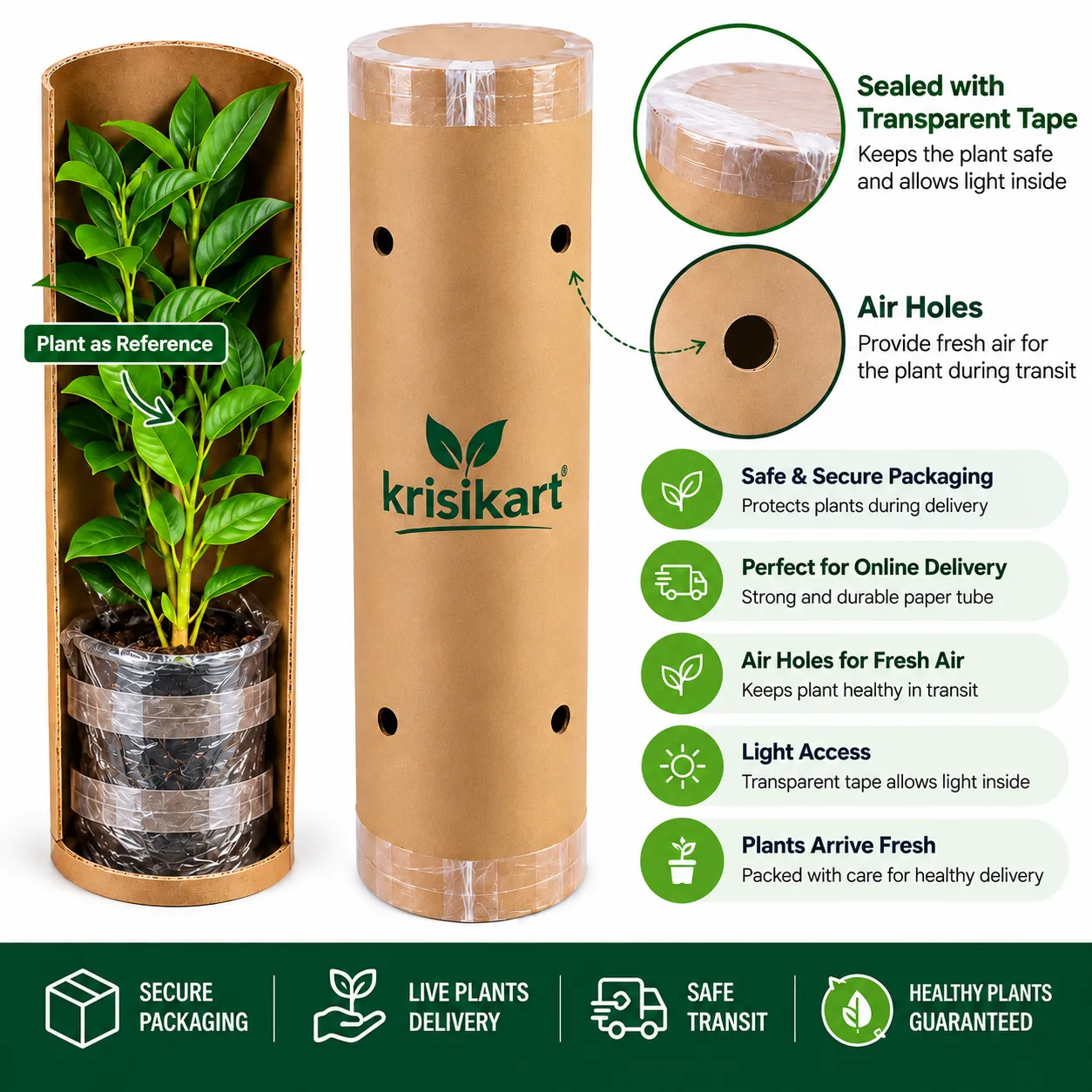
Your Akashmoni Tree (Acacia auriculiformis) will be supplied as a live ornamental tree suitable for growing in a home garden, farmhouse or outdoor landscape.
As this is a living plant, height, stem thickness, phyllode size, branching pattern and overall appearance may vary according to its growth stage and season. The delivered plant may look slightly different from the product photograph.
After delivery, plant it in a suitable outdoor location with adequate sunlight and space. Water regularly while the young plant establishes.
Please remember that Akashmoni naturally develops into a medium-to-large tree and should not be considered a permanently small ornamental plant.
Why Choose the Akashmoni Tree?
- Popular Indian tree also known as Sonajhuri
- Attractive evergreen green foliage
- Beautiful yellow flower spikes
- Fast-growing ornamental tree
- Adaptable to different soil conditions
- Suitable for spacious gardens and farmhouses
- Useful for shade and landscape planting
- Can grow in warm and humid Indian climates
- Interesting addition to tropical tree collections
Botanical Information & Further Reading
Learn more about Acacia auriculiformis, its identification, growing characteristics and uses:
- Royal Botanic Gardens, Kew – Acacia auriculiformis
- India Trees Portal – Acacia auriculiformis
- University of Florida IFAS – Earleaf Acacia
- World Agroforestry – Acacia auriculiformis Species Profile
- Australian Centre for International Agricultural Research – Acacia auriculiformis
- International Union for Conservation of Nature – Acacia auriculiformis
- National Information System for Climate and Environment – Acacia auriculiformis
Frequently Asked Questions
1. What is the botanical name of the Akashmoni Tree?
The botanical name is Acacia auriculiformis. It belongs to the Fabaceae family.
2. Is Akashmoni the same as Sonajhuri?
Yes. Akashmoni and Sonajhuri are common regional names used for Acacia auriculiformis, particularly in West Bengal.
3. Is Akashmoni also called Australian Babul?
Yes. Australian Babul is one of its common English names. It is also known as Earleaf Acacia and Ear-pod Wattle.
4. Can Akashmoni grow in West Bengal?
Yes. It is widely planted in West Bengal and grows well in suitable warm conditions.
5. Does Akashmoni need direct sunlight?
Yes. It grows best in full sunlight and needs an open location for healthy development.
6. How tall can an Akashmoni tree grow?
Depending on growing conditions, it can reach approximately 15–30 metres.
7. Does Akashmoni produce yellow flowers?
Yes. It produces attractive yellow to yellow-orange flowers arranged in elongated spikes.
8. Is Akashmoni an evergreen tree?
Yes. It is generally an evergreen tree and retains its foliage throughout the year in suitable climates.
9. Can Akashmoni grow in a pot?
A young plant can be grown temporarily in a large container, but the mature tree needs open ground and sufficient space.
10. How often should I water Akashmoni?
Water regularly while the plant is young. Once established, it can tolerate periods of dry weather.
11. Is Akashmoni a fast-growing tree?
Yes. It is known for relatively fast growth under favourable conditions.
12. What type of soil is best for Akashmoni?
It can grow in sandy, loamy and lateritic soils. Fertile, well-drained soil supports healthy growth.
13. Does Akashmoni produce seed pods?
Yes. It produces flat, twisted pods containing dark seeds, often attached to orange-coloured structures.
14. Is Akashmoni suitable for small home gardens?
It is not ideal for very small gardens because it develops a large crown and can grow quite tall. Choose an open location with sufficient space.
For More Information
Visit: krisikart.com
For Contact Visit:Contact Us
For Shopping Visit: Shop Page
For More Information
Visit: krisikart.com
For Contact Visit:Contact Us
For Shopping Visit: Shop Page


Reviews
There are no reviews yet.