
 Plastic Plant pot | Plastic Garden Pot for Plants
 Self Watering Planters | Self Watering Plant Pots For Plants
Chiku Plant | Zapota Tree (Manilkara zapota) Manilkara achras Plant
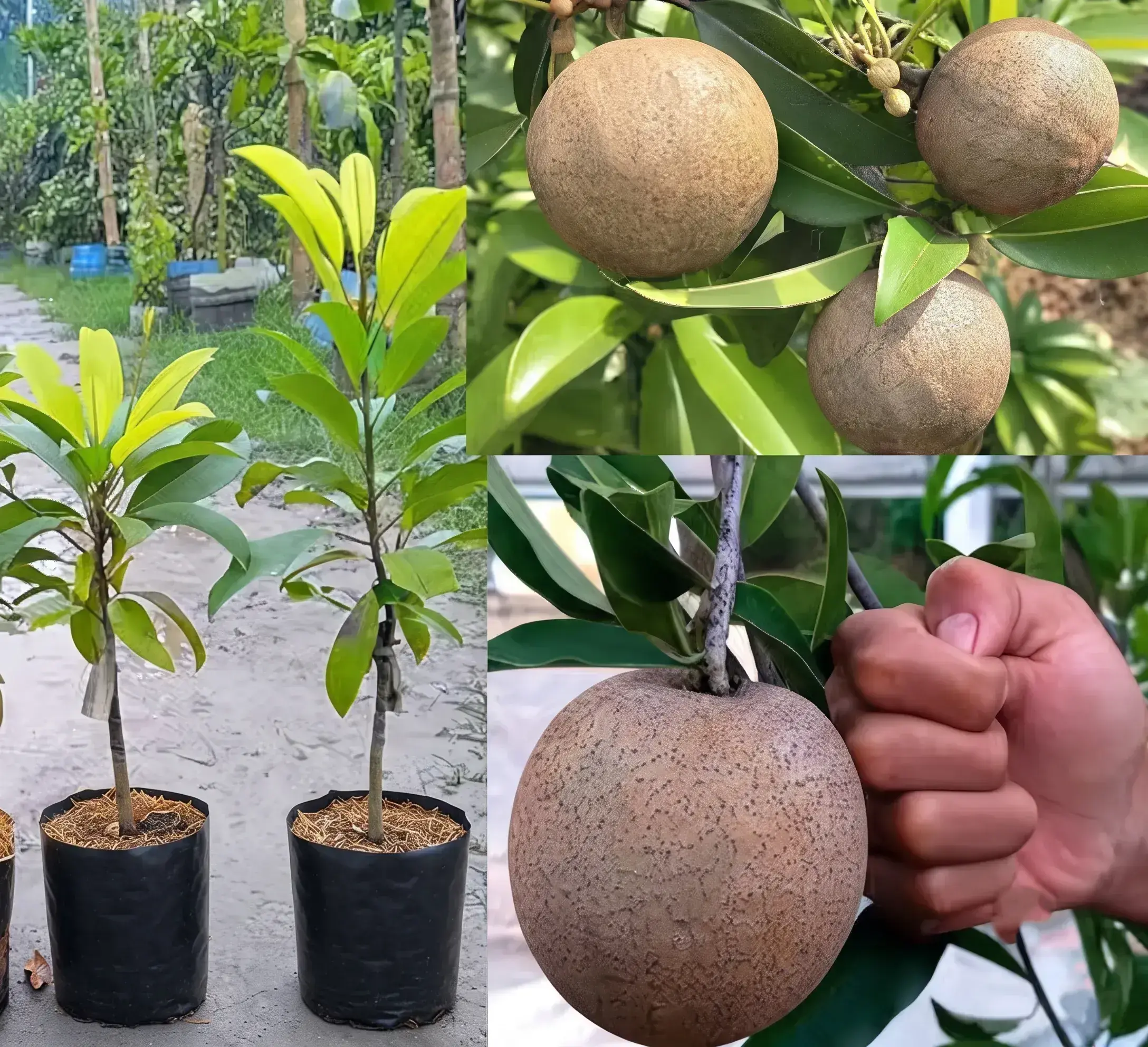
The Chiku Plant, (Manilkara zapota ) and widely referenced in older nursery records as Manilkara achras, is a hardy, long-lived evergreen fruit tree celebrated across India for its lush glossy foliage and honey-sweet, malty fruits. This Ball Size Fruit Grafted Plant—known in Indian horticulture as the Cricket Ball Chiku variety—is prized for producing large, round fruits packed with soft, sweet, granular pulp.
Because this Sapota or Zapota Tree is vegetatively grafted onto a vigorous rootstock rather than grown from seed, it maintains the authentic large fruit size and sweet flavor of the parent selection while staying compact enough for home gardens, backyard orchards, and large terrace containers. With full sunlight, fast-draining soil, and minimal routine maintenance once established, a grafted Chiku Plant rewards growers with year-round greenery and generous harvests.
Plant Highlights
- Product Name: Chiku Plant | Zapota Tree (Manilkara zapota) Manilkara achras Plant – Ball Size Fruit Grafted Plant
- Common Name: Chiku, Chikoo, Sapota, Sapodilla, Zapota, Sofeda / Sobeda (Bengali), Naseberry
- Botanical Name: Manilkara zapota (older synonyms: Manilkara achras, Achras zapota)
- Cultivar Identity: ‘Cricket Ball’ / Ball-Sized Fruit Selection (Propagated via grafting)
- Family: Sapotaceae (Sapodilla family)
- Plant Type: Evergreen perennial tropical fruit tree
- Origin: Native to southern Mexico, Central America, and the Caribbean; naturalized and widely cultivated across tropical India
- Flower Colour: Small, bell-shaped creamy-white to pale brownish-white blooms
- Flower Fragrance: Lightly sweet and subtle
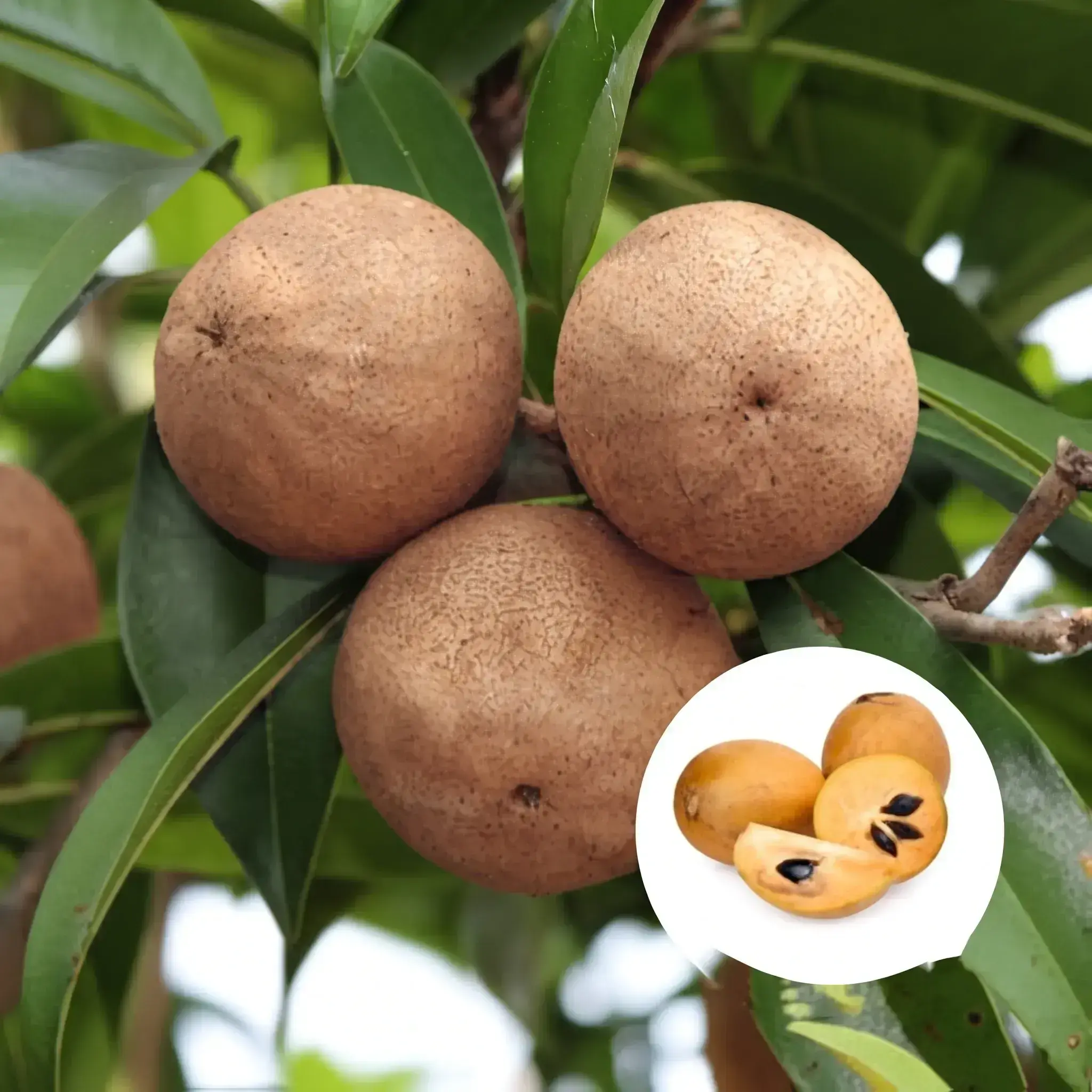
- Fruit Colour: Rough, sandy-brown skin maturing to dull russet-brown, enclosing soft yellowish-brown to pinkish-brown sweet pulp with shiny black seeds
- Foliage: Alternate, spirally clustered, glossy dark green elliptic-to-oblong leathery leaves near branch tips
- Growth Habit: Dense, symmetrical, dome-shaped evergreen tree with rough grey-brown bark and milky white sap (chicle) in stems and unripe fruit
- Mature Height: Typically 5 to 9 meters (16 to 30 feet) in open ground over many years; easily maintained at 1.8 to 2.5 meters (6 to 8 feet) in containers with pruning
- Sunlight: Full direct sunlight (at least 6 to 8 hours daily)
- Watering: Moderate; water deeply when the top 3 to 5 cm of soil feels dry, ensuring good drainage
- Suitable For: Open home gardens, sunny terraces, large pots or grow bags, courtyard borders, and farmhouses
About the Chiku Plant
Manilkara zapota belongs to the family Sapotaceae and is native to southern Mexico and Central America, where its natural latex (“chicle”) was historically harvested before the tree became a beloved fruit crop across tropical Asia. In India, states such as Gujarat, Maharashtra, Karnataka, Tamil Nadu, Andhra Pradesh, and West Bengal cultivate sapota extensively.
The ‘Cricket Ball’ (Ball Size Fruit) variety performs especially well in warm, humid coastal and eastern Indian plains—including West Bengal—producing noticeably larger, round fruits than oval varieties like ‘Kalipatti’. Grafting onto a hardy rootstock (commonly Khirni, Manilkara hexandra, or seedling sapota) ensures true varietal fruit size and brings the plant into flowering within 2 to 4 years under favorable care.
Appearance and Growth Habit
The Zapota Tree develops a sturdy trunk with fissured greyish-brown bark and tiers of horizontal-to-spreading branches clothed in dense, glossy green leaves arranged in neat rosettes near the shoot tips. Its leathery leaves are oblong-elliptic, 7 to 15 cm long, with a prominent pale midrib.
Because of its naturally symmetrical, rounded canopy and year-round evergreen foliage, the Chiku Plant doubles as an attractive ornamental shade tree in home landscapes while staying compact and manageable when grown in large containers.
Flowers and Flowering Season
The Chiku Plant produces small, discreet, bell-shaped creamy-white flowers about 1 to 1.5 cm long, borne singly on slender stalks in the leaf axils near the tips of young shoots.
In warm, frost-free Indian climates, Manilkara zapota often flowers in multiple flushes throughout the year—most prominently during spring/early summer (February to April) and post-monsoon/autumn (August to October). Because sapota fruits develop slowly on the tree over 6 to 8 months, it is common to see flowers, small green fruits, and mature fruits on the same tree simultaneously.
Fruits and Harvest
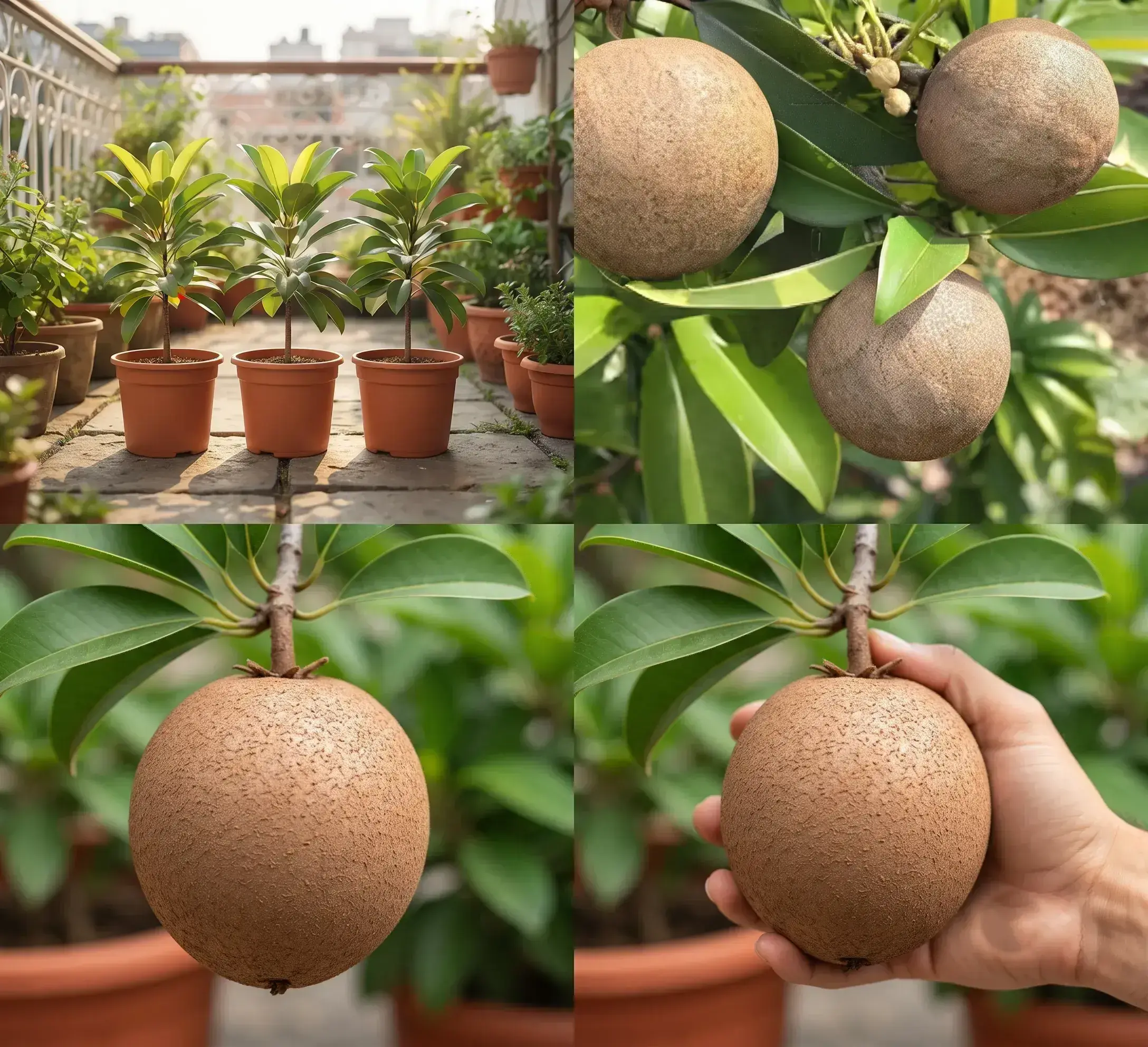
As the Ball Size Fruit variety matures, its round fruits reach roughly 7 to 10 cm in diameter, covered in a thin, rough, sandy-brown skin. When mature on the tree, the brownish scurf on the skin rubs off easily and the flesh beneath turns from green to warm yellowish-brown.
Harvesting and Ripening Tips
Sapota fruits are harvested when full-sized and mature-firm on the tree, then kept at room temperature for 3 to 5 days until they soften and develop their signature sweet, caramel-pear flavor. Unripe fruits contain astringent milky latex and should never be eaten before softening. Manilkara zapota is largely self-fertile, though outdoor insect pollination improves fruit set.
Sunlight Requirements
A productive Chiku Plant needs full, unobstructed sunlight for at least 6 to 8 hours every day. Strong direct sun fuels dense canopy growth, steady flowering flushes, natural pest resistance, and rich sugar accumulation in the ripening fruits.
Planting in shaded or semi-shaded corners causes sparse branching and very poor fruit set.
Watering Requirements
Once established, Manilkara zapota is moderately drought-tolerant and wind-resistant, though steady soil moisture during establishment and fruit sizing keeps fruits plump and sweet.
Watering During Establishment and Summer
During the first 3 to 4 weeks after planting, water every 2 to 3 days so the root zone stays lightly moist without becoming soggy. In hot Indian summers, potted plants generally need watering every 2 to 3 days when the top 3 to 5 cm of soil dries out, while ground-planted trees benefit from deep watering once every 5 to 7 days.
Watering During Monsoon and Winter
During the monsoon, pause manual watering when rainfall is regular and ensure rainwater drains quickly away from the trunk. In winter, water less frequently—once every 8 to 12 days—checking soil moisture before watering.
Soil and Potting Requirements
The Zapota Tree grows best in deep, fertile, well-draining sandy loam or alluvial soil enriched with organic matter, with a soil pH between 6.0 and 7.5. Heavy, waterlogged clay soils or shallow hardpan layers restrict root development.
Suggested Potting Mixture for Containers
For growing a Chiku Plant in a container or grow bag, prepare a well-draining mix using 45% fertile garden soil, 25% well-decomposed cow dung manure or vermicompost, 20% coarse river sand or perlite, and 10% cocopeat, mixed with a handful of neem cake powder. Make sure the pot has multiple unobstructed drainage holes at the base.
Growing the Plant in the Indian Climate
Manilkara zapota thrives across warm, frost-free tropical and subtropical parts of India, performing reliably in West Bengal, Kolkata, Maharashtra, Gujarat, Karnataka, Tamil Nadu, Andhra Pradesh, Odisha, and coastal regions.
Summer Care
Sapota handles warm Indian summer temperatures well. Apply a 4 to 5 cm layer of organic mulch (dry leaves or compost) around the root zone—keeping it clear of the trunk bark—to retain moisture and protect surface roots from extreme heat.
Monsoon Care
In high-rainfall regions such as Kolkata, West Bengal, and the Konkan or Malabar coast, monsoon triggers vigorous vegetative shoot growth. Elevate pots slightly on pot feet or bricks so excess rain drains away freely and roots never sit in stagnant water.
Winter Care
Established Chiku trees tolerate mild Indian winters easily, though growth slows in cool weather. Young saplings in northern plains should be protected from severe ground frost, as freezing temperatures can injure tender shoots.
Temperature and Humidity
Manilkara zapota thrives in warm temperatures between 20°C and 38°C and adapts well to both coastal humidity and warm inland plains. Mature trees tolerate brief dips down to 4°C–5°C, whereas prolonged frost harms young plants.
Fertilizer and Nutrition
Regular organic feeding supports continuous shoot renewal and multi-season flowering and fruiting.
Apply 3 to 5 kg of well-rotted farmyard manure or vermicompost around ground-planted trees twice a year—once in February before spring growth and again in August or September during the late monsoon. For potted plants, top-dress with 300 to 500 grams of vermicompost every 45 to 60 days during active growth, supplemented with bone meal or rock phosphate and potassium-rich organic inputs such as wood ash or banana peel fertilizer.
Growing the Plant in Pots
Because grafted sapota grows at a moderate, manageable pace, the Chiku Plant is an excellent fruit tree for sunny terrace and balcony container gardening. Start a young sapling in a 16-to-18-inch pot or grow bag, and shift it into a 20-to-24-inch heavy-duty container after 2 to 3 years as the roots expand.
Always keep the swollen graft union well above the soil surface when potting. Regular compost top-dressing and light shaping keep potted trees compact and productive for years.
Pruning and Maintenance
Manilkara zapota naturally forms an attractive, balanced dome canopy and needs minimal pruning.
Rootstock Sucker Removal
Check the lower trunk below the graft union periodically and prune off any shoots sprouting from the rootstock immediately so all energy supports the grafted Ball Size Fruit scion.
Canopy Maintenance
Remove dead, diseased, or low ground-touching branches, and lightly thin crowded inner twigs after a major harvest to maintain sunlight penetration and airflow. Avoid heavy pruning, as flowers appear near the tips of mature shoots.
Propagation
Nurseries propagate named sapota cultivars like ‘Cricket Ball’ vegetatively through inarching, softwood grafting, veneer grafting, or air layering (gootee) onto hardy rootstocks such as Khirni (Manilkara hexandra) or seedling sapota. Vegetative propagation preserves large round fruit size and brings trees into fruiting in 2 to 4 years, whereas seed-grown trees take 7 to 10 years and vary widely.
Common Problems and Plant Care
Inspecting young shoots, flower buds, and developing fruits regularly helps prevent common sapota issues.
1. Chiku Moth or Bud Borer
Small caterpillars occasionally bore into tender flower buds or shoot tips. Keep the canopy open to sunlight, prune affected tips cleanly, and spray diluted neem oil (3 to 5 ml per liter of water) in the evening during new flushes.
2. Mealybugs or Scale Insects
White, cottony mealybugs sometimes gather at the base of fruit stalks or undersides of leaves, secreting sticky honeydew that causes black sooty mold. Rinse light clusters with a jet of water or spray diluted neem oil.
3. Slow Growth in Young Saplings
Grafted Chiku plants grow steadily rather than explosively during their first year while establishing deep roots. Consistent full sun, well-drained soil, and regular organic compost encourage steady canopy expansion.
4. Fruit Drop During Extreme Heat
Severe dry soil stress during hot summer winds can cause small developing fruits to drop. Maintain even soil moisture and mulch around the base.
Suitability for Home Gardens
The Ball Size Fruit Grafted Chiku Plant is ideal for open home gardens, sunny terraces, large pots or grow bags, courtyard borders, and farmhouse orchards in frost-free climates. Because it requires at least 6 to 8 hours of direct sunlight daily, it is not suitable for indoor rooms or shaded balconies.
Safety and Important Information
Ripe, softened Chiku fruits are sweet, nutritious, and safe to eat fresh or in smoothies and desserts—remove the hard, glossy black seeds (which have a small hook at one end) before eating or blending. Note that unripe fruits, stems, and bark contain sticky white milky latex (chicle) that is bitter and astringent; always wait until harvested fruits soften fully before eating, and prevent pets from chewing seeds, leaves, or unripe fruit.
Live Plant Delivery Information
Live grafted saplings vary naturally in height, stem thickness, branching, and leaf count. Mild transit stress can occur during shipping, and a few older leaves may turn yellow or shed shortly after arrival.
Upon receiving your Chiku Plant, place it in bright, filtered outdoor light for 3 to 4 days to recover before moving it into full direct sunlight. Check the soil moisture immediately and water gently if dry. Avoid applying fertilizers, repotting right away, or pruning healthy shoots during the first 10 to 14 days while the sapling acclimates.
Why Choose the Chiku Plant for Your Garden?
Low-maintenance, wind-tolerant, and evergreen all year round, the Ball Size Fruit Grafted Chiku Plant rewards home gardeners with handsome foliage and large, honey-sweet sapotas. Given full sunlight, fast-draining soil, and simple organic care, Manilkara zapota thrives for decades in Indian backyards and sunny terrace containers.
Botanical Information and Further Reading
- Kew Science – Plants of the World Online: Manilkara zapota (L.) P.Royen
- Royal Horticultural Society (RHS) – Manilkara zapota Plant Details
- ICAR – Indian Institute of Horticultural Research (Sapota Varieties & Cultivation)
- eFlora of India – Manilkara zapota Botanical Reference
- University of Florida IFAS Extension – Sapodilla Growing in the Home Landscape
Frequently Asked Questions (FAQs)
1. What is the botanical name of the Chiku or Sapota Plant?
The accepted botanical name of the Chiku Plant is Manilkara zapota (older synonyms: Manilkara achras and Achras zapota), and it belongs to the family Sapotaceae.
2. What does “Ball Size Fruit” mean for this Chiku variety?
It refers to the ‘Cricket Ball’ sapota selection, which produces large, round fruits roughly the size of a cricket ball with sweet, soft, granular pulp.
3. Can I grow a Chiku Plant in a pot on my terrace?
Yes, grafted Chiku plants grow at a moderate pace and thrive in an 18-to-24-inch container or grow bag on a sunny terrace with well-draining soil.
4. How long does a grafted Chiku Plant take to bear fruit?
Under good sunlight and care, grafted sapota plants typically begin flowering and setting fruit within 2 to 4 years of planting, compared to 7 to 10 years for seed-grown trees.
5. Do I need two Chiku trees for pollination and fruit set?
No, Manilkara zapota is largely self-fertile and pollinated by garden insects, so a single outdoor Chiku Plant can bear fruit on its own.
6. How do I know when Chiku fruits are ready to harvest and eat?
Harvest fruits when they reach full size and the sandy brown coating rubs off easily to show yellowish-brown skin underneath, then keep them at room temperature for 3 to 5 days until they soften before eating.
7. How much sunlight does a Zapota Tree need?
It needs full, direct sunlight for at least 6 to 8 hours every day for dense evergreen foliage, steady flowering, and sweet fruits.
8. How often should I water my Chiku Plant?
Water deeply whenever the top 3 to 5 cm of soil feels dry. In summer, potted plants generally need watering every 2 to 3 days, while watering should be reduced during monsoon and winter.
9. What is the best soil mix for growing Chiku in containers?
A well-draining mix of 45% garden soil, 25% vermicompost or well-rotted cow dung manure, 20% coarse river sand or perlite, and 10% cocopeat works well.
10. What should I do if shoots grow below the graft joint on the trunk?
Any shoots sprouting below the swollen graft union belong to the seedling rootstock and must be pruned off flush with the trunk immediately.
11. Is the Ball Size Chiku Plant suitable for West Bengal and Kolkata?
Yes, Cricket Ball Chiku is one of the most popular and productive sapota varieties across West Bengal, Kolkata, Maharashtra, Gujarat, and southern India.
12. Can I keep a Chiku Plant indoors?
No, it requires strong direct outdoor sunlight to grow and bear fruit and will weaken if kept indoors.
For More Information
Visit: krisikart.com
For Contact Visit:Contact Us
For Shopping Visit: Shop Page


Arun Layer –
These plants added life to my home.
Very satisfied with the purchase.
Fresh, clean, and healthy plants.
Exactly what I was looking for.
Every plant looked strong and vibrant.
One of the best online plant purchases.