 Plastic Plant pot | Plastic Garden Pot for Plants
 Self Watering Planters | Self Watering Plant Pots For Plants
Elephant Apple Plant | Elephant Fruit Plant (Dillenia indica) Chalta Fruit Tree
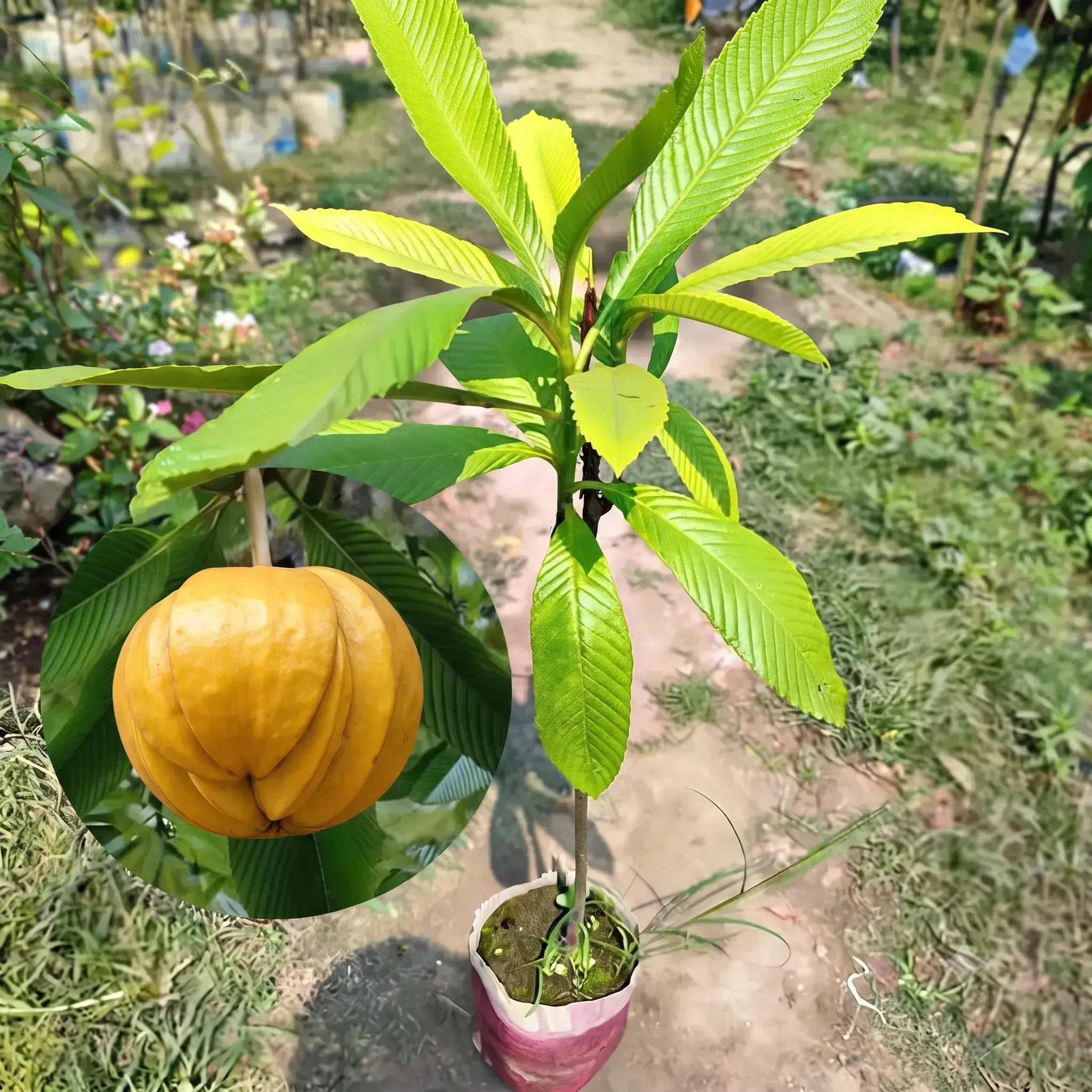
The Elephant Apple Plant Also Known As Elephant Fruit Plant (Dillenia indica) Chalta Fruit Tree and cherished across West Bengal, Assam, and eastern India as the Chalta Fruit Tree, is a distinctive tropical evergreen tree celebrated for its bold, deeply veined foliage, large fragrant white blossoms, and unique round fruits. In traditional Bengali, Assamese, and Odia kitchens, the thick, crisp, tangy-sour sepals of Chalta are a seasonal favorite for preparing chutneys, pickles, dal dishes, and preserves.
Native to India and humid tropical Asia, the Elephant Fruit Plant thrives in warm, high-rainfall climates where many delicate fruit trees struggle. While young plants can be started in large outdoor containers, planting Dillenia indica in an open home garden or farmhouse plot gives this long-lived tree the space it needs to develop its handsome canopy and bear fruit over time.
Plant Highlights
- Product Name: Elephant Apple Plant | Elephant Fruit Plant (Dillenia indica) Chalta Fruit Tree for Home Garden
- Common Name: Elephant Apple, Chalta (Bengali/Hindi), Outenga (Assamese), Karmal (Marathi), Chalta Fruit Tree
- Botanical Name: Dillenia indica
- Family: Dilleniaceae
- Plant Type: Evergreen perennial tropical fruit and ornamental tree
- Origin: Native to the Indian subcontinent, Southeast Asia, and southern China
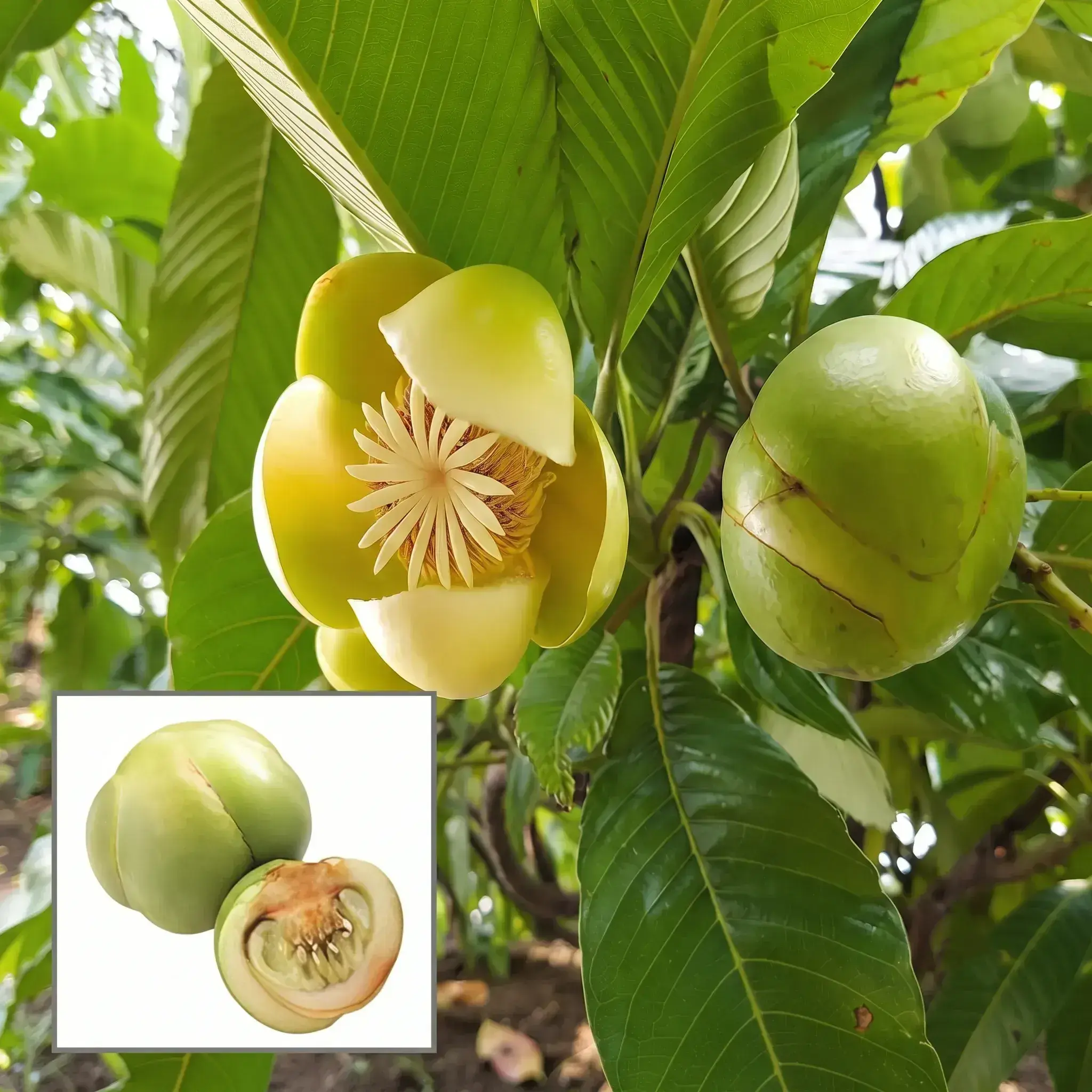
- Flower Colour: Large pure white petals surrounding a prominent golden-yellow ring of stamens and white central stigmas
- Flower Fragrance: Lightly sweet and fresh
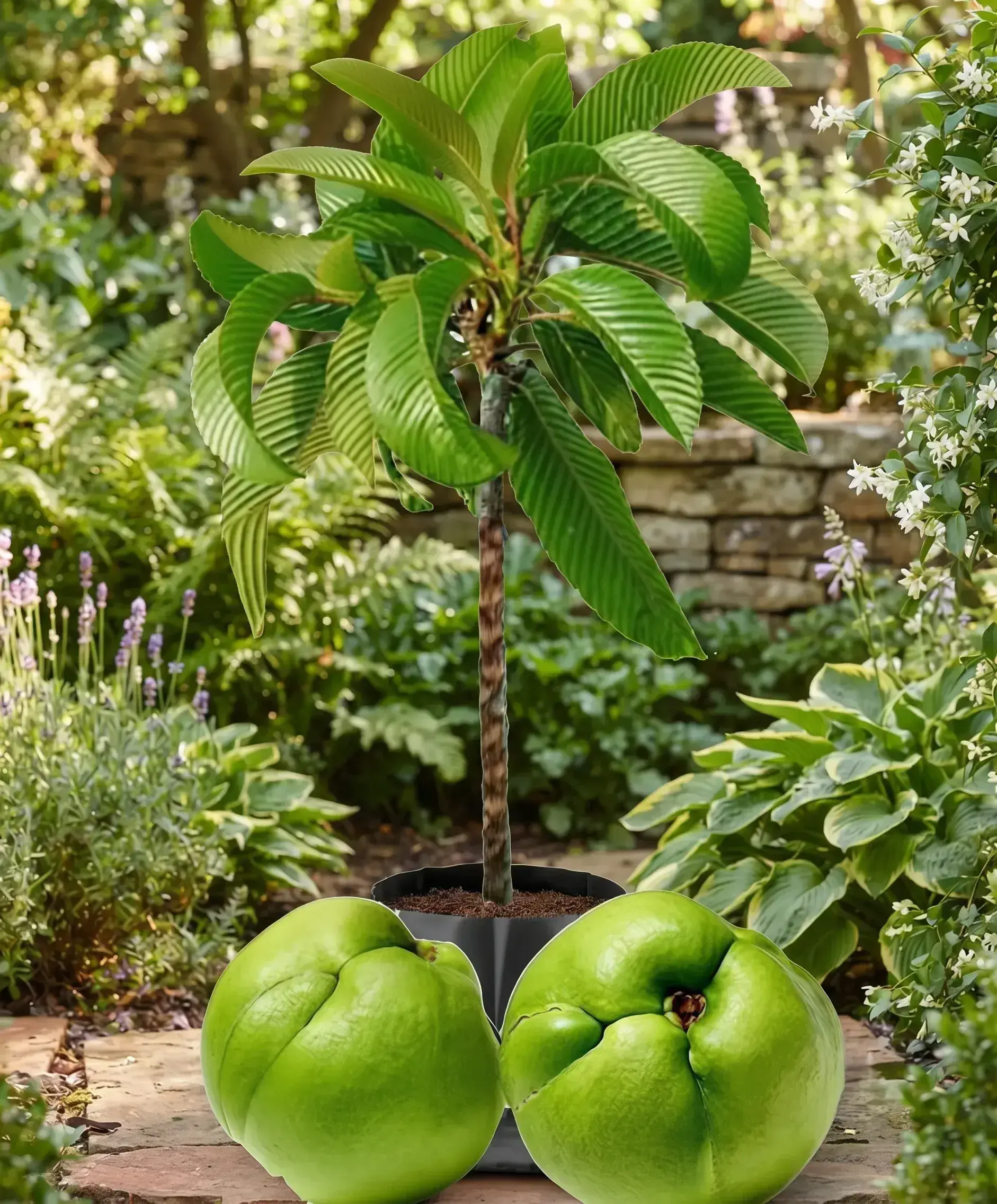
- Fruit Colour: Green maturing to greenish-yellow or yellowish-green, formed by thick, overlapping fleshy sepals enclosing a fibrous seed core
- Foliage: Large, alternate, oblong-lanceolate, dark green glossy leaves (15 to 35 cm long) with prominent parallel corrugated veins and toothed margins
- Growth Habit: Upright, spreading, dense-canopied evergreen tree with smooth reddish-brown bark that peels in thin flakes
- Mature Height: Typically 10 to 15 meters (33 to 50 feet) in open ground over many years; can be kept smaller in early years with pruning
- Sunlight: Full sun to partial shade (at least 5 to 7 hours of direct sunlight daily)
- Watering: Moderate to high; prefers consistently moist, well-drained soil and does not tolerate prolonged drought when young
- Suitable For: Open home gardens, farmhouses, agroforestry borders, moist backyard plots, and large containers while young
About the Elephant Apple Plant
Dillenia indica is the most widely cultivated member of the family Dilleniaceae and is indigenous to moist forests and riverbanks across India, Bangladesh, Nepal, Sri Lanka, and Southeast Asia. Its English common name, Elephant Apple, comes from the fact that wild Asian elephants relish the fallen fruits and help disperse the seeds in nature.
Note that Dillenia indica should not be confused with Wood Apple or Kaitha (Limonia acidissima), which is also occasionally called elephant apple in parts of southern and central India. True Chalta is immediately recognizable by its large, pleated leaves and its unusual flower-derived fruit structure.
Appearance and Growth Habit
The Elephant Apple Plant grows into a stately, spreading evergreen tree with a sturdy trunk covered in attractive reddish-brown bark that exfoliates in papery flakes. Its leaves are bold and architectural—measuring 15 to 35 cm long—with deeply impressed parallel lateral veins that give the leaf blade a ribbed, corrugated texture and finely serrated edges.
In open garden soil with regular moisture, the tree forms a dense, rounded crown that provides cool shade alongside ornamental appeal. Because it is naturally a medium-to-large tree rather than a dwarf shrub, actual height depends on soil depth, moisture, and pruning.
Flowers and Flowering Season
One of the most striking ornamental features of Dillenia indica is its huge, solitary, downward-facing flowers—often measuring 15 to 20 cm across—that bloom near the ends of branches. Each blossom features five thick, waxy, pure-white petals cupping a dense crown of bright yellow stamens and a star-shaped white stigma.
In India, the Chalta Fruit Tree typically flowers during late spring and early summer (May to July), releasing a pleasant fragrance that attracts bees and other pollinators. Seed-grown trees generally take several years (often 5 to 8 years) to reach flowering maturity, whereas vegetatively propagated plants (such as air-layered or grafted saplings) can flower earlier under favorable conditions.
Fruits and Harvest
Unlike ordinary fruits that develop solely from the ovary, the Elephant Apple is a false (accessory) fruit: after pollination, the five thick, fleshy green sepals enlarge tightly around the inner core to form a heavy, round, cabbage-like ball roughly 8 to 12 cm in diameter.
Harvesting and Culinary Uses
Fruits develop through the monsoon and mature during autumn and early winter (September to December). When ripe, the outer greenish-yellow sepals are crisp, juicy, and pleasantly acidic—resembling tart green apple in flavor. In Indian households, the fleshy sepals are sliced, cooked, and sweetened or spiced into Chalta chutney, tangy dal (such as Assamese Outenga tenga), pickles, and jams, while the inner mucilaginous seed core is discarded.
Sunlight Requirements
The Elephant Apple Plant performs best in full sunlight to light partial shade, ideally receiving 5 to 7 hours of direct sun daily. Good sunlight promotes sturdy branching, dense foliage, and reliable flowering and fruit set as the tree matures.
Young saplings naturally tolerate dappled forest shade and benefit from protection against scorching afternoon heat during their first summer after planting.
Watering Requirements
Because Dillenia indica originates along moist forest streams and high-rainfall valleys, it prefers steady soil moisture compared to drought-hardy dryland fruit trees.
Watering During Establishment and Summer
Keep the root zone evenly moist (not waterlogged) during the first few months after planting so roots establish well. During hot, dry Indian summers, water young ground-planted trees every 3 to 5 days and potted plants every 2 to 3 days whenever the top 3 to 4 cm of soil begins to dry out.
Watering During Monsoon and Winter
During the monsoon, natural rainfall generally supplies ample moisture; pause manual watering during rainy spells and ensure excess surface water drains away. In winter, when growth slows, reduce watering to once every 7 to 10 days, checking soil moisture before watering.
Soil and Potting Requirements
The Chalta Fruit Tree grows best in deep, fertile, moisture-retentive yet well-drained loamy or alluvial soil rich in organic matter. A slightly acidic to neutral soil pH between 5.5 and 7.0 supports healthy nutrient uptake.
Suggested Potting Mixture for Young Plants
This is a suggested potting mixture for starting a young sapling in a container rather than a rigid scientific formula: combine 45% fertile garden soil, 30% well-decomposed cow dung manure or vermicompost, 15% cocopeat (to retain steady moisture), and 10% coarse river sand or perlite, along with a handful of neem cake powder. Ensure the pot has clear drainage holes at the base.
Growing the Plant in the Indian Climate
Dillenia indica is naturally adapted to warm, humid, high-rainfall regions of India—particularly West Bengal, Kolkata, Assam, Tripura, Meghalaya, Odisha, Bihar, and the humid Western Ghats.
Summer Care
In warm regions with dry summer winds, apply a 4 to 5 cm layer of organic mulch (dry leaves or compost) around the base—keeping it clear of the trunk bark—to keep roots cool and prevent soil moisture from evaporating too quickly.
Monsoon Care
In Kolkata, West Bengal, and coastal or northeastern states, monsoon is the peak growing season for Elephant Apple. The tree thrives in warm rain and high humidity, provided the planting spot is not permanently flooded.
Winter Care
Dillenia indica prefers frost-free tropical and subtropical conditions. Established trees tolerate mild Indian winters easily, though growth slows in cool weather; young saplings in northern plains should be protected from cold winter drafts and ground frost.
Temperature and Humidity
The Elephant Apple Plant thrives in warm temperatures roughly between 22°C and 35°C and prefers moderate to high relative humidity. It is sensitive to frost and prolonged cold spells, which can injure young leaves and tender shoot tips.
Fertilizer and Nutrition
Regular organic enrichment supports lush leaf growth and steady trunk development.
Apply 5 to 10 kg of well-rotted farmyard manure or vermicompost around ground-planted trees twice a year—once in February or March before spring growth and again in August or September during the monsoon. For young potted plants, top-dress with 250 to 400 grams of vermicompost every 45 to 60 days during spring and monsoon. Avoid excessive synthetic chemical fertilizers on young saplings.
Growing the Plant in Pots
A young Elephant Apple Plant can be grown in a large 16-to-20-inch container or grow bag on a sunny terrace or patio for its first 2 to 3 years. Because Dillenia indica naturally develops into a full-sized evergreen tree with an extensive root system, container growing is best viewed as a temporary nursery stage before transplanting into open ground or a spacious farmhouse garden.
Pruning and Maintenance
Dillenia indica naturally forms an attractive, symmetrical branching habit and needs very little pruning.
Remove dead, broken, or inward-crossing lower branches during late winter or early spring to shape a clear main trunk and maintain good airflow through the canopy. Avoid unnecessary heavy pruning, as flowers and fruits form near the outer branch tips.
Propagation
In nurseries, Elephant Apple is propagated from fresh seeds extracted from ripe fruits (which germinate in 3 to 5 weeks in warm, moist soil) as well as vegetatively via air layering (gootee) or grafting. Vegetatively propagated plants maintain parent traits and reach flowering age earlier than seed-grown trees.
Common Problems and Plant Care
Dillenia indica is naturally hardy and rarely bothered by severe pests in suitable humid climates, though a few cultural issues can occur.
1. Brown or Dry Leaf Edges
Crisp brown leaf margins usually result from dry soil, low humidity, or hot drying winds. Keep soil evenly moist, mulch the root zone, and shield young saplings from harsh afternoon sun in dry regions.
2. Yellowing Leaves
Yellowing older leaves can indicate nutrient depletion or prolonged waterlogging in heavy clay soil. Check drainage and apply well-rotted compost or balanced organic nutrients.
3. Leaf-Eating Caterpillars or Beetles in Monsoon
During the rainy season, caterpillars or beetles may chew holes in tender leaves. Handpick visible pests or spray diluted neem oil (3 to 5 ml per liter of water) in the evening.
4. Slow Growth in Dry or Cold Climates
Because Chalta is a moisture-loving tropical tree, growth slows noticeably during dry winter months or in arid regions unless regular soil moisture and organic mulch are maintained.
Suitability for Home Gardens
The Elephant Apple Plant is best suited for open home gardens, larger residential yards, farmhouses, moisture-retentive backyard corners, and large containers while young. Because it requires bright outdoor light and eventually grows into a substantial evergreen tree, it is not suitable for indoor rooms or small balconies.
Safety and Important Information
The fleshy outer sepals of ripe Chalta fruits are widely used in traditional Indian chutneys, curries, and pickles; always wash fruits thoroughly and cook or prepare them according to traditional recipes, discarding the fibrous inner seed core. No major acute toxicity is documented for Dillenia indica foliage or fruit, though unripe fruits are strongly acidic and astringent—keep curious pets from chewing fallen plant material or garden sprays.
Live Plant Delivery Information
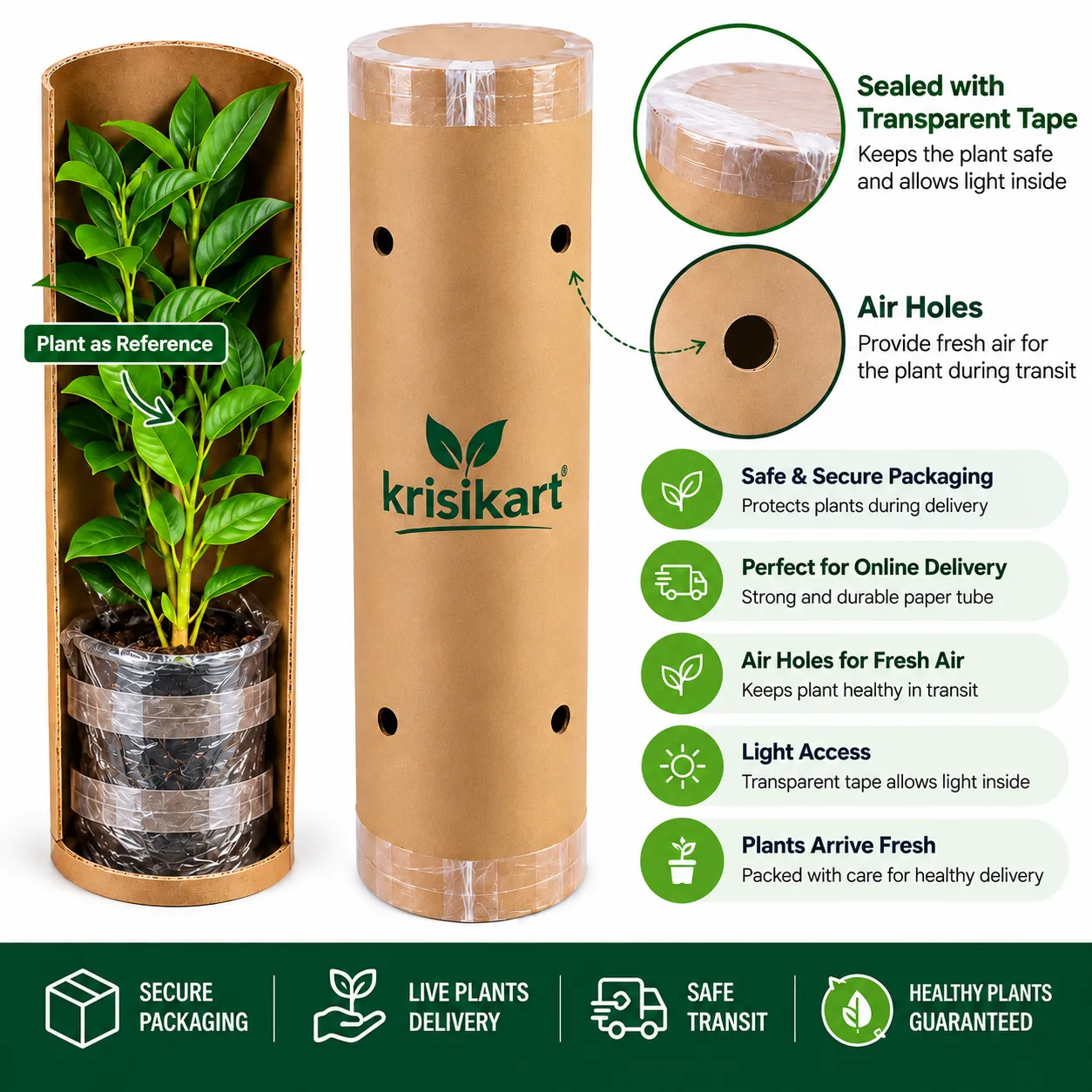
Live plants are natural living organisms, so slight variations in height, leaf size, stem thickness, and overall appearance are completely normal. Mild transit stress can occur during shipping, and a few lower leaves may turn yellow or droop upon arrival.
Upon receiving your Elephant Apple Plant, place it in bright, filtered outdoor shade for 3 to 4 days to acclimate before moving it into brighter sun. Check the soil moisture immediately and water gently so the root ball is evenly damp. Avoid applying fertilizers, repotting right away, or pruning healthy leaves during the first 10 to 14 days while the sapling settles.
Why Choose the Elephant Apple Plant for Your Garden?
Few native trees combine bold tropical foliage, magnificent magnolia-like white flowers, and unique culinary fruits like the Elephant Apple Plant. For gardeners in warm, humid regions with outdoor space to grow a specimen tree, Dillenia indica offers lasting shade, ornamental beauty, and traditional Chalta harvests for generations.
Botanical Information and Further Reading
- Kew Science – Plants of the World Online: Dillenia indica L.
- eFlora of India – Dillenia indica Botanical Reference
- India Biodiversity Portal – Dillenia indica L. Species Profile
- Flowers of India – Elephant Apple (Dillenia indica)
- Useful Tropical Plants – Dillenia indica
Frequently Asked Questions (FAQs)
1. What is the botanical name of the Elephant Apple or Chalta Plant?
The accepted botanical name of the Elephant Apple Plant is Dillenia indica, and it belongs to the family Dilleniaceae.
2. What are the common names of Dillenia indica in India?
It is widely known as Elephant Apple in English, Chalta in Bengali and Hindi, Outenga in Assamese, and Karmal in Marathi.
3. Is Elephant Apple (Chalta) the same as Wood Apple (Kaitha / Kothbel)?
No, they are completely different species. Chalta is Dillenia indica (family Dilleniaceae), whereas Wood Apple or Kaitha is Limonia acidissima (family Rutaceae).
4. How is the Chalta fruit eaten or used?
The thick, crisp, tangy-sour outer sepals surrounding the fruit are sliced and cooked into traditional Bengali and Assamese chutneys, pickles, sour dals, and jams, while the inner seed core is discarded.
5. How much sunlight does an Elephant Apple Plant need?
It grows best in full sun to light partial shade, ideally receiving 5 to 7 hours of direct sunlight daily, with protection from harsh midday sun when young.
6. How often should I water my Chalta Fruit Tree?
Keep the soil consistently moist without waterlogging. Water every 2 to 3 days for potted plants and every 3 to 5 days for young ground-planted saplings in summer, reducing watering during monsoon and winter.
7. Can I grow an Elephant Apple Plant in a pot?
You can grow a young sapling in a large 16-to-20-inch container for its first 2 to 3 years, though because Dillenia indica grows into a large tree, transplanting it into open ground is recommended for long-term growth and fruiting.
8. How big does an Elephant Apple Tree grow?
In open ground under favorable humid conditions, Dillenia indica typically grows 10 to 15 meters tall over many years.
9. When does the Elephant Apple Tree flower and fruit in India?
In India, it generally produces large white flowers in May to July, and the round greenish-yellow fruits mature from September to December.
10. Is the Elephant Apple Plant suitable for West Bengal and Kolkata?
Yes, Dillenia indica is native to eastern India and thrives naturally in the warm, humid climate of West Bengal, Kolkata, and Assam.
11. What soil is best for growing Dillenia indica?
Deep, fertile, organic-rich loamy or alluvial soil that holds steady moisture while draining excess water works best.
12. Can I keep an Elephant Apple Plant indoors?
No, it is an outdoor tropical tree that requires bright outdoor sunlight and ample space to grow.
For More Information
Visit: krisikart.com
For Contact Visit:Contact Us
For Shopping Visit: Shop Page


Anita sehera –
Fresh green plants with healthy roots.
Very satisfied with my order.