 Plastic Plant pot | Plastic Garden Pot for Plants
 Self Watering Planters | Self Watering Plant Pots For Plants
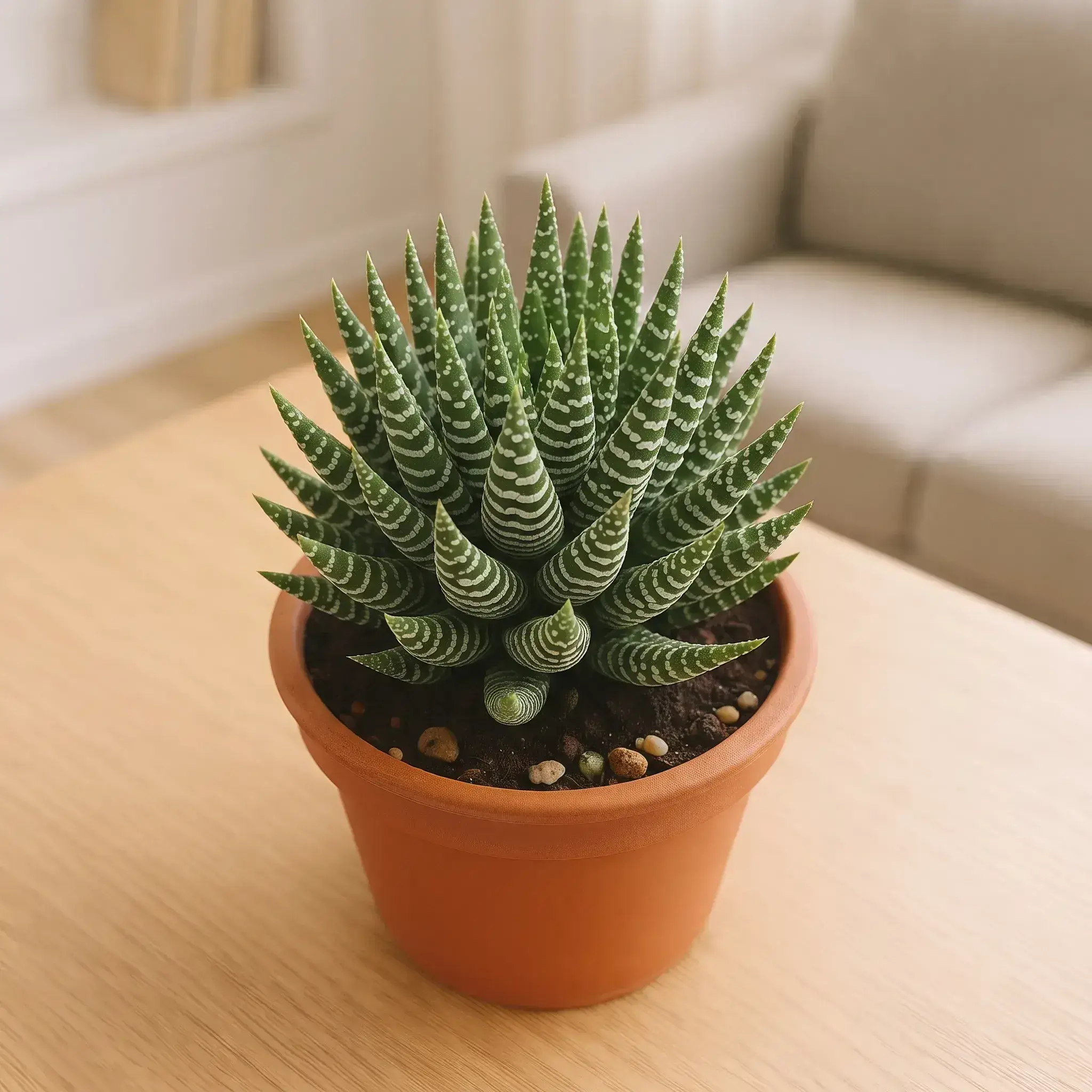
Haworthia Zebra Plant | Zebra Cactus (Haworthia fasciata) Plant
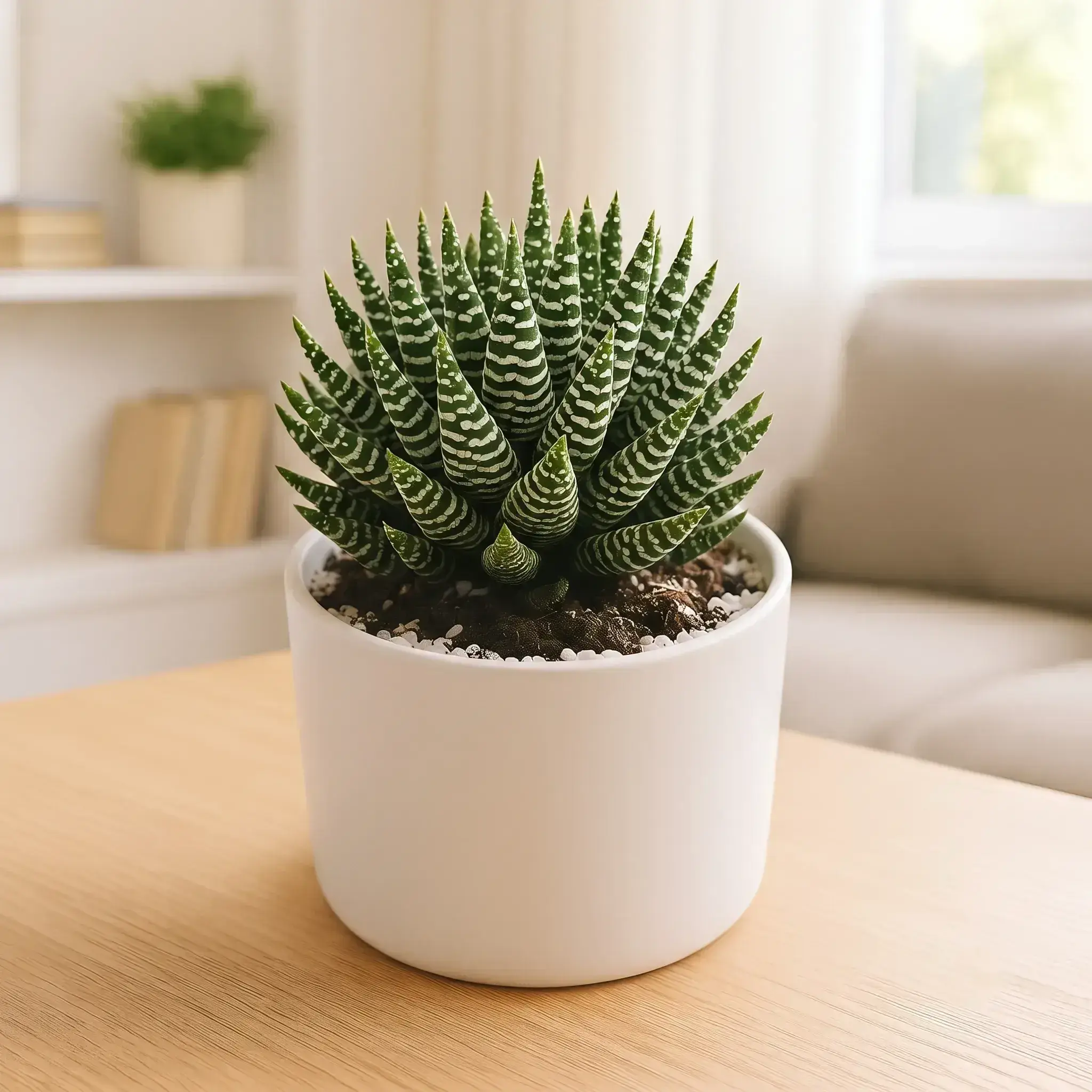
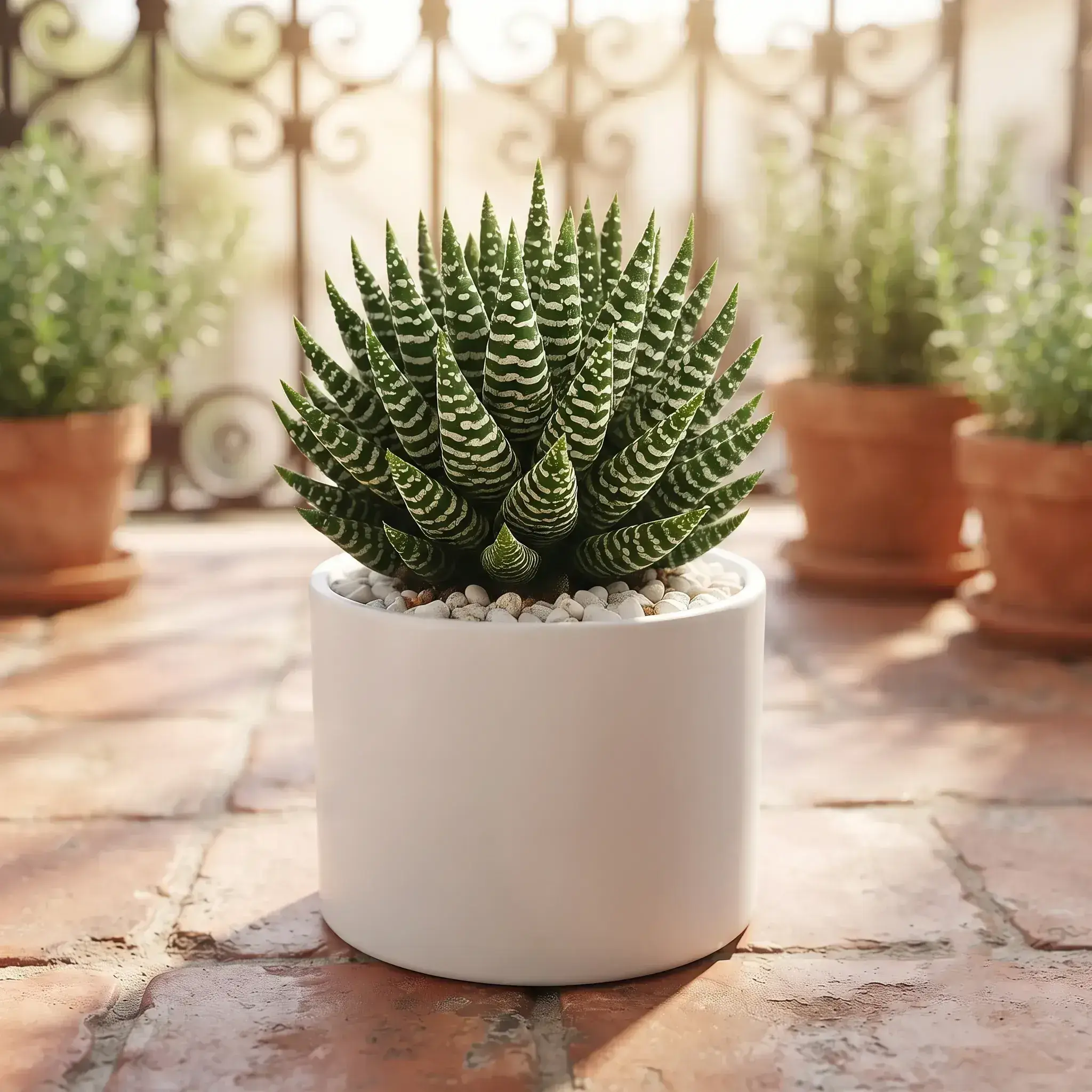
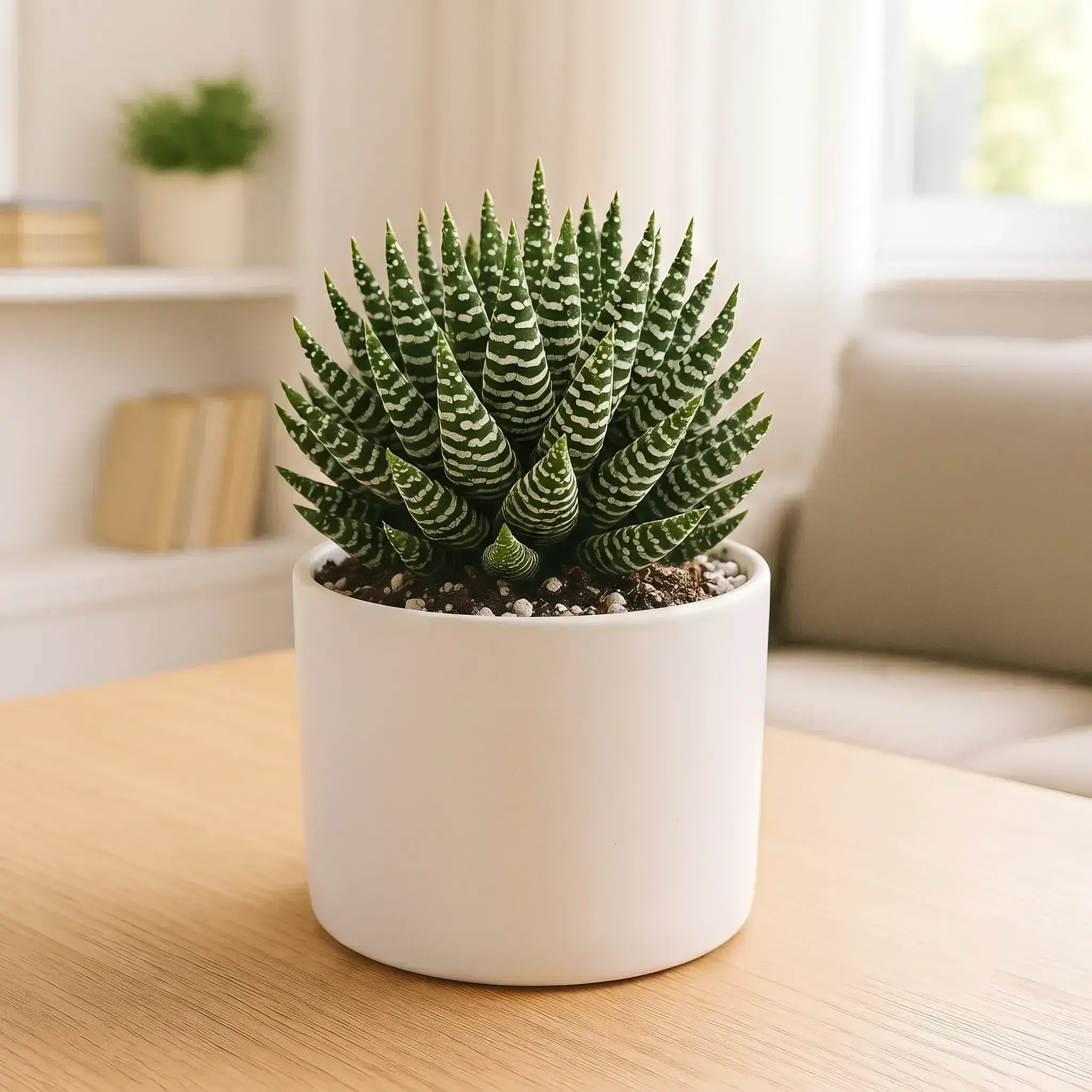
The Haworthia Zebra Plant, popularly known as the Zebra Cactus or Zebra Haworthia, is a compact, rosette-forming succulent prized for its stiff, pointed dark green leaves striped with crisp, raised white bands. Botanically known in nurseries as Haworthia fasciata (and classified in modern taxonomy as Haworthiopsis fasciata), this South African native looks like a miniature aloe without sharp thorns, making it an ideal tabletop and windowsill plant for Indian homes.
Slow-growing, drought-tolerant, and remarkably adaptable to bright indoor spaces, the Haworthia Zebra Plant thrives on sunny windowsills, study tables, office desks near windows, and shaded balconies. Because it stays small and stores water inside its thick leaves, it offers striking architectural texture with minimal watering and effortless upkeep.
Plant Highlights
- Product Name: Haworthia Zebra Plant | Zebra Cactus (Haworthia fasciata) Plant for Home Garden
- Common Name: Haworthia Zebra Plant, Zebra Cactus, Zebra Haworthia, Pearl Plant
- Botanical Name: Haworthia fasciata (accepted modern taxonomic name: Haworthiopsis fasciata; closely related nursery lookalike: Haworthiopsis attenuata)
- Family: Asphodelaceae (Aloe and Asphodel family)
- Plant Type: Evergreen perennial stemless succulent
- Origin: Eastern Cape Province of South Africa
- Flower Colour: Small tubular white to pinkish-white blooms arranged along a tall, slender wiry stalk
- Foliage: Thick, rigid, tapering dark green triangular leaves patterned with raised white horizontal stripes (tubercles)
- Growth Habit: Compact, stemless rosette that slowly produces basal offsets (pups) to form a dense cluster
- Mature Height: Typically 10 to 15 cm (4 to 6 inches) tall and 12 to 18 cm wide in home containers
- Sunlight: Bright indirect light to 2 to 3 hours of gentle morning sunlight daily
- Watering: Low; allow the potting mix to dry out completely between waterings
- Suitable For: Bright windowsills, study tables, office desks near windows, covered balconies, terrarium-style open dish gardens, and miniature succulent shelves
About the Haworthia Zebra Plant
Haworthia fasciata belongs to the family Asphodelaceae and is indigenous to the rocky scrublands of South Africa’s Eastern Cape. In modern botanical classifications recognized by Kew Science and the Royal Horticultural Society, this species is placed in the segregate genus Haworthiopsis as Haworthiopsis fasciata, though plant labels worldwide continue to use the familiar name Haworthia fasciata.
It is also useful to know that in nursery trade, true Haworthiopsis fasciata (which has smooth upper leaf surfaces and white bands only on the undersides) is very frequently confused with its close cousin Haworthiopsis attenuata (which has white bumpy bands on both upper and lower leaf surfaces). Both share the exact same compact size, zebra-striped appearance, and easy-care requirements.
Appearance and Growth Habit
The Haworthia Zebra Plant grows as a neat, symmetrical rosette of upright, sharply pointed, dark green leaves measuring 5 to 10 cm in length. Raised pearly-white horizontal ridges wrap across the outer leaf surfaces like zebra stripes, creating bold contrast against the deep green foliage.
Growth is slow and tidy, typically staying under 15 cm tall even at maturity. As the plant ages, it naturally sends out small baby rosettes (pups) around the base, gradually forming an attractive multi-headed clump.
Foliage and Flowering Characteristics
This succulent is grown primarily for its dramatic, year-round zebra-striped foliage rosette. When mature and happy, usually during spring or early summer, the plant sends up a remarkably tall, thin, wiry flower stem—often 25 to 35 cm high—bearing small, tubular white flowers striped with brownish-green or pink veins.
Sunlight Requirements
Unlike desert cacti that demand intense, all-day direct sun, the Haworthia Zebra Plant grows naturally tucked beside rocks and bushes in South Africa and prefers bright indirect light or 2 to 3 hours of gentle morning sunlight daily.
In Indian homes, place it on an east- or north-facing windowsill, a bright balcony table, or a well-lit office desk right next to a window. Direct, scorching afternoon sunlight during Indian summers can turn the leaves reddish-brown or scorch the leaf tips, while prolonged deep shade causes the rosette to open up and stretch weakly.
Watering Requirements
Because its thick, fibrous leaves store moisture efficiently, overwatering is the single most common threat to a Haworthia Zebra Plant.
Watering During Summer and Active Growth
Follow the soak-and-dry method: check the soil with your finger or a wooden skewer, and water thoroughly only when the potting mix is completely dry from top to bottom. Pour water around the soil surface rather than directly into the center crown of the rosette, and empty any excess water from the saucer underneath. In warm weather, this usually means watering once every 7 to 12 days.
Watering During Monsoon and Winter
During the humid Indian monsoon and cooler winter months, evaporation slows down significantly, so reduce watering to once every 2 to 4 weeks, checking that the mix is completely dry before watering again.
Soil and Potting Requirements
A fast-draining, porous succulent potting mix is essential to prevent root rot. Ordinary garden clay retains too much moisture around Haworthia’s thick, fleshy roots.
Suggested Potting Mixture for Haworthia Zebra Plant
Prepare an airy, gritty succulent mix using 40% pumice, perlite, or crushed brick, 35% coarse river sand or quartz grit, and 25% well-draining sandy garden loam mixed with a small pinch (about 5% to 10%) of well-aged vermicompost. Always plant in a terracotta or ceramic pot with a clear drainage hole at the bottom.
Growing the Plant in the Indian Climate
The Haworthia Zebra Plant adapts effortlessly to Indian homes and balconies when shielded from harsh afternoon sun and heavy monsoon rain.
Summer Care
Keep the pot in bright indirect light or morning-only sun with good airflow, protecting it from hot May and June afternoon glare.
Monsoon Care
Heavy monsoon rain and high humidity in cities like Kolkata, Mumbai, Bengaluru, and Chennai can cause crown or root rot if pots get soaked repeatedly. Keep potted plants indoors on a bright windowsill or under a covered balcony overhang during the rainy season.
Winter Care
Mild Indian winters are comfortable for Haworthiopsis fasciata. Keep it in bright winter light, water very sparingly, and protect it from frost if night temperatures drop near freezing in northern plains.
Temperature and Humidity
The Haworthia Zebra Plant thrives in comfortable room temperatures between 18°C and 30°C and prefers low to moderate humidity without misting. It grows reliably in air-conditioned living rooms and offices provided it receives bright natural light from a nearby window and sits away from freezing AC vents.
Fertilizer and Nutrition
This slow-growing miniature succulent requires very little fertilizer.
During the active growing period from spring to early autumn (March to September), feed once every 6 to 8 weeks with a low-nitrogen cactus or succulent liquid fertilizer diluted to quarter or half strength. Avoid fertilizing during winter dormancy or right after repotting.
Growing the Plant in Pots
Thanks to its tiny footprint and slow growth, the Haworthia Zebra Plant is ideally suited for long-term cultivation in small desktop and windowsill pots. Choose a snug container only 2 cm wider than the rosette, as oversized pots hold excess damp soil. Repot every 2 to 3 years in spring when offsets crowd the pot rim.
Pruning and Maintenance
No pruning is required for this naturally symmetrical rosette. If an older outer leaf dries out completely at the base, gently pull or snip it away with clean tweezers, and trim off dried flower stalks once blooms fade.
Propagation
The Haworthia Zebra Plant is easiest to propagate by separating its natural basal offsets (pups).
Propagation by Offsets (Pups)
When a baby rosette around the base reaches at least one-third the size of the parent plant and has developed its own small roots, unpot the clump gently during spring and separate the pup with a clean, sterilized knife. Let the cut surface dry in the shade for 2 to 3 days until calloused, then pot the offset into dry, gritty succulent mix and wait 4 to 5 days before watering lightly.
Common Problems and Plant Care
Monitoring sunlight and soil dryness prevents nearly all common issues with the Haworthia Zebra Plant.
1. Mushy, Translucent, or Brown Base Leaves
Indicates overwatering, poor pot drainage, or water trapped in the center rosette. Stop watering immediately, unpot the plant, remove any soft rotted roots or leaves, let the healthy crown dry for several days, and repot in fresh, dry gritty mix.
2. Reddish-Brown or Pale Bleached Leaves
Caused by too much intense direct sunlight. Move the pot to bright indirect light; once light levels are gentler, the leaves gradually return to their rich dark green color.
3. Curled, Thin, or Shriveled Leaf Tips
Signals prolonged underwatering during hot weather (or root loss from past rot). Check that roots are firm and water thoroughly so the leaves plump back up over a few days.
4. Mealybugs or Root Mealybugs
Tiny white cottony mealybugs sometimes hide deep between leaf bases or on roots. Dab visible insects with a cotton swab dipped in 70% rubbing alcohol or apply diluted neem oil (3 ml per liter of water) in the evening.
Suitability for Home Gardens
The Haworthia Zebra Plant is ideal for bright home windowsills, study tables, well-lit office desks near windows, covered balconies, and miniature succulent dish gardens. It is not suited for dark, windowless rooms or exposed outdoor beds in heavy-rainfall regions.
Safety and Important Information
According to veterinary and botanical references (including the ASPCA), Haworthiopsis fasciata (Haworthia fasciata) is non-toxic to cats, dogs, and humans, making it a safe, pet-friendly succulent choice for households with pets and children. Its pointed leaf tips are firm rather than razor-sharp, though placing the pot securely prevents accidental tipping.
Live Plant Delivery Information
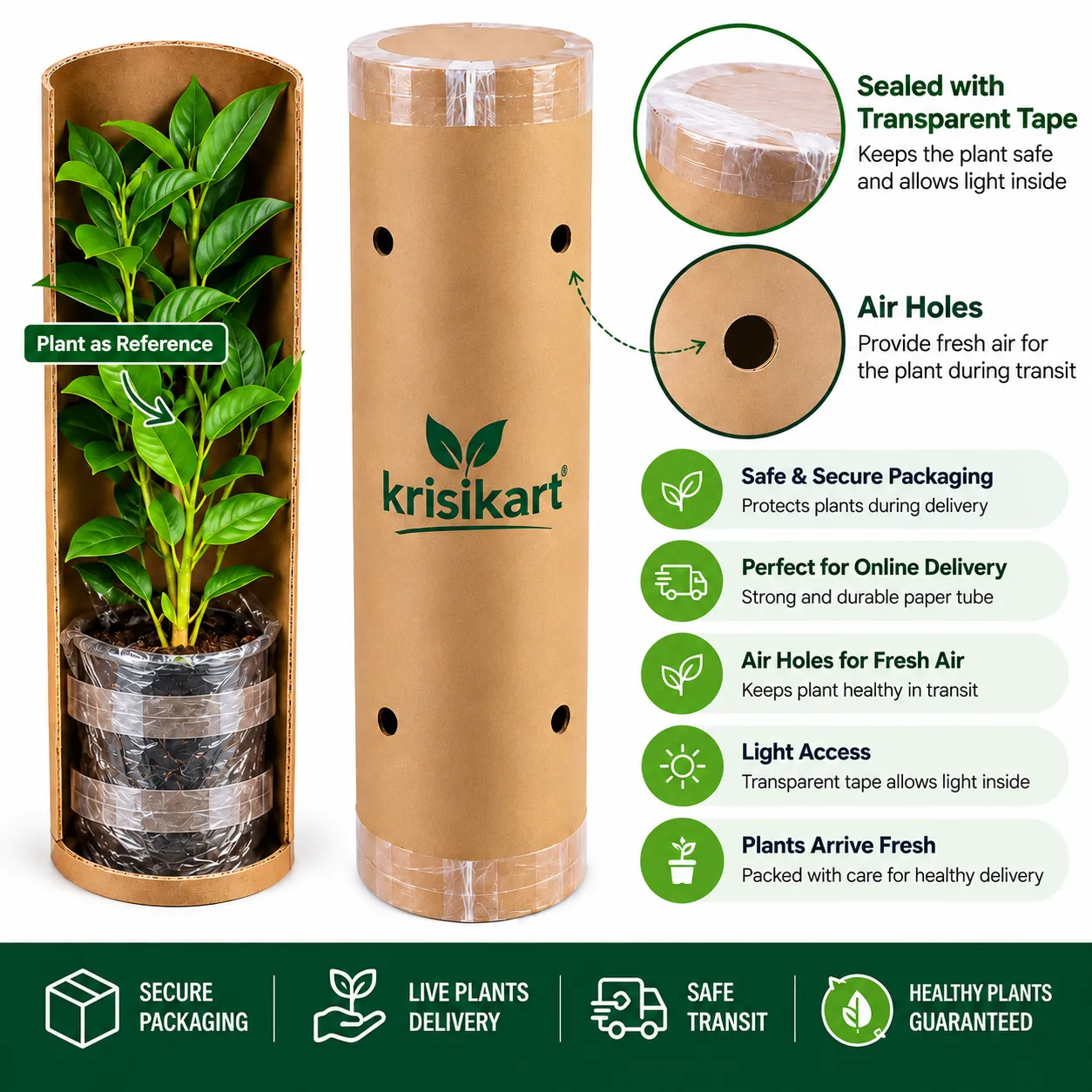
Live Haworthia Zebra Plants vary naturally in rosette diameter, leaf count, white stripe pattern, and presence of baby offsets. Mild shipping stress may occur during transit, and slight soil settling around the lower leaves is normal.
After unboxing, place your plant in bright indirect light and gently brush any loose soil particles out of the leaf rosette. Check soil moisture before watering—water thoroughly only if the potting mix is completely dry. Wait 1 to 2 weeks before repotting or applying fertilizer so the roots settle smoothly.
Why Choose the Haworthia Zebra Plant for Your Garden?
Combining bold zebra-striped foliage, a compact tabletop footprint, pet-friendly safety, and effortless drought tolerance, the Haworthia Zebra Plant is one of the best miniature succulents for Indian homes and offices. With bright indirect light, gritty soil, and restrained watering, it stays crisp, sculptural, and healthy for years.
Botanical Information and Further Reading
- Kew Science – Plants of the World Online: Haworthiopsis fasciata (Willd.) G.D.Rowley (syn. Haworthia fasciata)
- Royal Horticultural Society (RHS) – Haworthia fasciata Plant Profile
- South African National Biodiversity Institute (SANBI) – Haworthiopsis fasciata Guide
- ASPCA Animal Poison Control – Zebra Haworthia Pet Safety Information
Frequently Asked Questions (FAQs)
1. What is the botanical name of the Haworthia Zebra Plant?
It is widely sold in nurseries as Haworthia fasciata in the family Asphodelaceae, and modern taxonomic references such as Kew Science classify it under Haworthiopsis fasciata.
2. Is the Zebra Cactus a real cactus?
No, despite the nickname Zebra Cactus, it is a spineless succulent related to aloes rather than a true cactus, which makes it much easier to handle.
3. Can I keep a Haworthia Zebra Plant on my office desk or indoors?
Yes, it is an excellent indoor tabletop plant provided it sits near a bright window receiving bright indirect light or 2 to 3 hours of gentle morning sunlight daily.
4. How often should I water my Haworthia Zebra Plant?
Water thoroughly only when the potting soil has dried out completely—typically once every 7 to 12 days in summer and every 2 to 4 weeks during monsoon and winter.
5. What soil mix is best for Haworthia fasciata?
Use a fast-draining succulent potting mix made with pumice, perlite, coarse river sand, and a small amount of sandy loam so water drains immediately and prevents root rot.
6. Why are the leaves on my Zebra Plant turning reddish-brown?
Reddish or brownish leaf discoloration usually happens when the plant gets too much harsh, direct afternoon sun. Move it to bright indirect light, and the rich green color will gradually return.
7. How should I care for a Haworthia Zebra Plant during the Indian monsoon?
Keep potted plants indoors on a bright windowsill or under a rain-sheltered balcony so heavy monsoon rains do not waterlog the potting mix, and water very sparingly.
8. How big does a Haworthia Zebra Plant grow?
It is a slow-growing miniature succulent that typically stays around 10 to 15 cm (4 to 6 inches) tall, gradually widening as it produces baby offsets around its base.
9. How do I propagate a Haworthia Zebra Plant?
When mature plants grow small side offsets (pups) at the base, gently separate a rooted pup during spring repotting, let the cut end dry for 2 to 3 days, and plant it in dry succulent mix.
10. Is the Haworthia Zebra Plant safe for cats and dogs?
Yes, Haworthiopsis fasciata is non-toxic to cats and dogs and has no sharp thorns, making it a pet-safe choice for homes.
For More Information
Visit: krisikart.com
For Contact Visit:Contact Us
For Shopping Visit: Shop Page


Omkar Mishra –
The quality is much better than local shops.
Great value for money.First delivery by bluedart .Thanks Team for supoort