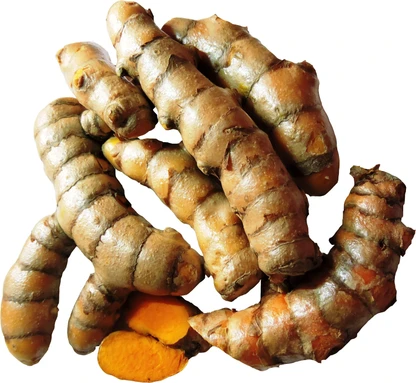
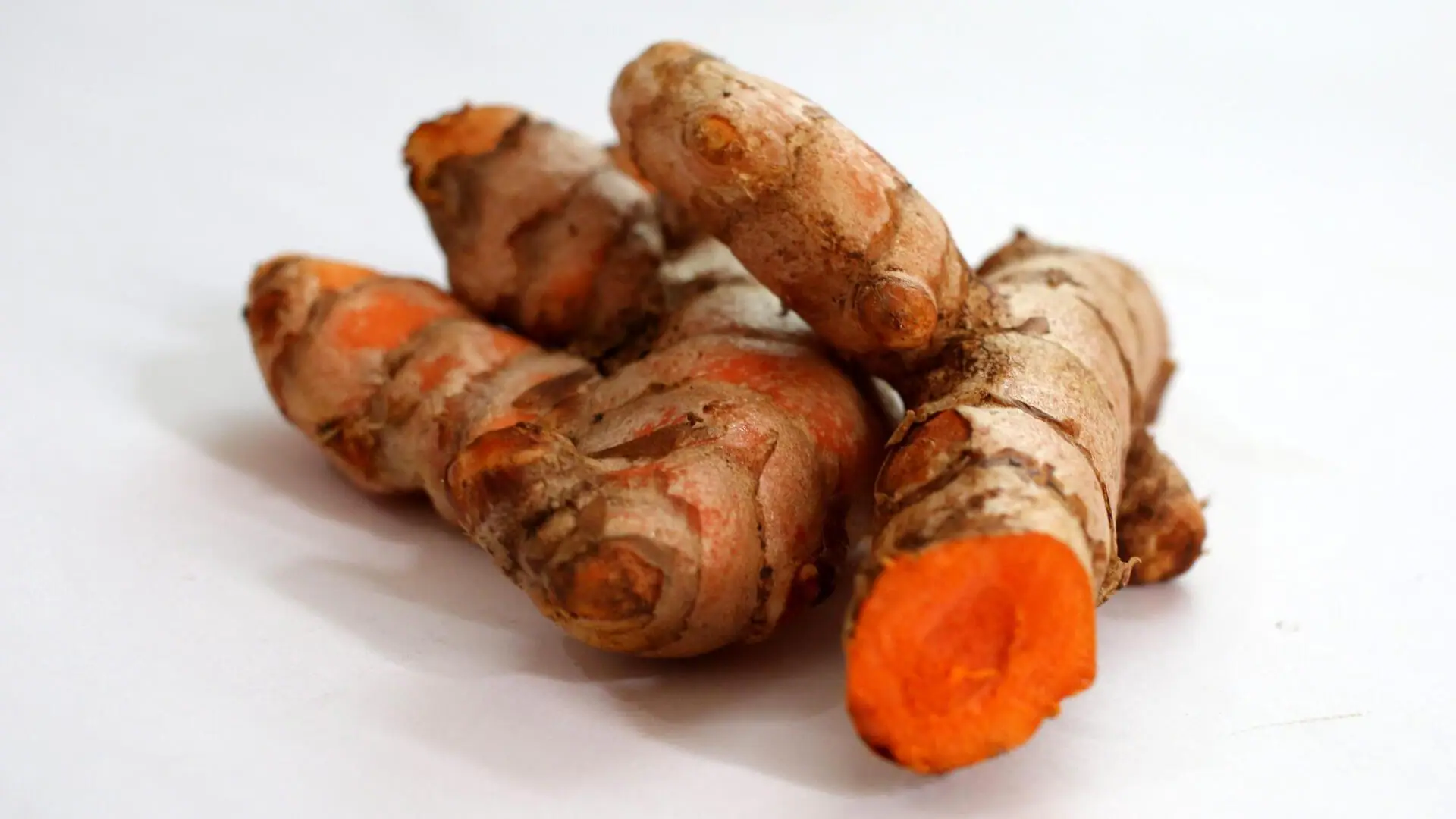
Fresh Turmeric / Raw Turmeric / Organic Kachi Haldi – Fresh Curcuma longa Rhizomes
Bring the natural freshness of Indian turmeric to your kitchen with Fresh Turmeric (Kachi Haldi), also known as Raw Turmeric or Fresh Haldi.
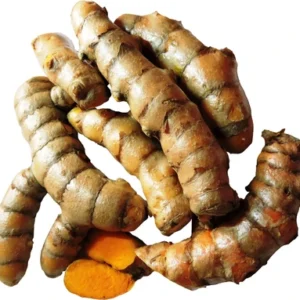
Unlike the familiar dried turmeric powder, fresh turmeric is the fresh underground rhizome of the turmeric plant. It has a firm, aromatic texture and a naturally bright yellow-orange interior.
The botanical name of common culinary turmeric is Curcuma longa L., belonging to the Zingiberaceae (ginger) family. Kew recognizes Curcuma longa as the accepted species name and describes its rhizomes as the source of the familiar yellow turmeric spice and dye.
🌱 What Is Fresh Turmeric?
Fresh turmeric is the recently harvested rhizome of the turmeric plant.
It is commonly called:
- Kachi Haldi
- Fresh Haldi
- Raw Turmeric
- Fresh Turmeric Root
- Turmeric Rhizome
- কাঁচা হলুদ (Kacha Holud) in Bengali
Although often called a “root” in everyday language, turmeric is botanically a rhizome, which is an underground modified stem.
The fresh rhizome has a thin outer skin and a vivid yellow to orange-yellow interior. Its aroma is distinctly earthy and turmeric-like.
🧡 Natural Colour, Aroma & Texture
Fresh turmeric has a characteristic:
- 🟡 Yellow-orange interior
- 🌿 Fresh earthy aroma
- 🌱 Firm, juicy rhizome texture
- 🧡 Naturally occurring turmeric pigments
- 🌿 Fresh, slightly pungent flavour
The colour can vary naturally according to variety, maturity, growing conditions and harvest stage.
Fresh turmeric may also leave a strong yellow stain on hands, cutting boards, utensils and fabrics. Kew notes that turmeric’s yellow colour can stain fingers and cloth and that contact may cause an allergic skin reaction in some people.
🍽️ How to Use Fresh Kachi Haldi
Fresh turmeric can be used in a variety of traditional and contemporary kitchen preparations.
You can:
- Grate it into recipes
- Slice it thinly
- Add it to curries
- Use it in pickles
- Add it to vegetable preparations
- Blend it into fresh drinks or culinary preparations
- Use it in homemade spice pastes
- Combine it with ginger and other ingredients
- Use it as a fresh alternative to dried turmeric in suitable recipes
The exact quantity required depends on the recipe because fresh turmeric contains more moisture than dried turmeric powder.
🥗 Fresh Turmeric vs Turmeric Powder
Fresh turmeric and turmeric powder come from the same plant species but have different characteristics.
| Feature | Fresh Turmeric | Turmeric Powder |
|---|---|---|
| Form | Fresh rhizome | Dried and ground |
| Moisture | Naturally high | Very low |
| Texture | Firm and juicy | Fine powder |
| Aroma | Fresh and earthy | Dried spice aroma |
| Colour | Yellow-orange | Yellow to orange-yellow |
| Preparation | Wash, peel if desired & use | Ready to use |
| Storage | Refrigerated storage recommended | Dry airtight storage |
Fresh turmeric is particularly appealing to people who enjoy using fresh, minimally processed ingredients in their kitchen.
🌿 Organic Kachi Haldi
This product is described as Organic Kachi Haldi according to the product’s intended cultivation/production positioning.
However, “organic” should not automatically be interpreted as certified organic unless the product has an applicable organic certification.
ICAR has published guidance specifically covering organic production of turmeric, demonstrating that turmeric can be cultivated under documented organic production practices.
If your product is genuinely produced without synthetic agricultural chemicals, maintain appropriate records and certifications where applicable so that the claim can be supported.
🚫 About “100% Chemical Free”
The phrase “100% Chemical Free” is commonly used in food marketing, but technically everything around us is made of chemicals, including natural foods.
For a food product, the more meaningful claim is about agricultural inputs and processing practices.
If applicable to your actual production process, you may describe the product as:
“Fresh turmeric grown without intentionally applied synthetic pesticides or chemical fertilizers.”
Do not use a certified-organic claim unless the required certification and standards are actually met.
🧼 Cleaning Before Use
Fresh turmeric is harvested from soil, so wash it thoroughly before culinary use.
Recommended preparation:
- Rinse the rhizomes under clean running water.
- Remove visible soil.
- Scrub gently if necessary.
- Peel if preferred.
- Cut, slice or grate according to your recipe.
- Use clean utensils and surfaces.
Fresh produce should always be handled hygienically.
🧊 Storage
Fresh turmeric contains considerable moisture and is more perishable than dried turmeric powder.
For better storage:
- Keep it refrigerated.
- Store it in a clean, dry container or suitable food-storage bag.
- Avoid unnecessary moisture accumulation.
- Do not store damaged or visibly spoiled pieces with healthy rhizomes.
- Use relatively soon after purchase for the best fresh quality.
The exact shelf life can vary depending on harvest condition, temperature, humidity and storage method.
🌿 Traditional & Culinary Significance
Turmeric has a long history in South Asian food, culture and traditional practices.
Kew records turmeric’s uses in food, dye, medicine, cultural/spiritual practices and cosmetics, reflecting its longstanding importance in South Asian traditions.
In India, fresh turmeric is particularly appreciated during seasonal periods when newly harvested rhizomes become available.
It is used in traditional cooking and preparations and is also associated with cultural and festive practices in many parts of the country.
🧡 Turmeric & Curcumin
Turmeric naturally contains a group of compounds known as curcuminoids, including curcumin.
The concentration and composition can vary according to:
- Variety
- Growing conditions
- Harvest maturity
- Processing
- Storage
ICAR’s recent work on Lakadong turmeric highlights substantial variation in curcumin content among turmeric genotypes and discusses selection of planting material for curcumin-rich types.
Therefore, this product description does not guarantee a particular curcumin percentage unless the specific batch has been laboratory tested.
⚠️ Important Health Information
Turmeric has a long history of traditional use, but a food product should not be marketed as a guaranteed treatment or cure for a disease.
This fresh turmeric is sold as a food ingredient.
Claims such as “cures arthritis,” “treats cancer,” “detoxifies the liver,” or “guarantees anti-inflammatory effects” should not be inferred from this product description.
People taking medicines or using concentrated turmeric/curcumin supplements should discuss potential interactions with a qualified healthcare professional.
🌾 Fresh Harvest & Natural Variation
Fresh turmeric is an agricultural product, so natural variation is expected.
The rhizomes may vary in:
- Size
- Thickness
- Shape
- Number of fingers
- Skin colour
- Interior colour
- Moisture
- Aroma
- Surface marks
Small amounts of soil staining or natural surface variation can occur because the product is harvested from the ground.
These variations do not necessarily indicate a quality problem.
📦 Fresh Product Packaging & Delivery
Fresh turmeric is packed as a fresh agricultural food product.
Because it contains natural moisture, the product should be protected from excessive heat and moisture during transportation.
For the best experience after delivery:
- Open the package soon after receiving it.
- Inspect the rhizomes.
- Remove any damaged pieces if necessary.
- Store the fresh turmeric appropriately.
- Refrigerate for longer freshness.
- Wash thoroughly before culinary use.
First delivery: Fresh orders are intended to be dispatched through Blue Dart Air/express courier where the service is available for the destination pincode, helping reduce transit time for fresh products.
Actual delivery time can vary according to destination, courier network, weather and serviceability.
📌 Important Note
Fresh Turmeric / Kachi Haldi = Curcuma longa rhizome.
It is commonly called a “turmeric root,” but botanically it is an underground rhizome.
The accepted botanical name is Curcuma longa L., and it belongs to the Zingiberaceae family.
Also note that the genus Curcuma contains many other species. This product refers specifically to culinary turmeric, Curcuma longa, rather than other species such as Curcuma aromatica.
🌿 Why Choose Fresh Kachi Haldi?
- 🧡 Fresh turmeric rhizomes
- 🌿 Natural earthy aroma
- 🟡 Naturally vibrant yellow-orange colour
- 🍽️ Useful fresh kitchen ingredient
- 🇮🇳 Traditional Indian culinary ingredient
- 🌱 Minimally processed compared with turmeric powder
- 🥗 Suitable for a variety of recipes
- 🌿 Can be grated, sliced or chopped
- 🧊 Convenient to store refrigerated
- 🌾 Seasonal fresh agricultural produce
🔬 Product & Botanical Information
| Feature | Information |
|---|---|
| Product Name | Fresh Turmeric / Raw Turmeric / Kachi Haldi |
| Botanical Name | Curcuma longa L. |
| Family | Zingiberaceae |
| Plant Type | Rhizomatous herb |
| Product Part | Fresh rhizome |
| Common Indian Name | Haldi / Kachi Haldi |
| Bengali Name | কাঁচা হলুদ (Kacha Holud) |
| Colour | Yellow to orange-yellow |
| Form | Fresh whole rhizome |
| Primary Use | Culinary |
| Storage | Refrigerated |
| Origin | India |
| Processing | Fresh, minimally processed |
📚 Botanical Information & Further Reading
- Kew – Plants of the World Online: Curcuma longa
- Kew – Curcuma longa General Information
- Kew – Curcuma longa Botanical Classification
- ICAR – Lakadong Turmeric: Package of Practice for Organic Production
- ICAR – Turmeric Research & Agricultural Information
Enjoy the distinctive colour, aroma and freshness of Indian Kachi Haldi in your everyday kitchen preparations.











Reviews
There are no reviews yet.