 Plastic Plant pot | Plastic Garden Pot for Plants
 Self Watering Planters | Self Watering Plant Pots For Plants
Leucophyllum Plant – Texas Sage (Leucophyllum frutescens) Plant
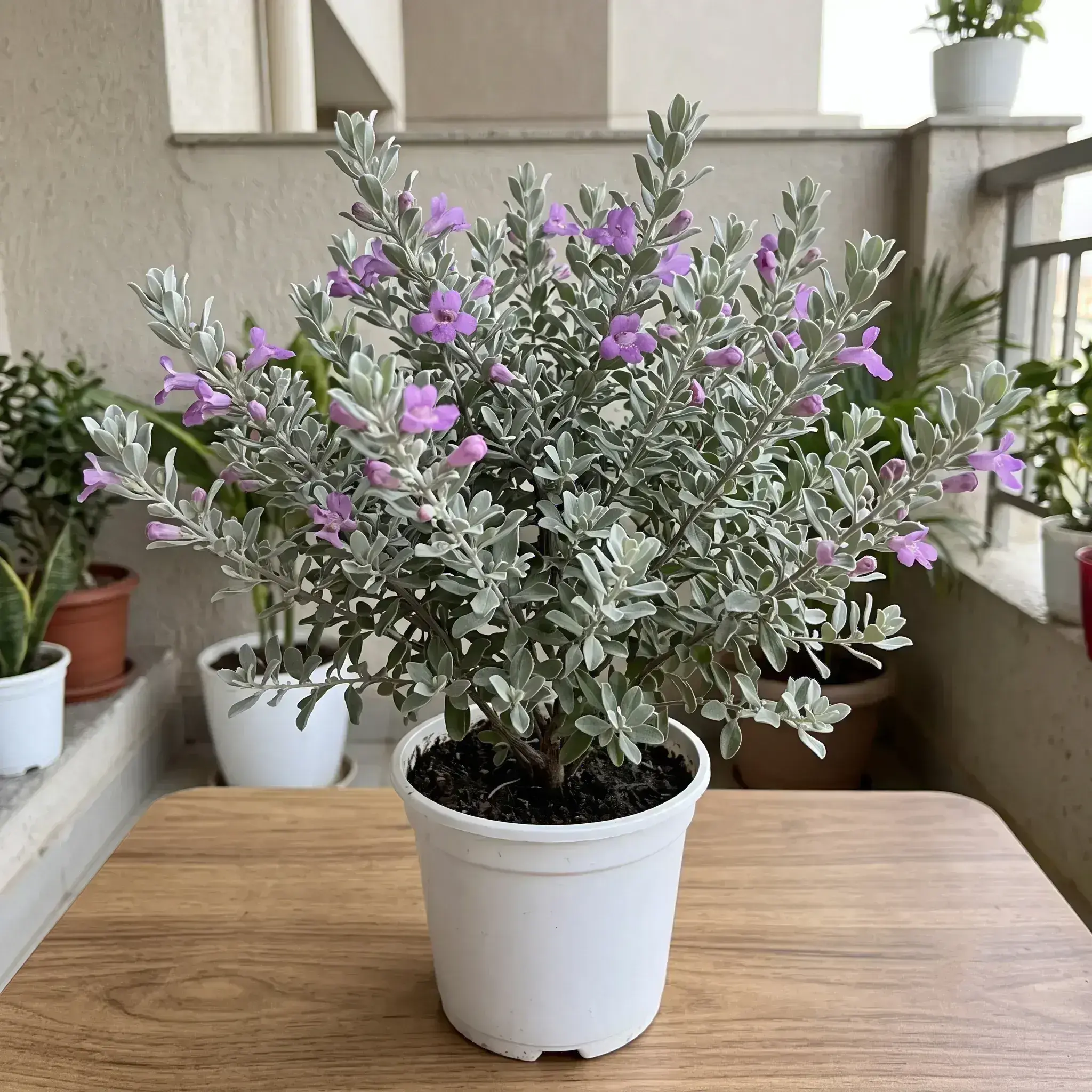
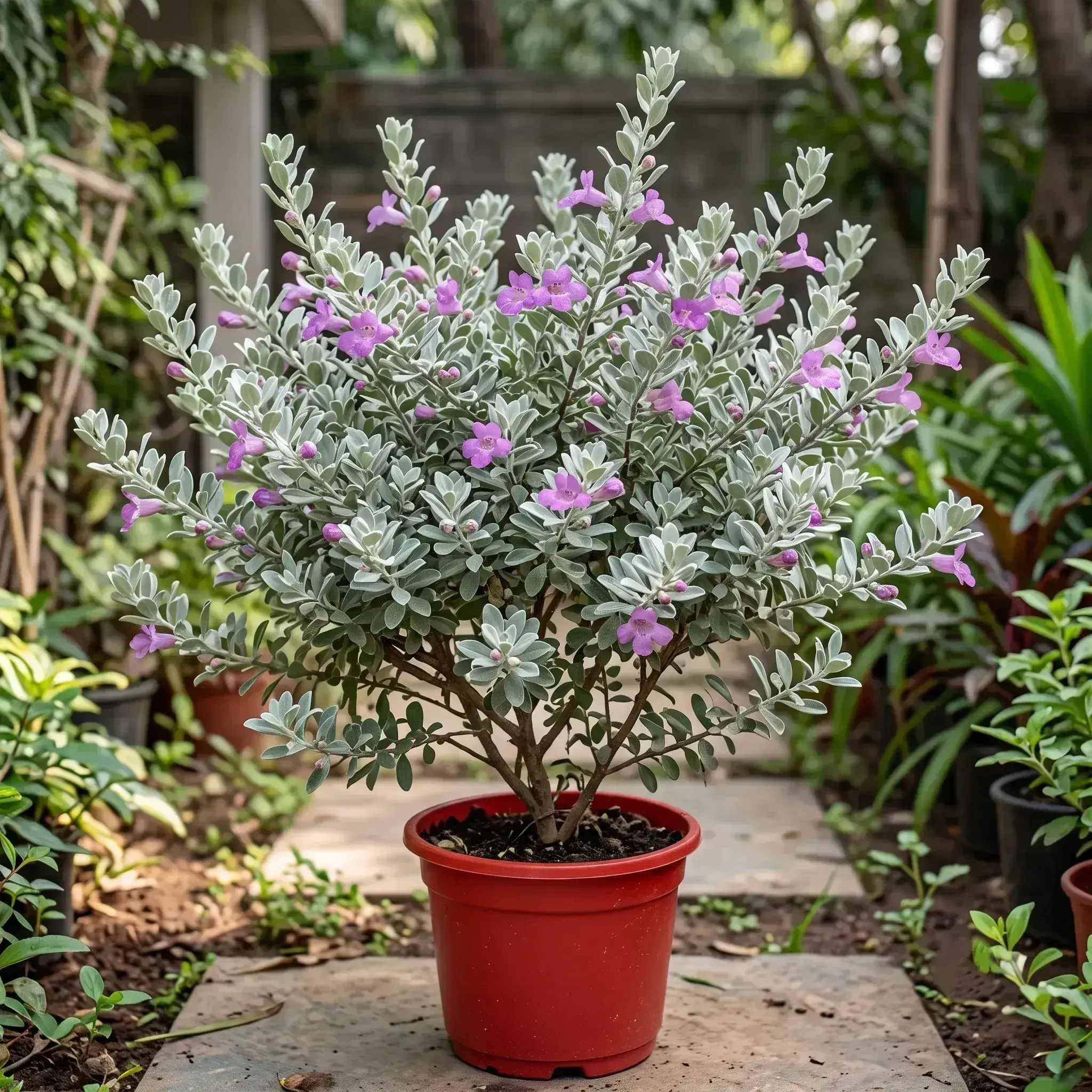
The Leucophyllum Plant Also Known As Texas Sage (leucophyllum frutescens) Plant, is an attractive ornamental shrub admired for its soft, silvery-grey leaves and beautiful purple or lavender flowers.
Its unusual foliage colour makes it different from many common garden plants. When the plant blooms, its colourful flowers create a lovely contrast against the silver-grey leaves.
Texas Sage is a popular landscape plant because it can tolerate heat and dry conditions once established. It is suitable for sunny gardens, decorative outdoor spaces, rock gardens and large containers with excellent drainage.
The plant is naturally adapted to dry regions, so it needs careful watering and a well-drained growing medium.
Plant Highlights
- Common Name: Texas Sage, Texas Ranger, Texas Silverleaf, Cenizo, Barometer Bush
- Scientific Name: Leucophyllum frutescens
- Family: Scrophulariaceae
- Plant Type: Evergreen ornamental shrub
- Growth Habit: Upright, rounded and bushy
- Flower Colour: Purple, lavender, pink or white in selected varieties
- Flower Shape: Small, bell-shaped or funnel-shaped flowers
- Foliage Colour: Silvery-grey or grey-green
- Leaf Type: Small, oval-shaped leaves covered with fine hairs
- Growth Rate: Slow to moderate, depending on conditions
- Light Requirement: Full sunlight
- Water Requirement: Low after establishment
- Origin: Southwestern Texas and northern Mexico
- Best Uses: Garden borders, landscape planting, rock gardens, sunny outdoor spaces and large decorative pots
About the Texas Sage Plant
Texas Sage is a drought-tolerant ornamental shrub native to dry regions of Texas and Mexico.
Its scientific name is Leucophyllum frutescens. It belongs to the Scrophulariaceae family.
The plant is especially popular for its silvery-grey foliage and attractive purple flowers. Its leaves have fine hairs that give them a soft, silver appearance.
Texas Sage is sometimes called Barometer Bush because it may produce flowers following changes in humidity or rainfall.
Important: Texas Sage is not a true culinary sage and does not belong to the Salvia genus. It is an ornamental shrub grown mainly for its foliage and flowers.
Plant Appearance and Growth
The Texas Sage Plant develops a naturally rounded and bushy shape.
Its small leaves are usually silvery-grey or grey-green. The soft-looking foliage gives the plant an attractive appearance even when it is not flowering.
The flowers are generally purple, lavender or pink, depending on the plant and variety. Some cultivated selections produce white flowers.
The flowers usually grow individually near the leaf joints and create colourful displays during favourable weather.
The plant can develop into a medium-sized shrub when grown in suitable outdoor conditions. Its mature size depends on the variety, climate and growing environment.
Flowering Season
Texas Sage can produce flowers repeatedly during warm growing periods.
In its native dry climate, flowering often follows changes in humidity or moisture associated with approaching rainfall. This is why it is also called Barometer Bush.
Flowering depends on sunlight, temperature, plant maturity and local weather conditions.
Tips for better flowering:
- Provide plenty of direct sunlight.
- Use very well-drained soil.
- Avoid frequent watering.
- Do not overfertilize.
- Allow the plant to establish before expecting regular flowering.
- Avoid excessive pruning.
- Maintain good air circulation.
The plant may produce fewer flowers when grown in unsuitable humid or waterlogged conditions.
Sunlight Requirements
The Texas Sage Plant grows best in full sunlight.
A sunny outdoor location with several hours of direct sunlight every day is important for healthy growth and flowering.
Good places to grow this plant:
- Open home gardens
- Sunny terrace gardens
- Rock gardens
- Dry garden borders
- Outdoor landscape areas
- Large pots in sunny locations
- Well-ventilated garden spaces
Avoid growing the plant in deep shade. Insufficient sunlight can cause weak growth and fewer flowers.
Watering Requirements
Texas Sage is a drought-tolerant plant and does not need frequent watering once established.
Excessive watering is one of the main problems when growing this shrub. Its roots can suffer if the soil remains wet for long periods.
Watering tips:
- Allow the soil to dry between watering.
- Water young plants while they establish.
- Water deeply but not frequently.
- Make sure extra water drains away.
- Avoid standing water around the roots.
- Reduce watering during rainy weather.
- Check soil moisture before watering during winter.
In Indian conditions, be especially careful during the monsoon because frequent rainfall and wet soil can damage the roots.
Soil and Potting Requirements
The Texas Sage Plant needs loose, very well-drained soil.
It naturally grows in dry regions and does not tolerate poorly drained soil.
A suitable home potting mix can contain:
- Well-drained garden soil
- Coarse sand or fine gravel
- Perlite or another drainage material
- A small amount of well-rotted compost
Use a pot with several drainage holes at the bottom.
Avoid heavy clay soil, excessive cocopeat or other materials that keep the roots continuously wet.
A raised planting area or a gritty growing medium can help improve drainage in locations that receive heavy rainfall.
Temperature and Indian Climate
Texas Sage is adapted to warm, dry climates and can tolerate high temperatures once established.
However, India’s humid monsoon conditions can make growing this plant more challenging than growing it in its native environment.
Summer: Provide full sunlight and avoid frequent watering. Make sure the soil drains properly.
Monsoon: Protect the plant from prolonged waterlogging. A raised location or covered area with good sunlight can help reduce excess moisture.
Winter: Growth may slow during cooler weather. Water less frequently when the soil takes longer to dry.
In areas with long periods of heavy rain and high humidity, careful site selection and excellent drainage are especially important.
Humidity Requirements
Texas Sage prefers relatively dry conditions and good air circulation.
It is not naturally adapted to continuously humid environments.
In humid parts of India, avoid keeping the plant in a crowded, poorly ventilated area. Give it enough space and use a growing medium that dries well between watering.
Fertilizer and Plant Feeding
Texas Sage generally grows well in low-fertility soil and does not need heavy feeding.
Excessive fertilizer can encourage unwanted leafy growth and may reduce the plant’s natural compact appearance.
Fertilizer tips:
- Use a suitable, well-drained growing medium.
- Avoid excessive compost.
- Do not apply heavy nitrogen fertilizer.
- Feed only when there is a clear need.
- Follow suitable fertilizer instructions if feeding is required.
Established plants usually need very little additional fertilizer.
Pruning and Maintenance
Texas Sage naturally develops a rounded shrub shape and usually needs little pruning.
Maintenance tips:
- Remove completely dry or damaged branches.
- Trim unwanted branches lightly.
- Maintain enough space around the plant.
- Avoid frequent heavy trimming.
- Use clean gardening scissors.
- Allow the plant to develop its natural shape.
Flowers generally develop on new growth, so suitable light pruning can help maintain the plant and encourage fresh branches.
Avoid cutting the plant into a very tight hedge shape repeatedly.
Growing Texas Sage in Pots
Texas Sage can be grown in a large container if excellent drainage is provided.
Container growing is useful when you want to control soil moisture or protect the plant from prolonged monsoon rain.
Container-growing tips:
- Choose a pot with several drainage holes.
- Use a gritty, well-drained potting mix.
- Avoid oversized containers with too much wet soil.
- Place the pot in full sunlight.
- Water only when required.
- Avoid leaving water in the pot tray.
- Do not overfertilize.
Repot when the roots become crowded or the plant outgrows its container.
Garden and Landscape Decoration
Texas Sage is an attractive choice for dry-style and sunny garden designs.
Its silver-grey leaves create a beautiful contrast with green plants and colourful flowering shrubs.
It can be grown in:
- Sunny home gardens
- Rock gardens
- Garden borders
- Dry landscape areas
- Large decorative pots
- Outdoor landscape beds
- Low-maintenance garden spaces
It looks particularly attractive when planted where its silvery foliage can be seen clearly.
Common Problems and Their Care
1. Yellow Leaves
Yellow leaves may appear because of overwatering or poor drainage. Check the soil and allow it to dry before watering again.
2. Root Rot
Root problems can develop when the soil remains wet for too long. Improve drainage and avoid frequent watering.
3. Fewer Flowers
Insufficient sunlight, unsuitable growing conditions or excessive fertilizer may reduce flowering. Provide full sunlight and avoid overfeeding.
4. Drooping Branches
Drooping may occur because of root damage or unsuitable watering. Check soil moisture and drainage.
5. Dry or Brown Leaves
Dry leaves may appear because of heat stress, poor establishment or unsuitable growing conditions. Check the plant’s location and watering routine.
6. Weak Growth
Insufficient sunlight or poor drainage can affect healthy growth. Move the plant to a sunny location with suitable soil if possible.
7. Poor Growth During Monsoon
Prolonged wet soil and high humidity may affect the plant. Protect the roots from waterlogging and improve air circulation.
Propagation of Texas Sage Plant
Texas Sage can be propagated through seeds and suitable stem cuttings.
Stem cutting propagation requires healthy plant material and a well-drained growing medium.
Basic propagation steps:
- Select a healthy semi-mature branch.
- Prepare a loose, well-drained growing medium.
- Place the cutting in the medium.
- Keep it in a bright location with suitable protection.
- Avoid excessive watering.
- Allow time for roots to develop.
Successful rooting depends on the cutting condition, temperature, humidity and propagation method.
Important Plant Safety Information
Texas Sage is mainly grown as an ornamental landscape plant.
Do not eat its leaves, flowers or other plant parts. Avoid using the plant for home remedies or food preparation without reliable species-specific safety information.
Keep fertilizers and garden pest treatments away from children and pets.
Live Plant Delivery and Natural Variation
Plants are living products, so their height, branch count, leaf size and overall shape may vary naturally.
The plant you receive may look slightly different from the website photograph. This is normal because each plant grows in its own way.
Some leaves or branches may become damaged during packing and transportation. The plant may also need time to adjust to its new location.
After receiving your plant:
- Carefully remove the packaging.
- Keep it in a bright, sunny location.
- Check the soil before watering.
- Avoid excessive watering.
- Make sure the pot has proper drainage.
- Do not apply heavy fertilizer immediately.
- Remove only completely dry or damaged branches.
- Give the plant time to adjust to its new surroundings.
Why Choose a Texas Sage Plant?
Texas Sage is a distinctive ornamental shrub for people who enjoy plants with unusual foliage and attractive flowers.
- Beautiful silvery-grey leaves.
- Attractive purple or lavender flowers.
- Naturally rounded shrub shape.
- Excellent heat tolerance.
- Drought-tolerant after establishment.
- Suitable for sunny outdoor spaces.
- Can be grown in large containers.
- Requires little maintenance when grown in suitable conditions.
Botanical Information & Further Reading
Explore these trusted resources to learn more about Texas Sage:
- Kew – Plants of the World Online: Leucophyllum frutescens – Accepted scientific name, family and native distribution.
- North Carolina State Extension – Texas Sage – Plant appearance, sunlight, watering, pruning and growing conditions.
- Austin Texas – Texas Sage Plant Guide – Plant size, foliage, sunlight, flowering and water requirements.
- Texas Tech University – Texas Sage – Plant characteristics, soil, drought tolerance and landscape uses.
- Native Plant Society of Texas – Leucophyllum frutescens – Native habitat, flowers, maintenance and water requirements.
- University of Florida IFAS – Texas Sage – Information about flowering, heat tolerance, soil and watering.
- Arizona-Sonora Desert Museum – Texas Sage Care Guide – Practical growing, watering, soil and pruning advice.
Frequently Asked Questions (FAQs)
1. What is a Texas Sage Plant?
Texas Sage is an ornamental shrub with silvery-grey leaves and purple or lavender flowers. Its scientific name is Leucophyllum frutescens.
2. Is Texas Sage a true sage plant?
No. Despite its common name, it is not a true culinary sage and does not belong to the Salvia genus.
3. Is Texas Sage suitable for Indian weather?
It can grow in warm, sunny locations, but prolonged humidity and monsoon rainfall can make cultivation difficult. Excellent drainage is essential.
4. Does Texas Sage need full sunlight?
Yes. It grows best in full sunlight. Insufficient sunlight may reduce flowering and affect its natural shape.
5. Can I grow Texas Sage in a pot?
Yes. It can be grown in a large pot with excellent drainage and a gritty growing medium.
6. How often should I water Texas Sage?
Water young plants while they establish. Established plants need much less frequent watering. Allow the soil to dry between watering.
7. What colour are Texas Sage flowers?
Flowers are commonly purple, lavender or pink. Some cultivated selections produce white flowers.
8. Why is Texas Sage called Barometer Bush?
It is sometimes called Barometer Bush because flowering may occur after changes in humidity or moisture associated with approaching rainfall.
9. Does Texas Sage need fertilizer?
Generally, no heavy fertilizer is needed. The plant grows well in low-fertility soil and should not be overfed.
10. Does Texas Sage need pruning?
It usually needs very little pruning. Remove damaged branches and trim lightly to maintain its natural shape.
11. Can Texas Sage survive drought?
Yes. Once established, it is highly drought-tolerant and can survive with limited watering.
12. Why is my Texas Sage losing leaves?
Leaf loss may be related to unsuitable watering, poor drainage, environmental stress or seasonal changes. Check the soil and growing conditions.
13. Can Texas Sage grow in a humid area?
It prefers dry conditions. In humid locations, excellent drainage, full sunlight and good air circulation are especially important.


Reviews
There are no reviews yet.