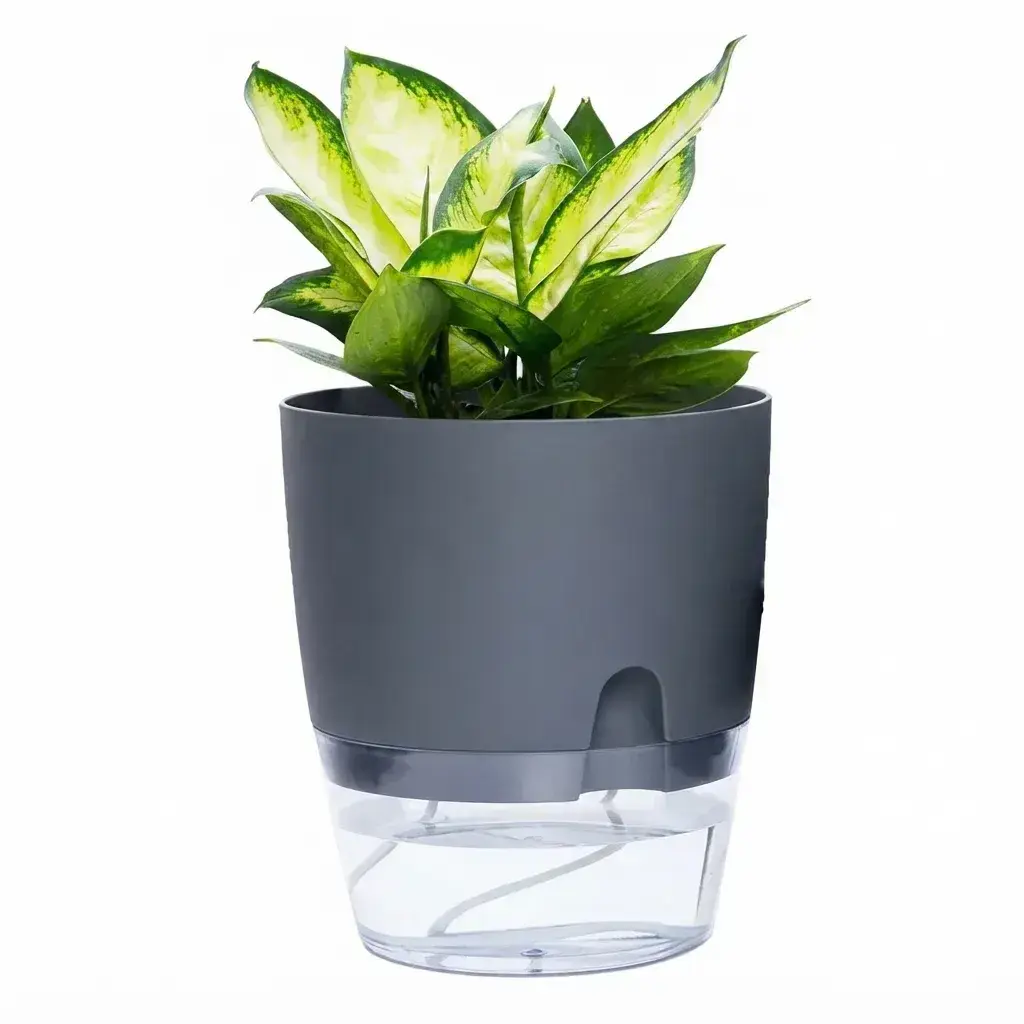
 Plastic Plant pot | Plastic Garden Pot for Plants
Self-Watering Planters – Self-Watering Plant Pot
Self-Watering Planters, also Self Watering Plant Pots designed to help maintain consistent moisture for your plants. These practical plant pots use a built-in water reservoir and a wicking system to supply moisture to the growing medium gradually.
Ideal for busy plant lovers, balcony gardeners, indoor plant enthusiasts, and people who sometimes forget to water their plants, self-watering pots can reduce the frequency of manual watering.
Whether you are growing indoor foliage plants, herbs, small ornamental plants, or selected flowering varieties, a self-watering planter can be a convenient addition to your home garden.
Important: This product listing is for the self-watering plant pot only. Live plants, soil, seeds, and decorative accessories are not included unless specifically mentioned.
Product Information
- Product Name: Self-Watering Planter
- Common Names: Self-Watering Pot, Automatic Watering Pot, Water Reservoir Planter
- Product Type: Plant Container
- Material: As specified in the selected product variant
- Watering System: Reservoir-based watering system
- Water Supply: Through a wick or capillary watering mechanism, depending on the design
- Usage: Indoor and outdoor gardening
- Suitable For: Compatible foliage plants, herbs, and ornamental plants
- Placement: Home, balcony, office, patio, and terrace garden
- Maintenance: Periodic water reservoir refilling and cleaning
- Package Includes: Self-watering planter according to the selected variant
- Plant Included: No
What Is a Self-Watering Planter?
A self-watering planter is a specially designed plant container that stores water in a separate reservoir, usually underneath the soil compartment.
A wick or capillary system helps transfer moisture from the reservoir into the growing medium. Plant roots can then absorb water as needed.
Unlike conventional pots that require frequent top watering, self-watering planters provide a more gradual supply of moisture.
The system can help reduce watering frequency and make plant care more convenient, although the reservoir still needs to be checked and refilled regularly.
How Does a Self-Watering Plant Pot Work?
Most reservoir-based self-watering pots work through capillary action.
- Water Reservoir: The lower compartment stores water.
- Wicking System: A wick or suitable growing-medium connection transfers moisture upward.
- Growing Area: The upper section contains the soil and plant.
- Root Moisture: The growing medium receives moisture from below.
- Water Refilling: You refill the reservoir when its water level becomes low.
The exact mechanism varies by planter design. Some models include a water-level indicator or filling tube, while simpler models use a basic reservoir and wick.
Key Features of Self-Watering Plant Pots
1. Built-In Water Reservoir
The reservoir stores water beneath the growing area, helping supply moisture gradually.
2. Reduced Manual Watering
The system can reduce how frequently you need to water, depending on plant requirements, reservoir capacity, temperature, and sunlight.
3. Convenient for Busy Gardeners
A practical choice for people with busy schedules who want to make routine plant care easier.
4. Suitable for Indoor and Balcony Gardening
Useful for arranging compatible plants in homes, offices, balconies, and terrace gardens.
5. More Consistent Soil Moisture
The wicking mechanism can help maintain more consistent moisture for plants that prefer evenly moist growing conditions.
6. Practical Plant Display
Self-watering pots can combine everyday gardening convenience with an organised and attractive plant display.
Suitable Plants for Self-Watering Pots
Self-watering planters are generally most suitable for plants that prefer consistent moisture.
Some suitable choices, depending on the planter size and design, include:
- Money Plant
- Peace Lily
- Spider Plant
- Fittonia
- Boston Fern
- Some varieties of indoor foliage plants
- Basil and selected kitchen herbs
- Moisture-loving ornamental plants
Always check the water requirements of the individual plant before using a self-watering pot.
Plants that generally need to dry between waterings, such as cacti, succulents, and many drought-tolerant plants, are usually better suited to conventional pots.
How to Use a Self-Watering Planter
- Select a plant compatible with bottom-watering or consistently moist growing conditions.
- Check the planter’s reservoir, wick, and drainage arrangement.
- Add a suitable potting mix to the planting compartment.
- Place the plant carefully and cover its roots with the growing medium.
- Water the growing medium from the top initially to help it settle and establish contact with the wick.
- Fill the reservoir according to the planter’s instructions.
- Monitor soil moisture and refill the reservoir when necessary.
Do not assume that every self-watering pot can remain continuously filled. Follow the design’s instructions and allow the root zone adequate airflow.
Soil and Potting Mix
A suitable growing medium is important for successful self-watering.
Choose a lightweight, well-aerated potting mix that can absorb and distribute moisture while retaining enough air around the roots.
A suitable mix may contain:
- Cocopeat
- Mature compost
- Perlite or pumice
- Suitable potting substrate
Avoid heavy, compacted garden soil that can restrict airflow and remain excessively wet.
Water Reservoir Maintenance
Regular reservoir maintenance helps keep the system working properly.
- Check the water level periodically.
- Refill according to the planter’s capacity and plant requirements.
- Clean the reservoir periodically.
- Check that the wick or capillary connection is not blocked.
- Remove accumulated dirt or algae when necessary.
- Check for unpleasant odours or signs of stagnant water.
If the pot is used outdoors, ensure that rainwater cannot continuously overfill the reservoir. An appropriate overflow or drainage arrangement is important.
Indoor and Outdoor Gardening Uses
Indoor Gardening: Suitable for compatible foliage plants in bright indoor locations.
Balcony Gardening: Helps manage watering for selected balcony plants.
Office Plants: Can reduce the need for frequent manual watering.
Terrace Gardens: Useful for organising multiple compatible container plants.
Kitchen Gardens: Can be used for selected herbs that prefer consistent moisture.
Home Decoration: Provides a practical way to display green plants in living spaces.
Important Care Instructions
- A self-watering planter does not eliminate the need for plant care.
- Check the reservoir regularly rather than assuming it is always full.
- Choose plants according to their moisture requirements.
- Avoid keeping drought-loving plants in continuously moist growing media.
- Use a suitable potting mix that allows adequate airflow.
- Clean the reservoir periodically.
- Keep outdoor planters protected from excessive rain where necessary.
- Check whether the selected model includes an overflow opening.
Benefits of Using Self-Watering Planters
- Helps reduce frequent manual watering.
- Convenient for busy plant owners.
- Supports consistent moisture for suitable plants.
- Useful for indoor and balcony gardening.
- Makes routine watering easier to manage.
- Suitable for selected herbs and ornamental plants.
- Helps organise a home gardening setup.
Why Choose Self-Watering Plant Pots?
- Convenient reservoir-based watering system.
- Practical for modern home gardening.
- Suitable for selected indoor and outdoor plants.
- Helps reduce watering frequency.
- Useful for people with busy schedules.
- Makes container gardening easier to manage.
Frequently Asked Questions
1. What is a self-watering plant pot?
It is a plant container with a water reservoir and a wick or capillary system that gradually supplies moisture to the growing medium.
2. Do self-watering pots water plants automatically?
They supply moisture from the reservoir, but they still require regular monitoring and refilling. The gardener must also check that the plant is receiving the right amount of moisture.
3. How often should I refill a self-watering planter?
It depends on reservoir capacity, plant size, temperature, sunlight, and water consumption. Check the reservoir regularly rather than following a fixed schedule.
4. Can I use a self-watering pot for indoor plants?
Yes. Many indoor foliage plants that prefer consistent moisture can grow well in suitable self-watering pots.
5. Can I grow cactus and succulent plants in self-watering pots?
Generally, this is not recommended. Most cacti and succulents need their growing medium to dry thoroughly between waterings.
6. Does this product include a live plant?
No. The product includes the self-watering planter only. Live plants, soil, seeds, and decorative accessories are not included unless specifically mentioned.
Gardening Information & Further Reading
- University of Kentucky Cooperative Extension – Wicking Containers — how self-watering containers work through capillary action.
- Garden Organic – Make a Self-Watering Container — reservoir construction and wick-based watering.
- University of Wisconsin Extension – Self-Watering Planter — reservoir and wick system explanation.
- Texas A&M AgriLife Extension – Self-Watering Containers — container design, overflow, and water management.
- Toronto Metropolitan University – Self-Watering Containers — practical information about sub-irrigated planters.
Package Includes: Self-Watering Plant Pot according to the selected size, colour, and product variant.
Important Product Note: Live plant, soil, seeds, fertilizer, and decorative accessories are not included. Reservoir capacity, water-level indicator, wick arrangement, drainage holes, and bottom tray availability depend on the actual product model.
For More Information
Visit: krisikart.com
For Contact Visit:Contact Us
For Shopping Visit: Shop Page


Reviews
There are no reviews yet.