 Plastic Plant pot | Plastic Garden Pot for Plants
 Self Watering Planters | Self Watering Plant Pots For Plants
Taiwan Pink Guava Plant | Taiwan Guava Tree (Psidium guajava) Plant
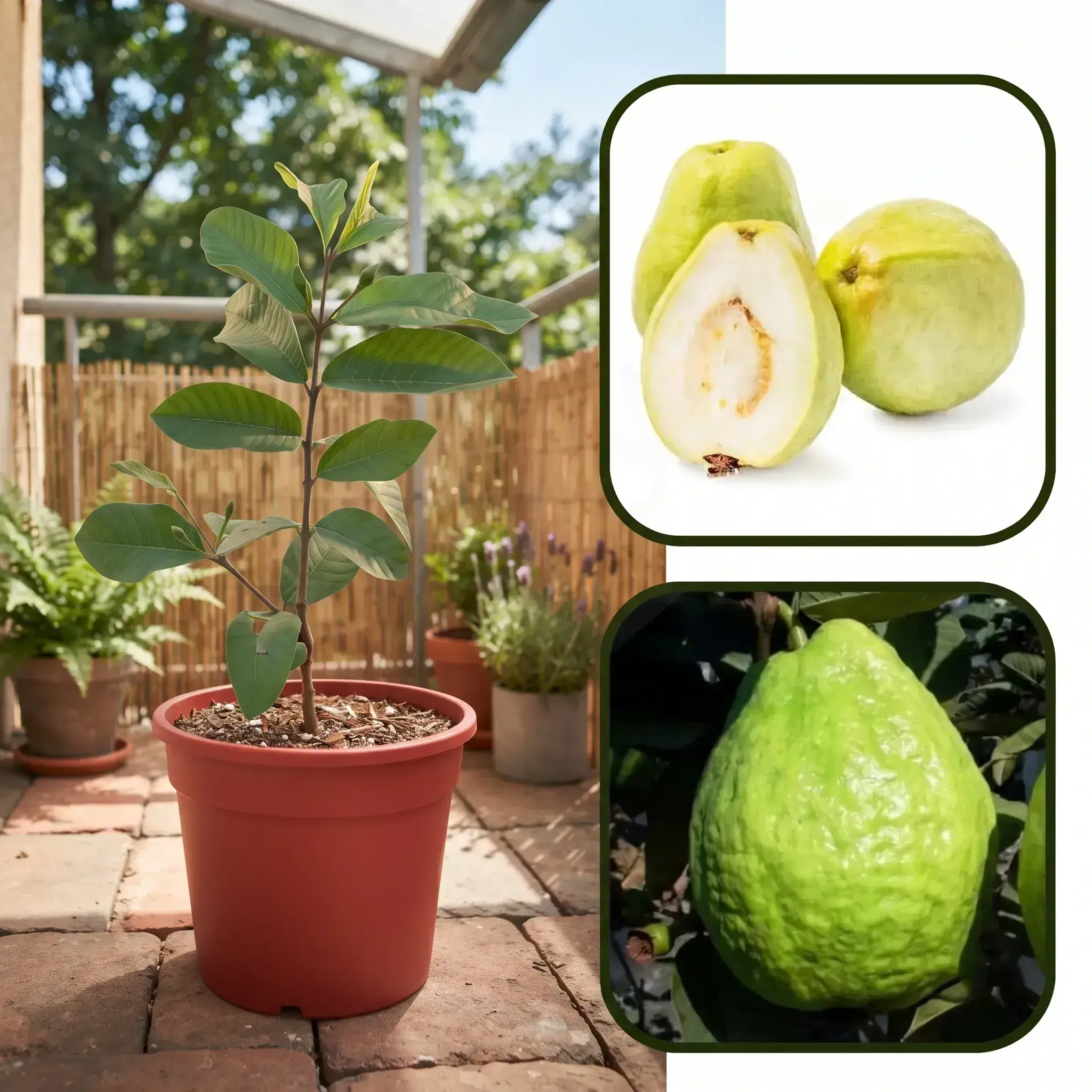
The Taiwan Pink Guava Plant Also known As Taiwan Guava Tree (Psidium Guajava) Plant, is a fast-growing, evergreen fruit plant prized for its large, crisp, aromatic fruits with vibrant coral-pink flesh. Popularized across Indian orchards and urban terrace gardens, this selection stands out for its balanced sweetness, thick edible outer pulp, and relatively soft inner seed cavity.
Because nursery-grown Taiwan Pink Guava Plants are propagated vegetatively through air layering or grafting rather than from seed, they maintain true parent fruit quality and stay compact enough for home gardens, grow bags, and large terrace containers. With full sunlight, well-drained soil, and light annual pruning, it delivers reliable greenery and seasonal harvests.
Plant Highlights
- Product Name: Taiwan Pink Guava Plant | Taiwan Guava Tree (Psidium guajava) Plant for Home Garden
- Common Name: Taiwan Pink Guava, Taiwan Guava, Pink Guava, Amrud (Hindi), Peyara (Bengali)
- Botanical Name: Psidium guajava
- Cultivar / Trade Selection: Taiwan Pink (Commercial nursery trade selection propagated via grafting or air layering)
- Family: Myrtaceae (Myrtle family)
- Plant Type: Evergreen perennial fruit shrub or small tree
- Origin: Species native to tropical America (Mexico, Central America, and northern South America); cultivar selected in Taiwan and widely cultivated across India
- Flower Colour: Pure white with numerous delicate stamens
- Flower Fragrance: Lightly sweet and pleasant
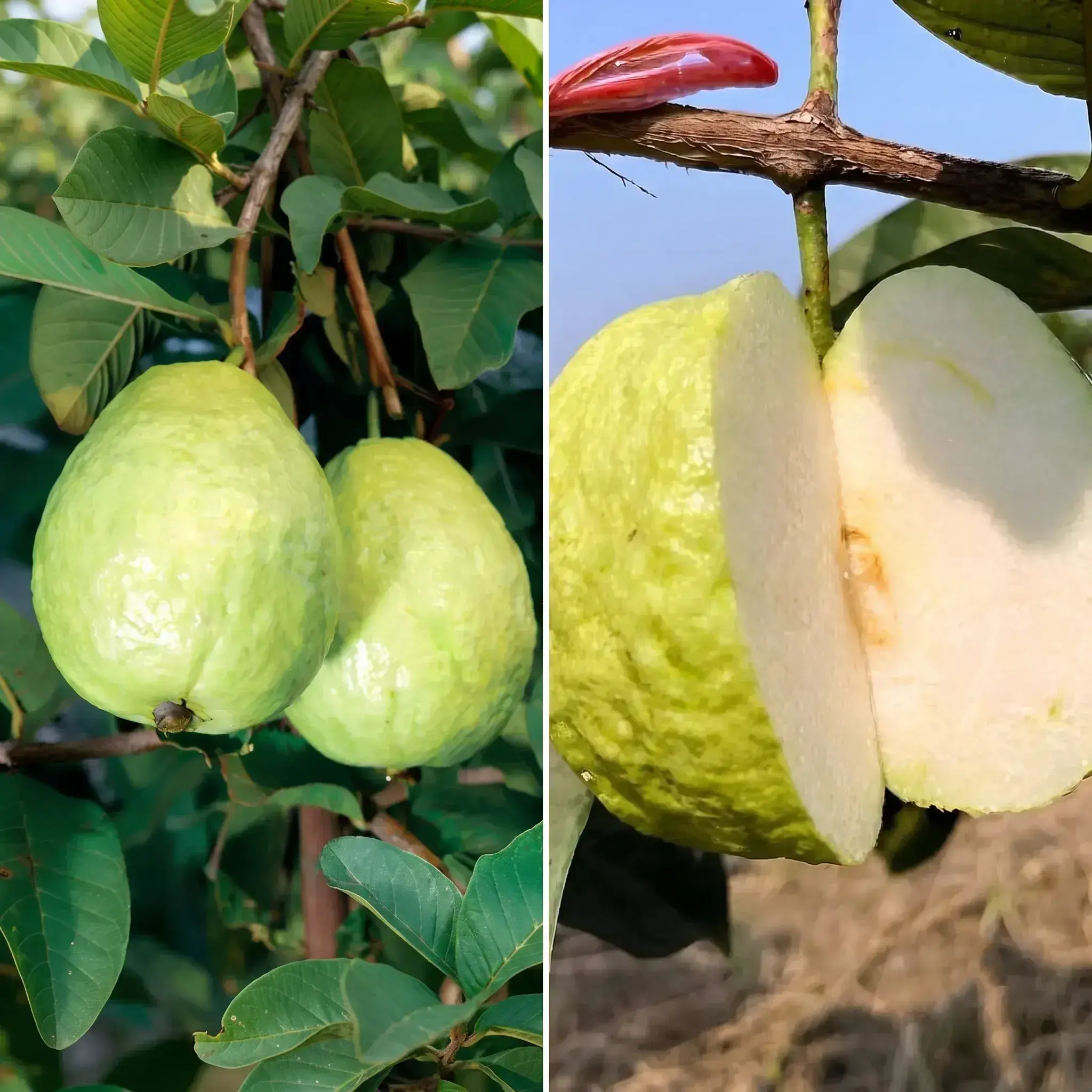
- Fruit Colour: Light green to pale yellowish-green outer skin with attractive pink to coral-red interior flesh
- Foliage: Opposite, oblong-to-elliptic, medium-to-dark green leaves with prominent parallel veins
- Growth Habit: Spreading, multi-branched small tree or compact shrub with smooth, flaking greenish-brown bark
- Mature Height: Typically 3 to 5 meters (10 to 16 feet) in open ground if unpruned; easily maintained at 1.5 to 2.5 meters (5 to 8 feet) in containers with pruning
- Sunlight: Full direct sunlight (at least 6 to 8 hours daily)
- Watering: Moderate; water deeply when the top 3 to 5 cm of soil feels dry, ensuring fast drainage
- Suitable For: Home gardens, sunny terraces, large pots or grow bags, kitchen gardens, and farmhouses
About the Taiwan Pink Guava Plant
Psidium guajava belongs to the myrtle family Myrtaceae and is native to tropical America, though it has been cultivated across India for centuries. Over the past couple of decades, the Taiwan Pink selection has become one of the most sought-after guava varieties among Indian gardeners because it combines attractive pink flesh with a crisp, pleasant bite and thick pericarp (outer flesh).
Vegetative propagation—either by air layering (gootee) or wedge grafting—ensures that your Taiwan Pink Guava Plant inherits the exact fruit flavor, color, and early-bearing habit of the parent tree. Unlike seed-grown guava trees that take several years to mature and vary widely in quality, vegetatively propagated plants typically start flowering within 1 to 2 years under favorable care.
Appearance and Growth Habit
The Taiwan Pink Guava Plant develops a sturdy, branching woody frame with smooth, mottled greenish-tan bark that sheds thin flakes as the stems thicken. Its aromatic leaves grow in opposite pairs along slightly four-angled young shoots, displaying distinct parallel lateral veins.
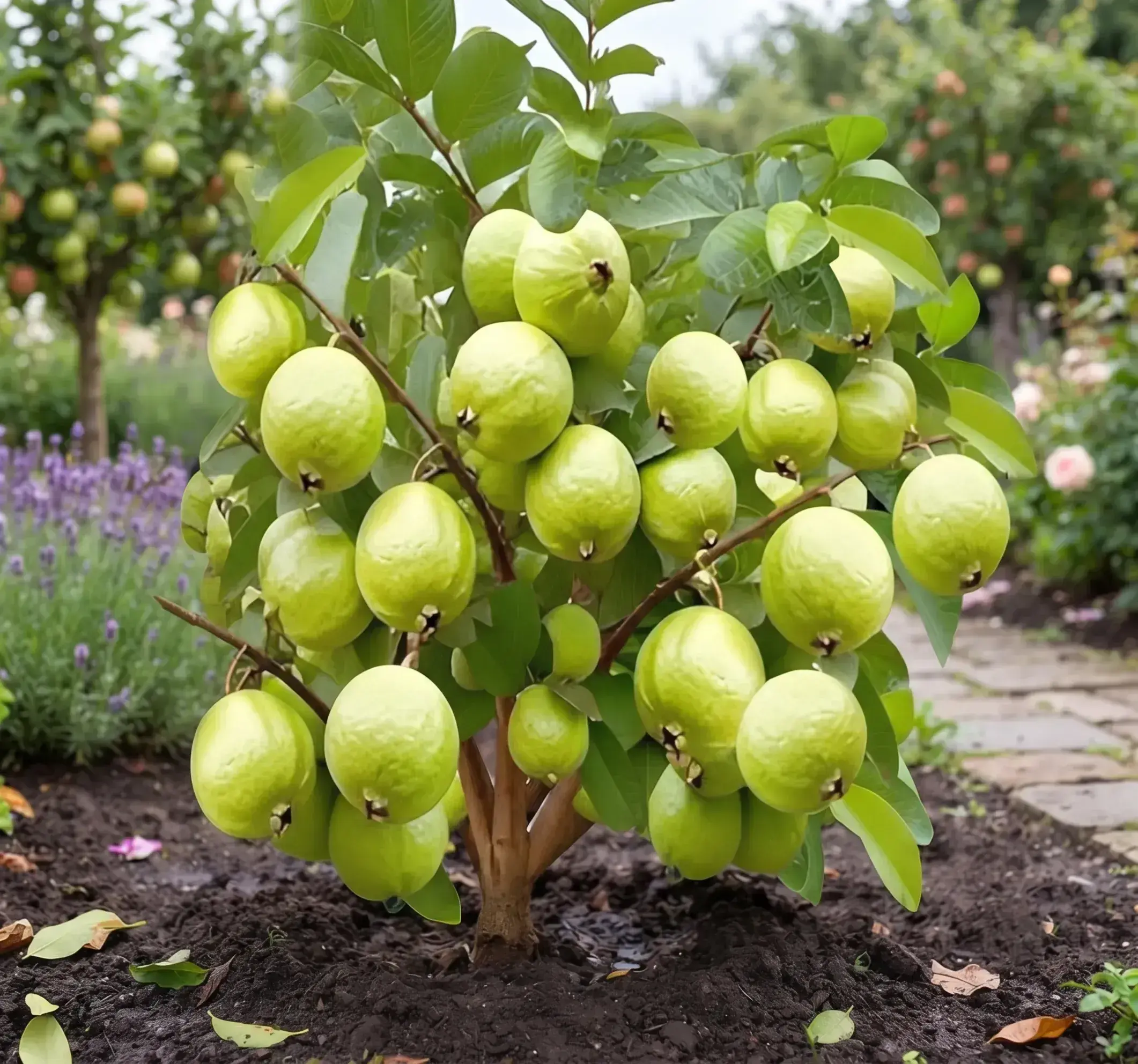
In open garden soil, the plant forms a rounded, spreading canopy reaching 3 to 5 meters over several years. In terrace containers or compact yards, responsive shoot growth makes it easy to shape into a neat, bushy tree that stays within comfortable arm’s reach for pruning and harvesting.
Flowers and Flowering Season
The Taiwan Pink Guava Tree produces solitary or small clusters of two to three white blossoms on new current-season shoots. Each bloom features five white petals surrounding a brush-like cluster of yellow-tipped stamens that attract honeybees and other pollinators.
In tropical and subtropical India, guava typically flowers in two to three flushes—most notably during spring (February to April) and the monsoon transition (June to August), with occasional autumn flowering depending on local weather and pruning. Removing flowers during the first few months after planting is recommended so a young sapling can build strong roots and branches first.
Fruits and Harvest
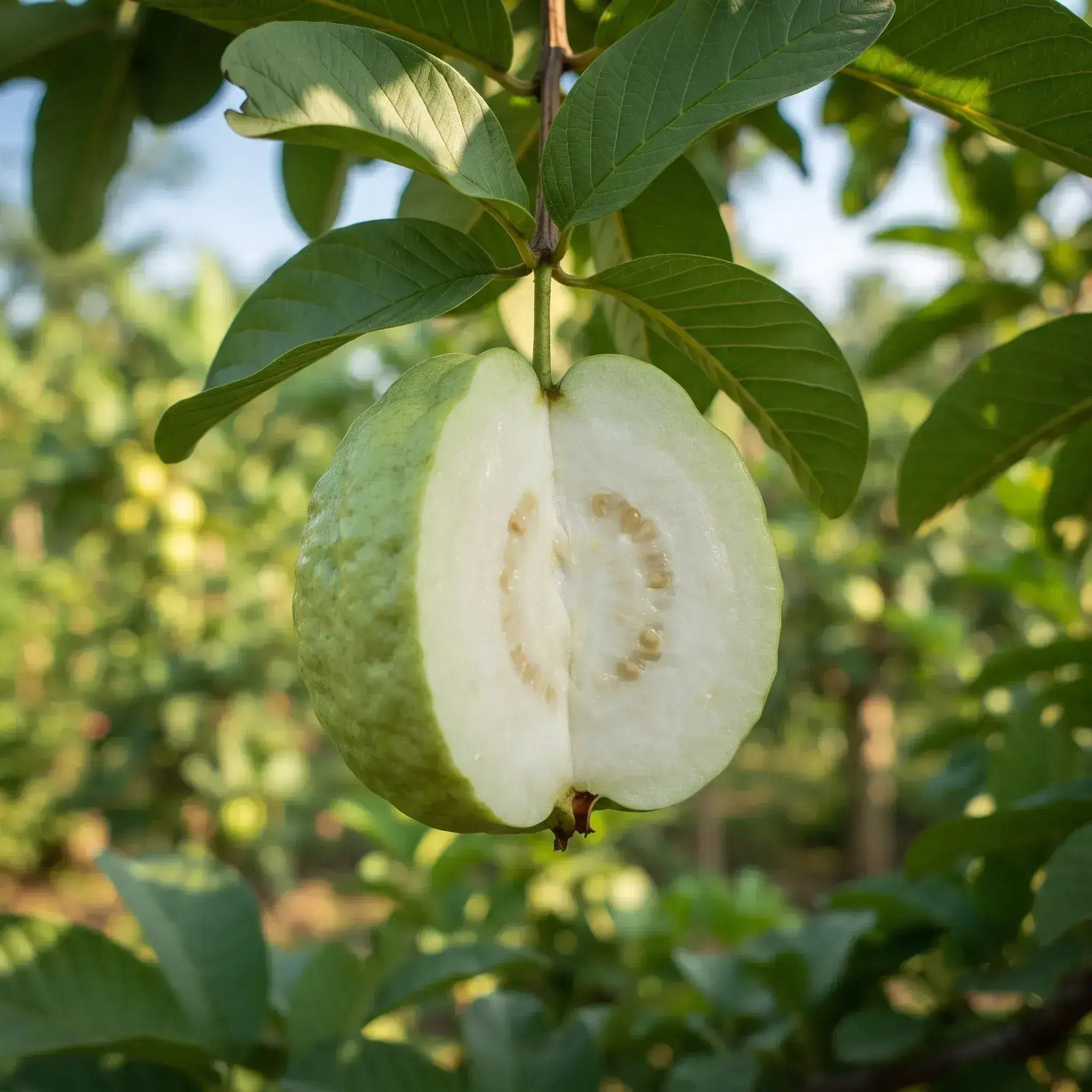
After successful pollination, round to slightly oval fruits develop over roughly 14 to 18 weeks. As a Taiwan Pink Guava matures, its glossy green skin softens to pale green or light yellowish-green, revealing fragrant pink flesh with a juicy, mildly sweet flavor and relatively soft seeds.
Pollination and Fruiting Tips
Psidium guajava is largely self-compatible and readily pollinated by garden insects, meaning a single Taiwan Pink Guava Plant can set fruit on its own outdoors. Regular organic feeding, consistent soil moisture during fruit sizing, and bagging developing fruits to protect them from fruit flies help ensure clean, blemish-free harvests.
Sunlight Requirements
A productive Taiwan Pink Guava Plant requires full, unobstructed sunlight for at least 6 to 8 hours every day. Abundant sunlight drives vigorous shoot growth, abundant flower bud formation, rich pink flesh color, and natural sugar development.
In regions where summer temperatures exceed 40°C, newly planted saplings or potted plants benefit from light afternoon shade during extreme heatwaves until their root systems are well established.
Watering Requirements
Steady, moderate soil moisture keeps the Taiwan Guava Tree healthy and prevents flower drop or small, dry fruits.
Watering During Establishment and Summer
During the first 3 to 4 weeks after planting, water every 2 to 3 days to keep the root zone evenly damp without becoming waterlogged. In hot Indian summers, potted plants generally need watering every 2 to 3 days when the top 3 to 5 cm of soil feels dry, while ground-planted trees require deep watering once every 5 to 7 days.
Watering During Monsoon and Winter
During the monsoon, reduce or pause manual watering when rain is regular and ensure rainwater drains quickly away from the roots. In winter, water less frequently—once every 7 to 12 days—always checking soil moisture before watering.
Soil and Potting Requirements
Psidium guajava adapts to a wide variety of Indian soils, including sandy loam, alluvial soil, red lateritic soil, and slightly clay-loam soils, provided drainage is reliable. It grows best in fertile soil with a slightly acidic to neutral pH between 5.5 and 7.2.
Suggested Potting Mixture for Containers
For growing a Taiwan Pink Guava Plant in a pot or grow bag, prepare a well-draining, nutrient-rich mix of 45% fertile garden soil, 25% well-decomposed cow dung manure or vermicompost, 20% coarse river sand or perlite, and 10% cocopeat, along with a handful of neem cake powder. Make sure the container has multiple unobstructed drainage holes.
Growing the Plant in the Indian Climate
The Taiwan Pink Guava Plant performs reliably across tropical and subtropical Indian states, including West Bengal, Maharashtra, Uttar Pradesh, Bihar, Karnataka, Tamil Nadu, Gujarat, and Telangana.
Summer Care
High summer heat accelerates moisture loss from containers and topsoil. Apply a 3 to 5 cm layer of organic mulch (dry leaves or compost) around the root zone—keeping it clear of the trunk bark—to keep roots cool and conserve water.
Monsoon Care
In warm, humid regions such as Kolkata, West Bengal, and coastal India, monsoon triggers vigorous vegetative growth. Ensure pots are raised slightly off the ground so excess rain drains away freely, and prune crowded inner twigs to maintain good airflow.
Winter Care
Mild Indian winters are ideal for ripening crisp, sweet guavas. Established trees tolerate cool winter nights easily, though young saplings in northern plains should be shielded from severe ground frost.
Temperature and Humidity
Psidium guajava thrives in warm temperatures between 20°C and 35°C and adapts well to both moderate and high humidity when given full sun and airflow. Mature plants tolerate brief dips down to 5°C, whereas prolonged freezing temperatures can injure tender shoots.
Fertilizer and Nutrition
Regular organic nutrition supports continuous shoot renewal, flowering, and sweet fruit development.
Feed your Taiwan Pink Guava Plant two to three times a year: before spring growth (February), ahead of the monsoon (June), and after harvest (September or October). Apply 3 to 5 kg of well-rotted farmyard manure or vermicompost for ground-planted trees (or 300 to 500 grams for potted plants), supplemented with bone meal or rock phosphate and potassium-rich organic inputs such as wood ash or banana peel fertilizer. Avoid heavy nitrogen fertilizers during flowering, which can favor leafy growth over fruit set.
Growing the Plant in Pots
The Taiwan Pink Guava Tree is one of the best fruit plants for terrace and balcony container gardening. Start a young sapling in a 16-to-18-inch pot or grow bag, and shift it into a 20-to-24-inch container after 2 years as the root system expands.
If your plant is grafted, always keep the swollen graft union well above the soil surface. Because container roots have limited volume, regular compost top-dressing and light seasonal pruning keep the tree compact, healthy, and productive.
Pruning and Maintenance
Light pruning shapes the canopy, allows sunlight to reach inner branches, and encourages fresh fruiting shoots.
After a harvest cycle, trim back overly long, drooping, or inward-crossing branches, and remove any dead or diseased wood. If your plant is grafted, check the lower trunk periodically and prune off any shoots sprouting below the graft union immediately. Avoid severe pruning on newly planted saplings.
Propagation
In nurseries, Taiwan Pink Guava is propagated vegetatively through air layering (gootee) or wedge grafting onto hardy guava seedling rootstocks. Vegetative propagation preserves the exact pink flesh color, sweetness, and early-bearing habit of the cultivar. Seed-grown guava plants show wide genetic variation and take much longer to bear fruit.
Common Problems and Plant Care
Inspecting leaves and developing fruits regularly helps prevent common guava garden issues.
1. Fruit Fly Damage
Oriental fruit flies can lay eggs in ripening guavas, especially during monsoon and late summer. Cover golf-ball-sized developing fruits with breathable paper or organza fruit bags, collect fallen fruits promptly, and use pheromone traps in the garden.
2. Yellowing Leaves
Yellowing older leaves often point to overwatering, poor drainage, or nitrogen deficiency, while yellowing between green veins on young leaves indicates micronutrient deficiency. Check pot drainage first and apply vermicompost or a balanced organic micronutrient spray.
3. Mealybugs, Aphids, or Whiteflies
Sap-sucking pests occasionally gather on tender new shoots or undersides of leaves. Wash off light clusters with a strong spray of water or apply diluted neem oil (3 to 5 ml per liter of water) in the cool evening hours.
4. Flower or Young Fruit Drop
Sudden moisture swings (letting soil dry out completely and then flooding it), extreme heatwaves, or lack of potassium and boron can cause small fruitlets to drop. Maintain steady, moderate watering during flowering and fruit sizing.
Suitability for Home Gardens
The Taiwan Pink Guava Plant is well suited for open home gardens, sunny terraces, large pots or grow bags, kitchen gardens, and farmhouse orchards. Because it requires strong direct sunlight for 6 to 8 hours daily, it is not suitable for indoor rooms or shaded balconies.
Safety and Important Information
Ripe Taiwan Pink Guava fruits are nutritious and safe to eat fresh, juiced, or in culinary preparations. If applying any organic or garden sprays, follow product instructions and wash harvested fruits thoroughly before eating. While guava foliage and ripe fruit are non-toxic to humans, prevent pets from chewing large quantities of unripe fruits or fallen plant debris, which may cause mild digestive upset.
Live Plant Delivery Information
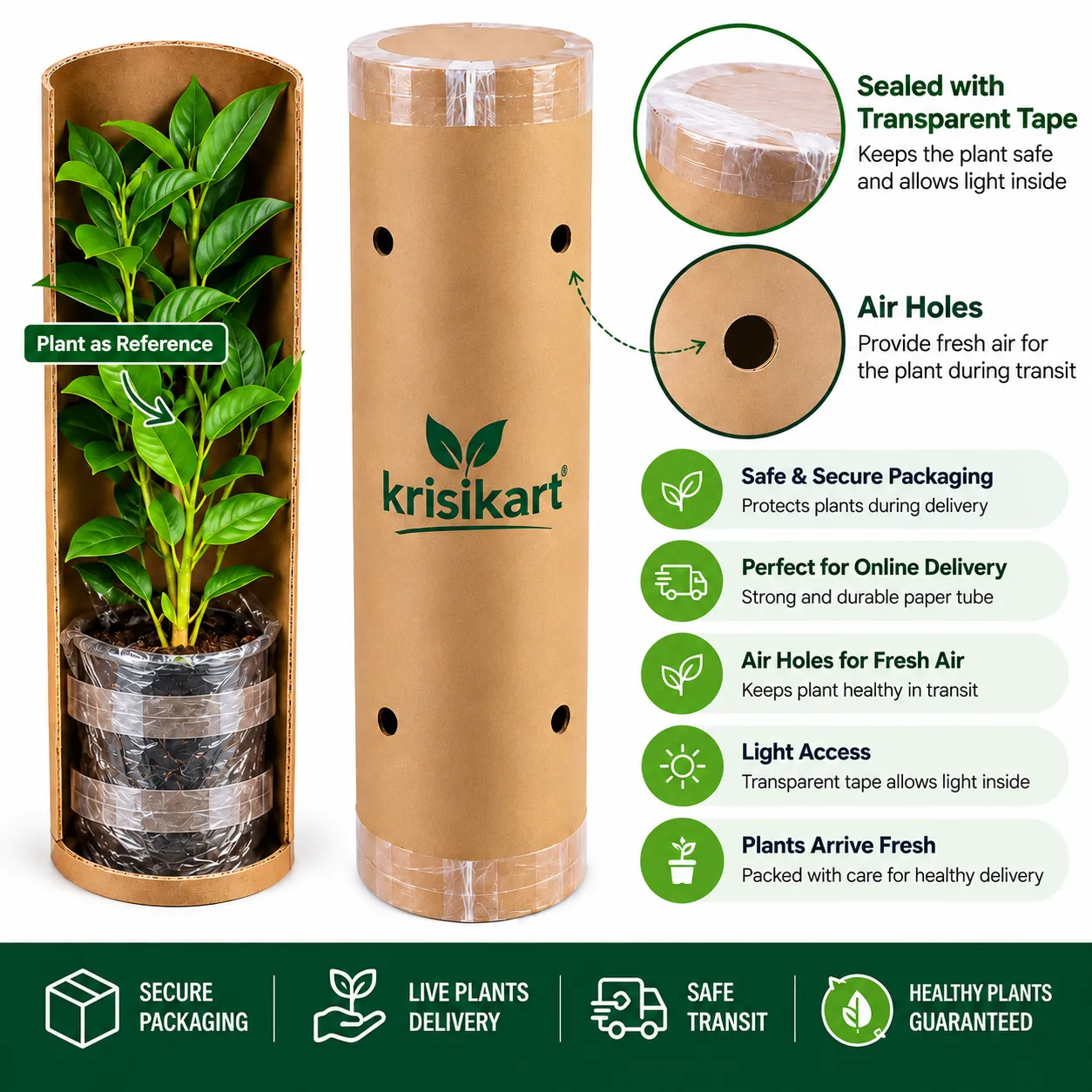
Live plants are natural living specimens, so normal variations in height, stem thickness, branching, and leaf count are expected. Mild transit stress can occur during shipping, and a few older leaves may turn yellow or shed shortly after arrival.
Upon receiving your Taiwan Pink Guava Plant, place it in bright, filtered outdoor light for 3 to 4 days to recover before moving it into full direct sunlight. Check the soil moisture immediately and water gently if dry. Avoid applying fertilizers, repotting right away, or pruning healthy shoots during the first 10 to 14 days while the sapling acclimates.
Why Choose the Taiwan Pink Guava Plant for Your Garden?
Easy to manage, quick to establish, and well adapted to warm Indian weather, the Taiwan Pink Guava Plant brings both lush evergreen foliage and delicious pink-fleshed fruit to your home garden or terrace. With full sunlight, well-drained soil, and simple seasonal care, Psidium guajava offers rewarding harvests year after year.
Botanical Information and Further Reading
- Kew Science – Plants of the World Online: Psidium guajava L.
- Royal Horticultural Society (RHS) – Psidium guajava Plant Details
- ICAR – Central Institute for Subtropical Horticulture (Guava Research and Cultivation)
- eFlora of India – Psidium guajava Botanical Reference
- University of Florida IFAS Extension – Guava Growing in the Home Landscape
Frequently Asked Questions (FAQs)
1. What is the botanical name of the Taiwan Pink Guava Plant?
The accepted botanical name of the Taiwan Pink Guava Plant is Psidium guajava, and it belongs to the myrtle family Myrtaceae.
2. What makes Taiwan Pink Guava different from regular white guava?
Taiwan Pink Guava produces round-to-oval fruits with attractive coral-pink flesh, a thick crisp outer pulp, fewer and softer seeds, and a sweet, fragrant flavor.
3. Can I grow a Taiwan Pink Guava Tree in a pot on my terrace?
Yes, it grows very well in a 16-to-24-inch pot or grow bag on a sunny terrace with well-draining soil, regular organic feeding, and light pruning.
4. How long does a Taiwan Pink Guava Plant take to bear fruit?
Vegetatively propagated plants (grown via air layering or grafting) typically begin flowering and fruiting within 1 to 2 years under favorable sun and care, though exact timing varies with plant age and growing conditions.
5. Do I need two guava trees for pollination?
No, Psidium guajava is largely self-compatible and pollinated by bees, so a single outdoor Taiwan Pink Guava Plant can bear fruit on its own.
6. How much sunlight does the Taiwan Pink Guava Plant need?
It needs full, direct sunlight for at least 6 to 8 hours daily for strong branching, abundant flowering, and sweet pink fruits.
7. How often should I water my Taiwan Guava Tree?
Water deeply whenever the top 3 to 5 cm of soil feels dry. Potted plants generally need watering every 2 to 3 days in summer, while watering should be reduced during monsoon and winter so roots never sit in soggy soil.
8. What is the best soil mix for growing Taiwan Pink Guava in containers?
A well-draining mix of 45% garden soil, 25% vermicompost or well-rotted cow dung manure, 20% coarse river sand or perlite, and 10% cocopeat works well.
9. How do I protect Taiwan Pink Guava fruits from worms or fruit flies?
Cover young developing fruits with paper or mesh fruit bags once they reach marble or golf-ball size, remove fallen fruits promptly, and use fruit fly traps.
10. Is Taiwan Pink Guava suitable for humid climates like Kolkata or West Bengal?
Yes, it grows very well in West Bengal, Kolkata, and across tropical and subtropical India when planted in full sun with fast-draining soil.
11. How should I prune my Taiwan Pink Guava Plant?
After harvesting, lightly trim overly long, crossing, or weak inner branches to open up the canopy and stimulate new fruiting shoots.
12. Can I keep a Taiwan Pink Guava Plant indoors?
No, it requires strong direct outdoor sunlight to grow and bear fruit and will weaken if kept indoors.
For More Information
Visit: krisikart.com
For Contact Visit:Contact Us
For Shopping Visit: Shop Page


Rakesh Nandi –
Healthy roots and fresh leaves.
Great quality and trusted seller.