
 Plastic Plant pot | Plastic Garden Pot for Plants
 Self Watering Planters | Self Watering Plant Pots For Plants
Pomegranate Plant | Pomegranate Fruit Plant (Punica granatum) Anar Plant
Introduction
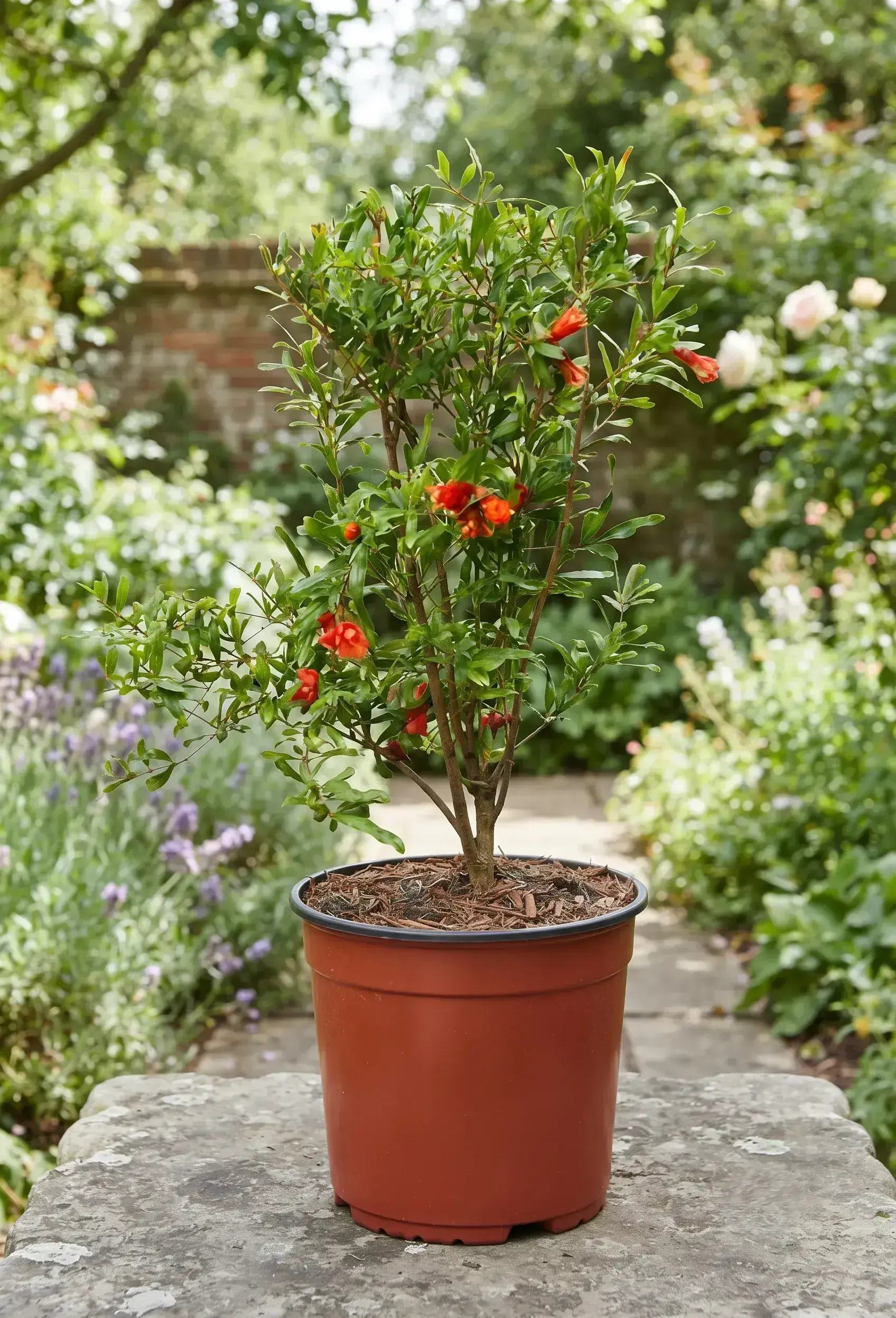
The Pomegranate Plant widely called Pomegranate Fruit Plant (Punica Granatum ) and the Anar Plant across India, is a hardy, long-lived fruit-bearing shrub or small tree prized for its glossy foliage, vibrant orange-red funnel-shaped blossoms, and jewel-like fruits filled with juicy arils. Combining strong ornamental appeal with practical kitchen-garden value, this resilient plant adapts easily to sunny home gardens, terrace containers, and backyard orchards.
Because the Pomegranate Fruit Plant thrives in warm weather and handles dry spells well once rooted, it is one of the most dependable fruiting plants for Indian home gardeners. Whether planted in open garden soil or maintained in a large pot or grow bag with light seasonal pruning, an Anar Plant brings vibrant seasonal color and homegrown harvests to your outdoor space.
Plant Highlights
- Product Name: Pomegranate Plant | Pomegranate Fruit Plant (Punica granatum) Anar Plant for Home Garden
- Common Name: Pomegranate, Anar (Hindi), Dalim (Bengali), Dadim (Sanskrit/Marathi), Madulai (Tamil)
- Botanical Name: Punica granatum
- Family: Lythraceae (Loosestrife family; historically classified under Punicaceae)
- Plant Type: Deciduous to semi-evergreen perennial fruiting shrub or small tree
- Origin: Iran and the Caucasus eastwards to Afghanistan, northern Pakistan, and the western Himalayas
- Flower Colour: Bright scarlet to orange-red (some ornamental cultivars bear pink, yellow, or white blooms)
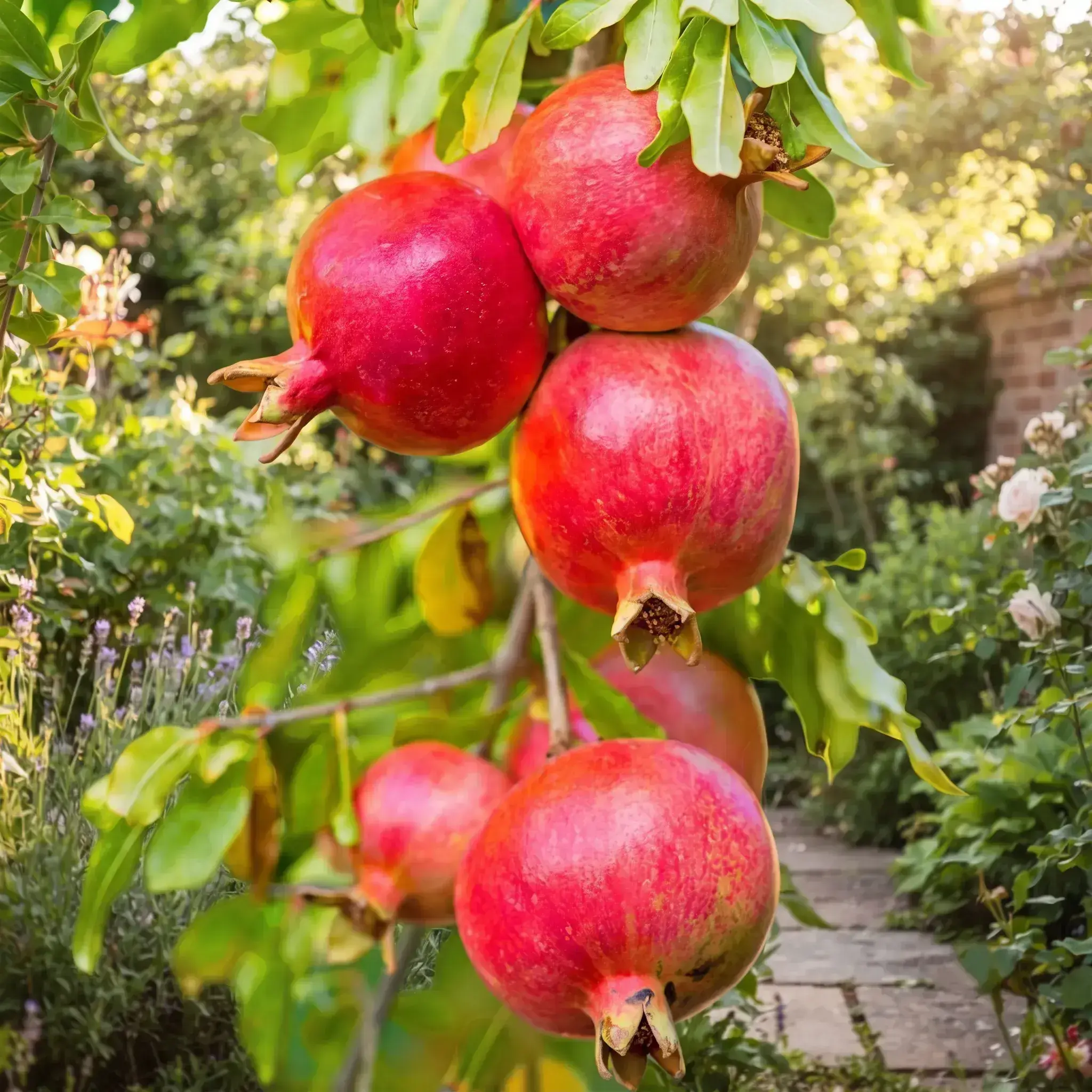
- Fruit Colour: Leathery yellow-green to deep red skin crowned with a persistent star-shaped calyx, enclosing ruby-red to pink juicy arils
- Foliage: Narrow, glossy, oblong-to-lanceolate green leaves (often bronze-tinted when young and turning golden-yellow before shedding in cooler weather)
- Growth Habit: Multi-stemmed, bushy shrub or small branching tree with slender twigs that sometimes end in small spines
- Mature Height: Typically 3 to 5 meters (10 to 16 feet) in open ground; easily maintained at 1.5 to 2.5 meters (5 to 8 feet) in containers with pruning
- Sunlight: Full direct sunlight (at least 6 to 8 hours daily)
- Watering: Moderate; water deeply when the top 3 to 5 cm of soil feels dry, ensuring fast drainage
- Suitable For: Open home gardens, sunny terraces, large pots or grow bags, courtyard borders, and farmhouses
About the Pomegranate Plant
Punica granatum belongs to the family Lythraceae (having formerly been placed in its own small family, Punicaceae) and has been cultivated since antiquity across Iran, the Mediterranean, and the Indian subcontinent. In India, pomegranate is grown commercially in semi-arid regions such as Maharashtra, Karnataka, Gujarat, and Andhra Pradesh, while thriving as a popular backyard and terrace fruit plant nationwide.
For home gardeners, vegetatively propagated plants—such as air-layered (gootee), hardwood-cutting, or tissue-cultured saplings—are preferred over seed-grown plants because they preserve parent fruit sweetness and soft-seed traits while reaching flowering age sooner.
Appearance and Growth Habit
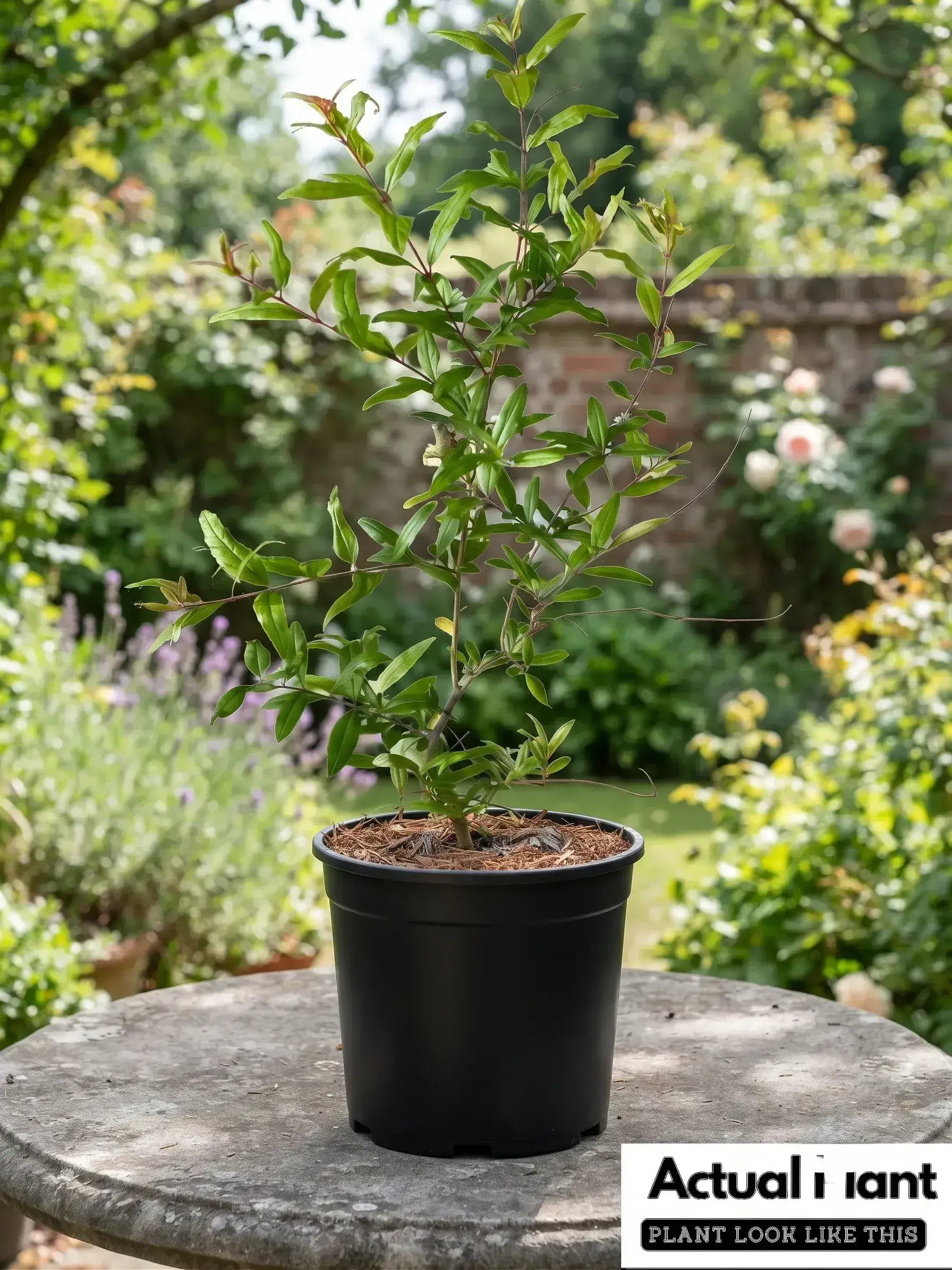
The Pomegranate Plant naturally grows as a dense, multi-stemmed shrub or compact small tree with slender, slightly four-angled young twigs that mature into smooth brownish-grey woody branches. New leaves emerge with an attractive coppery-bronze tint before turning glossy bright green, and in regions with distinct winter chill, the leaves turn yellow and shed seasonally before fresh spring growth appears.
In open ground, an unpruned Anar Plant typically reaches 3 to 5 meters in height with a rounded canopy. In terrace pots or compact yards, light annual pruning easily shapes it into a single-trunked mini-tree or neat multi-stem bush.
Flowers and Flowering Season
The Pomegranate Fruit Plant produces striking, waxy, funnel-shaped scarlet or orange-red flowers about 3 to 4 cm across, featuring crinkled petals and a prominent red calyx tube. The blossoms appear singly or in small clusters near the tips of current-season shoots.
In Indian climates, pomegranate can flower across three traditional seasonal flushes—spring (February to March, known as Ambe bahar), monsoon (June to July, Mrig bahar), and autumn (September to October, Hasta bahar)—depending on local rainfall, temperature, and watering schedules. Vegetatively propagated plants generally start flowering in 2 to 3 years under full sun and good care.
Fruits and Harvest
Following pollination, the base of the flower swells into a round, leathery-skinned fruit crowned by the persistent tubular calyx. Depending on the variety and climate, fruits mature roughly 5 to 7 months after flowering, turning from green to warm yellow-red or deep crimson.
Pollination and Fruiting Considerations
Punica granatum is self-fertile and pollinated by insects such as bees, so a single outdoor Pomegranate Plant can set fruit without needing a second tree. However, consistent soil moisture during fruit sizing and hot, relatively dry weather during ripening are key for sweet, crack-free fruits—heavy rain right as fruits mature can cause skin splitting.
Sunlight Requirements
A productive Pomegranate Plant needs full, unobstructed sunlight for at least 6 to 8 hours every day. Intense direct sun fuels dense branching, vivid red flower production, pest resistance, and rich aril color and sweetness.
Planting in shaded or semi-shaded corners leads to weak, leggy shoots and very poor flowering or fruiting.
Watering Requirements
Once established, Punica granatum is notably drought-tolerant, though steady, even moisture is essential when flowers and fruits are developing.
Watering During Establishment and Summer
During the first 3 to 4 weeks after planting, water every 2 to 3 days so the root zone stays lightly moist while roots anchor. In hot Indian summers, potted plants generally need watering every 2 to 3 days when the top 3 to 5 cm of soil dries out, while ground-planted trees benefit from deep watering once every 5 to 7 days.
Watering During Monsoon and Winter
During the monsoon, pause manual watering when rainfall is regular and ensure excess water drains away quickly. In winter, when growth slows and older leaves drop, water sparingly—once every 10 to 15 days—always checking soil moisture first. Avoid sudden swings from bone-dry soil to heavy flooding, which is the main cause of fruit cracking.
Soil and Potting Requirements
The Anar Plant grows best in deep, fertile, well-draining sandy loam or alluvial soil with a neutral to slightly alkaline or slightly acidic pH between 6.5 and 7.5. Heavy, waterlogged clay soils suffocate roots and invite fungal wilt.
Suggested Potting Mixture for Containers
For growing a Pomegranate Plant in a container, prepare a well-draining mix using 45% fertile garden soil, 25% well-decomposed cow dung manure or vermicompost, 20% coarse river sand or perlite, and 10% cocopeat, mixed with a handful of neem cake powder. Make sure the pot has multiple clear drainage holes at the base.
Growing the Plant in the Indian Climate
The Pomegranate Fruit Plant adapts across most of India, though its fruiting behavior responds strongly to regional rainfall patterns.
Dry and Semi-Arid Regions (Maharashtra, Gujarat, Rajasthan, Karnataka, Punjab)
Warm, low-humidity conditions provide ideal conditions for high-quality fruit color, sweetness, and minimal fungal disease.
Humid and High-Rainfall Regions (West Bengal, Kolkata, Kerala, Coastal India)
In warm, humid regions like Kolkata and coastal states, the Pomegranate Plant grows vigorously and blooms abundantly, though heavy monsoon rains during fruit ripening can cause fruit splitting or fungal spots. Timing flowering so fruits mature during drier post-monsoon or winter months—and planting in raised, fast-draining beds or pots—improves harvest quality.
Winter Care
Mature pomegranate plants tolerate cold Indian winters well and naturally enter brief winter dormancy in northern plains. Reduce watering during mid-winter and shield very young saplings from severe frost.
Temperature and Humidity
Punica granatum thrives in warm temperatures between 25°C and 35°C and prefers low to moderate humidity during fruit ripening. Dormant mature shrubs tolerate brief winter dips near freezing, while active spring shoots prefer frost-free warmth.
Fertilizer and Nutrition
Regular organic nutrition supports healthy shoot renewal, flowering, and juicy fruit development.
Apply 3 to 5 kg of well-rotted farmyard manure or vermicompost around ground-planted plants twice a year—once in February before spring growth and again in August or September as post-monsoon flowering begins. For potted plants, top-dress with 300 to 500 grams of vermicompost every 45 to 60 days during active growth, supplemented with bone meal or rock phosphate and potassium-rich inputs like wood ash or banana peel fertilizer. Avoid heavy nitrogen fertilizer during flowering, which encourages leafy shoots over fruit set.
Growing the Plant in Pots
Because of its naturally compact, multi-stemmed habit, the Pomegranate Plant is one of the best fruit plants for terrace and balcony container gardening. Start a young sapling in a 14-to-16-inch pot or grow bag, and shift it into an 18-to-24-inch container after 2 years as the roots expand.
Keep potted plants in full sun, elevate containers slightly on pot feet for free drainage, and prune lightly each year to balance canopy size with root volume.
Pruning and Maintenance
Light annual pruning keeps the Anar Plant airy, productive, and well-shaped.
Because pomegranate bears flowers on new current-season wood, perform light shaping in late winter (January to early February) before spring growth begins. Remove dead, diseased, or inward-crossing branches, and trim excess basal suckers sprouting from the base so the plant directs energy into 3 to 4 strong main stems. Avoid severe pruning right before or during flowering.
Propagation
In nurseries, pomegranate is propagated primarily by air layering (gootee), hardwood stem cuttings (20 to 25 cm pencil-thick shoots), or tissue culture to preserve parent fruit sweetness, color, and soft seeds. Seed-grown plants germinate easily but show wide genetic variation and take longer to bear fruit.
Common Problems and Plant Care
Checking new shoots and developing fruits regularly helps prevent common pomegranate issues.
1. Fruit Cracking or Splitting
Sudden heavy watering or heavy rain after a prolonged dry spell causes rapid internal swelling that splits the leathery rind. Maintain steady, moderate soil moisture throughout fruit development and mulch the root zone.
2. Flower and Young Fruit Drop
Pomegranate naturally produces many male and hermaphrodite flowers, and male flowers drop after shedding pollen—this is completely normal. Excessive drop of pollinated fruitlets is usually caused by extreme heat, drought stress, or boron and potassium deficiency.
3. Aphids, Whiteflies, or Pomegranate Fruit Borer
Sap-sucking insects often cluster on tender spring tips, while fruit borers can target young fruits. Spray diluted neem oil (3 to 5 ml per liter of water) in the evening on new shoots, and cover lemon-sized developing fruits with breathable paper or organza fruit bags.
4. Leaf or Fruit Spots in Monsoon
Dark spots on leaves or fruit rinds can appear during prolonged humid monsoon weather. Ensure full sun, prune crowded inner branches for airflow, and avoid wetting the foliage when watering.
Suitability for Home Gardens
The Pomegranate Plant is ideal for open home gardens, sunny terraces, large pots or grow bags, courtyard borders, and farmhouse orchards. Because it demands strong direct sunlight for 6 to 8 hours daily, it is not suitable for indoor rooms or shaded balconies.
Safety and Important Information
Fresh pomegranate arils and juice are safe, nutritious, and widely enjoyed. However, note that pomegranate fruit rinds, root bark, and stem bark contain tannins and alkaloids (such as pelletierine) and are not meant for raw consumption—keep pets and young children from chewing bark, roots, or fallen peels, and watch for
For More Information
Visit: krisikart.com
For Contact Visit:Contact Us
For Shopping Visit: Shop Page


Kabita saha –
Very happy with all 8 plants.
Healthy, fresh, and well packed.