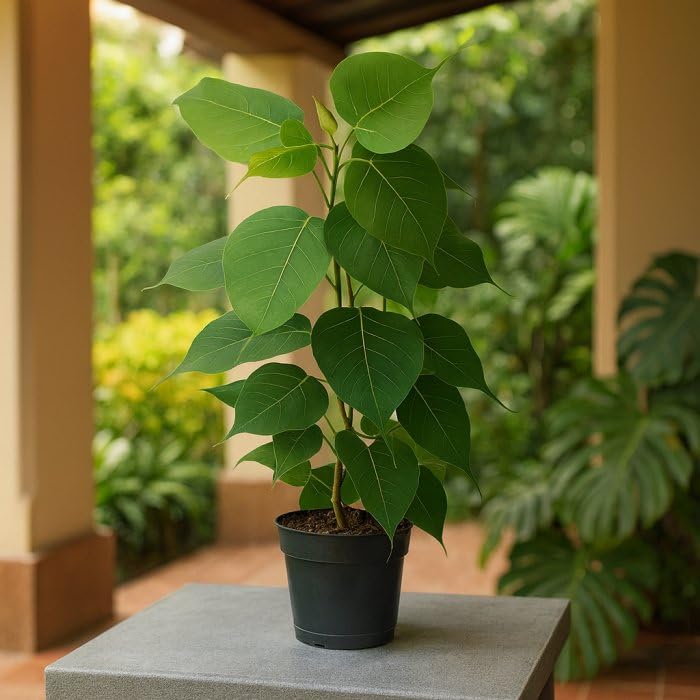
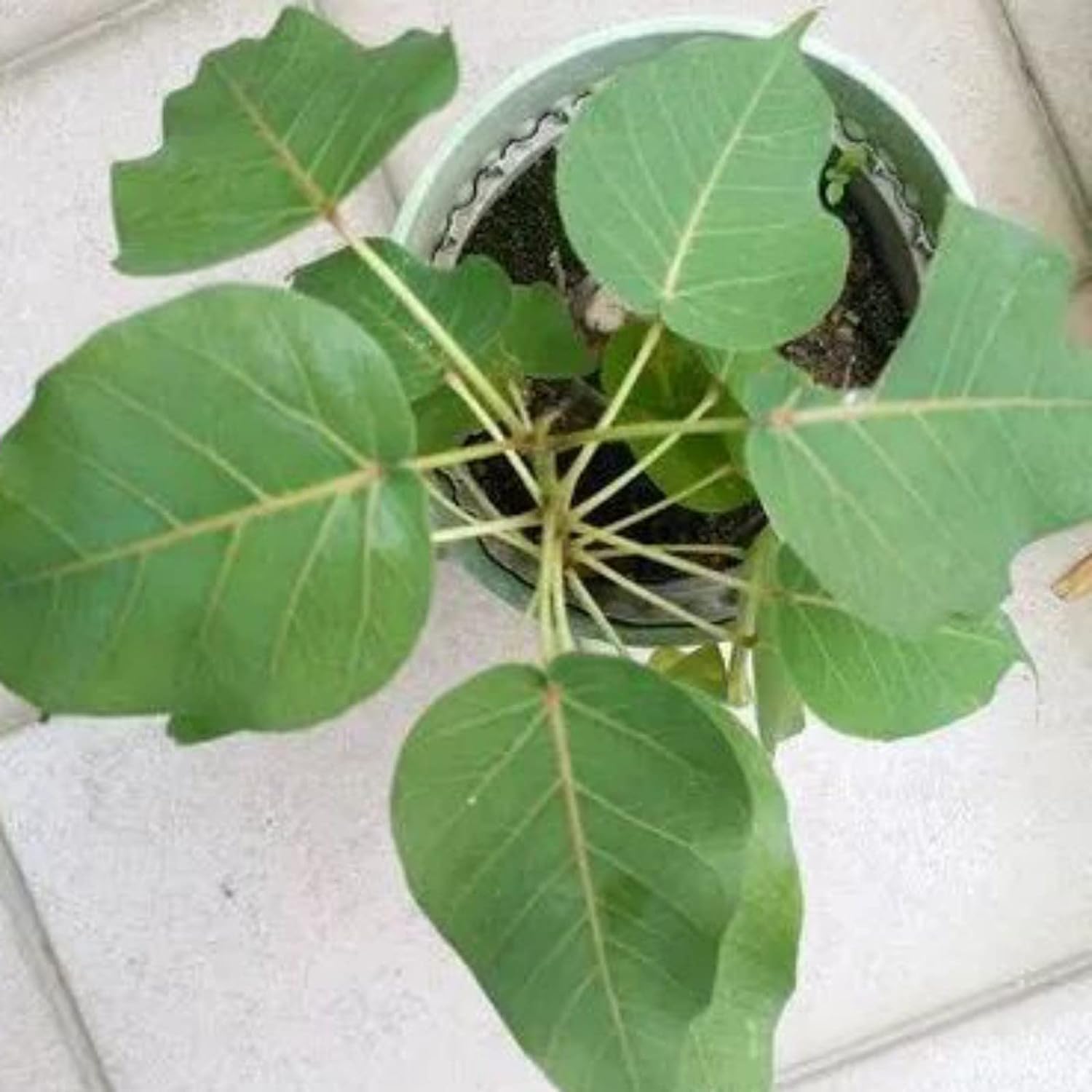

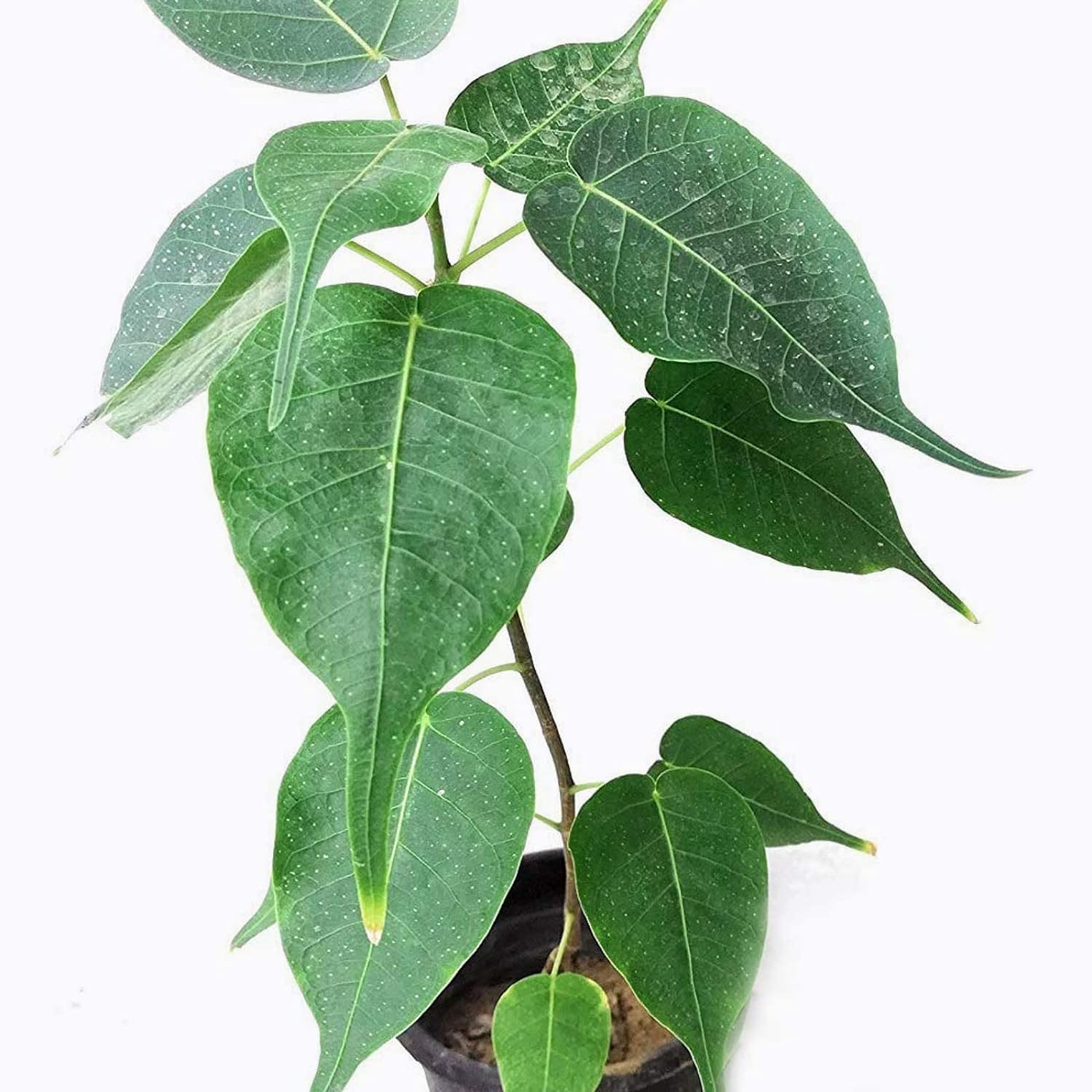
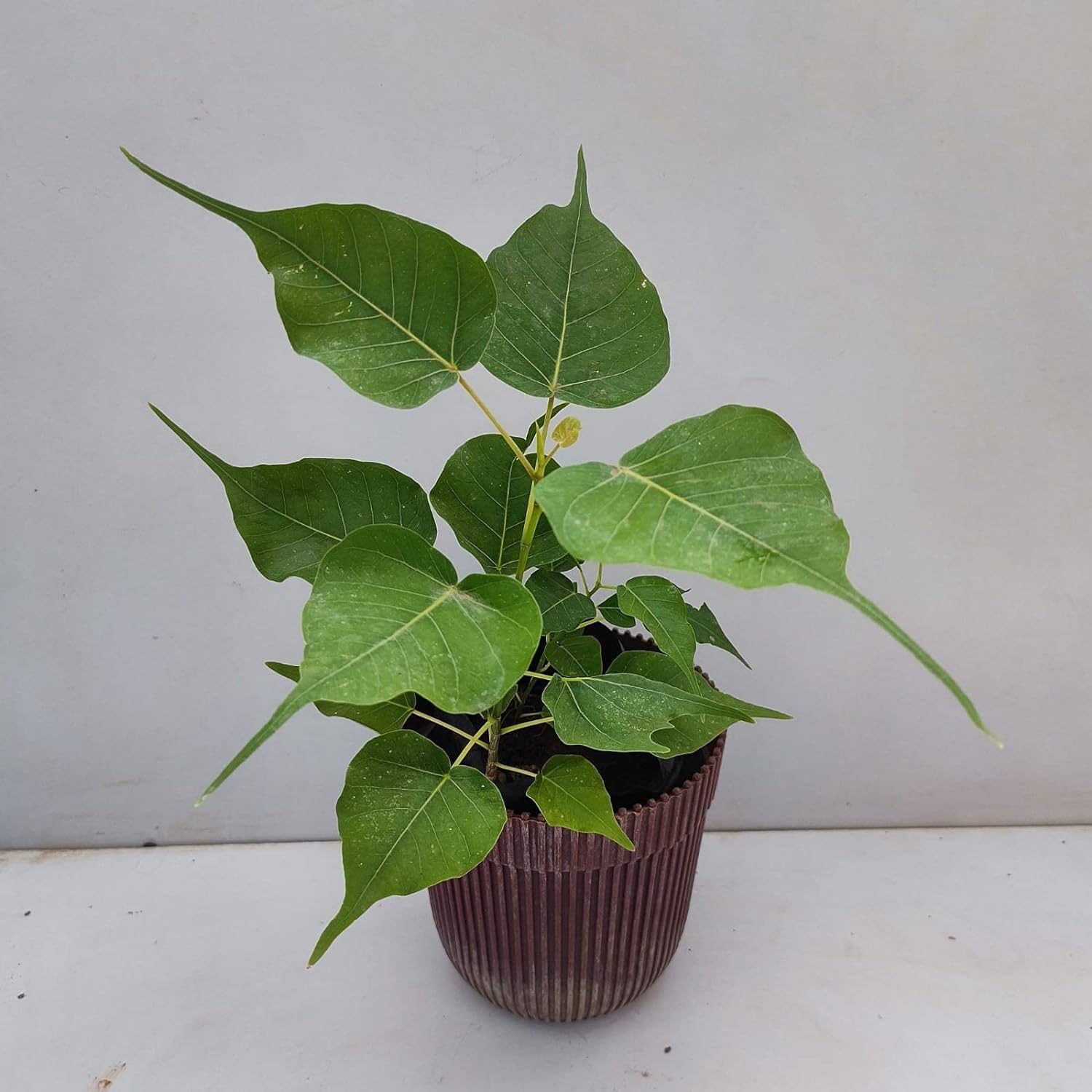
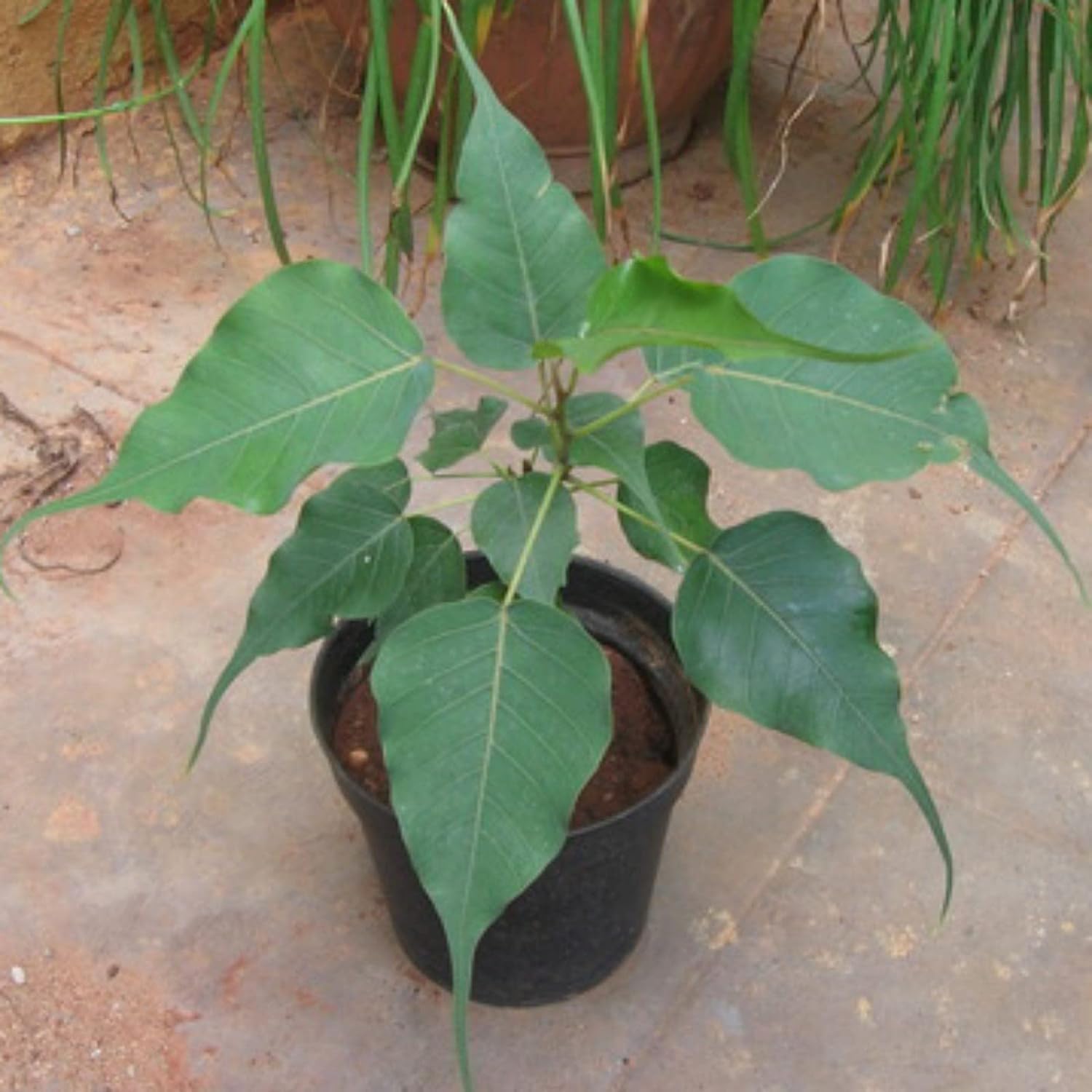
Peepal Plant (पीपल का पौधा) | Ficus religiosa Live Plant
Bring one of India’s most recognizable and culturally significant trees into your garden with a Peepal Plant (Ficus religiosa).
Commonly known as Peepal, Pipal, पीपल, Pippal, or Sacred Fig, this beautiful tree is appreciated for its distinctive heart-shaped leaves, long pointed leaf tips, attractive branching habit, and ability to develop into a large tree when planted in suitable open ground.
The botanical name Ficus religiosa L. is accepted by the Royal Botanic Gardens, Kew. It belongs to the Moraceae (fig family) and is native from southeastern Pakistan through India and onward to Myanmar.
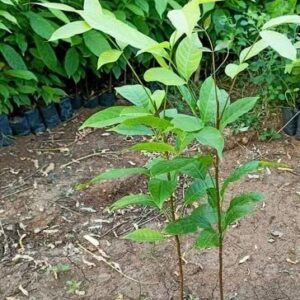
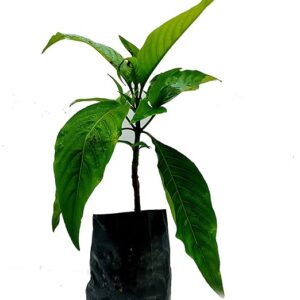
This listing includes a live Peepal plant with pot, making it suitable for starting a Peepal tree in a home garden, terrace garden, or balcony while the plant is young.
🌿 About the Peepal Plant
Peepal is a long-lived tree species naturally associated with the tropical and subtropical regions of South Asia.
Its most recognizable feature is its heart-shaped foliage with a distinctive elongated tip. The leaves move noticeably in light air, giving a mature Peepal tree a lively and graceful appearance.
The species is also widely recognized in India for its cultural and social importance. Kew records Ficus religiosa as having social, environmental and other uses.
🌱 Plant Characteristics
- Common Name: Peepal / Pipal
- Hindi: पीपल / पीपल का पौधा
- English: Sacred Fig / Peepul Tree
- Botanical Name: Ficus religiosa L.
- Family: Moraceae
- Genus: Ficus
- Plant Type: Tree
- Growth Habit: Upright, branching tree
- Leaf Shape: Heart-shaped with a long pointed tip
- Climate: Tropical and subtropical
- Suitable For: Home garden, terrace and young-plant container growing
- Plant Form: Live plant supplied with pot
Kew lists Ficus religiosa as an accepted species in the genus Ficus and family Moraceae.
🍃 Distinctive Peepal Leaves
Peepal leaves are one of the easiest ways to identify the tree.
The leaves have a characteristic heart-like shape and an extended tapering tip, creating the classic Peepal appearance.
Young leaves may appear lighter in colour before developing into mature green foliage.
The attractive foliage makes Peepal an interesting plant for people who enjoy growing traditional Indian trees from a young stage.
🌳 Growth Habit & Mature Size
An important point for home gardeners is that Peepal is naturally a tree, not a naturally dwarf balcony plant.
When planted in suitable open ground and allowed to mature, Ficus religiosa can develop into a substantial tree.
Therefore:
- A young Peepal can be maintained in a pot for a period of time.
- Container growing requires regular monitoring and pruning.
- A larger container may eventually be necessary.
- Mature trees require considerably more space than a balcony can normally provide.
- Do not plant a Peepal close to building foundations, walls, underground utilities or other structures without considering its eventual size.
For apartment and balcony gardeners, it is best to enjoy the plant as a young container-grown tree while planning its future growing space responsibly.
☀️ Sunlight Requirements
Peepal generally benefits from bright sunlight and an outdoor growing environment.
For container-grown plants:
- Place the pot in a bright location.
- Morning and direct sunlight are beneficial.
- Gradually acclimatize a young plant if it has previously been kept in shade.
- Avoid suddenly moving a shade-grown plant into intense full-day summer sunlight.
- A sunny terrace or outdoor balcony can be suitable when adequate light is available.
Good sunlight supports healthy foliage and strong growth.
💧 Watering Requirements
Watering should be adjusted according to the pot size, soil, season and local weather.
A newly planted Peepal requires regular attention while establishing its roots.
Watering Tips
- Check the top layer of soil before watering.
- Water thoroughly when the growing medium begins to dry.
- Allow excess water to drain from the pot.
- Increase attention during hot and dry weather.
- During monsoon periods, avoid keeping the container continuously waterlogged.
- Reduce watering during cooler periods if the soil remains moist for longer.
The objective is to provide adequate moisture without creating permanently stagnant conditions around the roots.
🪴 Soil & Potting
Use a fertile, well-draining growing medium for container-grown Peepal plants.
A practical home-garden mixture can include:
- Garden soil
- Well-decomposed compost
- Cocopeat or another moisture-retaining component
- Coarse material to improve drainage
Choose a container with proper drainage holes.
As the plant grows, periodically inspect the roots and overall plant size. If the plant becomes root-bound or grows vigorously, it may require repotting into a larger container.
🌱 Fertilizer & Nutrition
Young Peepal plants generally benefit from a healthy growing medium rather than excessive fertilizer.
For home gardening:
- Add mature compost periodically.
- Use a mild balanced fertilizer when required.
- Avoid excessive fertilizer application.
- Water after applying dry organic fertilizers.
- Reduce feeding during periods of stress or extreme weather.
Healthy soil, appropriate sunlight and correct watering are more important than excessive feeding.
🏡 Peepal Plant for Home Garden
A Peepal plant can be an excellent choice for gardeners who want to grow a traditional Indian tree from a young plant.
It can be maintained initially in:
- Home gardens
- Terrace gardens
- Outdoor balconies
- Large containers
- Courtyard gardens
- Nursery-style collections
- Educational or botanical plant collections
If you have sufficient open space, allowing the tree to eventually develop naturally can be more appropriate than permanently restricting it to a small pot.
🪴 Peepal Plant for Balcony
Yes, a young Peepal plant can be grown in a pot on a balcony, but there is an important long-term consideration.
Ficus religiosa is a tree species and can become large when mature. Therefore, balcony cultivation should be considered temporary or controlled container cultivation, unless the plant is maintained carefully and eventually relocated to a suitable location.
For balcony growing:
- Use a stable and appropriately sized pot.
- Provide plenty of natural light.
- Maintain good drainage.
- Prune unwanted or excessively vigorous shoots.
- Monitor root development.
- Keep the plant away from balcony edges where strong winds could destabilize the container.
- Plan ahead for its future size.
✂️ Pruning & Maintenance
Regular observation helps maintain a young Peepal plant in a manageable form.
Remove:
- Dead leaves
- Damaged branches
- Weak or unwanted shoots
- Excessively long growth when necessary
For a container-grown plant, light formative pruning can help maintain a more compact appearance.
However, pruning should not be used to create unrealistic expectations that a naturally large tree will remain permanently miniature.
🌧️ Indian Climate & Seasonal Care
Peepal is naturally distributed across India and other parts of South Asia, making it well suited to warm Indian growing conditions. Kew lists India among its native distribution areas.
Summer
During hot Indian summers:
- Check soil moisture more frequently.
- Provide adequate sunlight.
- Protect very young plants from sudden extreme heat if necessary.
- Avoid allowing the container to become completely dry for prolonged periods.
Monsoon
During the rainy season:
- Make sure drainage holes remain clear.
- Avoid standing water inside the pot.
- Move container plants to a location with suitable drainage if required.
Winter
In cooler regions, watering can generally be adjusted according to soil moisture and temperature.
🌿 Cultural Significance
Peepal has a deep cultural and historical presence in India and is widely associated with traditional landscapes, temples and community spaces.
The species’ scientific and common-name records include names such as Peepul, Pipal and Pippal.
This product is offered primarily as a live ornamental and culturally significant tree plant for gardening and cultivation.
Traditional or cultural associations should not be interpreted as medical claims.
🌱 Important Growing Consideration
Please remember that Peepal is ultimately a tree.
A small plant supplied in a pot may look perfectly suitable for a balcony today, but its natural growth potential is much larger.
Before planting it permanently:
- Consider available space.
- Keep it away from building foundations.
- Avoid planting directly beside walls.
- Avoid locations near underground pipes or utilities.
- Consider overhead electrical lines.
- Plan for the tree’s long-term growth.
For customers with limited space, keeping the plant in a suitable container and managing its growth is a practical option during its young stage.
📦 Live Plant with Pot – Natural Variation
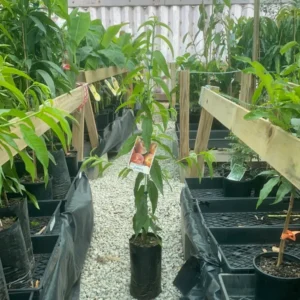
This product is supplied as a live Peepal plant with pot.
Because plants are living products, the exact appearance may vary from product photographs.
Natural differences can occur in:
- Plant height
- Number of leaves
- Leaf size
- Branching
- Stem thickness
- Leaf colour
- Root development
- New growth
These differences are normal and may change according to season, nursery conditions and transportation.
🚚 First Delivery with Pot
We aim to provide first delivery through Blue Dart Air / express courier where the destination and serviceable pincode permit.
The plant is prepared carefully for transportation to help reduce movement and physical damage during delivery.
After receiving the package:
- Open the package carefully.
- Check the plant and growing medium.
- Keep it in a bright outdoor location.
- Water according to soil moisture.
- Allow the plant some time to adjust after transportation.
- Continue normal plant care.
⚠️ Important Note
This is a living Peepal plant (Ficus religiosa) supplied with a pot.
The plant shown in product photographs represents the type of plant offered, but actual size and appearance may vary according to season and availability.
Peepal is a naturally growing tree species. It should not be planted immediately beside buildings, boundary walls, foundations, drains or underground utilities.
For balcony gardeners, container cultivation of a young plant requires regular monitoring and long-term space planning.
⭐ Why Choose This Peepal Plant?
- 🌿 Genuine Ficus religiosa live plant
- 🪴 Supplied with pot
- 🇮🇳 Iconic Indian Peepal / Pipal tree
- 🍃 Attractive heart-shaped foliage
- 🏡 Suitable for starting a home garden tree
- 🌇 Can be maintained as a young container plant
- 🌱 Suitable for terrace and outdoor balcony growing when young
- ☀️ Enjoys bright outdoor conditions
- 🌳 Excellent choice for gardeners interested in traditional Indian trees
- 📦 Carefully prepared for live-plant delivery
🔬 Botanical Information
| Botanical Detail | Information |
|---|---|
| Botanical Name | Ficus religiosa L. |
| Common Name | Peepal / Pipal / Peepul |
| Hindi | पीपल |
| Family | Moraceae |
| Genus | Ficus |
| Plant Type | Tree |
| Growth Habit | Upright, branching |
| Leaf Character | Heart-shaped with elongated tip |
| Native Range | Southeastern Pakistan to Myanmar |
| India | Native distribution |
| Climate | Seasonally dry tropical biome |
| Container Use | Suitable for young plants with appropriate care |
| Garden Use | Home garden, terrace, courtyard and tree planting |
Kew’s Plants of the World Online recognizes Ficus religiosa L. as the accepted name and records India within its native distribution.
📚 Botanical Information & Further Reading
- Kew Plants of the World Online – Ficus religiosa — botanical identity, family, distribution and accepted scientific name.
- Kew – Ficus religiosa General Information — botanical descriptions and recorded uses.
- Kew – Ficus peepul synonym record — confirms Ficus peepul as a synonym of Ficus religiosa.
- ICAR – Indian Council of Agricultural Research — Indian agricultural research and horticultural resources.
- Botanical Survey of India — Indian botanical and plant-diversity resources.











Reviews
There are no reviews yet.