Hybrid Dragon Fruit Plant/Tree for Planting | Premium Live Fruit Plant
This Hybrid Dragon Fruit Live Plant, suitable for planting in a home garden, terrace or a sunny balcony with appropriate support.
Dragon Fruit, commonly called Pitaya, is a climbing succulent fruit plant belonging to the cactus family Cactaceae. It produces fleshy, green, three-sided climbing stems and attractive flowers that can develop into colourful edible fruits.
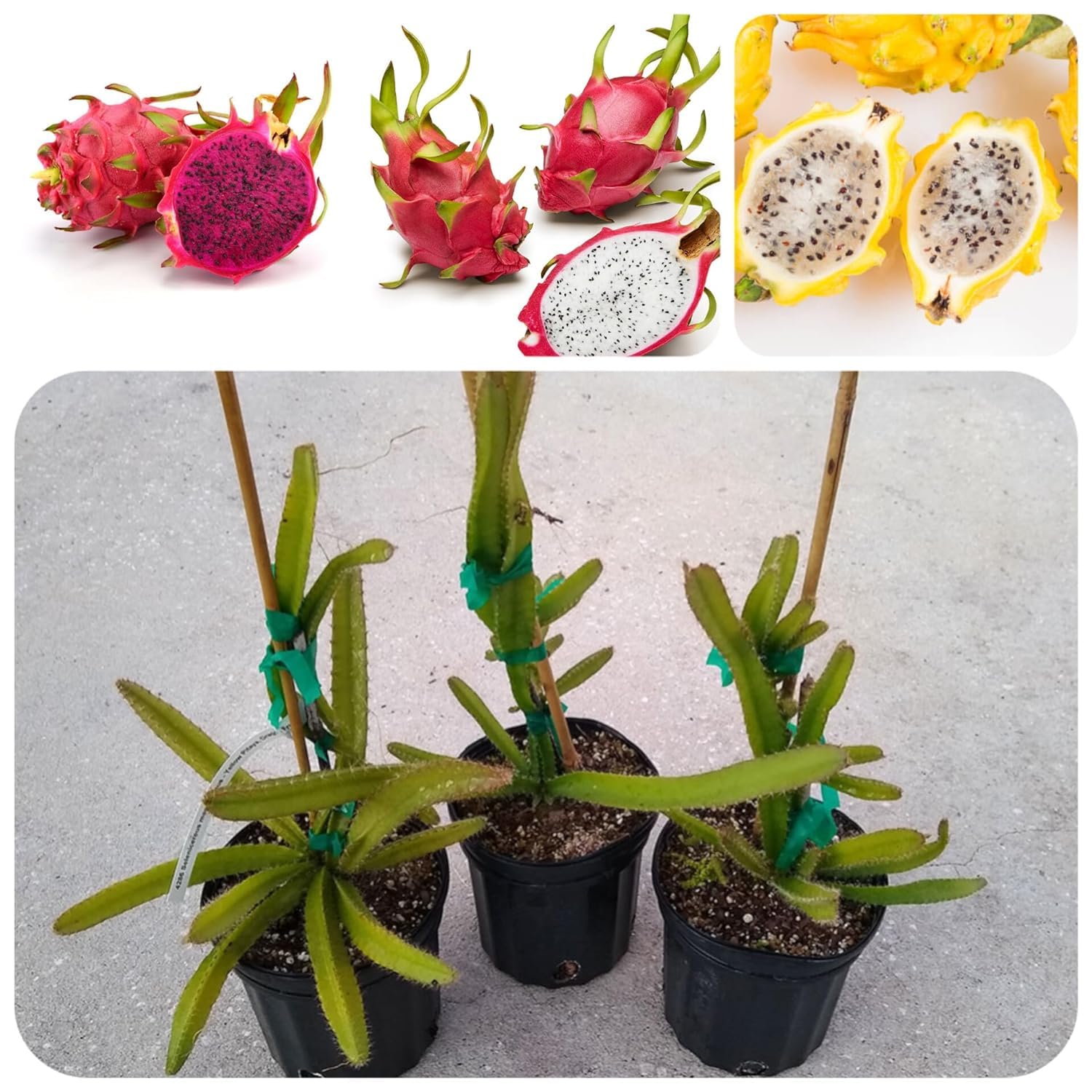
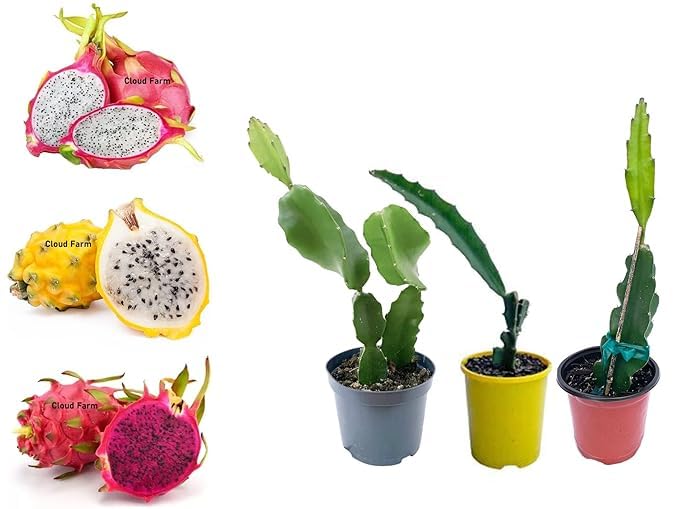
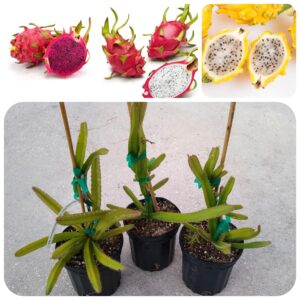
The dragon fruit group includes different cultivated types producing fruits with different skin and flesh colours. ICAR describes commonly cultivated types including red-skinned/red-fleshed, red-skinned/purple-fleshed, red-skinned/white-fleshed and yellow-skinned/white-fleshed forms.
For botanical reference, one widely cultivated white-fleshed dragon fruit species is currently accepted by Kew as Selenicereus undatus, with Hylocereus undatus retained as a synonym.
🌿 About the Dragon Fruit Plant
Dragon fruit is a perennial climbing cactus-like fruit plant rather than a conventional tree. Its fleshy stems grow upward and then cascade when properly trained over a support.
The plant is especially attractive for modern home gardens because it can be trained vertically instead of occupying a large horizontal area at ground level.
ICAR cultivation guidance emphasizes that dragon fruit is climbing in nature and cannot stand independently, making a strong support or trellis essential for successful cultivation.
🌱 Plant Characteristics
- Common Name: Dragon Fruit / Pitaya
- Plant Type: Perennial climbing succulent
- Family: Cactaceae
- Growth Habit: Climbing / trailing
- Stem: Green, fleshy and segmented
- Fruit: Fleshy, colourful and edible
- Flower: Large, showy flowers
- Cultivation: Tropical and subtropical conditions
- Suitable For: Home garden, terrace, patio and suitable sunny balcony
- Support Required: Yes
- Container Growing: Possible with an appropriately large container and strong support
Dragon fruit is classified by ICAR as a perennial semi-epiphytic/xerophytic plant, and its shallow/adventitious root system makes appropriate soil and moisture management particularly important.
🐉 Why Dragon Fruit Is Special
Dragon fruit is popular not only because of its edible fruit but also because of its unusual growth habit.
The plant develops long fleshy stems that can be trained around a central post, trellis or T-shaped support. Once the main stems reach the top of the support, they can be trained to hang downward.
This makes dragon fruit particularly interesting for:
- 🏡 Home gardens
- 🌿 Terrace gardens
- 🏢 Sunny balconies
- 🪴 Large containers
- 🌱 Kitchen gardens
- 🍈 Small home fruit collections
🌸 Flowers & Fruits
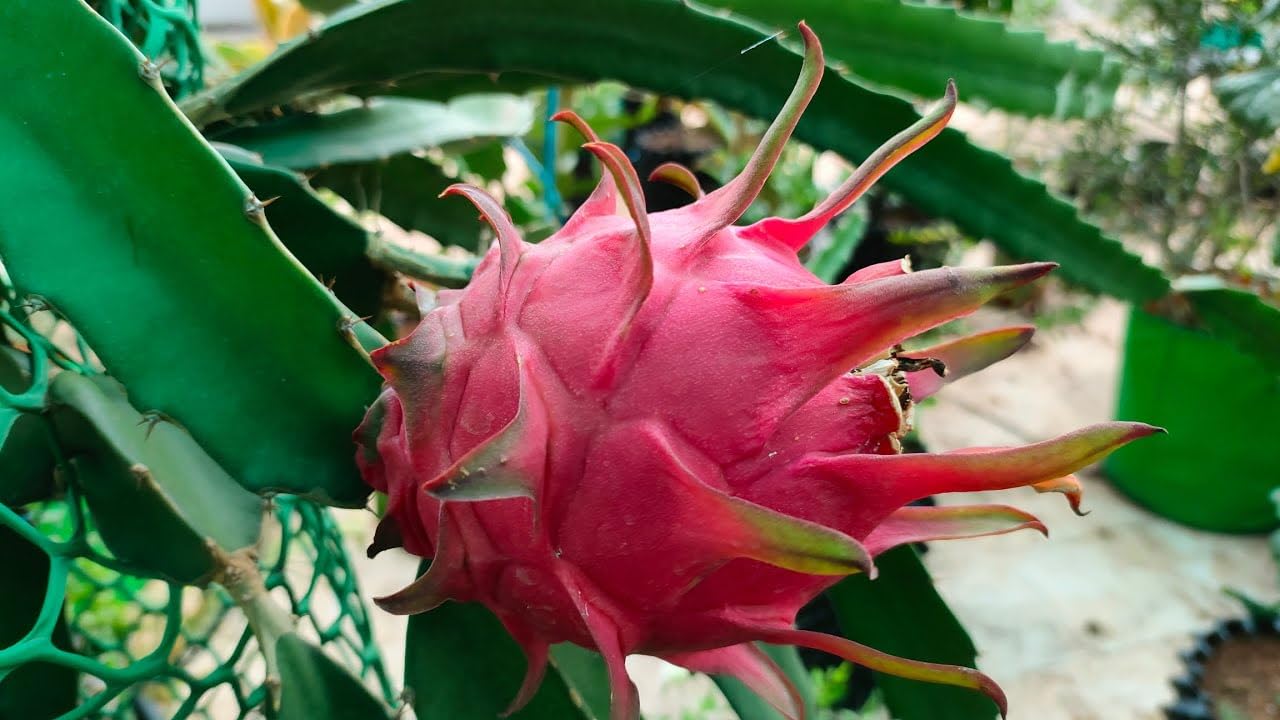
Dragon fruit produces large and attractive flowers from the stems. After successful flowering and fruit development, the plant can produce the characteristic dragon fruits.
Depending on the plant type, fruits may have:
- Red or pink outer skin
- White flesh
- Red flesh
- Purple/red flesh
- Yellow skin in some types
ICAR lists several cultivated groups based on fruit skin and flesh colour, including Moroccan Red, Jumbo Red, Vietnam Red and other named selections.
Important: Because the exact hybrid/cultivar is not specified in this product title, the description does not promise a particular fruit colour, flesh colour, fruit size or flavour.
☀️ Sunlight Requirements
Dragon fruit requires a bright, sunny outdoor location for healthy growth.
For home cultivation:
- Provide plenty of direct sunlight.
- Select an open balcony, terrace or garden location.
- Avoid permanently shaded corners.
- Rotate a container occasionally if one side receives substantially less light.
- Ensure the support structure does not block the plant’s access to sunlight.
However, extremely hot Indian summer conditions can cause sunburn and heat stress. ICAR reports that dragon fruit cultivation can be affected by high temperatures and intense solar radiation, particularly during peak summer.
In exceptionally hot locations, temporary protective shading during the harshest summer period may be useful.
💧 Watering Requirements
Dragon fruit is more drought-tolerant than many conventional fruit plants, but it still requires appropriate moisture for healthy growth.
Follow this simple approach:
- Check the soil before watering.
- Water thoroughly when the growing medium has begun to dry.
- Allow excess water to drain completely.
- Avoid keeping the root zone continuously wet.
- Reduce unnecessary watering during prolonged monsoon rainfall.
- Monitor container plants more frequently during very hot weather.
Avoid waterlogging. ICAR specifically notes that dragon fruit should not be cultivated under waterlogged conditions and that stagnant water around the collar can cause rotting of the fleshy stem.
🪴 Soil & Potting
Dragon fruit prefers a loose, fertile and well-drained growing medium.
For container gardening, a suitable mixture can include:
- Garden soil
- Well-decomposed compost
- Coarse sand
- Cocopeat
- Other drainage-improving organic or mineral material
The pot must have sufficient drainage holes.
ICAR reports that sandy to loamy, fertile soils rich in organic matter can be suitable and gives an ideal soil pH range of approximately 5.0–7.0.
For balcony cultivation, drainage is particularly important because rainwater can accumulate around pots during the monsoon.
🌱 Fertilizer & Nutrition
Dragon fruit benefits from regular nutrition during active growth.
For a home-grown container plant, suitable options include:
- Well-decomposed compost
- Vermicompost
- Balanced fruit-plant fertilizer
- Suitable organic manure
- Micronutrients where required
Use fertilizer according to the plant’s size and the manufacturer’s recommended dosage.
ICAR notes that dragon fruit has shallow/adventitious roots and requires appropriate nutrient management, with organic manure and fertilizers commonly supplied in split applications in commercial cultivation.
For a small balcony container, avoid copying field-level fertilizer quantities intended for commercial orchards.
🏗️ Support & Trellis Requirement
A strong support is one of the most important requirements for dragon fruit.
The plant naturally climbs and cannot maintain its mature canopy without structural support. ICAR describes systems using concrete poles, T-bars and other strong support structures, with the mature stems trained over the top and allowed to hang down.
For a home garden, you can use:
- Strong concrete post
- Metal post
- Heavy-duty garden trellis
- T-shaped support
- Suitable vertical frame
For a balcony, the support should be stable, heavy and securely anchored.
Do not rely on a lightweight decorative plant stand once the plant becomes large.
🏢 Balcony Gardening
Yes, dragon fruit can be started in a large balcony container, provided there is enough sunlight and a suitable support structure.
For balcony cultivation:
- Use a large, stable container.
- Place it in the sunniest suitable position.
- Install a strong vertical support.
- Train the main stem upward.
- Allow mature stems to spread over the support.
- Keep the plant away from areas where stems could obstruct walking paths.
- Ensure the pot cannot easily tip during strong winds.
A balcony is most suitable when it is open, sunny and spacious enough for a climbing plant.
A small shaded balcony is not an ideal permanent location.
🏡 Home Garden Suitability
Dragon fruit is a particularly interesting choice for gardeners who want to grow an unusual fruit plant in limited space.
It can be planted in:
- 🏡 Backyard gardens
- 🌿 Kitchen gardens
- 🌴 Tropical gardens
- 🪴 Large containers
- 🏢 Sunny terraces
- 🌱 Spacious balconies
- 🍈 Home fruit gardens
In a garden, planting directly into well-drained soil allows the plant more room for root development, while a container provides better control over the plant’s growing space.
🌦️ Indian Climate
Dragon fruit is increasingly cultivated in different parts of India. ICAR reports cultivation across tropical and subtropical areas and specifically notes its expansion into states including Maharashtra, Gujarat, Karnataka, Tamil Nadu, Andhra Pradesh, Telangana and West Bengal.
ICAR’s cultivation information indicates that dragon fruit can perform under a broad range of tropical and subtropical conditions, but prolonged waterlogging, freezing conditions, extreme heat and some combinations of heavy rain and humidity can negatively affect the plant.
For Indian home gardeners:
- Give plenty of sunlight.
- Maintain excellent drainage.
- Protect the plant from prolonged standing water.
- Provide additional protection during extreme heat.
- Keep the plant sheltered from damaging winds.
- Use a sturdy support system.
✂️ Pruning & Training
Pruning and training are important because dragon fruit naturally produces long, vigorous stems.
Remove:
- Dead stems
- Diseased or damaged sections
- Very weak growth
- Excessively crowded branches
Train selected healthy stems along the support.
Once the plant reaches the top of the support, allow suitable stems to spread and hang downward.
Good canopy management improves access to sunlight and makes maintenance and harvesting easier.
🌸 Flowering & Fruiting
Flowering and fruiting depend on several factors, including:
- Plant maturity
- Genetic type/cultivar
- Sunlight
- Temperature
- Nutrition
- Water management
- Pruning
- Pollination
- Overall plant health
Some dragon-fruit production systems experience multiple flowering flushes during the growing season. ICAR’s recent cultivation material discusses several flowering/fruiting flushes and emphasizes canopy and nutrient management.
A live plant does not guarantee immediate flowering or fruiting after delivery.
The plant needs time to establish, grow and reach the appropriate stage of maturity.
🌱 Planting & Establishment
If planting the supplied plant in a container:
- Select a large container with drainage holes.
- Prepare a loose, well-draining growing medium.
- Install the support structure before the plant becomes large.
- Plant the dragon fruit carefully.
- Keep the root zone stable.
- Water moderately after planting.
- Place the container in a bright sunny location.
- Train the main stem upward as it grows.
Avoid disturbing the roots unnecessarily during the establishment period.
🐛 General Plant Care
Regularly inspect the plant for:
- Mealybugs
- Scale insects
- Stem damage
- Rot
- Fungal problems
- Sunburn
- Physical damage
Good air circulation, appropriate watering and clean growing conditions can help reduce many common problems.
Overwatering is particularly important to avoid because the fleshy stems and collar region can be vulnerable to rot when water remains stagnant.
🚚 Live Plant Delivery & Natural Variation
This product is supplied as a live Dragon Fruit planting plant.
Because plants are living biological products, natural variation is expected.
The plant received may vary slightly in:
- Height
- Number of stems
- Stem thickness
- Number of new shoots
- Root development
- Leafless/leafy appearance
- Seasonal condition
Minor changes can occur during transportation.
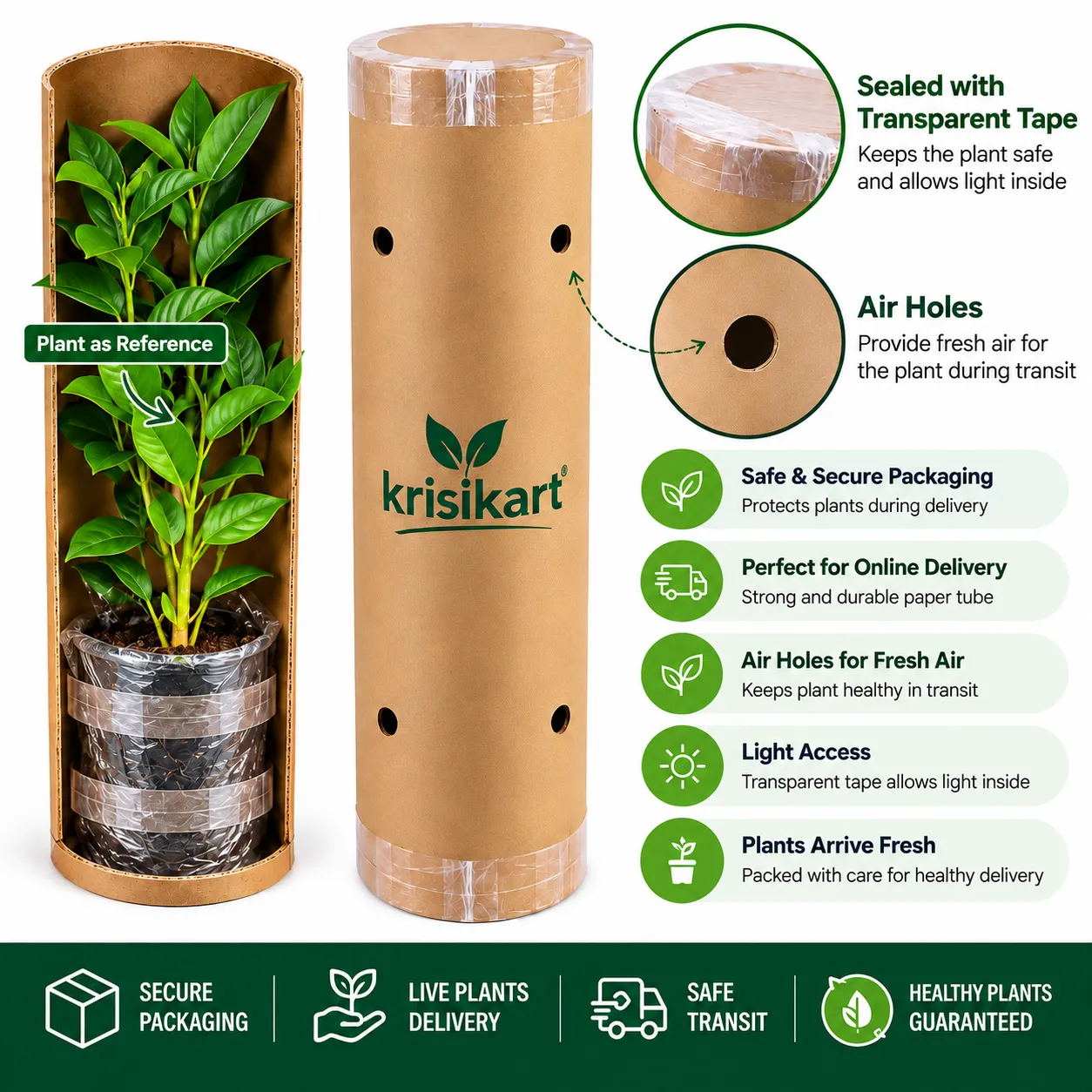
First delivery: The plant is intended to be dispatched through Blue Dart Air/express courier where the service is available for the destination pincode, helping reduce transit time for a live plant.
After receiving the plant:
- Carefully unpack it.
- Check the growing medium.
- Place it in a bright location.
- Water according to soil moisture.
- Avoid heavy fertilizer immediately after delivery.
- Allow the plant time to adjust before major pruning or repotting.
📌 Important Note About “Hybrid”
The term “Hybrid Dragon Fruit” is retained from the product title as a nursery/market description.
Because the exact hybrid or cultivar name was not supplied, this listing does not claim a specific genetic hybrid, fruit colour, fruit size, sweetness level or guaranteed yield.
Dragon fruit includes multiple cultivated species and selections. ICAR documents several types based on fruit skin and flesh colour.
If the supplied plant has a specific verified cultivar name, that cultivar can be added to the product title and botanical information.
⭐ Why Choose This Dragon Fruit Plant?
- 🐉 Attractive and unusual fruit plant
- 🍈 Produces distinctive dragon fruit
- 🌱 Perennial climbing plant
- 🪴 Suitable for large containers
- 🏡 Excellent for home gardens
- 🏢 Suitable for sunny terraces and suitable balconies
- ☀️ Performs well with strong sunlight
- 🌿 Attractive fleshy green stems
- 🏗️ Can be trained vertically on a support
- 🇮🇳 Increasingly cultivated in India
- 🌱 Interesting plant for home fruit gardening
- 🚚 Supplied as a live planting plant
🔬 Botanical Information
| Feature | Information |
|---|---|
| Common Name | Dragon Fruit / Pitaya |
| Family | Cactaceae |
| Plant Type | Perennial climbing succulent |
| Growth Habit | Climbing / trailing |
| Widely Used Botanical Name | Hylocereus spp. |
| Current Kew Accepted Name for White-Fleshed Species | Selenicereus undatus |
| Formerly Used Name | Hylocereus undatus |
| Fruit | Edible fleshy fruit |
| Sunlight | Bright sunlight / full sun with heat management where required |
| Soil | Loose and well-drained |
| Watering | Moderate; avoid waterlogging |
| Support | Essential |
| Container Growing | Suitable with adequate pot size and support |
| Balcony Growing | Suitable for sunny, spacious balconies |
| Home Garden | Suitable |
Kew currently accepts Selenicereus undatus as the species name and lists Hylocereus undatus as a synonym.
📚 Botanical Information & Further Reading
- Kew – Plants of the World Online: Selenicereus undatus
- ICAR – Dragon Fruit Cultivation: Potential Crop for North Eastern Hill Region
- ICAR – Dragon Fruit Sunburn Management
- ICAR – Climate-Resilient Sunburn Management in Dragon Fruit
- ICAR – Underutilized Fruits and Vegetables: Dragon Fruit
- ICAR – Tyre-Trellis System for Dragon Fruit Cultivation
Grow your Dragon Fruit plant in a sunny location, provide a strong support structure, maintain excellent drainage and enjoy watching its distinctive stems, flowers and colourful fruits develop in your own home garden.












Reviews
There are no reviews yet.