 Plastic Plant pot | Plastic Garden Pot for Plants
 Self Watering Planters | Self Watering Plant Pots For Plants
Banana Plant | Robusta Banana Tree (Musa acuminata) – Singapuri Banana Plant
Introduction
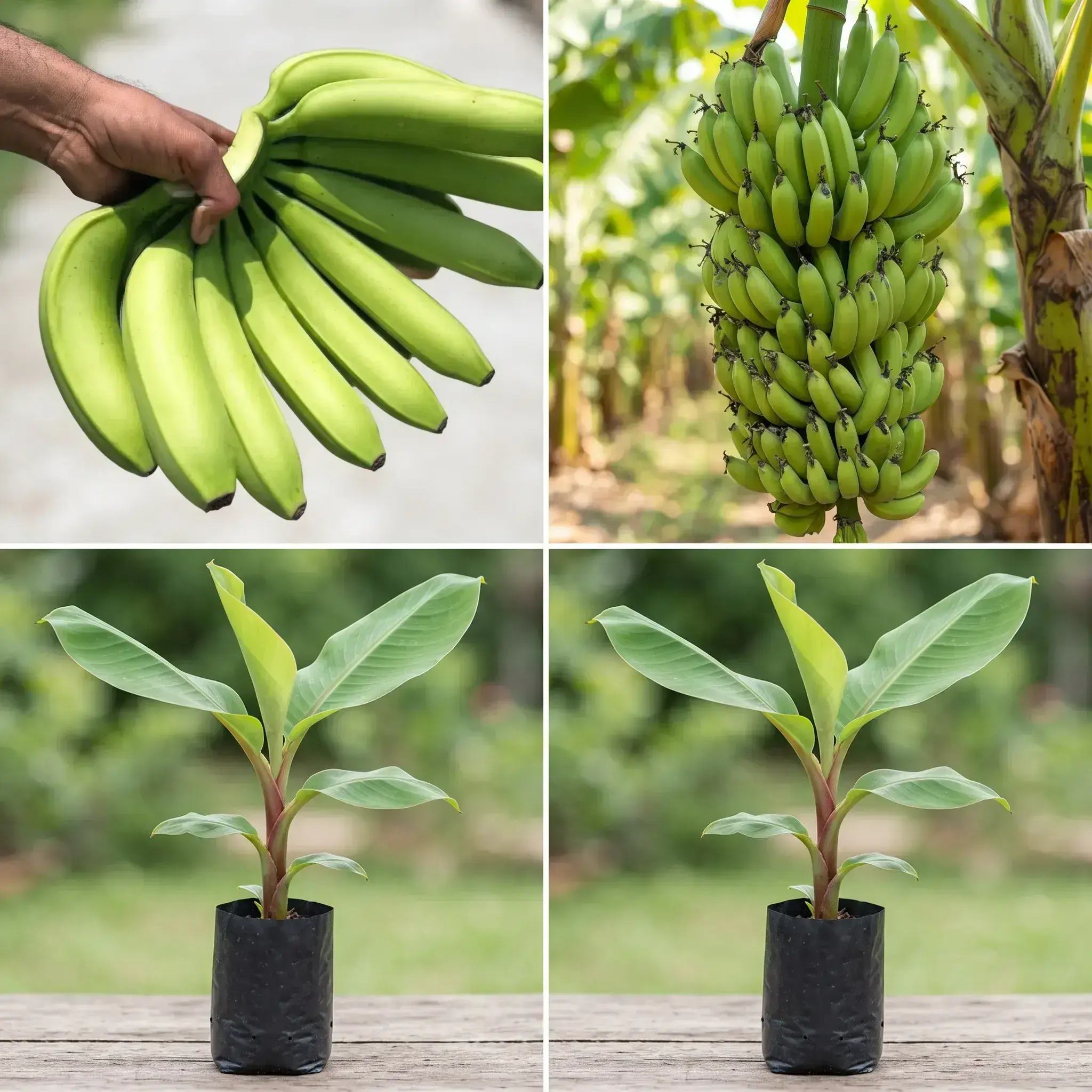
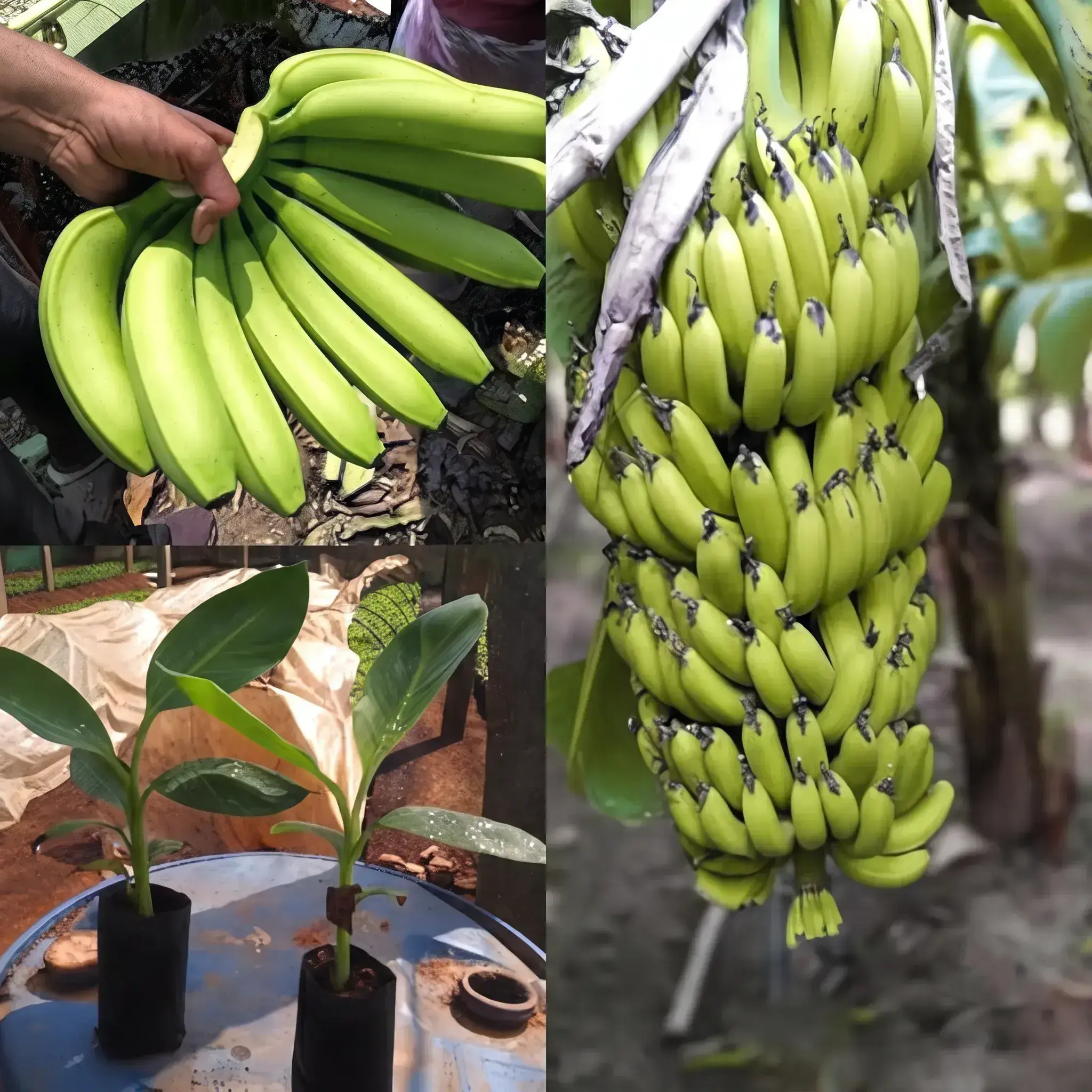
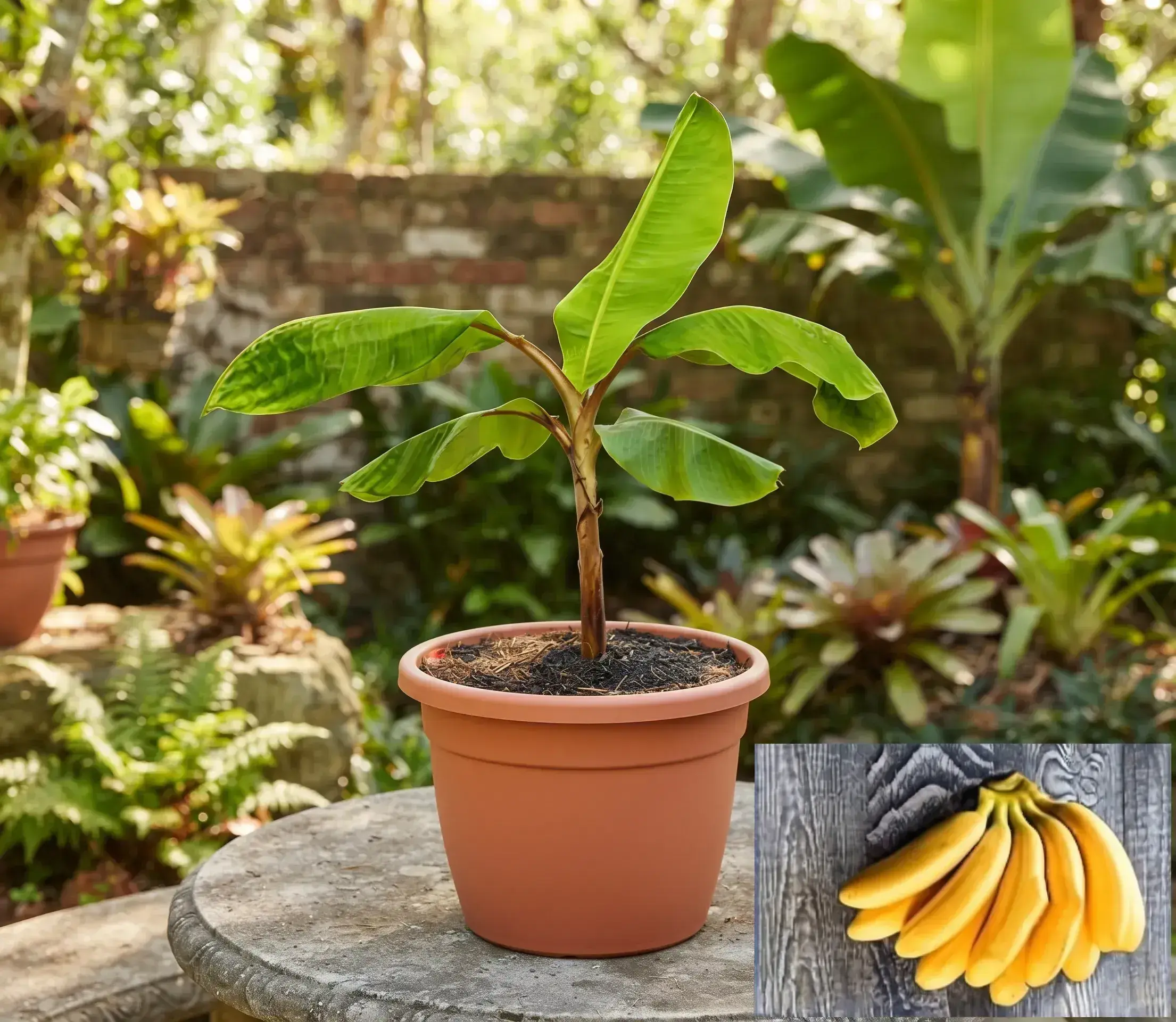
The Banana Plant Also known As Robusta Banana Tree (Musa Acuminata-Musa Accuminata) – Singapuri Banana Plant , is a fast-growing, semi-dwarf tropical fruit plant prized for its bold paddle-shaped foliage and large bunches of long, sweet, aromatic bananas. Combining dramatic tropical landscape appeal with reliable kitchen-garden productivity, this variety fits well in home gardens, backyard orchards, and deep outdoor containers.
Although commonly called the Robusta Banana Tree, the banana plant is botanically a giant perennial herb that grows rapidly from an underground rhizome (corm). Once a main stem flowers and yields its bunch of fruit, new side shoots (suckers) emerging from the base take over, allowing a single planting to produce fresh foliage and harvests across successive cycles.
Plant Highlights
- Product Name: Banana Plant | Robusta Banana Tree (Musa acuminata) – Singapuri Banana Plant Variety
- Common Name: Robusta Banana, Singapuri Banana, Singapuri Kola (Bengali), Kela (Hindi), Vazhai (Tamil)
- Botanical Name: Musa acuminata (AAA Group ‘Robusta’)
- Cultivar Identity: ‘Robusta’ (Cavendish subgroup; known regionally in eastern India as ‘Singapuri’)
- Family: Musaceae (Banana family)
- Plant Type: Giant herbaceous perennial tropical fruit plant
- Origin: Species native to Southeast Asia and Indo-Malesia; ‘Robusta’ is a widely cultivated commercial and home-garden Cavendish selection
- Flower Colour: Creamy-yellow tubular flowers arranged in clusters beneath large, drooping purplish-red bracts
- Fruit Colour: Green when developing, ripening to bright golden-yellow with sweet, soft, seedless creamy-white flesh
- Foliage: Very large, arching, oblong paddle-shaped bright green leaves with a thick central midrib
- Growth Habit: Upright, sturdy, semi-dwarf pseudostem formed by tightly overlapping leaf sheaths, producing basal suckers (pups)
- Mature Height: Typically 2.2 to 3 meters (7 to 10 feet) in open ground; slightly shorter in large containers
- Sunlight: Full direct sunlight (at least 6 to 8 hours daily)
- Watering: High; requires regular, generous watering to keep soil evenly moist, paired with good drainage
- Suitable For: Open home gardens, backyard kitchen gardens, farmhouses, sunny courtyards, and extra-large outdoor containers or drums
About the Robusta Banana Plant
Musa acuminata belongs to the family Musaceae and is indigenous to tropical Southeast Asia. Within cultivated bananas, ‘Robusta’ belongs to the triploid AAA Cavendish subgroup—the same celebrated dessert banana group that includes ‘Grand Naine’ and ‘Dwarf Cavendish’—and is popularly called Singapuri Banana in West Bengal, Odisha, Bihar, and Assam.
Compared to tall traditional banana varieties that easily topple in monsoon winds, the Singapuri Banana Plant maintains a sturdier, semi-dwarf stature around 2.2 to 3 meters tall while still bearing heavy, well-filled bunches of curved, sweet dessert bananas.
Appearance and Growth Habit
Rather than forming a woody trunk, the Robusta Banana Plant develops a thick, succulent green pseudostem composed of tightly wrapped leaf bases rising from an underground corm. At the crown, huge bright-green leaves—often 1.5 to 2.5 meters long—unfurl sequentially from the center, creating a lush tropical umbrella.
In windy outdoor gardens, mature banana leaves naturally split along their parallel veins into ribbons; this is a normal wind-adaptation feature that reduces wind resistance without harming the plant. Around the base of the main pseudostem, young offshoots (“sword suckers”) emerge to continue the clump.
Flowers and Flowering Season
In warm Indian climates, a healthy Robusta Banana Plant can flower at any time of the year once the pseudostem has produced enough mature leaves (typically 9 to 12 months after planting under good sun, water, and nutrition).
A thick flower stalk emerges from the center of the crown and curves downward, tipped by a large, teardrop-shaped purplish-red bud (locally called mocha in Bengali). As the purple bracts lift one by one, rows of creamy-yellow female flowers develop into hands of bananas without needing cross-pollination (parthenocarpy), followed by male flowers at the tip.
Fruits and Harvest
After the flower bunch emerges, the bananas take roughly 3 to 4 months (90 to 120 days) to fill out and mature, depending on temperature and care. Harvest the whole bunch when the individual fruits become plump, their sharp longitudinal angles round out, and the lowest hands begin showing a hint of yellowish-green.
Post-Harvest Care and Ratoon Cropping
Each individual banana pseudostem fruits only once. After harvesting the bunch, cut that spent pseudostem down near ground level (its chopped stem and leaves make excellent potassium-rich garden mulch) so the strongest basal sucker can grow into the next fruiting stem.
Sunlight Requirements
The Singapuri Banana Plant thrives in full, unobstructed sunlight for at least 6 to 8 hours every day. Abundant sunlight fuels rapid leaf unfurling, thick pseudostem strength, timely flowering, and sweet fruit development.
Choose a sunny spot that is sheltered from severe gusty winds whenever possible, as strong storms can lean heavy fruit-bearing stems.
Watering Requirements
Because of its massive leaf surface area and succulent pseudostem, Musa acuminata has a high water requirement and grows best in consistently moist, well-drained soil.
Watering During Establishment and Summer
Keep the soil evenly damp after planting so new roots anchor rapidly. During hot Indian summers, water ground-planted clumps deeply every 2 to 3 days and container-grown plants daily whenever the top 3 cm of soil feels dry.
Watering During Monsoon and Winter
During the monsoon, pause manual watering when rainfall is regular and ensure rainwater drains quickly away from the corm so roots do not rot. In winter, when growth slows in cooler regions, reduce watering to once every 4 to 6 days, checking soil moisture before watering.
Soil and Potting Requirements
The Robusta Banana Plant is a heavy feeder that performs best in deep, fertile, loose, organic-rich loamy or alluvial soil with a slightly acidic to neutral pH between 5.5 and 7.0. Compacted clay soils that hold stagnant water can cause root and corm rot.
Suggested Potting Mixture for Containers
This is a suggested potting mixture for growing a banana plant in a large container rather than a rigid scientific formula: combine 40% fertile garden soil, 35% well-decomposed cow dung manure or vermicompost, 15% cocopeat (to maintain steady moisture), and 10% coarse river sand or perlite, mixed with a handful of neem cake powder. Ensure the container has multiple large drainage holes.
Growing the Plant in the Indian Climate
Musa acuminata ‘Robusta’ is ideally suited to warm, humid tropical and subtropical regions across India, including West Bengal, Kolkata, Assam, Odisha, Maharashtra, Tamil Nadu, Kerala, Karnataka, Andhra Pradesh, and Gujarat.
Summer Care
High summer heat demands generous watering and mulching. Apply a 5 to 8 cm layer of organic mulch (dry banana leaves, straw, or compost) around the base to keep the root zone cool and moist.
Monsoon Care
In high-rainfall regions such as Kolkata and coastal India, monsoon is the fastest growth period for Singapuri Banana. Provide sturdy bamboo props to support plants carrying heavy bunches during monsoon squalls, and ensure excess rainwater drains away fast.
Winter Care
Banana plants are tropical and sensitive to cold and frost. In northern plains where winter night temperatures drop below 10°C, leaf growth slows and leaves may yellow at the edges; reduce fertilizer and heavy watering until spring warmth returns.
Temperature and Humidity
The Robusta Banana Plant thrives in warm temperatures between 25°C and 35°C and loves moderate to high relative humidity (60% to 85%). Temperatures below 10°C–12°C chill the plant and slow bunch development, while frost damages the foliage.
Fertilizer and Nutrition
Bananas are among the hungriest garden fruit plants, especially requiring plenty of potassium and nitrogen to build a thick pseudostem and fill out large fruit bunches.
Mix generous well-rotted farmyard manure or vermicompost into the planting pit before planting. Once established, feed every 30 to 45 days during spring, summer, and monsoon with 2 to 4 kg of vermicompost or composted manure per clump, supplemented with potassium-rich organic inputs such as wood ash, banana peel fertilizer, or kelp/seaweed extract. Always water thoroughly after feeding.
Growing the Plant in Pots
Because ‘Robusta’ is a semi-dwarf variety, it can be grown on a sunny terrace or patio in an extra-large, deep container—such as a 22-to-24-inch heavy-duty tub, half-barrel, or large grow bag at least 18 to 20 inches deep.
In containers, maintain only one main stem and one replacement sucker at a time, water daily in warm weather, and feed monthly with organic compost and potassium to support fruiting.
Pruning and Maintenance
Simple routine care keeps your Singapuri Banana Plant tidy, healthy, and productive.
Sucker Management
A healthy banana clump sends up numerous side suckers. Keep only one strong, narrow-leaved “sword sucker” per clump as the follower plant to replace the main stem after harvest, and cleanly slice off extra suckers at ground level so they do not compete for water and nutrients.
Removing Old Leaves and Male Bud
Trim away completely brown, hanging lower leaves to improve airflow and deter pests. Once all female hands on a flower bunch have formed fruits and a 15 cm bare stalk gap appears below the lowest hand, snapping off the remaining purple male bud helps redirect energy into plumping the bananas.
Propagation
Because edible Robusta/Singapuri bananas are seedless triploids, they are propagated exclusively through vegetative methods: separating rooted basal suckers (pups) or pieces of the underground rhizome (corm) from an established clump, or via tissue culture in commercial nurseries for uniform, disease-free saplings.
Common Problems and Plant Care
Regular watering, clean mulching, and sucker control prevent most common banana issues.
1. Yellowing or Brown Leaf Edges
Dry, crispy leaf margins usually indicate insufficient watering, low humidity, or potassium deficiency. Increase watering consistency, mulch the base, and add potassium-rich organic fertilizer.
2. Choking or Bunched Leaves at the Crown
If new leaves struggle to unfurl properly and emerge bunched together, the plant is usually experiencing cold stress, severe drought, or nutrient deficiency. Ensure warm sun, regular deep watering, and balanced feeding.
3. Corm Weevil or Pseudostem Borer
Keep the base of the plant clean of rotting old leaf sheaths, avoid leaving cut stem debris piled directly against live stems, and mix neem cake powder into the soil around the clump.
4. Leaf Spot (Sigatoka) in Humid Weather
Yellow-brown streaks on older leaves during prolonged monsoon humidity are common. Prune away badly spotted lower leaves, avoid overhead watering, and maintain good spacing between plants.
Suitability for Home Gardens
The Robusta / Singapuri Banana Plant is ideal for open home gardens, backyard kitchen gardens, sunny courtyards, farmhouses, and extra-large terrace containers. Because it needs strong direct sunlight for 6 to 8 hours daily and grows 2.2 to 3 meters tall with wide leaves, it is not suitable for indoor rooms or small, narrow balconies.
Safety and Important Information
Ripe Robusta bananas—as well as the inner tender pseudostem core and flower bud used in traditional Indian cooking—are safe and nutritious to eat. Note that fresh banana sap from cut stems and leaves is sticky and stains clothing permanently dark brown—wear old clothes and gloves when pruning or harvesting, and keep pets from chewing large amounts of raw leaves or peels.
Live Plant Delivery Information
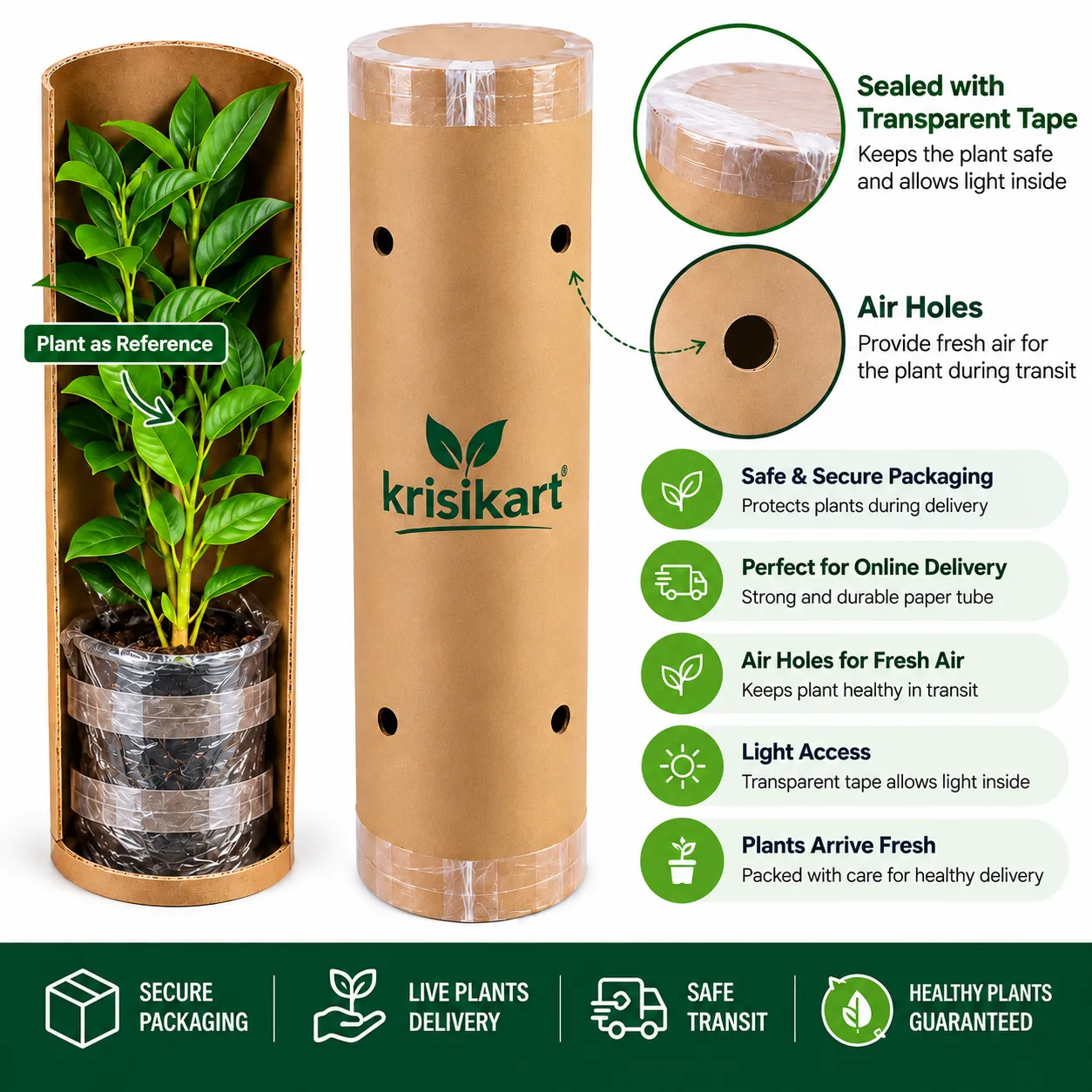
Live banana saplings vary naturally in height, pseudostem thickness, and leaf count. Mild transit stress can occur during shipping, and outer leaves may fold, split along the veins, or turn yellow upon arrival—this is completely normal for broad-leaved banana plants, as fresh new leaves unfurl rapidly from the central cigar-like roll once planted.
Upon receiving your Robusta Banana Plant, place it in bright, filtered outdoor light for 3 to 4 days to recover before moving it into full direct sunlight. Check the soil moisture immediately and water gently so the root ball is evenly damp. Avoid applying fertilizers or repotting right away during the first 7 to 10 days while the plant acclimates.
Why Choose the Robusta Banana Plant for Your Garden?
Fast-growing, semi-dwarf, and remarkably productive, the Robusta / Singapuri Banana Plant transforms any sunny yard or spacious terrace into a lush tropical oasis while yielding sweet, homegrown dessert bananas. Given full sunlight, generous moisture, and organic compost, Musa acuminata rewards home gardeners with continuous greenery and harvests cycle after cycle.
Botanical Information and Further Reading
- Kew Science – Plants of the World Online: Musa acuminata Colla
- Royal Horticultural Society (RHS) – Musa acuminata Plant Details
- ICAR – National Research Centre for Banana (NRCB), Tiruchirappalli
- eFlora of India – Musa acuminata Botanical Reference
- ProMusa – Robusta Banana Cultivar Profile (Cavendish Subgroup)
Frequently Asked Questions (FAQs)
1. What is the botanical name of the Robusta or Singapuri Banana Plant?
The accepted botanical name of the Robusta Banana Plant is Musa acuminata (AAA Cavendish subgroup ‘Robusta’), and it belongs to the family Musaceae.
2. Are Robusta Banana and Singapuri Banana the same variety?
Yes, in eastern India—especially West Bengal, Assam, and Odisha—the semi-dwarf Cavendish cultivar ‘Robusta’ is popularly known by the local trade name Singapuri Banana (or Singapuri Kola).
3. Can I grow a Robusta Banana Plant in a pot on my terrace?
Yes, because ‘Robusta’ is a semi-dwarf variety, it can grow in an extra-large, deep 22-to-24-inch container or drum on a sunny terrace with daily watering in summer and monthly organic feeding.
4. How much sunlight does a Singapuri Banana Plant need?
It needs full, direct sunlight for at least 6 to 8 hours every day for rapid leaf growth, thick pseudostem development, and sweet fruit bunches.
5. How long does a Robusta Banana Plant take to produce bananas?
Under warm, sunny outdoor conditions with generous water and organic fertilizer, a healthy sapling typically flowers in 9 to 12 months and produces ripe bananas 3 to 4 months later.
6. Does a banana plant die after giving fruit?
The individual stem (pseudostem) that produced the banana bunch fruits only once and should be cut down after harvest, while new basal suckers (pups) growing from the underground root corm continue growing and bearing future bunches.
7. Do I need two banana plants for pollination and fruit set?
No, cultivated Robusta/Singapuri bananas are parthenocarpic (seedless and self-fruiting), so a single plant produces full bunches of bananas without needing cross-pollination.
8. How often should I water my Banana Plant?
Banana plants need consistently moist, well-drained soil. Water every 2 to 3 days in open ground (or daily in pots) during hot summer weather, and reduce watering during rainy monsoon spells and cool winter months.
9. Why are the large leaves of my banana plant splitting into strips?
Leaf splitting along the veins is a completely natural adaptation to wind that prevents the whole plant from blowing over; it does not hurt the plant.
10. What is the best soil and fertilizer for growing bananas at home?
Fertile, well-draining loamy soil rich in organic compost is ideal. Feed every 30 to 45 days with vermicompost or well-rotted cow dung manure plus potassium-rich inputs like wood ash or banana peel fertilizer.
11. Is the Robusta Banana Plant suitable for West Bengal and Kolkata?
Yes, Singapuri / Robusta Banana is one of the most widely grown banana varieties across West Bengal, Kolkata, and humid tropical parts of India.
12. Can I keep a Robusta Banana Plant indoors?
No, it grows 2.2 to 3 meters tall with huge leaves and requires intense direct outdoor sunlight to thrive and fruit.
For More Information
Visit: krisikart.com
For Contact Visit:Contact Us
For Shopping Visit: Shop Page


Mukesh Kumar –
Plants were bigger than I expected.
Very good experience with Krisikart.