
 Plastic Plant pot | Plastic Garden Pot for Plants
 Self Watering Planters | Self Watering Plant Pots For Plants
Whale Fin Snake Plant | Whale Fin Plant (Sansevieria masoniana) Plant for Home
Introduction
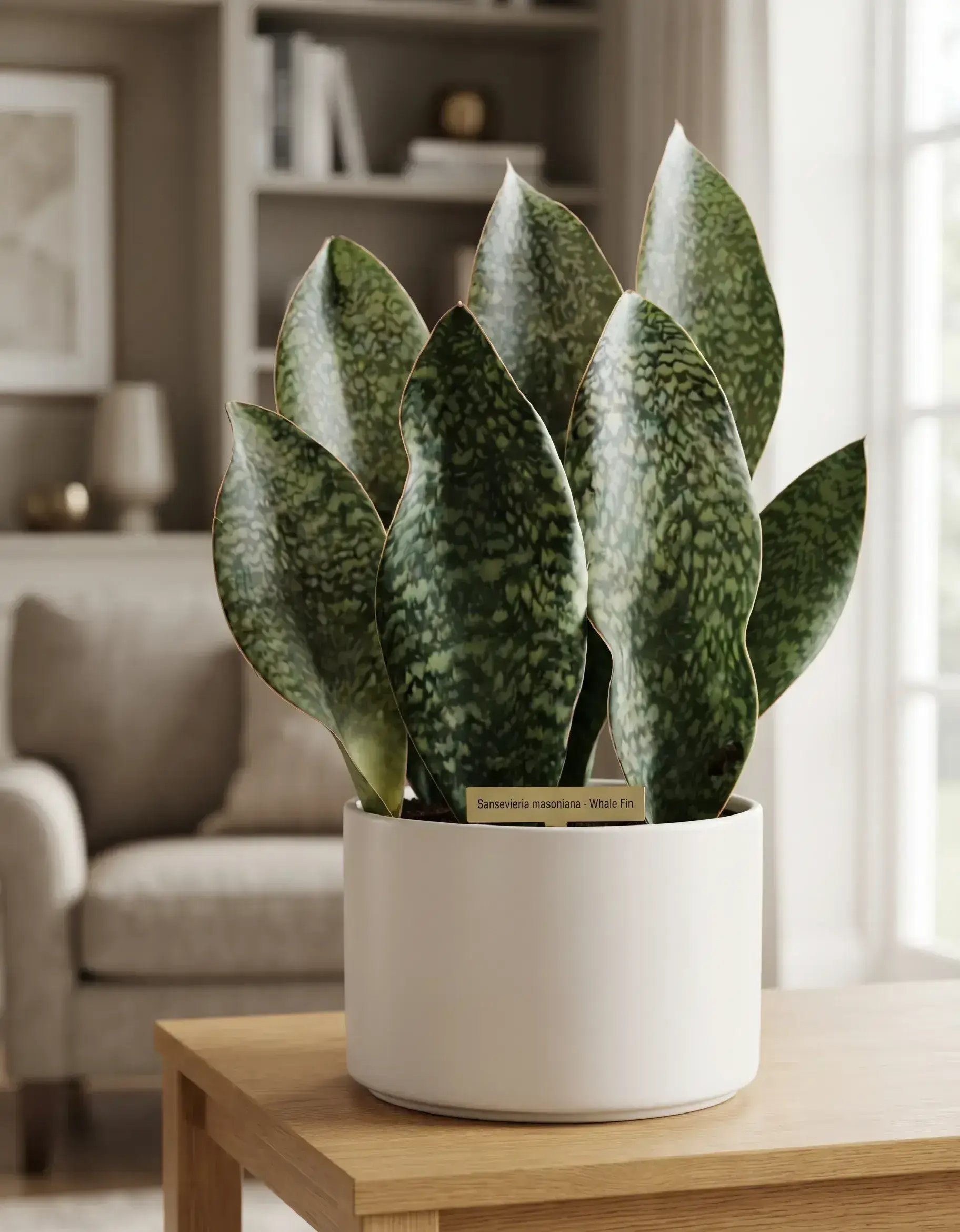
The Whale Fin Snake Plant, botanically known as Sansevieria masoniana (classified in current botanical taxonomy under the synonym Dracaena masoniana), is one of the most distinctive architectural houseplants you can grow at home. Named for its broad, upright, paddle-shaped foliage that resembles a whale’s fin emerging from the soil, this slow-growing semi-succulent adds bold sculptural style to living rooms, bedrooms, office desks, and shaded balconies.
Native to Central Africa, the Whale Fin Plant combines rare designer appeal with the legendary toughness of classic snake plants. It adapts comfortably to bright indirect light or moderate indoor corners, requires infrequent watering, and thrives with minimal fuss in Indian apartments and homes.
Plant Highlights
- Product Name: Whale Fin Snake Plant | Whale Fin Plant (Sansevieria masoniana) Plant for Home
- Common Name: Whale Fin Snake Plant, Whale Fin Plant, Shark Fin Sansevieria, Mason’s Congo Snake Plant, Mother-in-Law’s Tongue
- Botanical Name: Sansevieria masoniana (current accepted taxonomic synonym: Dracaena masoniana)
- Family: Asparagaceae (Asparagus / Dracaena family)
- Plant Type: Slow-growing evergreen perennial semi-succulent houseplant
- Origin: Native to Central Africa (Democratic Republic of the Congo)
- Flower Colour: Small greenish-white tubular flowers borne on a slender upright spike in mature, well-lit specimens
- Flower Fragrance: Lightly sweet, noticeable mostly in the evening
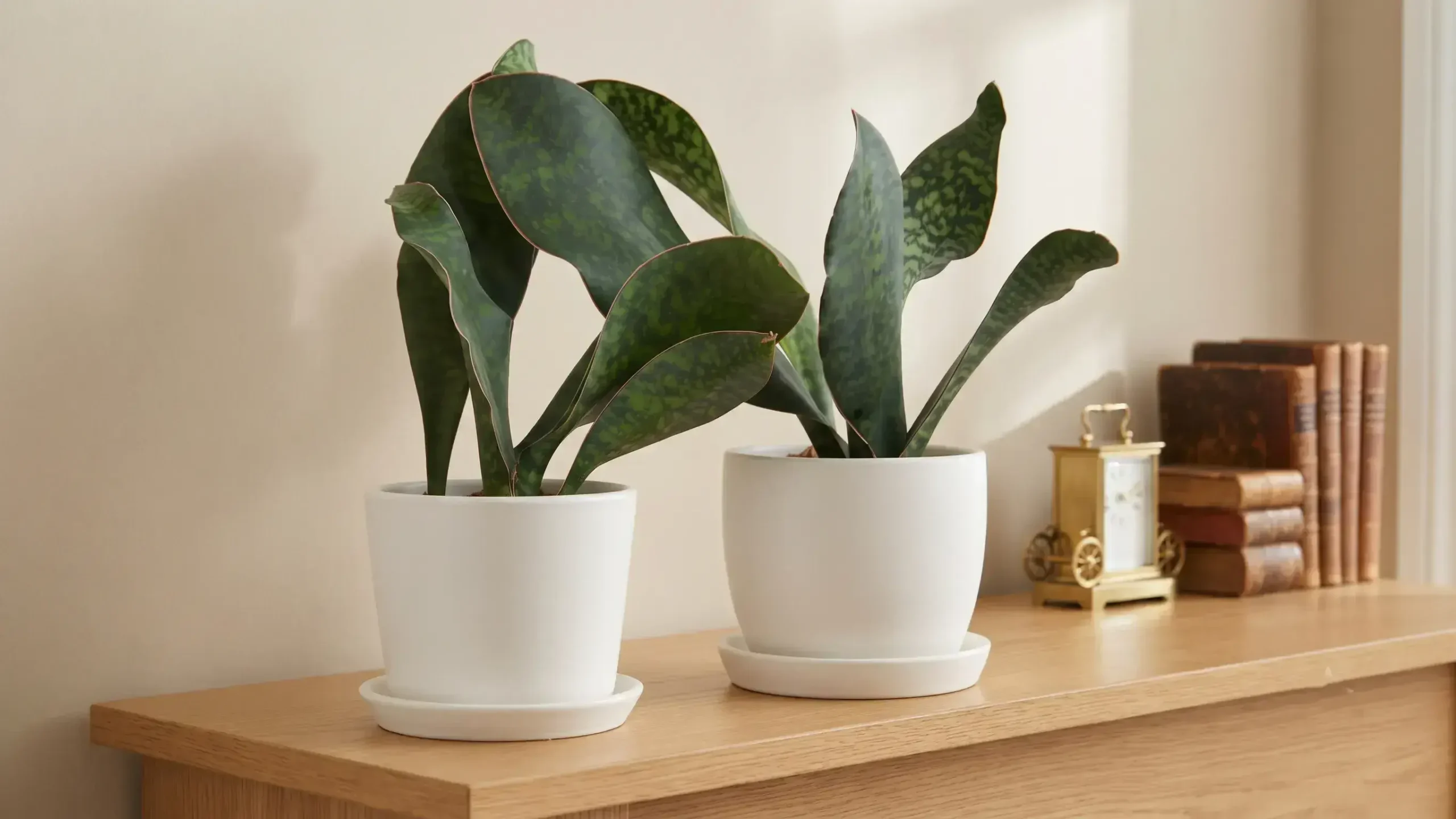
- Foliage: Broad, thick, leathery paddle- or lance-shaped upright leaves with mottled light-and-dark green horizontal banding and a fine dark-to-reddish-brown margin
- Growth Habit: Single upright statement leaf (or small cluster of 2 to 4 leaves) rising from a thick underground creeping rhizome
- Mature Size: Individual leaves typically reach 40 to 90 cm (16 to 36 inches) tall and 12 to 25 cm (5 to 10 inches) wide over several years in bright conditions
- Sunlight: Bright indirect indoor light to medium indoor light (tolerates lower indoor light; avoid harsh direct afternoon sun)
- Watering: Low; drought-tolerant succulent—allow the potting mix to dry out completely between thorough waterings
- Suitable For: Living rooms, bedrooms, office desks, study tables, reception counters, hallways, and shaded balconies
About the Whale Fin Snake Plant
Sansevieria masoniana—now placed by botanical authorities such as Kew Science within the genus Dracaena as Dracaena masoniana—belongs to the family Asparagaceae and originates from the Democratic Republic of the Congo. First introduced to horticulture in the mid-twentieth century, it quickly became a collector favorite because each leaf develops into a wide, stiff, paddle-like blade rather than the narrow sword leaves of common snake plants.
Like other snake plants, Sansevieria masoniana uses Crassulacean Acid Metabolism (CAM) photosynthesis, opening its leaf pores primarily at night to conserve water—making it naturally suited to warm indoor rooms and busy plant owners.
Appearance and Growth Habit
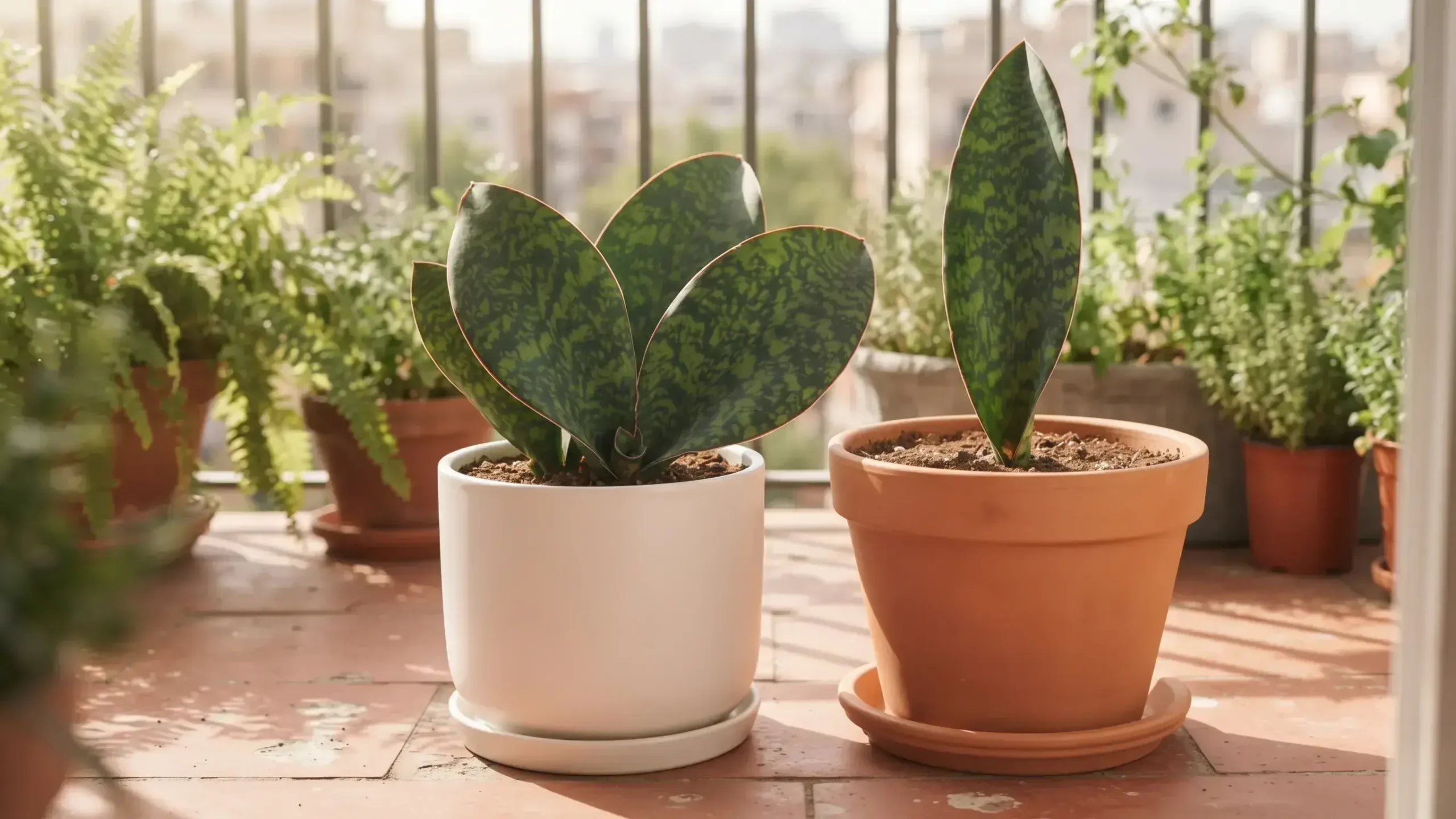
Most young Whale Fin Plants begin as a single dramatic, upright paddle-shaped leaf anchored to a sturdy underground orange-brown rhizome. The thick, leathery leaf surface is richly patterned with horizontal blotches and mottling in shades of deep forest green, sage, and pale silver-green, framed by a thin, crisp brownish-purple edge.
Because Sansevieria masoniana grows slowly, a single fin holds its clean architectural form for months before sending up a new offset (“pup”) beside the parent leaf to form a compact cluster.
Flowers and Blooming Notes
When a mature, slightly root-bound Whale Fin Snake Plant receives bright indirect light over several years, it may occasionally send up a slender upright flower spike lined with small, tubular greenish-white blossoms that release a mild sweet fragrance in the evening.
In most indoor homes, however, Sansevieria masoniana is grown purely for its striking, long-lived evergreen foliage.
Sunlight and Indoor Light Requirements
The Whale Fin Plant is remarkably adaptable to indoor lighting conditions, though light levels directly influence leaf size and color contrast.
Ideal Placement Indoors
Place your Whale Fin Snake Plant near a bright east- or north-facing window, in a well-lit living room, or on a shaded balcony receiving gentle morning sun. Bright indirect light brings out bold green mottling and encourages larger new pups.
While Sansevieria masoniana tolerates medium-to-low indoor light in bedrooms or offices better than almost any other foliage plant, growth slows significantly in dim corners, and watering must be reduced accordingly. Avoid intense direct afternoon sun through glass, which can scorch pale patches onto the leaf blade.
Watering Requirements
Because Sansevieria masoniana stores water in its thick succulent leaves and underground rhizomes, underwatering rarely hurts it—whereas overwatering is the number-one cause of root and rhizome rot.
Watering Indoors and in Summer
Always check the soil all the way down to the bottom half of the pot before watering—only water when the potting mix has dried out completely. In warm Indian summers, this typically means watering once every 10 to 14 days indoors, pouring thoroughly until water exits the drainage holes and emptying the saucer afterward.
Watering During Monsoon and Winter
During humid monsoon months and cool Indian winters, evaporation slows dramatically. Water very sparingly—often once every 2 to 4 weeks—and never pour water directly into the center cup of a rosette where moisture could stagnate.
Soil and Potting Requirements
Sansevieria masoniana requires a coarse, porous, fast-draining succulent potting mix that dries quickly after watering, with a slightly acidic to neutral pH between 6.0 and 7.2. Heavy garden clay or moisture-retentive cocopeat-only mixes stay wet too long and rot the underground rhizome.
Suggested Potting Mixture for Indoor Containers
This is a suggested potting mixture for indoor container cultivation rather than a rigid scientific formula: blend 40% coarse river sand, perlite, or pumice, 35% loose sandy garden soil, and 25% well-decomposed vermicompost or cocopeat, mixed with a small pinch of neem cake powder. Choose a sturdy pot with clear drainage holes—unglazed terracotta (clay) pots work especially well because they breathe and prevent excess moisture buildup.
Growing the Plant in the Indian Climate
Sansevieria masoniana thrives indoors across all Indian cities—including Kolkata, West Bengal, Mumbai, Bengaluru, Chennai, Hyderabad, Pune, and Delhi-NCR—because typical Indian room temperatures match its tropical African origins.
Summer Care
Hot Indian summers suit the Whale Fin Plant well. Keep it out of direct scorching western window sun, water only after the soil dries completely, and wipe dust off the broad leaf blades with a soft damp cloth once a month so the plant breathes easily.
Monsoon Care
In humid regions like Kolkata and coastal India, high monsoon humidity means the soil stays damp much longer. Stretch out watering intervals during rainy weeks and ensure outdoor balcony pots are sheltered from continuous rain.
Winter Care
In northern Indian cities where winter temperatures dip below 10°C, keep your Whale Fin Snake Plant indoors away from cold window drafts and reduce watering to once every 3 to 4 weeks until spring warmth returns.
Temperature and Humidity
The Whale Fin Plant prefers comfortable room temperatures between 18°C and 32°C and tolerates normal household and air-conditioned humidity effortlessly without needing misting. Temperatures below 8°C–10°C can chill the succulent leaves, and frost is fatal.
Fertilizer and Nutrition
Because Sansevieria masoniana is a slow-growing succulent, it requires minimal feeding and is easily burned by strong fertilizers.
Feed lightly once or twice during its active warm growing season (spring and early monsoon) using 1 to 2 tablespoons of vermicompost or a diluted, quarter-strength balanced liquid organic fertilizer. Skip fertilizing completely during autumn and winter.
Growing the Plant in Pots
Because of its tall, upright, top-heavy leaf blade, choose a heavy, stable 6-to-10-inch ceramic or terracotta pot with drainage holes so the broad fin does not tip the container over.
Snake plants prefer being slightly snug in their pots; repot only once every 2 to 3 years when expanding underground rhizomes visibly press against the pot walls, stepping up just one pot size at a time.
Pruning and Maintenance
The Whale Fin Plant needs virtually no pruning and holds its architectural form for years.
Keep the broad leaf surface clean by gently wiping away household dust with a damp microfiber cloth—avoid commercial leaf-shine sprays, which can clog leaf pores. If an old outer leaf ever turns yellow or soft at the base, slice it cleanly at soil level with a sterilized knife.
Propagation
Sansevieria masoniana is propagated primarily by dividing rooted underground rhizome offsets (“pups”) during repotting in spring or monsoon—which preserves the exact size and any variegation of the parent plant. It can also be grown from leaf cuttings rooted in gritty, barely moist sand, though leaf-cutting propagation is slow (taking several months to form a pup) and variegated forms revert to solid green from leaf cuttings.
Common Problems and Plant Care
Restrained watering and fast-draining soil prevent nearly all common Whale Fin Snake Plant issues.
1. Soft, Mushy, or Yellowing Leaf Base
A soft, water-soaked, or yellowing base is the classic sign of overwatering or poorly drained soil causing rhizome rot. Unpot the plant immediately, trim away any mushy brown root or rhizome tissue with a clean blade, let the healthy section air-dry for 24 hours, and repot into fresh, dry succulent mix.
2. Wrinkled or Curling Leaf Margins
If the thick leaf starts looking slightly wrinkled, puckered, or curled inward, the plant has gone too long without water or its roots have dried back. Give it a thorough, deep watering and allow excess water to drain completely.
3. Brown, Corky Scars or Cracked Edges
Minor tan corky marks along the leaf edge or tip usually come from physical bumps during handling or a brief dry spell; these scars are permanent and harmless—do not cut across healthy green tissue, as the cut edge will simply callous brown.
4. Mealybugs in Soil Crevices
Occasionally, tiny white mealybugs hide near the soil line where the leaf meets the rhizome. Dab visible spots with a cotton swab dipped in rubbing alcohol or spray diluted neem oil (3 ml per liter of water) in the evening.
Suitability for Home Gardens & Interiors
The Whale Fin Snake Plant is ideal for living rooms, bedrooms, office desks, study tables, reception areas, hallways, and covered balconies or verandas. It is not suited for unshaded outdoor afternoon sun or wet, un-drained garden beds.
Safety and Important Information
Like all Sansevieria / Dracaena species, Sansevieria masoniana contains natural saponins that can cause mild nausea, drooling, or stomach upset in cats and dogs if chewed—place the pot on a high stand or shelf out of reach of curious pets and young children.
Live Plant Delivery Information
Live Whale Fin Plants vary naturally in leaf height, width, mottling pattern, and whether shipped as a single statement fin or with an emerging side pup. Minor natural edge callousing or slight transit scuffs are normal on large succulent leaves.
Upon receiving your Whale Fin Snake Plant, place it in bright, indirect indoor light for 3 to 4 days to acclimate. Check the soil moisture immediately—water lightly only if the potting mix is completely dry, and wait 10 to 14 days before repotting or applying any fertilizer.
Why Choose the Whale Fin Snake Plant for Your Home?
Bold, low-maintenance, and practically indestructible with restrained watering, the Whale Fin Snake Plant turns a single potted plant into a living piece of modern sculpture. Whether placed on an office desk or in a bright living room corner, Sansevieria masoniana thrives effortlessly for years.
Botanical Information and Further Reading
- Kew Science – Plants of the World Online: Dracaena masoniana (syn. Sansevieria masoniana)
- Royal Horticultural Society (RHS) – Sansevieria masoniana Plant Details
- ASPCA – Snake Plant (Sansevieria) Pet Safety Reference
- NC State Extension Gardener Plant Toolbox – Dracaena masoniana (Whale Fin Snake Plant)
Frequently Asked Questions (FAQs)
1. What is the botanical name of the Whale Fin Snake Plant?
The Whale Fin Snake Plant is widely known in horticulture as Sansevieria masoniana (accepted in current botanical taxonomy under the synonym Dracaena masoniana), belonging to the family Asparagaceae.
2. Why does my Whale Fin Plant have only one big leaf?
Unlike multi-leaved rosette snake plants, Sansevieria masoniana naturally grows as a single broad, paddle-shaped statement leaf first, slowly sending up additional new leaves (pups) from its underground rhizome over time.
3. How much light does a Whale Fin Snake Plant need indoors?
It thrives best in bright, indirect indoor light—such as near a sunny window—and also tolerates medium-to-low indoor light, though growth is slower in dim corners.
4. How often should I water my Whale Fin Plant?
Water only after the potting soil has dried out completely—typically once every 10 to 14 days in summer and every 2 to 4 weeks during monsoon and winter.
5. What is the best soil mix for Sansevieria masoniana?
A gritty, fast-draining succulent mix—such as 40% coarse river sand or perlite, 35% sandy garden soil, and 25% vermicompost or cocopeat—in a pot with drainage holes prevents root rot.
6. How fast does a Whale Fin Snake Plant grow?
It is naturally a slow-growing succulent plant, focusing energy on building thick, sturdy leaves and underground rhizomes rather than rapid height.
7. Is the Whale Fin Snake Plant safe for cats and dogs?
No, like other snake plants, Sansevieria masoniana contains saponins that can cause mild stomach upset in cats and dogs if chewed, so keep it out of reach of pets.
8. Why is the base of my Whale Fin leaf turning soft or yellow?
A soft, mushy, or yellowing base is caused by overwatering or soggy soil. Let the soil dry completely between waterings and use a fast-draining pot.
9. Can I grow a Whale Fin Snake Plant in my bedroom or office?
Yes, its compact upright footprint, tolerance for indoor air conditioning, and low watering needs make it an excellent choice for bedrooms, living rooms, and office desks.
10. How often should I repot my Whale Fin Plant?
Repot only once every 2 to 3 years when roots and underground rhizomes fill the pot, choosing a heavy ceramic or terracotta pot so the tall leaf stays balanced.
11. Should I mist the leaves of my Whale Fin Snake Plant?
No, misting is unnecessary and can leave water trapped near the base; simply wipe dust off the broad leaf occasionally with a damp cloth.
12. Can I keep a Whale Fin Snake Plant outdoors in full sun?
It prefers bright indirect light or morning shade outdoors; harsh direct afternoon sun can bleach or scorch the leaf surface.
For More Information
Visit: krisikart.com
For Contact Visit:Contact Us
For Shopping Visit: Shop Page


Anita Gupta –
Fresh green plants with healthy roots.
Very satisfied with my order.nice help team