 Plastic Plant pot | Plastic Garden Pot for Plants
 Self Watering Planters | Self Watering Plant Pots For Plants
Umbrella Plant – Umbrella Palm Tree (Schefflera arboricola) Plant
The Umbrella Plant Also known As Umbrella Palm Tree (Schefflera Arboricola) is a beautiful green ornamental plant with glossy leaves that spread out like the shape of an umbrella. Its fresh green foliage and bushy growth make it a lovely choice for home decoration, office spaces, balconies and gardens.
This plant is popular because it can grow well in pots and suitable indoor spaces. It has several small leaflets growing from one point, giving each leaf an attractive umbrella-like shape.
The Umbrella Plant is also known as Dwarf Umbrella Tree, Dwarf Schefflera and Parasol Plant. It is suitable for people who want an attractive green plant for their home or garden.
With suitable sunlight, regular watering and well-drained soil, this plant can grow into a beautiful leafy shrub.
Plant Highlights
- Common Name: Umbrella Plant, Dwarf Umbrella Tree, Dwarf Schefflera
- Scientific Name: Heptapleurum arboricola
- Common Nursery Name: Schefflera arboricola
- Family: Araliaceae
- Plant Type: Evergreen ornamental shrub
- Growth Habit: Upright, bushy and branching
- Foliage Colour: Green
- Leaf Type: Glossy, umbrella-shaped compound leaves
- Growth Rate: Moderate under suitable conditions
- Origin: Taiwan and Hainan, China
- Best Uses: Home garden, indoor decoration, office, balcony, patio and decorative pots
About the Umbrella Plant
The Umbrella Plant is a popular ornamental shrub grown for its beautiful green leaves.
Its leaves are made up of several small leaflets that spread out from one point. This gives them the appearance of a small umbrella.
The plant develops several branches and can grow into a thick, bushy shrub. It can be maintained in a smaller shape through regular pruning.
It is suitable for growing in decorative pots and can also be planted in outdoor gardens in suitable warm conditions.
Plant Appearance and Growth
The main attraction of the Umbrella Plant is its glossy green foliage.
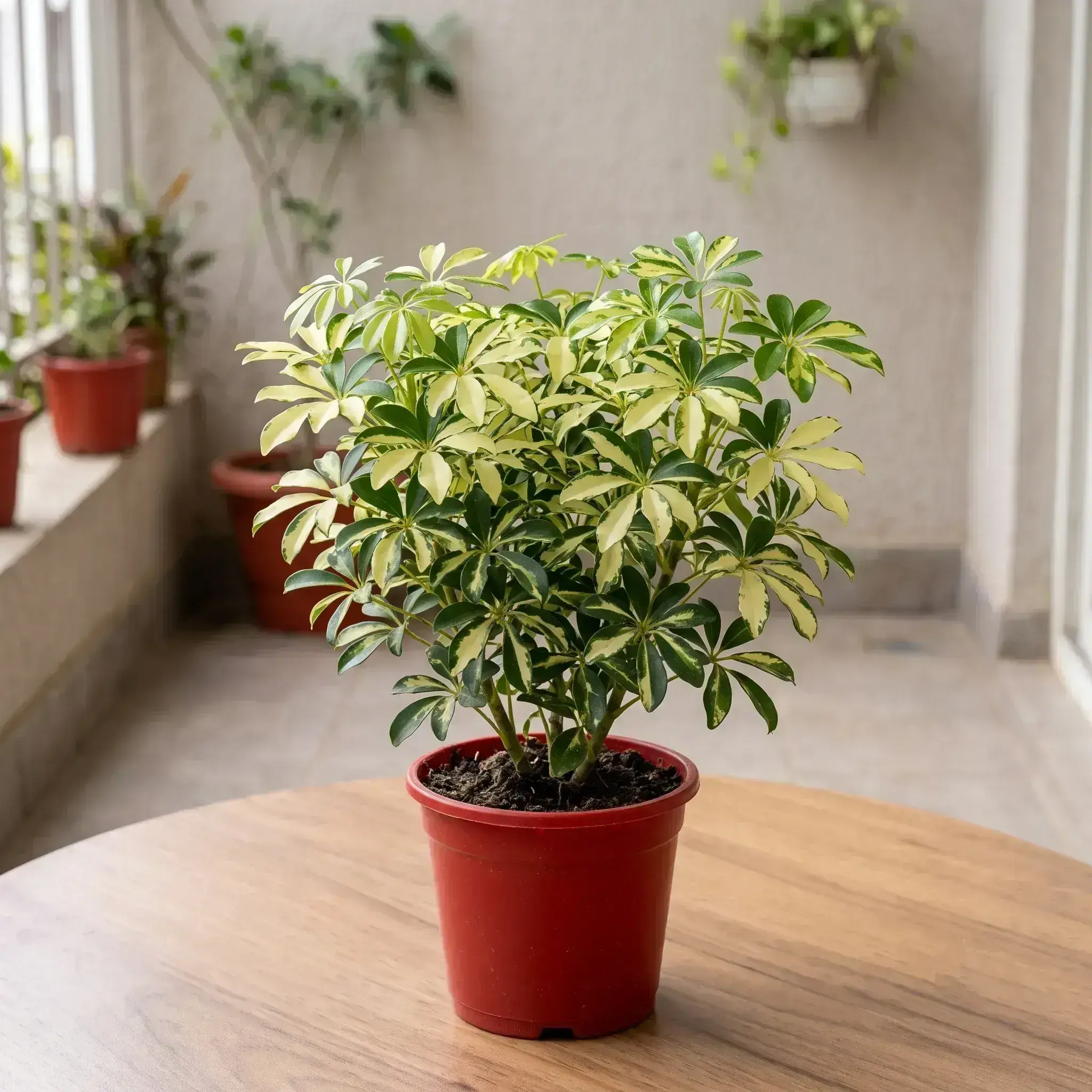
Each leaf usually has around 7 to 9 leaflets arranged in a circle. The leaflets have a smooth surface and an attractive green colour.
The branches grow upward and outward, creating a full and leafy appearance.
The plant may also produce small flowers and round fruits when mature and grown in suitable outdoor conditions. Indoor plants rarely flower.
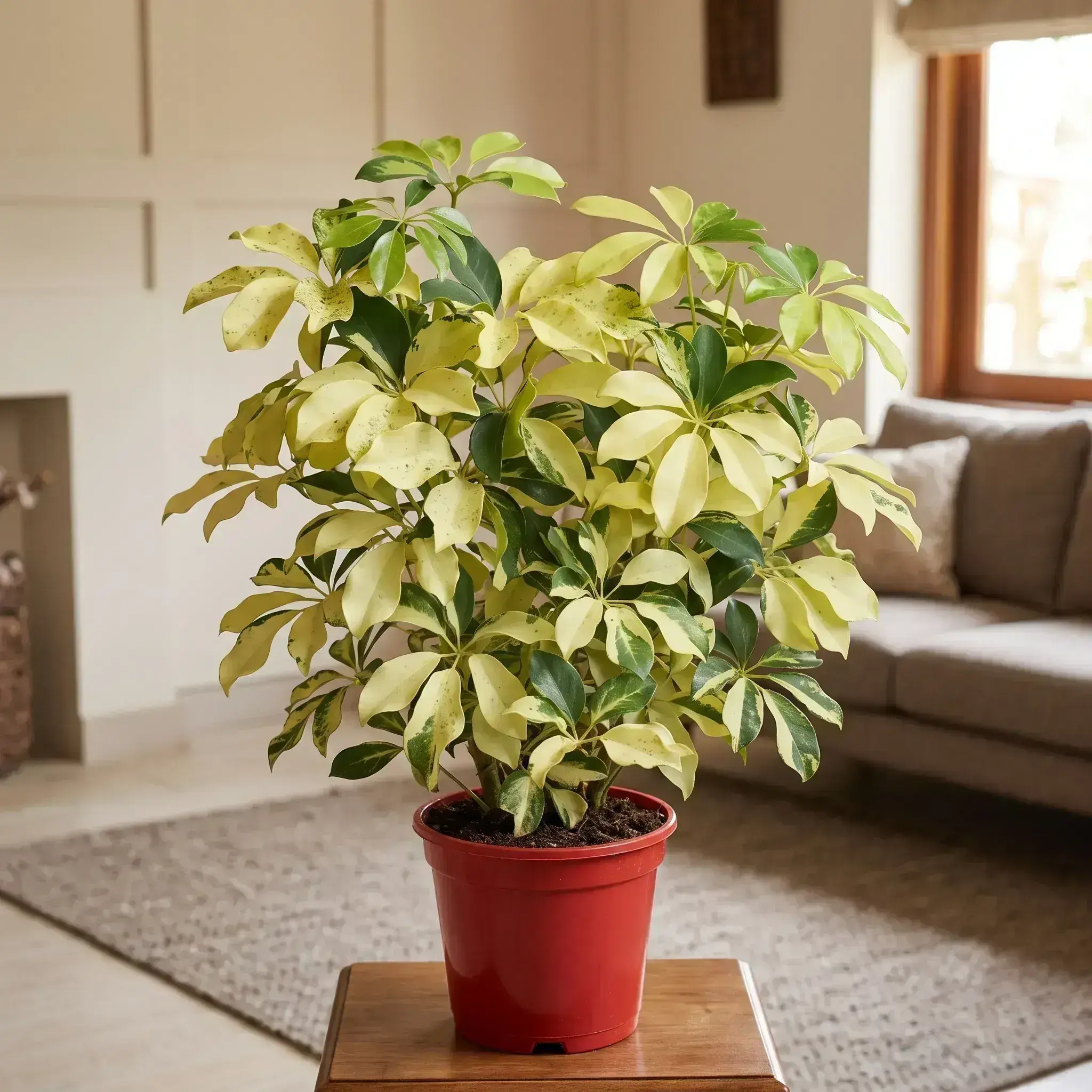
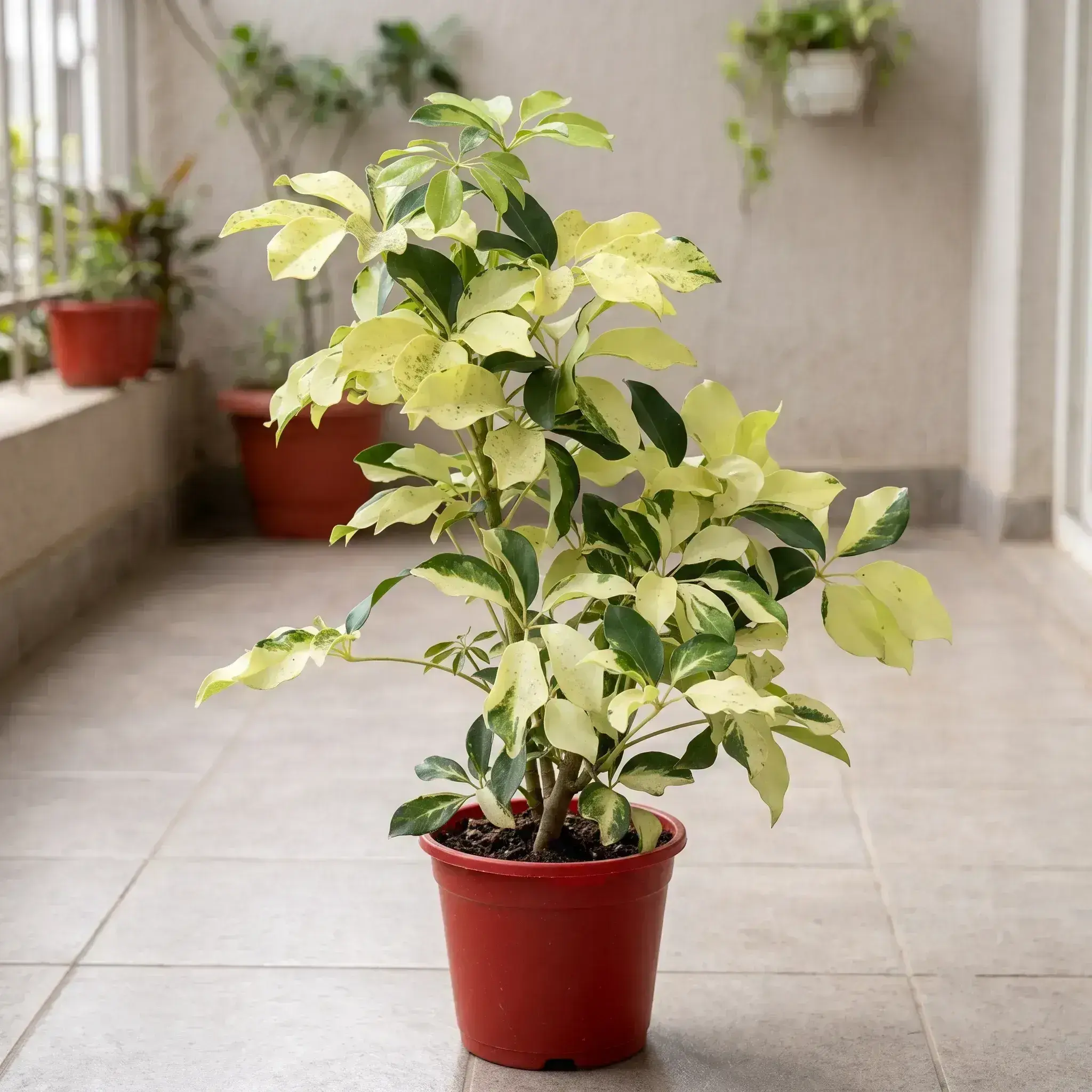
Some varieties have green and yellow or cream-coloured leaves. These are commonly sold as variegated Umbrella Plants.
Sunlight Requirements
The Umbrella Plant grows best in bright, indirect sunlight or partial shade.
It needs good natural light for healthy leaf growth. However, strong direct afternoon sunlight can burn the leaves, especially during hot Indian summers.
Good places to keep this plant:
- Near a bright window
- In a living room with natural light
- On a covered balcony
- In a shaded terrace garden
- In a bright office
- Under light shade in an outdoor garden
Avoid keeping the plant in a completely dark room for a long time.
If you grow it outdoors, gradually adjust it to stronger sunlight rather than moving it suddenly from a shaded place into full sun.
Watering Requirements
The Umbrella Plant likes moderate watering. It does not like soil that stays wet for a long time.
Water the plant when the upper layer of soil starts to feel dry. After watering, allow extra water to drain from the bottom of the pot.
Watering tips:
- Check the soil before watering.
- Water slowly around the base of the plant.
- Do not leave the pot standing in collected water.
- Reduce watering during cooler weather.
- Check the soil more often during hot and dry weather.
- During the monsoon, avoid unnecessary watering.
Both overwatering and allowing the soil to become too dry for long periods can cause leaf drop.
Soil and Potting Requirements
The Umbrella Plant grows well in loose, fertile and well-drained soil.
A good potting mix helps the roots grow properly and prevents excess water from collecting around them.
A suitable home potting mix can contain:
- Garden soil
- Cocopeat
- Compost or well-rotted organic matter
- Perlite or coarse sand for better drainage
Use a pot with drainage holes at the bottom.
For outdoor planting, choose a place where rainwater does not collect around the roots.
Temperature and Indian Climate
The Umbrella Plant grows well in warm conditions and can be grown in many parts of India.
It is suitable for home gardens, balconies and protected outdoor spaces.
Summer: Protect the plant from very strong afternoon sunlight. Check the soil regularly and water when needed.
Monsoon: Make sure extra rainwater can drain away. Avoid keeping the pot in standing water.
Winter: Growth may slow down in cooler weather. Protect the plant from very cold conditions.
In areas with hot summers, a bright location with filtered sunlight is a good choice.
Humidity Requirements
The Umbrella Plant grows well in normal to moderately humid conditions.
It can also benefit from a more humid environment, especially during dry weather.
You can clean the leaves with a damp cloth to remove dust. Keep the plant away from hot air coming directly from an air conditioner or heater.
Good air movement around the plant helps maintain healthy foliage.
Fertilizer and Plant Feeding
The Umbrella Plant benefits from moderate feeding during active growth.
You can use a balanced liquid fertilizer according to the instructions on its package. A small amount of well-rotted compost can also be added to the soil.
Fertilizer tips:
- Feed during active growth.
- Follow the recommended fertilizer quantity.
- Avoid excessive feeding.
- Do not apply fertilizer to very dry soil.
- Reduce feeding when the plant is growing slowly.
Too much fertilizer can damage the roots and affect leaf health.
Pruning and Maintenance
The Umbrella Plant responds well to pruning. Regular trimming can help maintain a neat and bushy shape.
You can trim long branches to keep the plant compact and remove dry or damaged leaves.
Pruning tips:
- Remove dry and damaged branches.
- Trim branches that grow outside the desired shape.
- Use clean gardening scissors.
- Avoid cutting too many healthy branches at once.
- Prune lightly to encourage a fuller appearance.
The plant can be maintained as a rounded bush or a small decorative indoor tree.
Growing Umbrella Plant in Pots
The Umbrella Plant is suitable for container gardening.
It can be grown in decorative pots and placed in living rooms, balconies, patios and office spaces.
Choose a pot with drainage holes and enough space for root growth. Do not use a very large pot for a small plant because excess wet soil can cause root problems.
As the plant grows, move it to a slightly larger pot when its roots become crowded.
Regular pruning can help maintain its size and shape.
Indoor and Office Decoration
The Umbrella Plant is a popular choice for indoor decoration because of its attractive green leaves.
Its bushy appearance makes it suitable for different types of indoor spaces.
It looks attractive in:
- Living room corners
- Office reception areas
- Near bright windows
- Covered balconies
- Indoor garden corners
- Decorative floor planters
- Bright office spaces
For healthy growth, keep it in a bright place with indirect sunlight.
Garden and Landscape Decoration
The Umbrella Plant can also be grown outdoors in suitable warm conditions.
Its dense green leaves make it useful for garden decoration. It can be planted as a single feature plant or grown in groups.
It is suitable for:
- Home garden corners
- Garden borders
- Outdoor decorative pots
- Shaded patios
- Balcony gardens
- Terrace gardens
- Small garden hedges
Give the plant enough space to develop its branches and leaves.
Common Problems and Their Care
1. Yellow Leaves
Yellow leaves may appear because of overwatering, poor drainage or unsuitable growing conditions. Check the soil before watering again.
2. Leaf Drop
The plant may drop leaves when the soil stays too wet or becomes too dry. Sudden changes in light and location can also affect the plant.
3. Brown Leaf Tips
Brown tips may develop because of dry air, irregular watering or other growing problems. Check the soil moisture and keep the plant away from hot, dry air.
4. Dry or Burnt Leaves
Strong direct sunlight can damage the leaves. Move the plant to a bright location with filtered sunlight.
5. Spider Mites
Spider mites may sometimes affect the leaves, especially in dry conditions. Check the undersides of the leaves and use a suitable garden pest treatment if needed.
6. Mealybugs and Scale Insects
These small insects may appear on the stems and leaves. Check the plant regularly and treat an infestation with a suitable garden product according to its instructions.
7. Root Problems
Keeping the soil wet for too long can damage the roots. Use well-drained soil and a pot with drainage holes.
Important Safety Information
The Umbrella Plant is toxic if eaten. It contains calcium oxalate crystals that can cause irritation in the mouth and throat.
Chewing the leaves may cause drooling, mouth irritation, difficulty swallowing and vomiting in pets.
Safety tips:
- Keep the plant away from dogs and cats.
- Do not allow children to chew the leaves.
- Do not eat any part of the plant.
- Wash your hands after handling damaged leaves.
- Wear gloves if you have sensitive skin.
If a pet eats the plant, contact a veterinarian for advice.
Live Plant Delivery and Natural Variation
Plants are living products, so their height, branch count, leaf size and overall shape may vary naturally.
The plant you receive may look slightly different from the website photograph. This is normal because each plant grows in its own way.
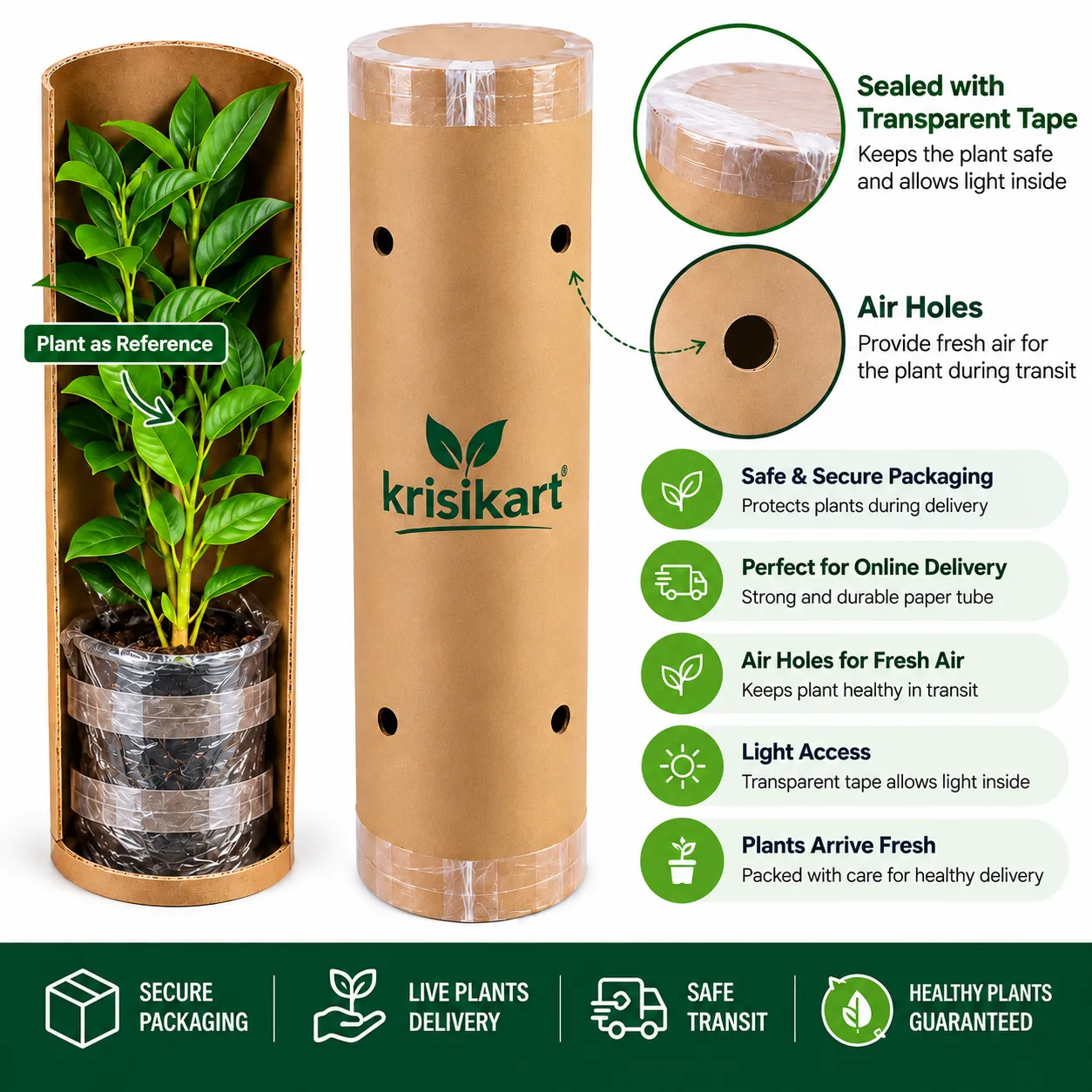
Some leaves may become yellow or fall during packing and transportation. The plant may also need some time to adjust to its new location.
After receiving your plant:
- Carefully remove the packaging.
- Keep it in a bright place with indirect sunlight.
- Check the soil before watering.
- Avoid strong afternoon sunlight immediately after delivery.
- Do not add heavy fertilizer immediately.
- Remove only completely dry or damaged leaves.
- Give the plant time to adjust to its new location.
Why Choose an Umbrella Plant?
The Umbrella Plant is a lovely choice for people who want an attractive green plant for their home or garden.
- Beautiful glossy green leaves.
- Unique umbrella-shaped leaf arrangement.
- Suitable for indoor and outdoor growing in suitable conditions.
- Can be grown in decorative pots.
- Suitable for home gardens and balconies.
- Responds well to regular pruning.
- Adds a fresh tropical look to homes and offices.
- Can be maintained in a compact or bushy shape.
Botanical Information & Further Reading
Explore these trusted resources to learn more about the Umbrella Plant:
- Kew – Plants of the World Online: Heptapleurum arboricola – Accepted scientific name, plant family and native distribution.
- North Carolina State Extension – Umbrella Plant – Plant appearance, sunlight, watering, soil, pests and safety information.
- Royal Horticultural Society – Umbrella Tree – Plant features, growing conditions, pruning and common pests.
- India Flora Online – Schefflera arboricola – Indian botanical information, family and common names.
- USDA GRIN – Schefflera arboricola – Scientific name and botanical classification.
- ASPCA – Schefflera – Pet safety and signs of poisoning in cats and dogs.
- Bishop Museum – Heptapleurum arboricola – Botanical description, leaves, flowers and fruits.
Frequently Asked Questions (FAQs)
1. What is an Umbrella Plant?
The Umbrella Plant is an ornamental shrub with glossy green leaves. Its leaflets spread out from one point and look like a small umbrella.
2. Is Umbrella Plant the same as Schefflera arboricola?
Yes. Schefflera arboricola is the widely used botanical name in the nursery trade. Kew currently accepts Heptapleurum arboricola as the scientific name.
3. Is Umbrella Plant a palm tree?
No. It is not a true palm. It belongs to the Araliaceae family and grows as an evergreen shrub.
4. Can I grow an Umbrella Plant indoors?
Yes. It can grow indoors in a bright location with indirect sunlight. Avoid keeping it in a completely dark room.
5. Does Umbrella Plant need direct sunlight?
It grows best in bright, indirect sunlight or partial shade. Strong direct afternoon sunlight can burn its leaves.
6. How often should I water an Umbrella Plant?
Water when the upper layer of soil starts to feel dry. Avoid keeping the soil constantly wet.
7. Is Umbrella Plant suitable for Indian weather?
Yes. It can grow in many parts of India in suitable warm conditions. Protect it from harsh afternoon sunlight and provide good drainage during the monsoon.
8. Can I grow Umbrella Plant in a pot?
Yes. It grows well in decorative pots with drainage holes. It is suitable for balconies, patios and bright indoor spaces.
9. Does Umbrella Plant produce flowers?
Mature outdoor plants may produce small flowers in clusters. Indoor plants rarely flower.
10. Why are the leaves of my Umbrella Plant falling?
Leaf drop may happen because of overwatering, very dry soil or sudden changes in light and location. Check the soil and keep the plant in a suitable place.
11. Can I prune Umbrella Plant to make it bushier?
Yes. Light pruning can help maintain a compact and bushy shape. Use clean scissors and remove unwanted long branches.
12. Is Umbrella Plant safe for pets?
No. It can be harmful to cats and dogs if eaten. Keep it away from pets and contact a veterinarian if your pet chews or swallows any part of the plant.
For More Information
Visit: krisikart.com
For Contact Visit:Contact Us
For Shopping Visit: Shop Page


Reviews
There are no reviews yet.