 Plastic Plant pot | Plastic Garden Pot for Plants
 Self Watering Planters | Self Watering Plant Pots For Plants
Date Palm Tree | Dates Fruit Tree (Phoenix dactylifera) Ajwa-Dates Plant
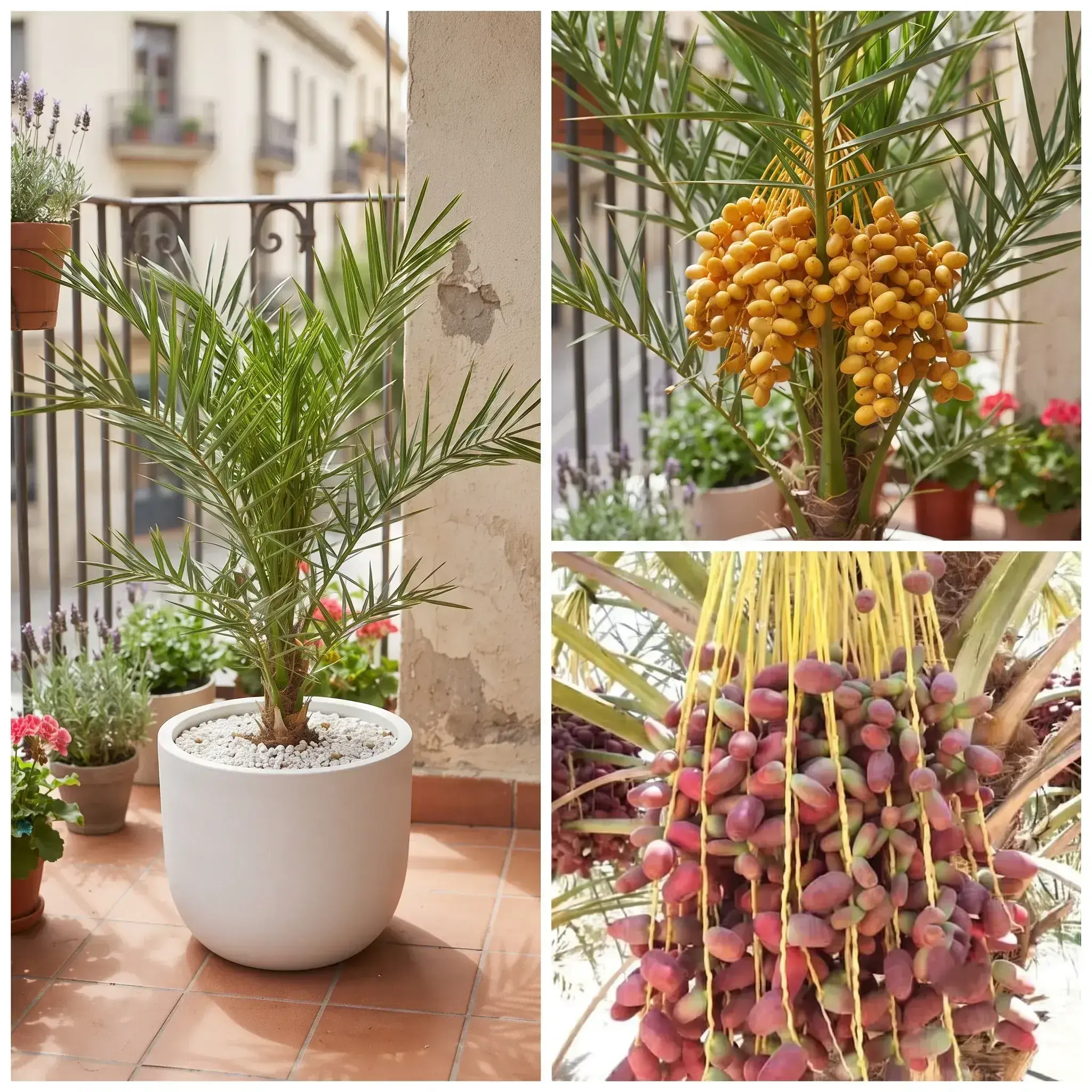
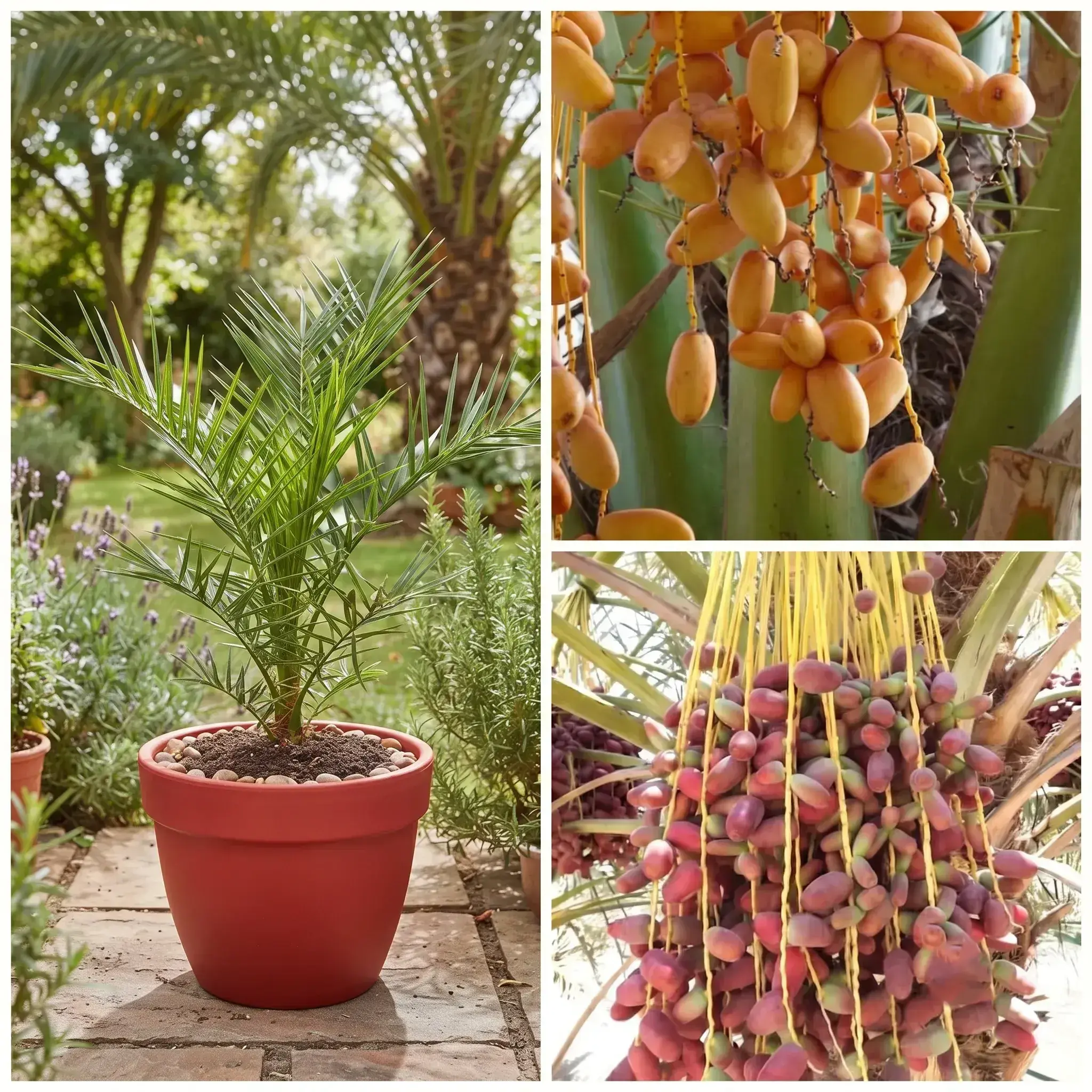
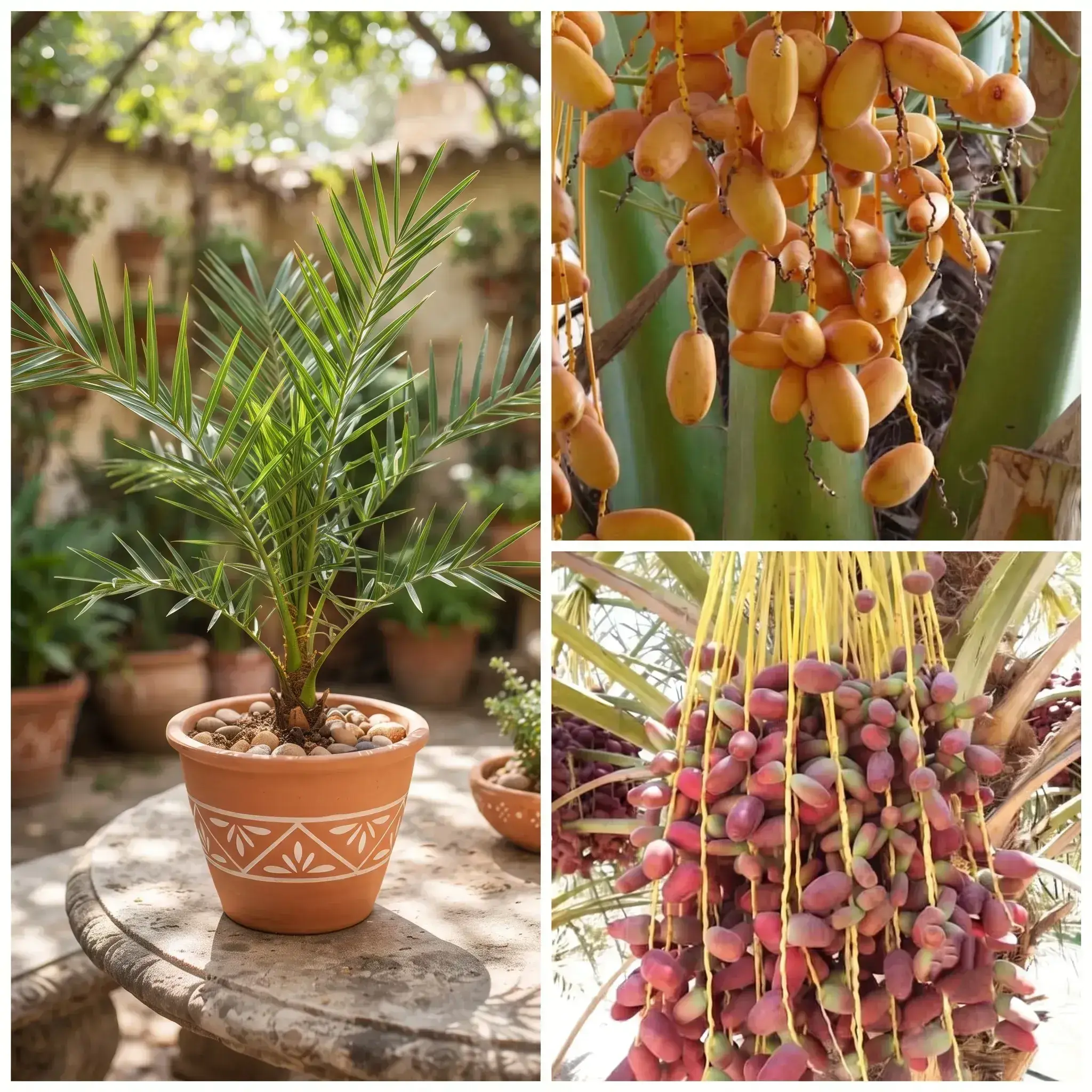
The Date Palm Tree( Phoenix dactylifera) also known as Date Palm Tree , Dates Fruit Tree, Ajwa-Dates Plants is an iconic, long-lived fruit-bearing palm prized across arid and semi-arid regions for its sweet, nutrient-dense dates and majestic architectural foliage. Among its many cultivated varieties, the Ajwa cultivar (Phoenix dactylifera ‘Ajwa’) is celebrated worldwide for its dark, soft, richly flavored fruits and cultural significance.
While traditionally grown in desert oases and dry agricultural belts, young Date Palm Trees can also be cultivated in spacious Indian home gardens, farmhouses, and large outdoor containers in warm, sunny regions. Understanding its climate needs, pollination biology, and slow-to-moderate growth habit will help you successfully grow and care for this remarkable palm.
Plant Highlights
- Product Name: Date Palm Tree | Dates Fruit Tree (Phoenix dactylifera) Ajwa-Dates Plant for Home Garden
- Common Name: Date Palm, Edible Date Palm, Khajoor (Hindi), Khejur (Bengali)
- Botanical Name: Phoenix dactylifera
- Cultivar Identity: ‘Ajwa’ (Note: True cultivar characteristics are maintained in vegetatively propagated or tissue-cultured female plants)
- Family: Arecaceae (Palm family)
- Plant Type: Evergreen, dioecious perennial palm tree
- Origin: Middle East and North Africa (Fertile Crescent and Arabian Peninsula)
- Flower Colour: Creamy white to pale yellow inflorescences
- Fruit Colour: Deep reddish-brown maturing to dark brownish-black (characteristic of ‘Ajwa’ dates)
- Foliage: Long, arching, pinnate (feather-shaped) grey-green to bluish-green fronds with sharp spines near the base
- Growth Habit: Upright, single-trunked palm that often produces basal offshoots (suckers) when young
- Mature Height: Typically 15 to 25 meters (50 to 80 feet) in open ground over several decades
- Sunlight: Full, direct sunlight
- Watering: Low to moderate once established; requires deep watering in dry summer heat and excellent soil drainage
- Suitable For: Open ground gardens, farmhouses, dry-climate orchards, and large outdoor containers while young
About the Date Palm Tree
Phoenix dactylifera belongs to the palm family Arecaceae and is one of the oldest cultivated fruit trees in human history, domesticated thousands of years ago in the Middle East and North Africa. In India, commercial and homestead date cultivation is well established in dry, arid regions such as Kutch in Gujarat, western Rajasthan, and parts of Punjab and Haryana.
The ‘Ajwa’ date originates from the Medina region of Saudi Arabia and is renowned for its compact, rounded-oval shape, dark skin, and mild, caramel-like sweetness. Because date palms are dioecious—meaning individual trees are either strictly male or strictly female—only female trees bear fruit, and they require pollen from a male palm to set dates.
Appearance and Growth Habit
A mature Date Palm Tree develops a sturdy, cylindrical trunk patterned with diamond-shaped leaf base scars, crowned by a dense rosette of arching feather-like leaves (fronds). Each frond can grow 3 to 5 meters long and carries numerous stiff, pointed leaflets arranged along a central spine. Near the base of each frond, the leaflets are modified into sharp, woody spines, so careful handling is necessary during maintenance.
Young plants spend their first few years establishing a deep root system and thickening their base before gaining noticeable vertical height. In open ground under ideal conditions, a Date Palm Tree grows slowly to moderately, eventually reaching 15 to 25 meters over many years. Young palms also naturally produce offshoots (pups) around the base of the main trunk.
Flowers and Flowering Season
Date palms are dioecious, producing separate male and female flower clusters (spathes) on different trees. In India, flowering generally occurs in late winter to early spring (February to March), triggered by warming temperatures after winter.
The flowers are small, creamy-white, and borne on branched stalks enclosed within a fibrous sheath that splits open at maturity. Male flowers produce abundant pollen, while female flowers develop into clusters of dates once pollinated. Plants grown from seed typically take 5 to 8 years to reach flowering maturity, whereas tissue-cultured or offshoot-propagated plants may flower earlier depending on care and climate.
Fruits and Harvest
When a female Phoenix dactylifera ‘Ajwa’ palm is successfully pollinated, fruits develop in heavy hanging bunches through the hot summer months. The dates progress through distinct ripening stages—from green (kimri) to yellow or reddish (khalal), soft brown (rutab), and finally dark, wrinkly brownish-black (tamr).
Pollination and Fruiting Factors in India
In orchards, growers practice hand-pollination by dusting pollen from a male palm onto freshly opened female flower clusters to ensure good fruit set. For home gardeners, successful fruiting depends on three key factors: having a confirmed female plant, access to male pollen during the flowering window, and a hot, dry ripening period without heavy monsoon rain.
Sunlight Requirements
The Date Palm Tree is a true sun-loving species that requires full, unobstructed sunlight for at least 6 to 8 hours every day. Intense solar radiation drives strong frond development, sturdy trunk growth, and sugar accumulation in ripening dates.
Planting in shaded or semi-shaded areas leads to weak, elongated fronds, poor vigor, and little to no fruit production. Always choose the sunniest, most open location in your garden or terrace.
Watering Requirements
Although famous for desert resilience, the Date Palm Tree still needs consistent moisture to establish strong roots and produce quality foliage and fruit.
Watering During Establishment and Summer
For newly planted saplings, water deeply every 2 to 3 days during the first few months until roots anchor into the soil. During scorching Indian summers, mature ground-planted trees benefit from deep irrigation once every 7 to 10 days, while potted plants may need watering every 2 to 3 days once the top 5 cm of soil dries out.
Watering During Monsoon and Winter
During the monsoon, pause manual watering unless there is an extended dry spell, ensuring rainwater never stagnates around the trunk. In winter, reduce watering frequency to once every 10 to 15 days, checking soil moisture before watering.
Soil and Potting Requirements
Date palms adapt to a wide range of soils, including sandy loam, alluvial soil, and slightly alkaline soils, provided drainage is fast and unrestricted. Heavy, waterlogged clay soils can suffocate roots and invite fungal crown rot.
Suggested Potting Mixture for Young Palms
If starting your Date Palm Tree in a large container, use a well-draining mix of 50% sandy garden soil, 30% coarse river sand or perlite, and 20% well-decomposed cow dung manure or vermicompost. Ensure the pot has multiple large drainage holes at the bottom.
Growing the Plant in the Indian Climate
India’s diverse climate zones strongly influence how a Date Palm Tree performs, particularly when it comes to fruiting.
Arid and Semi-Arid Regions (Rajasthan, Gujarat, Punjab, Haryana)
These regions offer ideal conditions for Phoenix dactylifera, featuring scorching dry summers and low monsoon humidity that allow dates to ripen cleanly on the tree without spoiling.
Humid and High-Rainfall Regions (West Bengal, Kolkata, Kerala, Coastal India)
In warm, humid regions like Kolkata and coastal states, the Date Palm Tree grows very well as a hardy ornamental foliage palm. However, because dates ripen during summer and early monsoon, high atmospheric humidity and heavy rains during fruit ripening can cause fruit splitting, fermentation, or fungal rot before harvest.
Winter Care
Established Date Palm Trees tolerate mild Indian winters easily, though growth naturally slows down when night temperatures drop below 12°C. Young saplings in northern plains should be protected from severe ground frost during December and January.
Temperature and Humidity
Phoenix dactylifera thrives in hot, dry climates with summer temperatures ranging from 30°C to 45°C. While the foliage tolerates high humidity without issue, low relative humidity during late spring and summer is essential for successful pollination and sweet, dry fruit ripening.
Fertilizer and Nutrition
Regular nutrition supports steady frond production and overall palm health.
Apply 5 to 10 kg of well-rotted farmyard manure or vermicompost around the root zone twice a year—once in February before spring growth begins and again in September after the monsoon. For young potted palms, top-dress with 250 to 500 grams of vermicompost every two months during the active growing season. You can also supplement with a balanced organic micronutrient mix containing magnesium and potassium, as palms are prone to magnesium and potassium deficiencies in sandy soils. Avoid dumping fresh manure or concentrated chemical fertilizers directly against the trunk.
Growing the Plant in Pots
A young Date Palm Tree makes an attractive structural centerpiece in a large 18-to-24-inch heavy-duty pot or planter box for the first 3 to 5 years. Because palms develop deep, vigorous roots, container cultivation is temporary; as the trunk thickens, the tree will eventually need to be transplanted into open ground or a spacious farmhouse landscape to reach its full potential and bear fruit.
Pruning and Maintenance
Date palms require minimal pruning and should never be over-trimmed.
Only remove completely brown, dry, or broken lower fronds using sharp, sterilized pruning saws or loppers. Always wear thick leather gloves and eye protection when working near the base of the fronds, as the sharp basal spines can easily cause puncture injuries. Avoid cutting green, healthy fronds, as the palm relies on them for photosynthesis and nutrient storage.
Propagation
Date palms are propagated through three primary methods, each with distinct horticultural outcomes.
1. Offshoots (Suckers)
Young female palms produce vegetative offshoots at the base of the trunk. Separating and rooting these offshoots produces a genetically identical clone of the parent tree, preserving true ‘Ajwa’ fruit quality and guaranteeing a female tree.
2. Tissue Culture
Commercial nurseries use micropropagation (tissue culture) to produce disease-free, true-to-type female ‘Ajwa’ plants that grow uniformly.
3. Seeds
Date seeds germinate easily within 3 to 6 weeks when planted in warm, moist sandy soil. However, seed-grown plants exhibit wide genetic variation—roughly half will be male trees that never bear fruit, and female seedlings will not produce true ‘Ajwa’ dates.
Common Problems and Plant Care
Monitoring your palm occasionally helps prevent common cultural and pest issues.
1. Yellowing or Brown Tips on Lower Fronds
Natural aging causes the lowest fronds to turn brown and dry out over time, which is normal. However, premature yellowing of older fronds with green veins often points to magnesium or potassium deficiency, which can be corrected with organic palm fertilizer and Epsom salt (magnesium sulfate).
2. Slow Vertical Growth in Young Plants
Young Date Palm Trees naturally focus on root and trunk base development for the first few years before growing upward. Ensure full sunlight, deep watering, and organic feeding rather than worrying about slow initial height gain.
3. Red Palm Weevil and Rhinoceros Beetle
In Indian gardens, borers such as the red palm weevil or rhinoceros beetle can damage the crown or trunk. Keep the crown clean of decaying debris, inspect for boreholes or chewed frond tips, and apply neem cake around the root zone as a preventive measure.
4. Leaf Spot or Fungal Issues in Monsoon
Prolonged wetness in humid climates can cause dark spots on leaflets. Improve air circulation around the plant, avoid overhead watering, and prune away severely affected lower fronds.
Suitability for Home Gardens
The Date Palm Tree is best suited for spacious outdoor home gardens, farmhouses, driveways, sunny courtyards, and large terrace containers while young. Because it demands intense direct sunlight and eventually develops a massive root system and tall trunk, it is not suitable for indoor living rooms or small, shaded balconies.
Safety and Important Information
The primary safety precaution with Phoenix dactylifera is physical rather than chemical: the lower stalks of the fronds bear long, needle-sharp spines capable of causing painful skin or eye injuries. Plant the tree away from narrow walkways, children’s play areas, and pet paths, or carefully trim the sharp spines from lower fronds within reach.
Fresh and dried dates are safe and nutritious for human consumption, though the hard central seed (pit) should always be removed before eating.
Live Plant Delivery Information
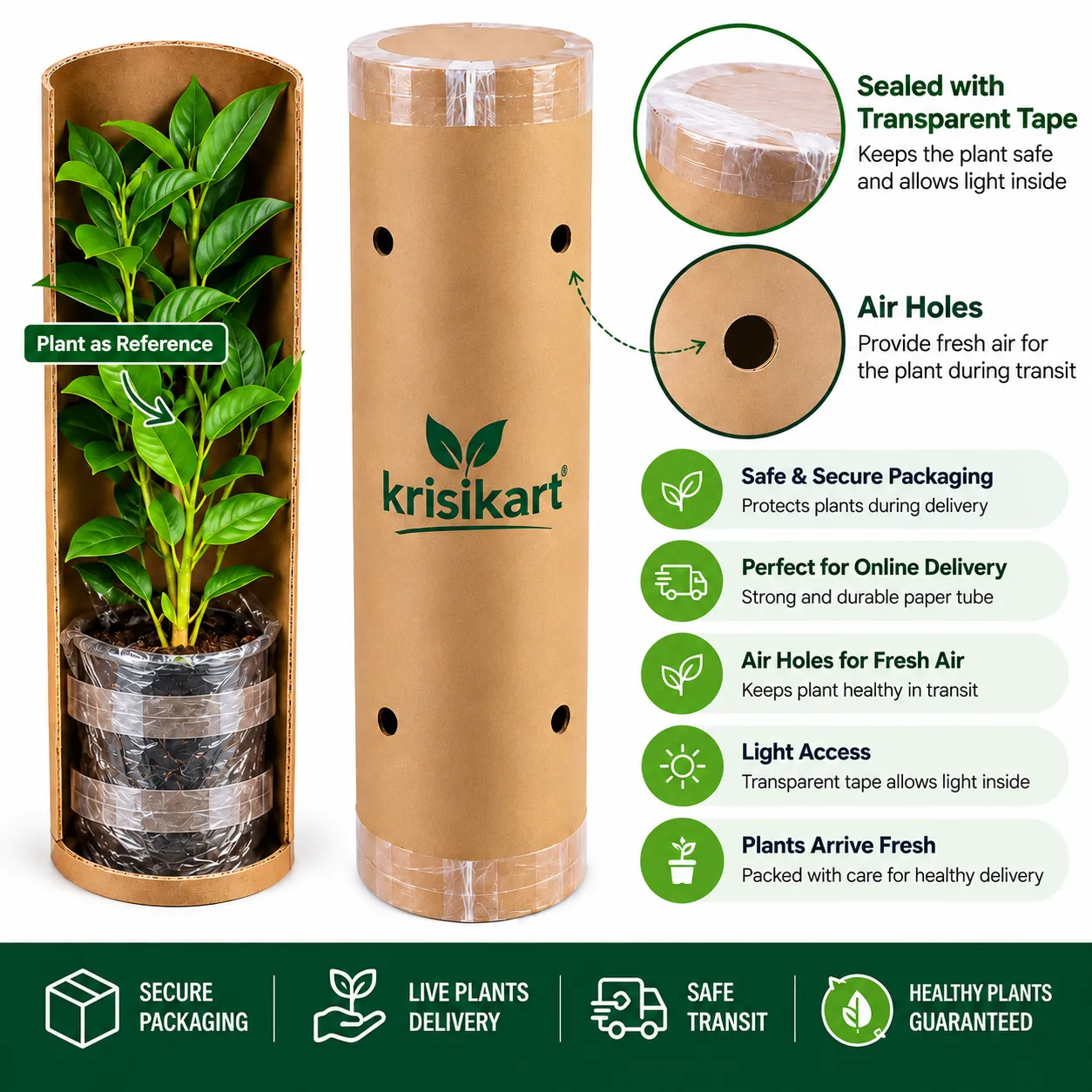
Live palm saplings vary naturally in height, frond count, and leaf spread. During transit, plants may experience mild shipping stress, and the tips of a few lower leaflets may turn slightly dry or yellow.
Upon receiving your Date Palm Tree, place it in bright, filtered outdoor light for 3 to 4 days before moving it into full direct sun. Check the root ball moisture and water thoroughly if dry, ensuring excess water drains freely. Avoid applying fertilizers or pruning green leaves immediately after delivery; allow the sapling 2 to 3 weeks to settle into its new environment first.
Why Choose the Date Palm Tree for Your Garden?
The Date Palm Tree brings timeless architectural beauty, drought tolerance, and long-term heritage value to outdoor landscapes. Whether you are cultivating it in a dry-climate home garden with the goal of harvesting homegrown dates or planting it as a bold, resilient evergreen specimen in a sunny courtyard, Phoenix dactylifera rewards patient gardeners with decades of stately growth.
Botanical Information and Further Reading
- Kew Science – Plants of the World Online: Phoenix dactylifera L.
- Royal Horticultural Society (RHS) – Phoenix dactylifera Plant Profile
- ICAR – Central Institute for Arid Horticulture (Date Palm Research in India)
- eFlora of India – Phoenix dactylifera Botanical Reference
- FAO – Date Palm Cultivation Horticultural Guide
Frequently Asked Questions (FAQs)
1. What is the botanical name of the Date Palm Tree?
The accepted botanical name of the Date Palm Tree is Phoenix dactylifera, and it belongs to the palm family Arecaceae.
2. Will a single Ajwa Date Palm Tree produce dates on its own?
No, date palms are dioecious, meaning male and female flowers grow on separate trees. Only female trees produce dates, and they require pollen from a male palm during flowering to set fruit.
3. What is the difference between seed-grown and tissue-cultured Ajwa date plants?
Tissue-cultured or offshoot-propagated plants are genetically identical clones of a female ‘Ajwa’ tree and reliably produce true ‘Ajwa’ dates. Seed-grown plants have a 50% chance of being male and will not produce true-to-type ‘Ajwa’ fruits.
4. Can I grow a Date Palm Tree in India?
Yes, Date Palm Trees grow across warm regions of India. However, commercial-quality fruit ripening occurs best in hot, dry states like Gujarat, Rajasthan, and Punjab, whereas in humid regions like West Bengal or Kerala it grows primarily as an ornamental palm.
5. How much sunlight does a Date Palm Tree need?
It requires full, direct sunlight for at least 6 to 8 hours daily to develop sturdy fronds and support flowering and fruiting.
6. Can I grow a Date Palm Tree in a pot?
You can grow a young Date Palm Tree in a large 18-to-24-inch container for its first 3 to 5 years, but it will eventually need to be planted in open ground due to its deep roots and large mature size.
7. How long does a Date Palm Tree take to bear fruit?
Under suitable dry, sunny conditions with proper pollination, offshoot or tissue-cultured female palms typically begin fruiting in 4 to 6 years, while seed-grown trees take 5 to 8 years or longer.
8. How often should I water my Date Palm Tree?
Water deeply every 2 to 3 days for newly planted saplings. Once established in the ground, water deeply every 7 to 10 days during hot summers and reduce watering during monsoon and winter.
9. What type of soil is best for growing dates?
Well-draining sandy loam or alluvial soil enriched with organic compost is ideal. Avoid heavy, waterlogged clay soils that hold stagnant water around the roots.
10. Are the leaves of the Date Palm Tree sharp?
Yes, the lower section of each frond has sharp, woody spines, and the leaflet tips are pointed. Always wear thick gloves when pruning or handling the plant.
11. Is the Date Palm Tree suitable for indoor gardening?
No, Phoenix dactylifera needs intense full sunlight and substantial space, making it unsuitable for indoor rooms.
12. Why is my young Date Palm growing slowly?
Young date palms spend their first few years building a strong root system and thickening their trunk base before growing tall. Consistent sun, deep watering, and seasonal compost applications will support steady growth.
For More Information
Visit: krisikart.com
For Contact Visit:Contact Us
For Shopping Visit: Shop Page


Suvbhom malhotra –
service good.plant received good condition thanks team.🙏🙏🙏