 Plastic Plant pot | Plastic Garden Pot for Plants
 Self Watering Planters | Self Watering Plant Pots For Plants
Ponytail Palm | Elephant Foot Plant (Beaucarnea recurvata) Nolina Palm
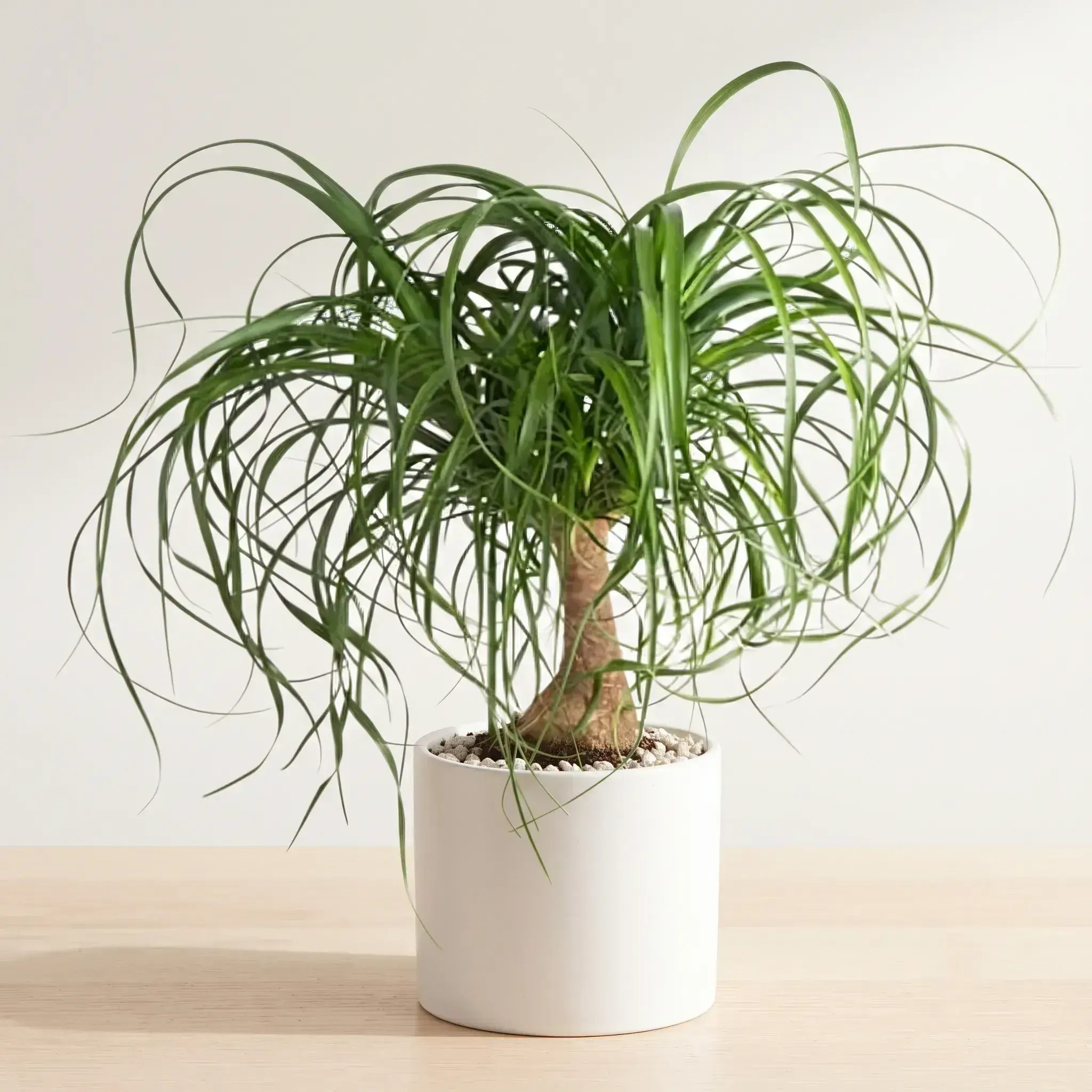
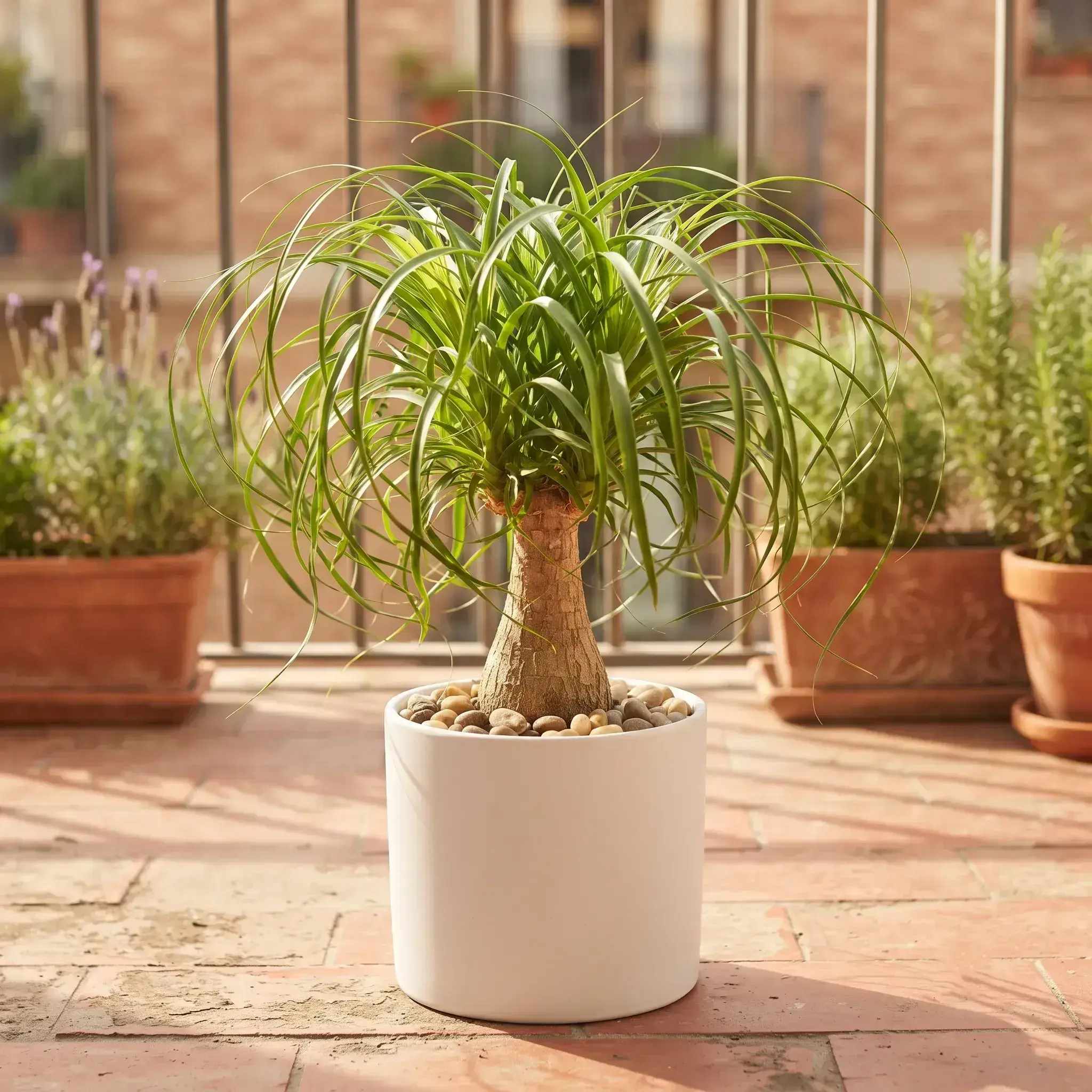
The Ponytail Palm, also popularly known as the Elephant Foot Plant or Nolina Palm, is a striking, sculptural succulent tree prized for its swollen, bottle-shaped trunk base and fountain-like cascade of long, curly, ribbon-like leaves. Botanically classified as Beaucarnea recurvata (and widely recognized in nurseries under its older synonym Nolina recurvata), this native Mexican perennial belongs to the asparagus family Asparagaceae rather than the true palm family.
Tough, slow-growing, and remarkably drought-tolerant, the Ponytail Palm stores water inside its bulbous trunk base, allowing it to thrive on sunny balconies, bright living room corners, terrace gardens, and office spaces across India with minimal watering. Whether styled as a compact tabletop specimen when young or grown into a bold architectural centerpiece in a large floor planter, Beaucarnea recurvata brings effortless desert elegance to modern homes.
Plant Highlights
- Product Name: Ponytail Palm | Elephant Foot Plant (Beaucarnea recurvata) Nolina Palm for Home Garden
- Common Name: Ponytail Palm, Elephant Foot Plant, Bottle Palm, Nolina Palm
- Accepted Botanical Name: Beaucarnea recurvata (commonly listed in nurseries under the synonym Nolina recurvata)
- Family: Asparagaceae (Asparagus family)
- Plant Type: Evergreen perennial tree-like succulent
- Origin: Eastern and Southeastern Mexico (Veracruz, Oaxaca, Tamaulipas, San Luis Potosí)
- Flower Colour: Creamy white to pale greenish-yellow tiny flowers in large branching panicles (only on very old, mature outdoor specimens)
- Foliage: Long, narrow, arching, leathery dark green leaves that cascade downward from the top of the trunk like a ponytail
- Growth Habit: Upright, single or sparsely branched trunk with a prominent swollen, water-storing caudex base
- Mature Height: Typically 60 cm to 1.8 meters (2 to 6 feet) in home containers over many years; up to 4 to 8 meters in open ground in frost-free climates
- Sunlight: Bright indirect light to 4 to 6 hours of direct sunlight daily
- Watering: Low; allow the potting mix to dry out thoroughly between waterings
- Suitable For: Bright indoor rooms near sunny windows, covered balconies, terrace gardens, courtyards, office lobbies, and architectural floor planters
About the Ponytail Palm
Beaucarnea recurvata belongs to the family Asparagaceae and originates from the dry deciduous forests and rocky hillsides of eastern Mexico. In older botanical literature and Indian nurseries, it is frequently referred to by its synonym Nolina recurvata.
Although called a palm because of its tufted crown of arching leaves, the Elephant Foot Plant is actually a xerophytic succulent. Its signature swollen base—called a caudex—acts as a natural water reservoir during prolonged dry seasons, making it far more forgiving of occasional neglect than true tropical palms.
Appearance and Growth Habit
The defining feature of the Ponytail Palm is its thick, bulbous trunk base covered in fissured, grey-brown elephant-skin bark, tapering upward into a slender woody stem. From the top of the stem emerges a dense rosette of slender, strap-like, dark green leaves up to 90 to 150 cm long that arch gracefully downward and curl at the ends.
Growth is noticeably slow, especially in containers. Over many years, a single-stemmed plant may branch at the top—particularly if pruned or damaged—creating multiple leafy crowns that enhance its sculptural silhouette.
Foliage and Flowering Characteristics
The Ponytail Palm is grown almost exclusively for its dramatic, year-round evergreen foliage and swollen trunk base. Very mature, decades-old trees grown outdoors in full sun can produce tall, branching plumes of tiny creamy-white flowers during summer, though indoor and balcony container plants rarely flower.
Sunlight Requirements
Bright light keeps the Ponytail Palm compact, sturdy, and vibrant. Place it where it receives at least 4 to 6 hours of bright indirect light or direct morning sunlight daily, such as beside an east- or south-facing window, on a sunny balcony, or in a bright courtyard.
In Indian regions experiencing scorching summer heat above 38°C to 40°C, provide light afternoon shade so the strap-like leaves do not scorch. While the plant can tolerate medium indoor light temporarily, prolonged dim conditions cause weak, pale foliage and slow trunk development.
Watering Requirements
Because the Elephant Foot Plant stores moisture inside its swollen base, overwatering is the primary risk to avoid.
Watering During Summer and Active Growth
Follow the soak-and-dry rule: check the soil with your finger or a wooden stick, and water thoroughly only when the top 5 to 7 cm (or nearly the entire pot) of soil has dried out completely. Let excess water drain freely out of the bottom holes and empty the drainage tray. In warm summer weather, potted plants typically need watering once every 7 to 14 days depending on pot size and sunlight.
Watering During Monsoon and Winter
During the humid Indian monsoon, evaporation slows down significantly, so reduce watering to once every 2 to 3 weeks or only when the potting mix is dry. In winter, when growth slows, water sparingly once every 3 to 4 weeks.
Soil and Potting Requirements
A fast-draining, porous cactus and succulent potting mix is essential to keep the fleshy roots and swollen trunk base from rotting in damp soil.
Suggested Potting Mixture for Ponytail Palm
Prepare an airy, well-draining mix using 40% well-draining sandy garden loam, 35% coarse river sand or perlite, and 25% pumice, crushed brick, or fine gravel, blended with a small handful (about 10%) of well-aged vermicompost. Choose a heavy, stable terracotta or ceramic pot with clear drainage holes so the top-heavy foliage does not tip the pot over.
Growing the Plant in the Indian Climate
The Ponytail Palm adapts reliably to Indian homes, balconies, and gardens when protected from stagnant monsoon water.
Summer Care
It handles warm Indian summers comfortably when kept in bright light with good airflow and shielded from harsh midday glare during peak May and June heatwaves.
Monsoon Care
Heavy monsoon rainfall and high humidity in cities like Kolkata, Mumbai, Bengaluru, and Chennai can cause root or trunk base rot if the soil remains saturated. Move potted plants under a covered balcony overhang or bright indoor window during the rainy season.
Winter Care
Mild Indian winters are comfortable for Beaucarnea recurvata. Keep the plant in bright winter sun, reduce watering frequency, and protect it from frost if temperatures drop near freezing in northern plains.
Temperature and Humidity
Beaucarnea recurvata thrives in warm temperatures between 18°C and 35°C and prefers low to moderate humidity without misting. It tolerates air-conditioned indoor environments well, provided it sits near a bright natural window and away from direct cold AC drafts.
Fertilizer and Nutrition
This slow-growing succulent tree has modest nutrient needs and does not benefit from heavy feeding.
During the active growing period from spring through early autumn (March to September), feed once every 6 to 8 weeks with a balanced liquid fertilizer or succulent feed diluted to half strength, or apply a light top-dressing of vermicompost in spring. Avoid fertilizing during winter dormancy or right after repotting.
Growing the Plant in Pots
Thanks to its slow growth and compact, shallow root system, the Ponytail Palm is one of the best architectural plants for long-term container cultivation. In fact, it prefers being slightly snug in its pot—choose a container only 3 to 5 cm wider than the swollen base, as oversized pots hold excess wet soil. Repot every 3 to 4 years in spring using fresh, gritty succulent mix.
Pruning and Maintenance
Routine upkeep is minimal. Gently pull away old, completely dried lower leaves from the base of the leafy crown to keep the trunk neat.
If leaf tips turn brown from dry air or mineral buildup in tap water, trim only the brown tip at an angle with clean scissors without cutting into green tissue. Wipe dust off the long arching leaves occasionally with a soft, damp cloth.
Propagation
The Ponytail Palm is propagated primarily from seeds or occasionally from small side offsets (pups) produced near the base of mature plants.
1. Basal Offsets (Pups)
If an older plant forms small woody offsets near the base of the trunk, carefully separate an offset with a sterilized knife, let the cut surface dry in the shade for 3 to 4 days until calloused, and pot it in slightly moist, fast-draining succulent mix.
2. Seeds
Fresh seeds soaked in lukewarm water for 24 hours and sown in warm, well-draining sandy mix generally germinate in 3 to 6 weeks, though seed-grown plants take several years to develop a noticeable swollen trunk.
Common Problems and Plant Care
Monitoring soil dryness and light levels prevents nearly all common issues with Beaucarnea recurvata.
1. Soft, Mushy, or Wrinkled Trunk Base
A soft, spongy base indicates overwatering and rot. Stop watering immediately, unpot the plant to inspect the roots, remove any rotted roots, and repot in dry, gritty succulent soil.
2. Brown Leaf Tips
Dry brown tips commonly result from very low indoor humidity, underwatering during extreme heat, or fluoride and salts in hard tap water. Water thoroughly using filtered or rainwater when the soil dries out, and trim brown tips neatly.
3. Yellowing Lower Leaves
Gradual yellowing of the lowest, oldest leaves is a natural part of trunk growth. However, rapid yellowing of multiple leaves points to overwatering or poor pot drainage.
4. Scale Insects or Mealybugs
Occasionally, tiny scale bumps or white mealybugs hide deep inside the leaf crown. Wipe visible pests with a cotton swab dipped in 70% rubbing alcohol or spray diluted neem oil (3 ml per liter of water) in the evening.
Suitability for Home Gardens
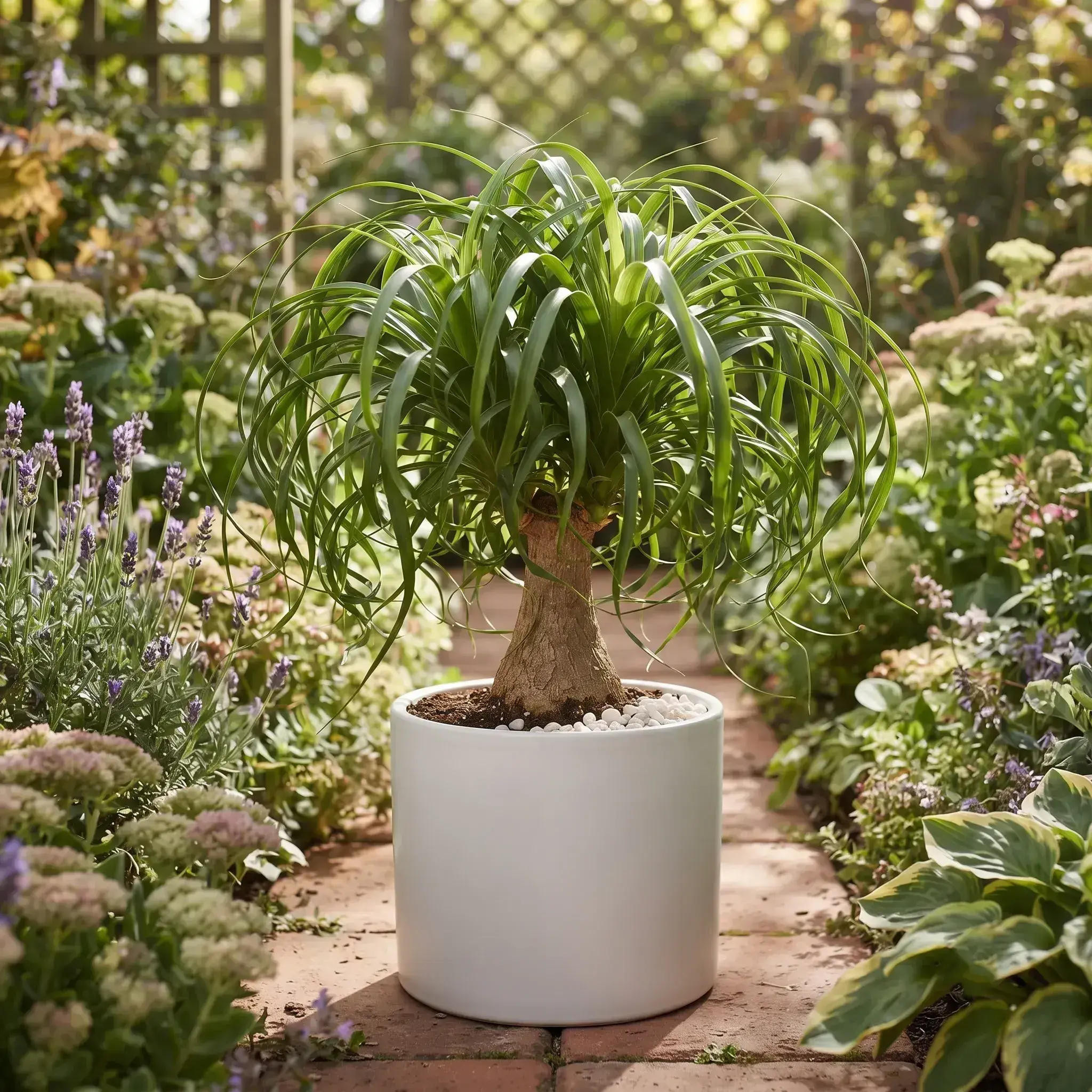
The Ponytail Palm is ideal for bright living rooms next to sunny windows, covered balconies, terrace gardens, sunlit courtyards, and office spaces. Because it needs strong natural light, it is not suitable for dark, windowless rooms, and in heavy-rainfall regions it performs best in pots rather than open wet soil.
Safety and Important Information
According to veterinary and botanical references (including the ASPCA), Beaucarnea recurvata is non-toxic to dogs, cats, and humans, making it a pet-friendly choice for households with curious pets. However, the long leaf edges can feel slightly rough or sharp if pulled quickly, and cats often enjoy batting at the dangling ponytail leaves, so placing the pot on a sturdy stand helps protect the foliage.
Live Plant Delivery Information
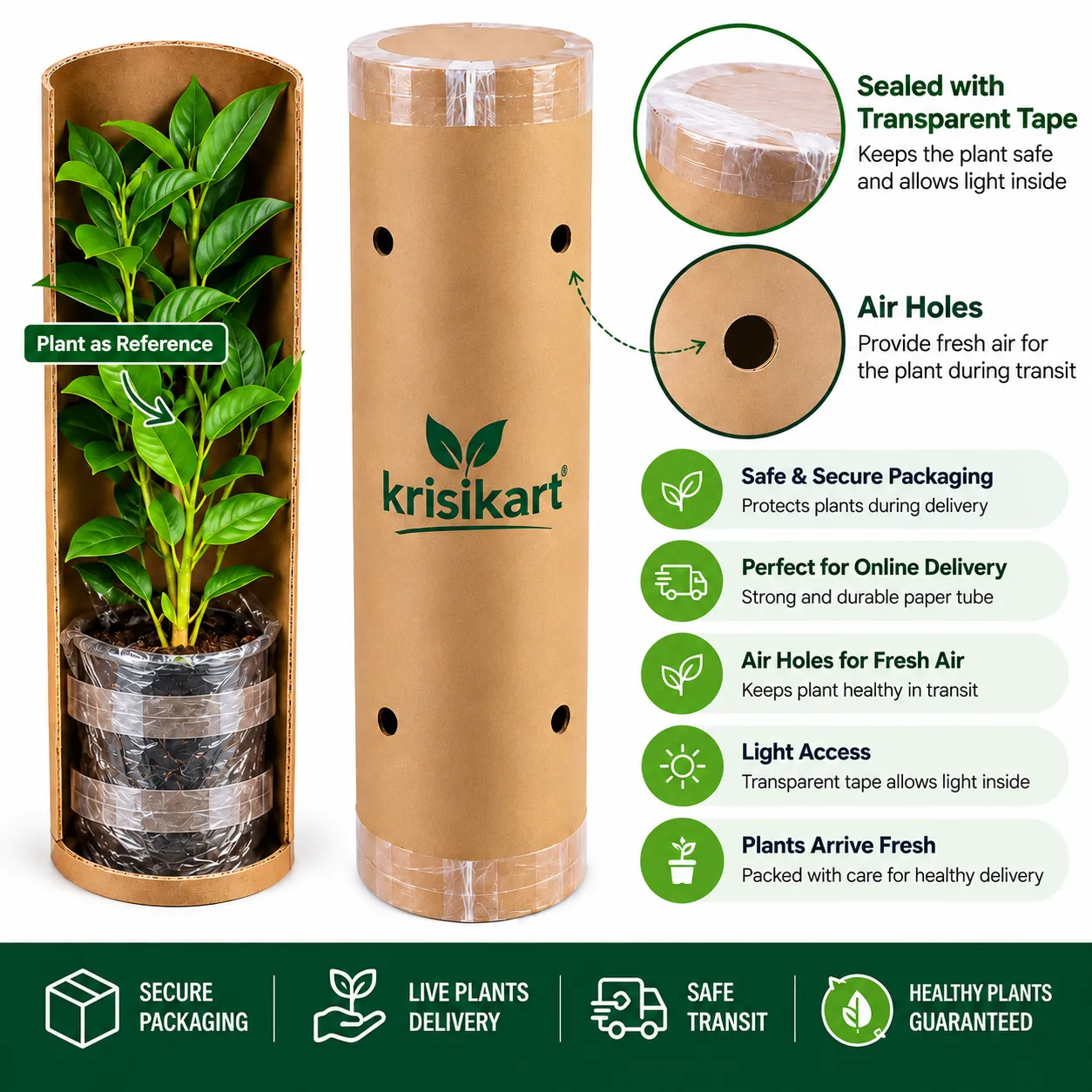
Live Ponytail Palm plants vary naturally in bulb diameter, trunk height, leaf length, and curliness. During shipping, mild transit stress may occur, and a few lower leaf tips may bend or dry slightly.
After unboxing, place your Elephant Foot Plant in bright indirect light for 2 to 3 days before moving it into brighter morning sunlight. Check soil moisture before watering—water only if the potting mix is dry. Wait 1 to 2 weeks before repotting or fertilizing so the plant settles comfortably.
Why Choose the Ponytail Palm for Your Garden?
Combining a sculptural elephant-foot trunk, cascading fountain foliage, pet-friendly safety, and effortless drought resilience, the Ponytail Palm is a standout low-maintenance plant for Indian homes and balconies. With bright light, gritty soil, and restrained watering, it grows into a timeless living centerpiece for decades.
Botanical Information and Further Reading
- Kew Science – Plants of the World Online: Beaucarnea recurvata (K.Koch & Fintelm.) Lem.
- Royal Horticultural Society (RHS) – Beaucarnea recurvata Plant Profile
- Missouri Botanical Garden – Beaucarnea recurvata Plant Finder
- University of Wisconsin-Madison Extension – Ponytail Palm Care Guide
- ASPCA Animal Poison Control – Ponytail Palm Pet Safety Information
Frequently Asked Questions (FAQs)
1. What is the botanical name of the Ponytail Palm or Elephant Foot Plant?
The accepted botanical name is Beaucarnea recurvata in the family Asparagaceae, and it is also widely sold under its older synonym Nolina recurvata.
2. Is the Ponytail Palm a true palm tree?
No, despite its common name and palm-like crown of leaves, it is actually a desert succulent related to agaves and asparagus.
3. Can I grow a Ponytail Palm indoors?
Yes, it thrives indoors as long as it sits right beside a bright, sunny window receiving at least 4 to 6 hours of bright indirect light or gentle morning sunlight daily.
4. How often should I water my Ponytail Palm?
Because its swollen trunk stores water, water thoroughly only after the potting mix has dried out completely—typically once every 7 to 14 days in summer and every 2 to 4 weeks in monsoon and winter.
5. What soil mix is best for Beaucarnea recurvata?
Use a fast-draining cactus and succulent potting mix made with sandy loam, coarse river sand, perlite, or pumice so water drains quickly and never rots the swollen base.
6. Why are the leaf tips on my Ponytail Palm turning brown?
Brown leaf tips usually happen due to dry indoor air, prolonged underwatering in heat, or salts in tap water. Water thoroughly when dry and trim brown tips neatly with clean scissors.
7. How should I care for a Ponytail Palm during the Indian monsoon?
Keep potted plants under a covered balcony or bright indoor window so heavy monsoon rains do not soak the potting mix, and water very sparingly.
8. How fast does an Elephant Foot Plant grow?
It is a slow-growing plant that typically reaches 60 cm to 1.8 meters tall in home containers over many years, making it easy to manage indoors or on a balcony.
9. Does the Ponytail Palm need a large pot?
No, it actually prefers a snug pot only 3 to 5 cm wider than its swollen trunk base, as oversized pots hold excess moisture around the roots.
10. Is the Ponytail Palm safe for cats and dogs?
Yes, Beaucarnea recurvata is non-toxic to cats and dogs, though pets often like to play with its dangling leaves.


Reviews
There are no reviews yet.