 Plastic Plant pot | Plastic Garden Pot for Plants
 Self Watering Planters | Self Watering Plant Pots For Plants
Betel Nut Plant | (Areca catechu) Arecanut Palm Tree Hybrid
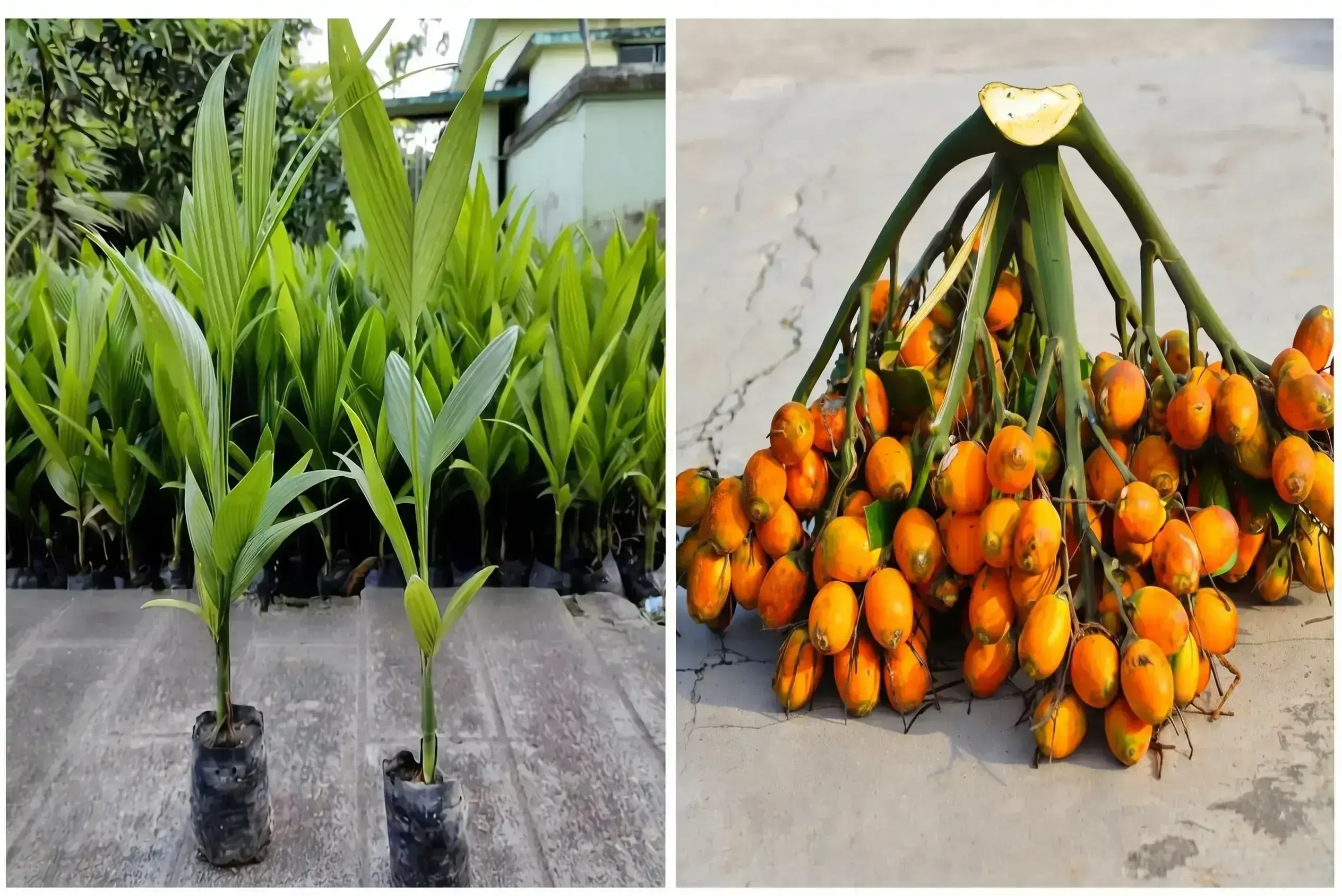
The Betel Nut Plant, universally recognized across Indian households and farms as the Supari Palm or Arecanut Palm Tree, is a graceful, single-trunked tropical palm valued for its slender architectural silhouette and commercially important nut clusters. Botanically classified as Areca catechu, this hybrid selection offers home gardeners, farmhouses, and plantations a more compact, sturdier, and productive palm compared to traditional towering wild varieties.
With its ringed green-to-grey trunk, crown of feathery arching fronds, and vibrant clusters of orange-red fruits, the Hybrid Arecanut Palm brings authentic tropical orchard character to spacious home gardens, boundary lines, and farms across warm, humid regions of India. While young seedlings can be started in large containers during their first year or two, planting in open, well-draining soil unlocks the tree’s full nut-bearing potential.
Plant Highlights
- Product Name: Betel Nut Plant | (Areca catechu) Arecanut Palm Tree (Hybrid) for Home Garden & Farm
- Common Name: Betel Nut Palm, Arecanut Palm, Supari Tree, Adike, Adakka, Pakku, Gua
- Botanical Name: Areca catechu (Hybrid Variety)
- Family: Arecaceae (Palm family)
- Plant Type: Evergreen perennial single-stemmed nut-bearing palm tree
- Origin: Tropical South and Southeast Asia (cultivated extensively across Karnataka, Kerala, Assam, West Bengal, Maharashtra, and Tamil Nadu)
- Flower Colour: Fragrant creamy-white to yellowish-white male and female flowers borne on branched panicles (spadices) below the leaf crown
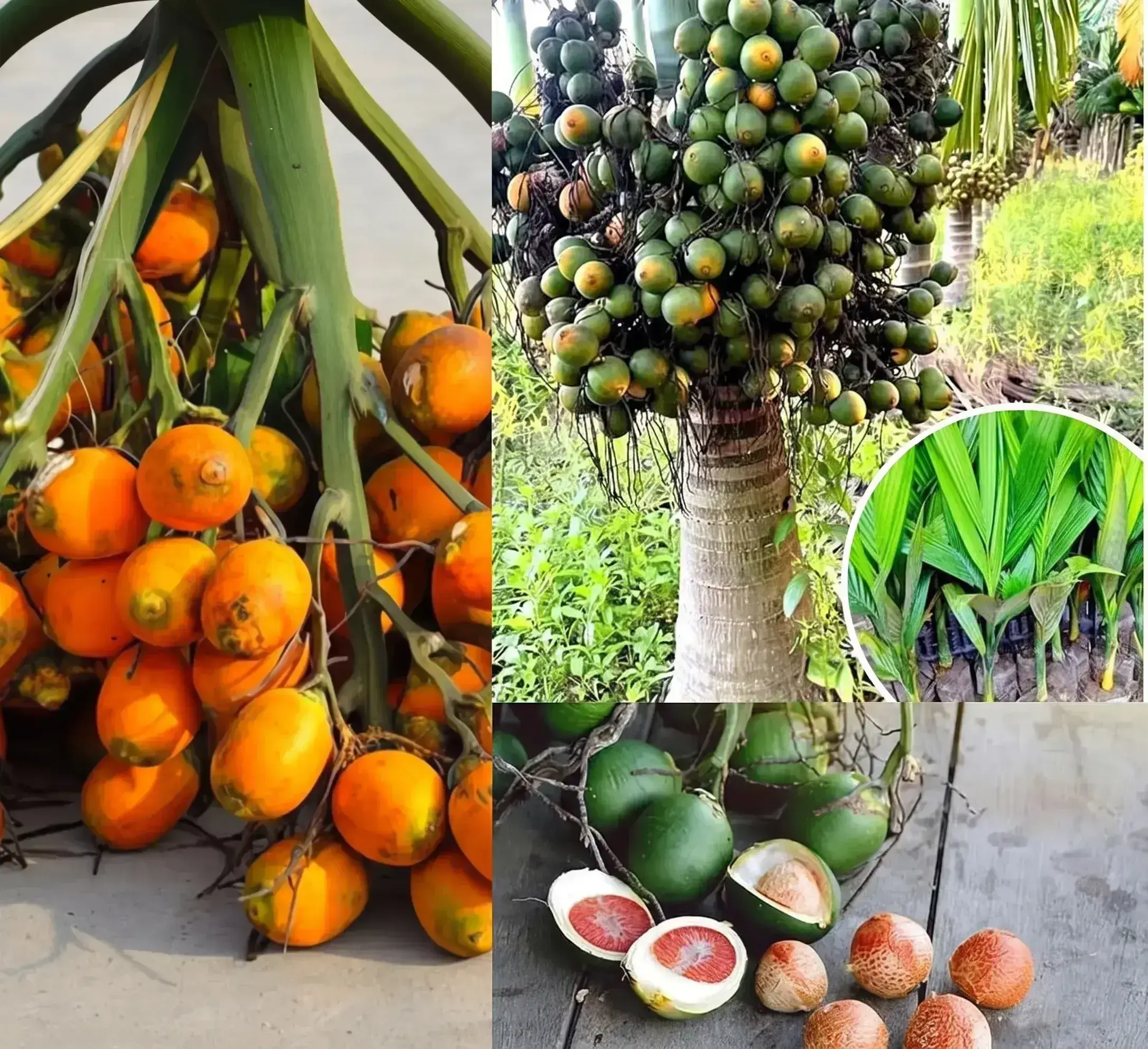
- Fruit Characteristics: Ovoid to oblong drupes (4 to 5 cm long) with a fibrous husk that ripens from green to bright yellow-orange or scarlet-red, enclosing a hard, marbled brown seed (arecanut / supari)
- Foliage: Large, gracefully arching pinnate fronds (1.5 to 2 meters long) composed of numerous glossy dark green lance-shaped leaflets
- Growth Habit: Upright, slender, single-trunked palm marked with distinct horizontal leaf-scar rings
- Mature Height: Typically 6 to 12 meters (20 to 40 feet) in hybrid and semi-dwarf selections in open ground (significantly shorter and easier to harvest than traditional tall palms reaching 15 to 20 meters)
- Sunlight: Partial shade during early seedling stage; full sunlight (at least 5 to 7 hours daily) once established
- Watering: Regular and consistent moisture; not drought-hardy, requiring reliable irrigation during dry spells without waterlogging
- Suitable For: Spacious home gardens, farmhouses, agricultural plantations, orchard borders, and large containers during early nursery growth
About the Hybrid Betel Nut (Arecanut) Palm
Areca catechu belongs to the palm family Arecaceae and has been cultivated across the Indian subcontinent for centuries for cultural rituals, traditional agriculture, and commercial farming. Note that true Areca catechu is a single-trunked nut-bearing tree—completely distinct from the multi-stemmed indoor ornamental Areca Palm (Dypsis lutescens).
Hybrid and semi-dwarf arecanut selections (such as improved high-yielding hybrids developed for Indian orchards) are bred to combine shorter internodes, thicker and more wind-resistant trunks, and earlier, heavier nut bearing—making them far easier to manage and harvest in both home gardens and commercial farms.
Appearance and Growth Habit
The Hybrid Arecanut Palm grows with a straight, slender, unbranched trunk ringed neatly by scars left behind as older fronds shed cleanly from the smooth green crownshaft. At the top sits a lush crown of 8 to 12 arching, feather-like pinnate fronds measuring up to 1.5 to 2 meters in length.
Growth is steady in warm, moist climates. Because hybrid varieties feature shorter spaces between trunk rings, the canopy stays closer to the ground for many years compared to traditional tall palms.
Flowers and Fruiting Season
Once mature—typically around 4 to 5 years after field planting under good irrigation and nutrition—Areca catechu produces multi-branched flowering stalks (inflorescences) emerging just below the green crownshaft. Fragrant creamy-white female flowers sit near the base of the branches while smaller male flowers line the upper tips, attracting bees and pollinating insects.
Following pollination, dense hanging bunches of oval fruits develop, turning from deep green to vivid yellow-orange and bright red as they ripen over 8 to 9 months. In Indian conditions, flowering commonly peaks in spring and early summer, with harvests spanning autumn through winter depending on regional climate and whether tender or ripe nuts are harvested.
Sunlight Requirements
Light requirements change as the palm matures. Young seedlings and newly transplanted saplings under 1 to 2 years old are sensitive to harsh sunburn—especially on the south-west side—and benefit from filtered light or partial shade from companion plants like banana.
Once established, mature Hybrid Arecanut Palms thrive in full, direct sunlight (at least 5 to 7 hours daily), which fuels strong trunk growth and heavy nut clusters.
Watering Requirements
Unlike desert palms, Areca catechu is native to humid tropical rainforests and is not drought-tolerant—consistent soil moisture is critical, especially during dry summer months.
Watering During Establishment and Summer
Keep the root zone evenly moist without creating stagnant mud. During hot summer months (March to May), water young palms every 2 to 3 days and provide regular irrigation (or drip irrigation) to mature bearing palms every 3 to 5 days so nuts do not drop prematurely.
Watering During Monsoon and Winter
During the monsoon, natural rainfall supplies ample moisture; ensure planting pits and garden rows have sloped drainage channels so excess rainwater never pools around the trunk base. In winter, when evaporation slows, reduce watering to once every 7 to 10 days based on soil dryness.
Soil and Potting Requirements
Areca catechu grows best in deep, fertile, well-draining laterite, red loam, or alluvial soils rich in organic matter (ideal pH 5.5 to 7.0) without a high water table. Sticky, waterlogged clay or brackish soils restrict root growth and invite fungal rot.
Suggested Potting Mixture for Young Saplings
If growing a young sapling in a large container during its first 1 to 2 years before field planting, use a well-draining mix of 50% fertile garden loam, 30% well-decomposed cow dung manure or vermicompost, and 20% coarse river sand, enriched with a handful of neem cake powder. Always use a deep container with multiple clear drainage holes.
Growing the Plant in the Indian Climate
India is the world’s leading producer of arecanut, and Areca catechu thrives across humid tropical states including Karnataka, Kerala, Assam, West Bengal, Maharashtra, Goa, and Tamil Nadu.
Summer Care
Hot, dry spells from March to May are the most critical period for young palms. Mulch the basin around the trunk with dry palm fronds, leaves, or organic compost to retain soil moisture, and provide light afternoon shade for saplings under two years old.
Monsoon Care
In heavy-rainfall regions like Kolkata, coastal Karnataka, Kerala, and Assam, vigorous growth occurs during monsoon. Ensure proper drainage around the root collar to prevent monsoon fungal diseases like fruit rot (Mahali) and bud rot.
Winter Care
Areca catechu thrives in mild winters between 14°C and 32°C, though temperatures dropping below 10°C in northern plains slow growth and can injure tender foliage. Avoid planting in frost-prone regions.
Temperature and Humidity
The Betel Nut Palm prefers warm, humid tropical weather between 15°C and 36°C with high relative humidity. Prolonged dry heat above 40°C without irrigation or cold snaps below 10°C can stress the palm.
Fertilizer and Nutrition
Because arecanut palms produce heavy fronds and dense nut bunches, steady organic and balanced feeding supports strong yields.
Apply a generous dose of well-rotted farmyard manure or vermicompost along with neem cake and green leaf mulch twice a year—once at the onset of monsoon (May–June) and again after heavy rains (September–October). For bearing palms on farms or home orchards, supplement with potassium-rich organic inputs such as wood ash, banana peel compost, or balanced NPK nutrition tailored to palm crops.
Growing the Plant in Pots
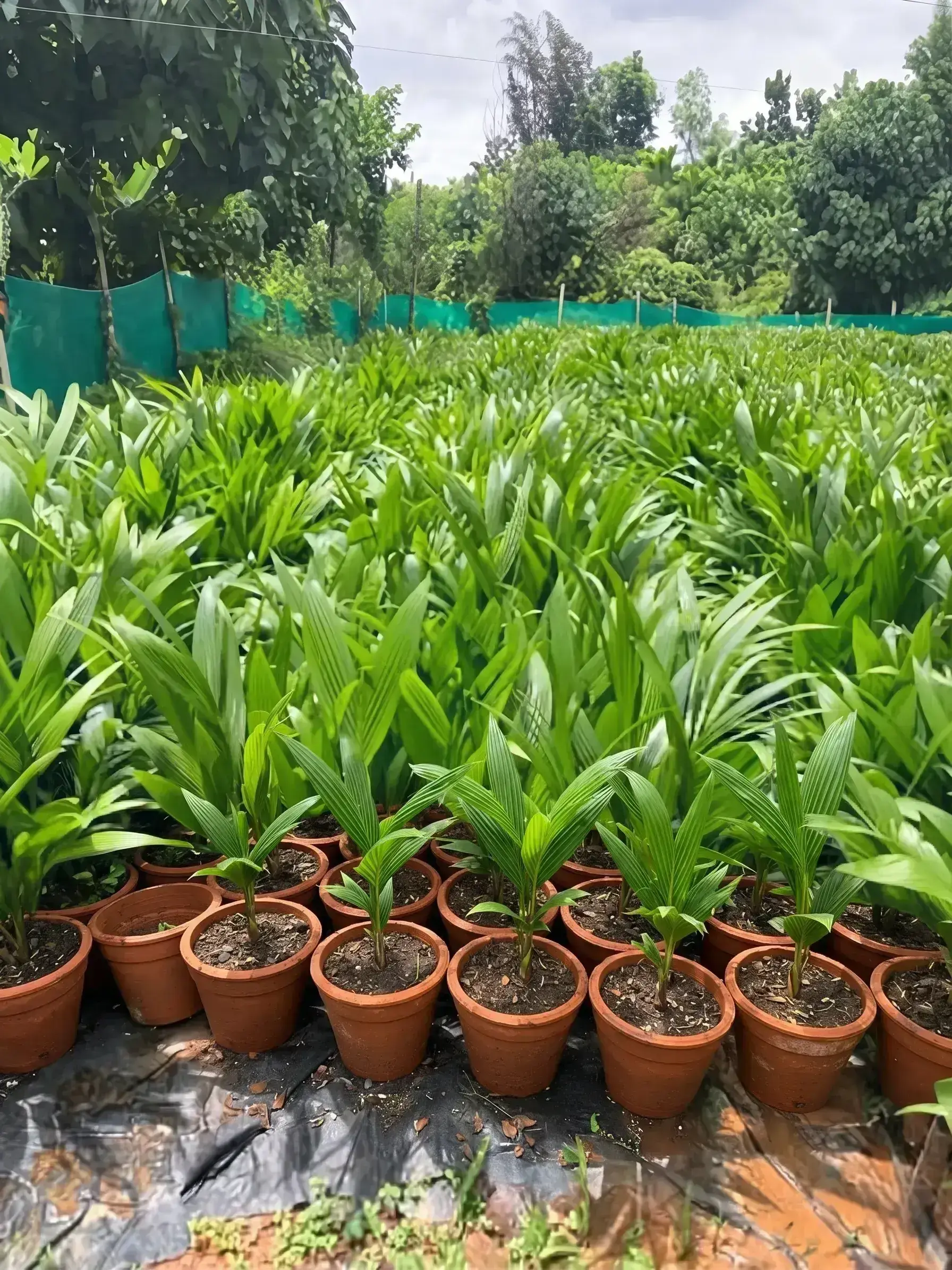
You can grow a Hybrid Betel Nut sapling in a deep 14-to-18-inch container on a bright patio or courtyard during its first 1 to 2 years. However, because Areca catechu develops a tall single trunk and deep fibrous root system, it cannot remain in a pot permanently—transplant it into open garden or farm soil at 2.7 m × 2.7 m spacing for long-term health and nut production.
Pruning and Maintenance
Areca catechu is naturally self-cleaning: old lower fronds turn yellow-brown and drop off cleanly along with their broad leaf sheaths, revealing the smooth ringed trunk beneath. Never cut or pull green fronds prematurely, and never damage the central growing bud (crownshaft) at the top of the trunk, as a single-stemmed palm cannot regrow if its terminal bud is destroyed.
Propagation
Arecanut palms are propagated exclusively from selected, fully ripe seed nuts harvested from healthy, high-yielding mother trees. Seed nuts are sprouted in shaded nursery beds over 40 to 90 days and grown in secondary nursery bags for 12 to 18 months before transplanting into the garden or farm.
Common Problems and Plant Care
Consistent dry-season watering and sharp monsoon drainage prevent most issues with Areca catechu.
1. Fruit Rot (Mahali) and Bud Rot in Monsoon
Heavy, continuous monsoon rains and high humidity can cause water-soaked lesions and premature dropping of young green nuts (Mahali) or rotting of the central spindle leaf. Ensure open spacing for airflow, keep the crown clean, and apply recommended organic copper or protective sprays ahead of heavy monsoon rains.
2. Sun Scorch on Young Saplings
Direct, intense south-western afternoon sun can bleach or scorch the trunk and fronds of young palms. Provide temporary shade netting or companion shade plants during the first two summers.
3. Spindle Bugs, Mites, or Root Grubs
Sucking mites on leaf undersides during dry summer weather or spindle bugs in the leaf axils can cause yellow stippling. Spray diluted cold-pressed neem oil (5 ml neem oil + 2 ml mild liquid soap per liter of water) in the evening, and incorporate neem cake into the soil basin to deter root grubs.
4. Yellowing Fronds
Gradual yellowing of the lowest frond before shedding is completely normal. Widespread yellowing across upper fronds indicates waterlogging, drought stress, or potassium/magnesium deficiency.
Suitability for Home Gardens & Farms
The Hybrid Betel Nut Palm is ideal for spacious home gardens, farmhouses, agricultural plantations, and boundary plantings in warm, frost-free tropical regions. Because it grows into a tall single-stemmed palm requiring full sun and deep soil, it is not suitable for indoor living rooms or small apartment balconies.
Safety and Important Information
While arecanut (supari) holds longstanding cultural significance in Indian rituals and agriculture, health authorities (including the World Health Organization / IARC) classify chewing betel nut / areca nut—whether alone or with betel quid—as carcinogenic to humans and associated with oral health risks. Grow this palm responsibly for ornamental landscaping, cultural ceremonies, or commercial agricultural harvest, and keep fallen nuts out of reach of young children and pets.
Live Plant Delivery Information
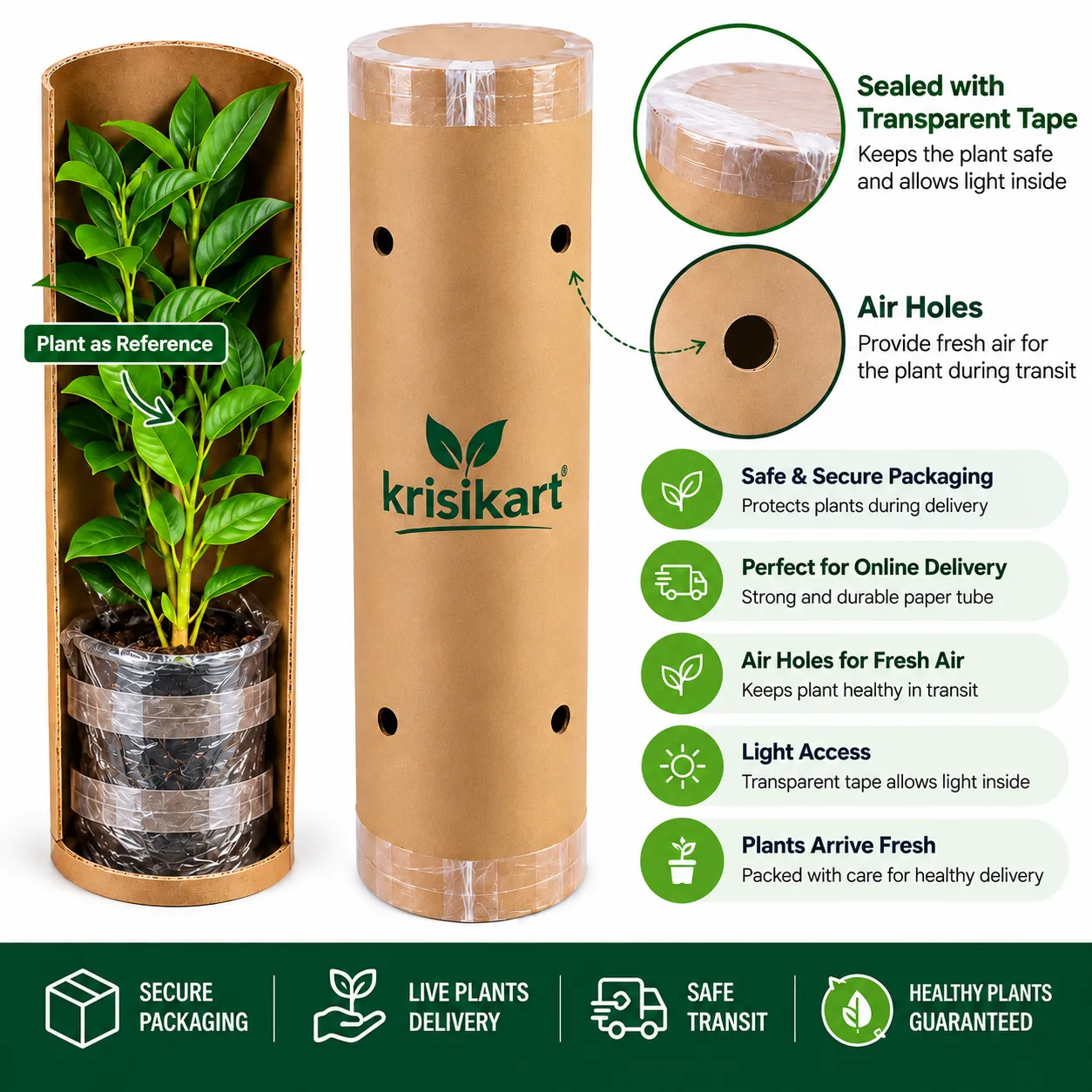
Live Hybrid Betel Nut saplings vary naturally in height, trunk girth, and frond count at the time of shipping. During transit, plants may experience mild shipping stress, and a few lower leaflet tips may dry or yellow slightly upon arrival—this is a normal temporary reaction.
After unboxing, place your sapling in bright, filtered outdoor shade for 3 to 4 days to recover before transplanting into a partially shaded garden spot or large container. Check root ball moisture immediately and water thoroughly if dry. Avoid applying chemical fertilizers right after delivery; wait 2 to 3 weeks until new root growth settles.
Why Choose the Hybrid Betel Nut Plant for Your Garden & Farm?
Combining a slender, ring-marked tropical trunk, graceful feathery fronds, and compact, productive hybrid vigor, the Areca catechu Palm is an enduring asset for warm Indian gardens and farms. With steady moisture, rich organic soil, and basic seasonal care, it grows into a handsome, productive palm for decades.
Botanical Information and Further Reading
- Kew Science – Plants of the World Online: Areca catechu L.
- India Biodiversity Portal – Areca catechu L. Reference
- ICAR – Central Plantation Crops Research Institute (CPCRI): Arecanut Research & Varieties
- TNAU Agritech Portal – Arecanut Cultivation Guide
Frequently Asked Questions (FAQs)
1. What is the botanical name of the Betel Nut or Supari Plant?
The accepted botanical name of the Betel Nut (Arecanut) Palm is Areca catechu, and it belongs to the palm family Arecaceae.
2. Is Areca catechu the same as the indoor ornamental Areca Palm?
No, Areca catechu is a single-trunked nut-bearing palm tree grown outdoors for betel nuts (supari), whereas the clumping indoor decorative Areca Palm is a different species, Dypsis lutescens.
3. What are the benefits of choosing a Hybrid Arecanut Palm?
Hybrid and semi-dwarf arecanut selections feature shorter internodes, sturdier trunks, more compact mature height (around 6 to 12 meters instead of 15 to 20 meters), and earlier, heavier nut production.
4. How many years does a Betel Nut Palm take to bear fruit?
In warm, humid climates with regular irrigation and organic fertilization, hybrid arecanut palms typically start flowering and bearing nut clusters around 4 to 5 years after field planting.
5. How much sunlight does an Arecanut Palm need?
Young saplings under 2 years old prefer filtered light or partial shade to avoid leaf scorch, while established palms thrive in full direct sunlight for at least 5 to 7 hours daily.
6. How often should I water my Betel Nut Plant?
Areca catechu is not drought-tolerant—keep the soil evenly moist without waterlogging, watering every 2 to 3 days during hot dry summer months and reducing watering during monsoon and winter.
7. Can I grow a Betel Nut Palm in a pot?
You can grow a young sapling in a deep 14-to-18-inch pot for its first 1 to 2 years, but because it grows into a tall single-trunked palm, it must be planted in open garden or farm soil long-term.
8. What soil type is best for growing Areca catechu?
Deep, fertile, well-draining laterite, red loam, or alluvial soil rich in organic matter (pH 5.5 to 7.0) without stagnant waterlogging works best.
9. Why shouldn’t I cut the top central shoot of a Betel Nut Palm?
Like all single-stemmed palms, Areca catechu grows from a single central growing bud at the top of the trunk—if that central bud is cut or rots, the palm cannot branch or recover.
10. Which Indian regions are best suited for growing Arecanut Palms?
Warm, humid tropical and subtropical regions with reliable rainfall or irrigation—such as Karnataka, Kerala, Assam, West Bengal, Maharashtra, Goa, and Tamil Nadu—are ideal.
For More Information
Visit: krisikart.com
For Contact Visit:Contact Us
For Shopping Visit: Shop Page


Arpita Nayak –
Plants bilkul fresh aaye.
No damage at all.
Krisikart ka service bahut achha hai.