
 Plastic Plant pot | Plastic Garden Pot for Plants
 Self Watering Planters | Self Watering Plant Pots For Plants
All Spice Plant | Carolina Allspice Tree (Pimenta dioica) Plant – Sarvasugandhi Plant
The All Spice Plant, botanically classified as Pimenta dioica and cherished across Indian households as the Sarvasugandhi Plant, is a fragrant evergreen tropical spice tree prized for its glossy aromatic foliage and dried unripe berries. Its common name comes from the remarkable culinary aroma of its leaves and berries, which naturally blends the warm scents of cinnamon, nutmeg, cloves, and black pepper in a single plant.
Native to the Caribbean and Central America and cultivated successfully in warm, humid parts of India such as Kerala, Karnataka, Tamil Nadu, and coastal regions, this versatile spice plant adapts well to home gardens and large containers. Even in home gardens where trees are grown primarily for foliage, fresh and shade-dried Sarvasugandhi leaves can be harvested year-round to infuse curries, biryanis, stews, and herbal teas with rich spice fragrance.
Plant Highlights
- Product Name: All Spice Plant | Carolina Allspice Tree (Pimenta dioica) Plant – Sarvasugandhi Plant for Home Garden
- Common Name: Allspice, Sarvasugandhi (Hindi/Malayalam/Kannada/Sanskrit), Jamaica Pepper, Pimento, Myrtle Pepper (note: distinct from North American Carolina Allspice, Calycanthus floridus)
- Botanical Name: Pimenta dioica (older synonyms: Myrtus dioica, Pimenta officinalis)
- Family: Myrtaceae (Myrtle family)
- Plant Type: Evergreen perennial aromatic spice tree
- Origin: Native to Jamaica, Cuba, southern Mexico, and Central America; cultivated in humid tropical regions of southern India
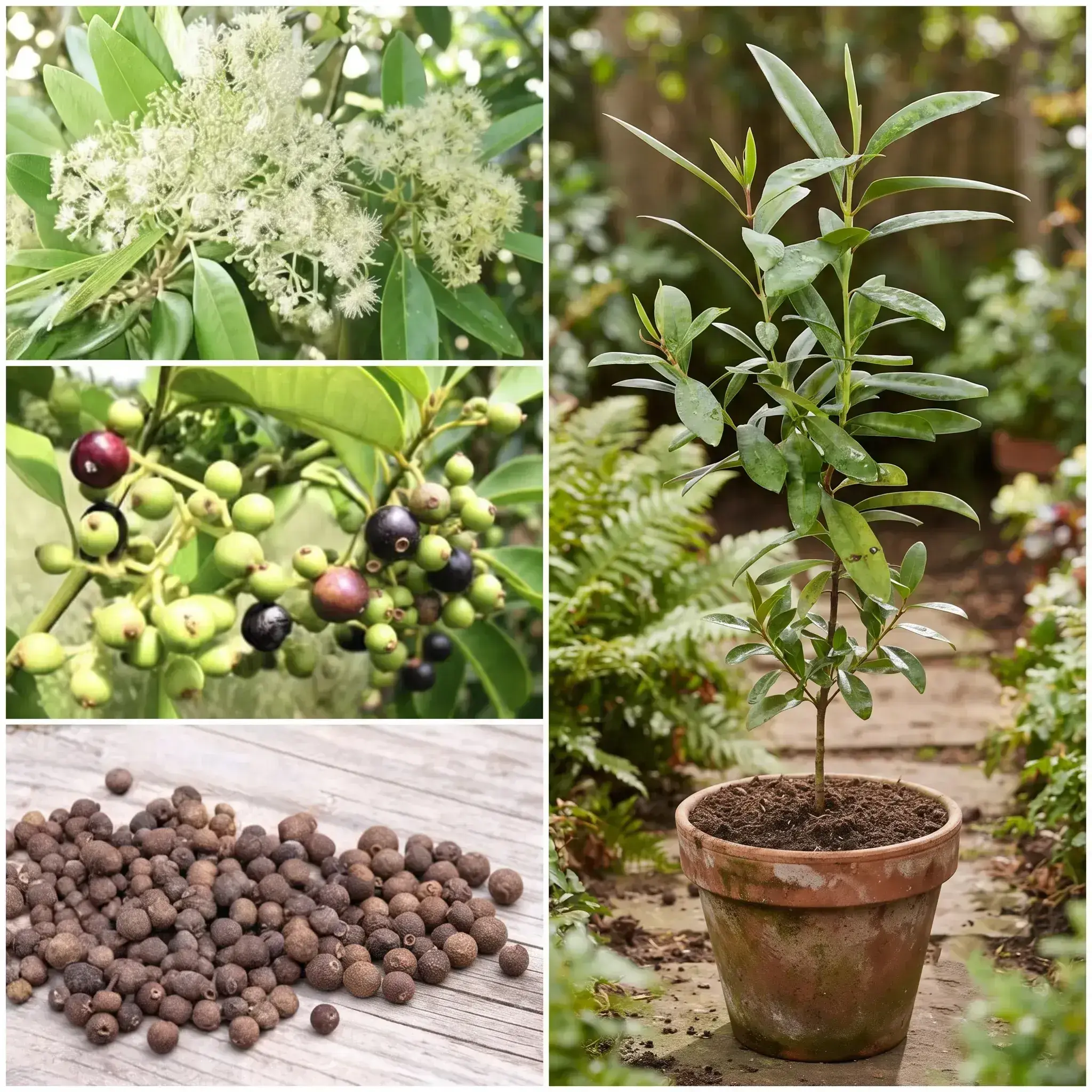
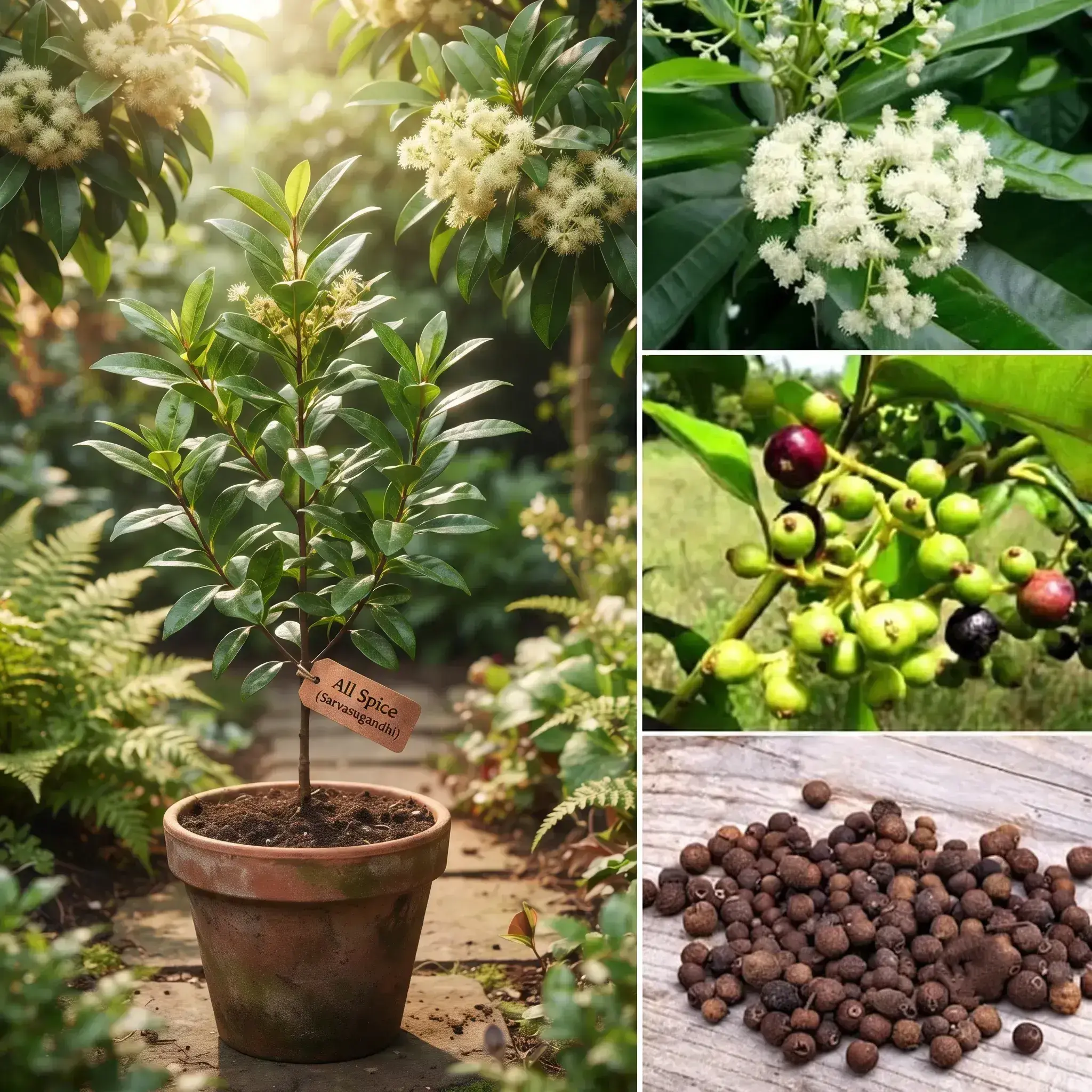
- Flower Colour: Tiny white flowers borne in branched axillary clusters (cymes)
- Flower Fragrance: Lightly sweet and spicy
- Fruit Colour: Green when mature-unripe (harvested stage for drying), ripening to glossy dark purple-black berry-like drupes
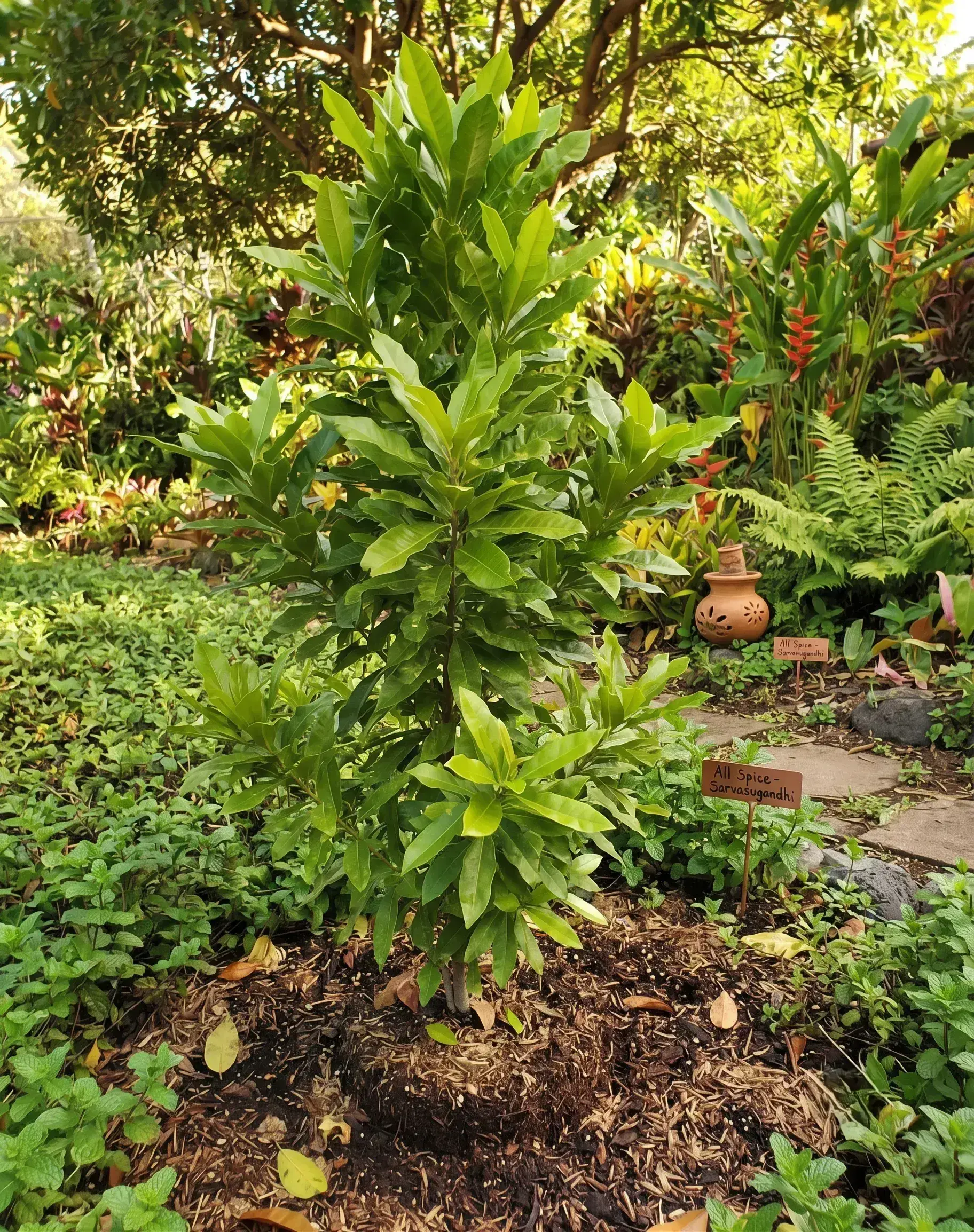
- Foliage: Opposite, leathery, glossy dark green oblong-to-elliptic leaves (8 to 18 cm long) dotted with fragrant essential oil glands
- Growth Habit: Upright, bushy, well-branched evergreen tree with smooth, pale grey-tan peeling bark
- Mature Height: Typically 7 to 12 meters (23 to 40 feet) in open tropical ground over many years; easily kept compact at 1.5 to 2.5 meters (5 to 8 feet) in containers or with light pruning
- Sunlight: Partial shade when young, transitioning to full sun or bright morning sun with light afternoon shade in hot regions (4 to 6 hours of direct sun)
- Watering: Moderate; prefers evenly moist, well-drained soil and does not tolerate prolonged drought or stagnant waterlogging
- Suitable For: Home spice gardens, sunny-to-part-shaded courtyards, coastal and humid backyards, and large terrace containers or grow bags
About the All Spice Plant
Pimenta dioica belongs to the myrtle family Myrtaceae alongside clove, guava, and jamun, and is indigenous to the Greater Antilles (especially Jamaica), southern Mexico, and Central America. Introduced to India during the colonial spice era, it has adapted well to the humid hills and plains of Kerala, Tamil Nadu, and Karnataka, earning the Sanskrit-derived Indian name “Sarvasugandhi” (“possessing all fragrances”).
Gardeners should note a small naming quirk in nursery catalogs: although often tagged as “Carolina Allspice” online, true culinary Allspice is Pimenta dioica, whereas Carolina Allspice (Calycanthus floridus) is an unrelated North American ornamental shrub not used as a food spice. Your Sarvasugandhi Plant is the true culinary Pimenta dioica.
Appearance and Growth Habit
The Sarvasugandhi Plant develops a straight, slender trunk with smooth, pale greyish-brown bark that flakes off in thin strips as the tree matures. Its opposite, leathery leaves are glossy dark green above, paler underneath, and packed with aromatic oil glands that release an immediate warm clove-cinnamon-nutmeg scent when gently crushed.
In open garden soil, Pimenta dioica forms a dense, rounded, attractive evergreen crown over many years. In terrace containers or compact yards, it grows at a moderate pace and responds well to light shaping.
Flowers and Flowering Season
The species epithet dioica refers to its functional dioecy—meaning individual trees are functionally either male (pollen-bearing) or female (fruit-bearing), even though flowers appear structurally similar. In warm Indian climates, mature trees typically bloom during spring to early summer (March to May), producing clusters of tiny white flowers with numerous stamens.
Seed-grown trees generally take 5 to 7 years to reach flowering maturity, whereas vegetatively propagated plants (such as air-layered or grafted saplings from proven female mother trees) can bloom earlier under favorable tropical conditions.
Spice Harvest and Culinary Use
Both the leaves and the berries of Pimenta dioica are prized in the kitchen, making the Sarvasugandhi Plant immediately useful even before it reaches berry-bearing age.
Harvesting Sarvasugandhi Leaves and Allspice Berries
Once your plant is well established (typically after 1 year), mature green leaves can be snipped sparingly, used fresh like bay leaves in rice, curries, soups, and teas, or shade-dried and powdered into homemade spice blends. On mature fruiting female trees, plump green unripe berries are picked roughly 3 to 4 months after flowering—before they turn soft and purple-black—and sun-dried until crisp and reddish-brown.
Sunlight Requirements
Young All Spice Plants grow best in bright morning sunlight (4 to 5 hours) with light afternoon shade, as harsh midday summer sun and hot drying winds can scorch tender new foliage.
Once established in warm, humid regions, Pimenta dioica tolerates fuller outdoor sunlight, which encourages compact branching and higher essential oil concentration in the leaves.
Watering Requirements
Originating in moist tropical forests, the Sarvasugandhi Plant prefers steady, moderate soil moisture paired with fast drainage so roots never dry out completely or sit in standing water.
Watering During Establishment and Summer
During the first 3 to 4 weeks after planting, water every 2 to 3 days so the root zone stays evenly damp. During hot, dry Indian summers, water potted plants every 1 to 2 days and ground-planted trees every 3 to 5 days whenever the top 3 cm of soil feels dry, misting foliage lightly in the evening during dry spells.
Watering During Monsoon and Winter
During the monsoon, pause manual watering when rainfall is regular and ensure excess rainwater drains away rapidly. In winter, reduce watering intervals to once every 7 to 10 days, checking soil moisture before watering.
Soil and Potting Requirements
Pimenta dioica grows best in deep, fertile, loose, organic-rich sandy loam or red lateritic soil with a slightly acidic to neutral pH between 5.5 and 6.8. Heavy, waterlogged clay soils or highly saline soils restrict root growth and cause yellowing leaves.
Suggested Potting Mixture for Containers
This is a suggested potting mixture for container cultivation rather than a rigid scientific formula: blend 45% fertile garden soil, 30% well-decomposed leaf mold or vermicompost, 15% cocopeat (to retain steady moisture), and 10% coarse river sand or perlite, mixed with a handful of neem cake powder. Ensure the pot has multiple unobstructed drainage holes at the base.
Growing the Plant in the Indian Climate
The Sarvasugandhi Plant thrives in warm, humid, frost-free tropical and subtropical parts of India, performing reliably in Kerala, Karnataka, Tamil Nadu, Goa, coastal Maharashtra, West Bengal, Kolkata, Assam, and Odisha.
Summer Care
Hot, dry summer winds can dry out leaf tips. Apply a 4 to 5 cm layer of organic mulch (dry leaves or compost) around the root zone—keeping it clear of the trunk bark—to keep roots cool and conserve moisture.
Monsoon Care
In high-rainfall regions such as Kolkata, West Bengal, and the Western Ghats, monsoon is the fastest vegetative growth season for Pimenta dioica. Elevate pots slightly on pot feet or bricks so excess rainwater drains away freely and roots never sit in stagnant water.
Winter Care
The All Spice Plant is sensitive to frost and prolonged cold snaps. Established plants tolerate mild Indian winters easily, though growth slows below 15°C; young saplings in northern plains should be kept in a warm, sheltered spot protected from cold night winds and frost.
Temperature and Humidity
Pimenta dioica thrives in warm temperatures between 20°C and 35°C and prefers moderate to high relative humidity (65% to 85%). Temperatures below 8°C–10°C slow growth and can chill tender new shoots, while frost is harmful.
Fertilizer and Nutrition
Regular organic nutrition supports lush aromatic foliage and steady root and branch growth.
Apply 3 to 5 kg of well-rotted farmyard manure, leaf mold, or vermicompost around ground-planted trees twice a year—once at the onset of the monsoon (May to June) and again in September or October as heavy rains subside. For potted plants, top-dress with 250 to 400 grams of vermicompost every 45 to 60 days during warm growing months. Avoid heavy synthetic chemical fertilizers on culinary spice plants.
Growing the Plant in Pots
Because its aromatic leaves can be harvested right from a compact shrub, the All Spice Plant is well suited for sunny-to-part-shaded terrace and balcony container gardening. Start a young sapling in a 14-to-16-inch pot or grow bag, and shift it into an 18-to-20-inch container after 2 to 3 years as it grows.
Container cultivation naturally restricts root spread and keeps the tree compact at 1.5 to 2.5 meters, making leaf harvesting easy.
Pruning and Maintenance
Pimenta dioica responds well to light pruning, which encourages bushy side branching and increases the supply of tender, fragrant leaves.
Once a young plant reaches about 0.75 to 1 meter tall, pinching back growing tips during early monsoon stimulates fuller branching. Remove dead, damaged, or weak inward-growing twigs periodically, and avoid stripping too many leaves at once from young saplings.
Propagation
Allspice is propagated from fresh ripe seeds (extracted from dark purple-black berries and sown immediately in moist, shaded soil, germinating in 3 to 6 weeks) as well as vegetatively via air layering (gootee), semi-hardwood cuttings, or approach grafting from known productive mother trees. Note that seed-grown trees produce a mix of male and female plants, whereas vegetative propagation preserves the sex and aroma of the parent tree.
Common Problems and Plant Care
Maintaining filtered sun, good drainage, and steady moisture prevents most common Sarvasugandhi garden issues.
1. Brown or Scorched Leaf Tips
Crispy brown edges usually result from harsh afternoon sun, dry hot winds, or letting the soil dry out completely. Move potted plants to bright morning sun with afternoon shade, mulch the soil, and water consistently.
2. Yellowing Leaves
Yellowing older leaves can indicate waterlogged roots in heavy soil or nutrient depletion in older pots. Check container drainage and top-dress with vermicompost or composted leaf mold.
3. Scale Insects, Aphids, or Caterpillars
Sap-sucking scale insects or caterpillars occasionally appear on tender new leaf flushes. Rinse light clusters with clean water or spray diluted neem oil (3 to 5 ml per liter of water) in the cool evening hours.
4. Leaf Rust or Fungal Spots in Humid Weather
Small rusty or dark spots on leaves can appear if foliage stays wet in stagnant air during heavy monsoon rains. Ensure good air circulation around the shrub and avoid late-evening overhead watering.
Suitability for Home Gardens
The All Spice / Sarvasugandhi Plant is ideal for home spice gardens, sunny-to-part-shaded courtyards, east-facing balconies, terrace containers, and farmhouse borders in warm, frost-free climates. Because it requires bright outdoor light and natural humidity, it is not suited for dark, air-conditioned indoor rooms.
Safety and Important Information
Leaves and dried berries of Pimenta dioica are safe and widely used in moderate culinary amounts; always wash harvested leaves thoroughly before cooking. Pure allspice essential oil (rich in eugenol) is concentrated and should not be ingested undiluted or applied directly to sensitive skin, and pets should be kept from chewing large amounts of leaves or plant material.
Live Plant Delivery Information
Live saplings vary naturally in height, stem thickness, branching, and leaf count. Mild transit stress can occur during shipping, and a few older leaves may turn yellow or shed shortly after arrival.
Upon receiving your All Spice Plant, place it in bright, shaded outdoor light out of harsh direct sun for 4 to 5 days to recover before moving it to morning sun and light afternoon shade. Check the soil moisture immediately and water gently so the root ball is evenly damp. Avoid applying fertilizers, repotting right away, or harvesting leaves during the first 2 to 3 weeks while the sapling acclimates.
Why Choose the All Spice Plant for Your Garden?
Glossy, evergreen, and packed with the unmistakable warm aroma of cinnamon, clove, and nutmeg in every leaf, the Sarvasugandhi / All Spice Plant is one of the most rewarding culinary herbs you can grow at home. Easy to maintain in both terrace containers and garden beds, Pimenta dioica brings instant spice-garden magic to Indian homes.
Botanical Information and Further Reading
- Kew Science – Plants of the World Online: Pimenta dioica (L.) Merr.
- Royal Horticultural Society (RHS) – Pimenta dioica Plant Details
- ICAR – Indian Institute of Spices Research (IISR), Kozhikode (Allspice Cultivation)
- eFlora of India – Pimenta dioica Botanical Reference
- India Biodiversity Portal – Pimenta dioica (L.) Merr. Species Profile
Frequently Asked Questions (FAQs)
1. What is the botanical name of the All Spice or Sarvasugandhi Plant?
The accepted botanical name of the All Spice / Sarvasugandhi Plant is Pimenta dioica (older synonyms: Myrtus dioica and Pimenta officinalis), and it belongs to the myrtle family Myrtaceae.
2. Why is it called “Allspice” or “Sarvasugandhi”?
Both its leaves and dried berries naturally combine the warm aromas of cinnamon, clove, nutmeg, and black pepper—hence the English name Allspice and the Indian name Sarvasugandhi (“all fragrances”).
3. Can I use the leaves of the All Spice Plant in cooking?
Yes, fresh or shade-dried mature leaves of Pimenta dioica can be used whole like bay leaves in curries, biryanis, stews, and teas, or dried and ground into spice mixes.
4. Can I grow a Sarvasugandhi Plant in a pot on my balcony or terrace?
Yes, an All Spice Plant grows very well in a 14-to-20-inch pot or grow bag placed in bright morning sun with light afternoon shade and well-draining organic soil.
5. Will a single All Spice Plant produce berries on its own?
Pimenta dioica is functionally dioecious, meaning male and female flowers are typically borne on separate trees, so berry production requires both a fruiting female tree and a pollen-producing male tree nearby—though any single plant provides abundant aromatic leaves.
6. How much sunlight does an All Spice Plant need?
It thrives in 4 to 6 hours of bright morning sunlight with filtered or partial afternoon shade, especially in hot Indian regions where harsh midday sun can scorch young leaves.
7. How often should I water my Sarvasugandhi Plant?
Keep the soil evenly moist without waterlogging. Water every 1 to 2 days for potted plants (every 3 to 5 days in open ground) during warm summer weather, and reduce watering during monsoon and winter.
8. What is the best soil mix for growing All Spice in containers?
A humus-rich, slightly acidic, well-draining mix of 45% garden soil, 30% leaf mold or vermicompost, 15% cocopeat, and 10% coarse sand or perlite works well.
9. Is Pimenta dioica the same as North American Carolina Allspice?
No, true culinary Allspice / Sarvasugandhi is Pimenta dioica, whereas Carolina Allspice (Calycanthus floridus) is an unrelated ornamental shrub from North America.
10. Is the All Spice Plant suitable for West Bengal, Kolkata, and humid Indian regions?
Yes, Pimenta dioica grows well in warm, humid climates including Kerala, Karnataka, Tamil Nadu, coastal Maharashtra, West Bengal, and Assam when protected from frost.
11. How big does an All Spice Tree grow?
In open tropical soil, Pimenta dioica can grow 7 to 12 meters tall over many years, while container growing and light pruning keep it compact at 1.5 to 2.5 meters.
12. Can I keep an All Spice Plant indoors?
No, it needs bright outdoor light and natural humidity to develop its essential oils and healthy foliage, making dark indoor rooms unsuitable.
For More Information
Visit: krisikart.com
For Contact Visit:Contact Us
For Shopping Visit: Shop Page


Rakesh Barman –
Plants bahut fresh aaye.
Quality dekhkar kaafi happy hua.
Nice package