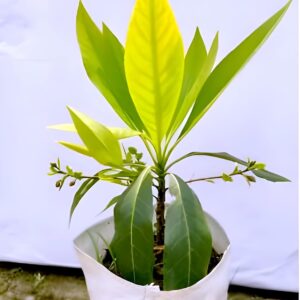
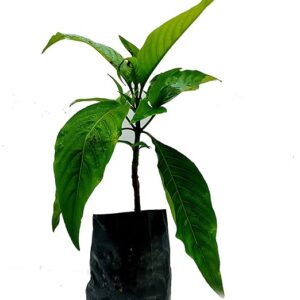
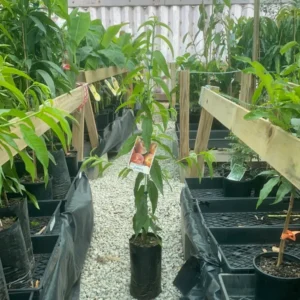
Nursery Cashew Nut Tree (Anacardium occidentale) – Healthy Live Plant
Cashew Nut Tree, scientifically known as Anacardium occidentale, is a popular tropical fruit and nut tree grown for its cashew nuts and cashew apples. It is an attractive evergreen tree with broad leaves and a naturally spreading growth habit.
This healthy nursery-grown cashew plant is suitable for home gardens, farms, orchards, kitchen gardens and other open outdoor spaces where it can receive plenty of sunlight and has sufficient room to develop.
Anacardium occidentale belongs to the Anacardiaceae family and is now widely cultivated throughout tropical regions, including India.
🌿 Key Features
- Common Name: Cashew Nut Tree / Cashew Tree
- Botanical Name: Anacardium occidentale
- Family: Anacardiaceae
- Plant Type: Evergreen tropical fruit and nut tree
- Foliage: Broad, leathery green leaves
- Growth Habit: Spreading tree
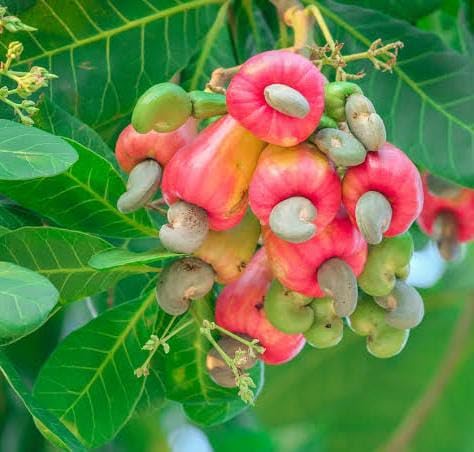
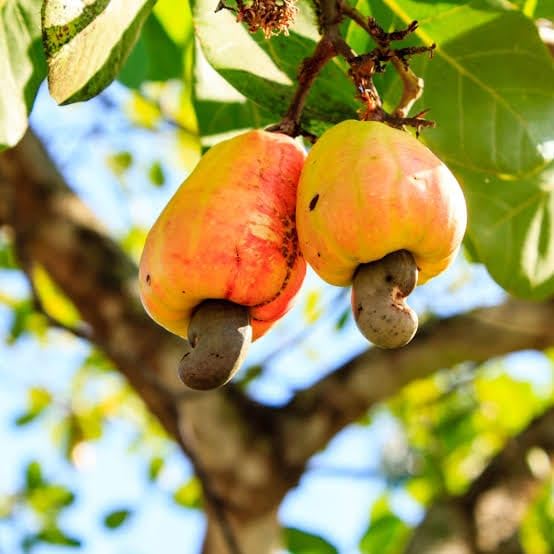
- Fruit: Cashew apple with a kidney-shaped cashew nut attached
- Suitable For: Home gardens, farms, orchards and large outdoor spaces
- Climate: Tropical and warm subtropical conditions
- Main Attraction: Future cashew nut and fruit production
🌳 About the Cashew Tree
Cashew is a fascinating fruit-and-nut tree because the familiar cashew nut develops outside the fruit, attached to the bottom of the fleshy cashew apple.
The species can develop into a substantial tree with a spreading canopy. Kew records Anacardium occidentale as a tree that is widely cultivated throughout tropical regions and describes its fruit as a kidney-shaped drupe borne on a swollen fruit stalk.
🍎 Cashew Apple & Nut
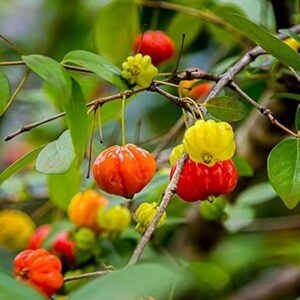
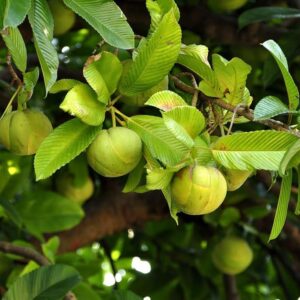
The cashew tree produces a fleshy structure commonly called the cashew apple, with the true cashew nut attached externally.
Depending on the variety and growing conditions, cashew apples can develop different colors, including yellow or reddish tones. The attached cashew nut is enclosed in a hard shell.
Important: Raw cashew nuts in their shells should not be eaten or handled casually, because the shell contains irritating substances. Commercial cashew nuts require proper processing before consumption.
☀️ Sunlight Requirements
Cashew trees perform best in an open sunny location.
For healthy growth:
- Provide plenty of direct sunlight.
- Choose an open area with good air circulation.
- Avoid deep shade.
- Give the tree enough room for its future canopy.
- Keep competing weeds away from young plants.
Good sunlight is especially important for healthy tree development and eventual flowering and fruit production.
💧 Watering
Young cashew plants need adequate moisture while establishing their root system.
For newly planted trees:
- Water thoroughly after planting.
- Maintain reasonable soil moisture during establishment.
- Water during prolonged dry periods.
- Avoid excessive irrigation.
- Ensure that rainwater can drain away quickly.
Cashew is sensitive to water stagnation and poor drainage. ICAR notes that cashew generally has an extensive root system and that waterlogging, flooding and impeded drainage should be avoided.
🪴 Soil Requirements
Cashew can grow in different soil types, but well-drained soil is particularly important.
ICAR information notes good performance in soils such as red sandy loam and light coastal soils, with an ideal soil pH range around 5.5–7.5.
For home gardening, prepare the planting area with:
- Well-drained garden soil
- Mature compost
- Organic manure
- Suitable organic matter
Avoid heavy, permanently waterlogged locations.
🌱 Fertilizer
A young cashew tree can benefit from balanced nutrition during establishment.
You can use:
- Well-decomposed compost
- Vermicompost
- Organic manure
- A suitable fruit-tree fertilizer
For commercial orchards, fertilizer requirements should follow the variety, tree age, soil test and local agricultural recommendations rather than applying the same quantity to every plant.
ICAR’s current cashew advisories provide specific nutrient recommendations for orchard production, illustrating why fertilizer requirements change as trees mature.
🌳 Planting Space
Cashew eventually develops a spreading canopy, so provide sufficient space when planting.
For commercial cultivation, ICAR recommendations include spacing such as 7 × 7 metres or 8 × 8 metres, depending on the production system and variety.
For a home garden, choose a location where the mature tree will not interfere with:
- Buildings
- Boundary walls
- Power lines
- Small structures
- Narrow pathways
- Other fruit trees
🌸 Flowering & Fruiting
Cashew trees produce flowers in clusters and can eventually develop cashew apples and nuts.
However, a young nursery plant will not necessarily fruit immediately. The time to flowering and fruiting depends on:
- Plant age
- Variety
- Propagation method
- Climate
- Sunlight
- Soil
- Nutrition
- Water management
- Overall plant health
Therefore, flowering or fruiting should not be promised within a fixed number of months.
For commercial production, selecting a recommended variety is important. ICAR lists several improved cashew varieties, including Nethra Jumbo-1 and other regionally recommended cultivars.
✂️ Pruning & Maintenance
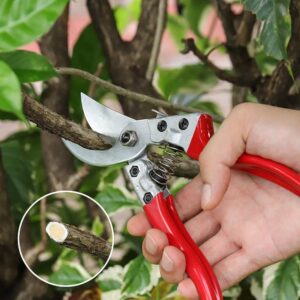
Light pruning can help maintain a manageable tree structure.
Remove:
- Dead branches
- Broken branches
- Diseased growth
- Unwanted basal shoots
- Poorly positioned branches
Avoid unnecessary heavy pruning, particularly when the tree is young.
🏡 Where Can You Grow Cashew?
This cashew plant is suitable for:
- Home gardens
- Farmhouses
- Orchards
- Kitchen gardens
- Agricultural land
- Large backyards
- Tropical landscapes
- Fruit-tree collections
It is particularly suitable for areas with warm conditions, good sunlight and well-drained soil.
🪴 Can Cashew Be Grown in a Pot?
A young cashew plant can be maintained temporarily in a sufficiently large container.
However, cashew is a tree and not a naturally dwarf plant. For long-term growth and fruit production, planting in suitable open ground is generally preferable.
If you want to grow it in a container, use a large pot with excellent drainage and expect to manage the plant’s size.
⚠️ Important Safety Information
Cashew belongs to the same botanical family as several plants containing irritating compounds.
The raw nut inside its shell is not ready for direct consumption, and the shell contains irritating cashew-nut-shell liquid.
For safety:
- Do not eat raw cashew nuts directly from the shell.
- Do not crack or process raw cashew nuts at home without proper knowledge and protective measures.
- Keep children away from raw nuts and processing materials.
- Commercially processed cashew kernels should be used for eating.
🚚 Healthy Live Nursery Plant Delivery
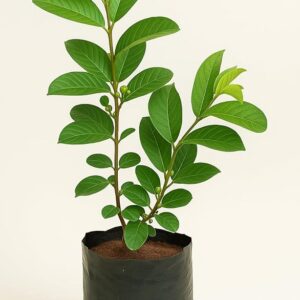
This listing is for a healthy live Cashew Nut Tree (Anacardium occidentale).
As with all living plants, natural variation can occur in:
- Plant height
- Stem thickness
- Number of leaves
- Leaf size
- Branching
- Overall shape
Temporary leaf drooping or minor leaf loss can also occur during transportation.
After delivery, place the plant in a bright outdoor location, water according to soil moisture and allow it to adjust before transplanting.
🌱 Why Choose a Cashew Nut Tree?
- Popular tropical fruit and nut tree
- Produces cashew nuts and cashew apples
- Attractive evergreen foliage
- Excellent choice for home gardens
- Suitable for farms and orchards
- Can become a long-term productive tree
- Performs well in warm climates
- Interesting addition to a fruit-tree collection
🌳 Grow Your Own Cashew Tree
Bring home a Nursery Cashew Nut Tree (Anacardium occidentale) and start growing a beautiful tropical fruit-and-nut tree in your garden or farm.
With adequate sunlight, good drainage, suitable nutrition and enough growing space, a healthy cashew tree can become a valuable long-term addition to your property.










Reviews
There are no reviews yet.