
 Plastic Plant pot | Plastic Garden Pot for Plants
 Self Watering Planters | Self Watering Plant Pots For Plants
Areca Nut Palm | Betel Nut Plant (Areca catechu) Plant
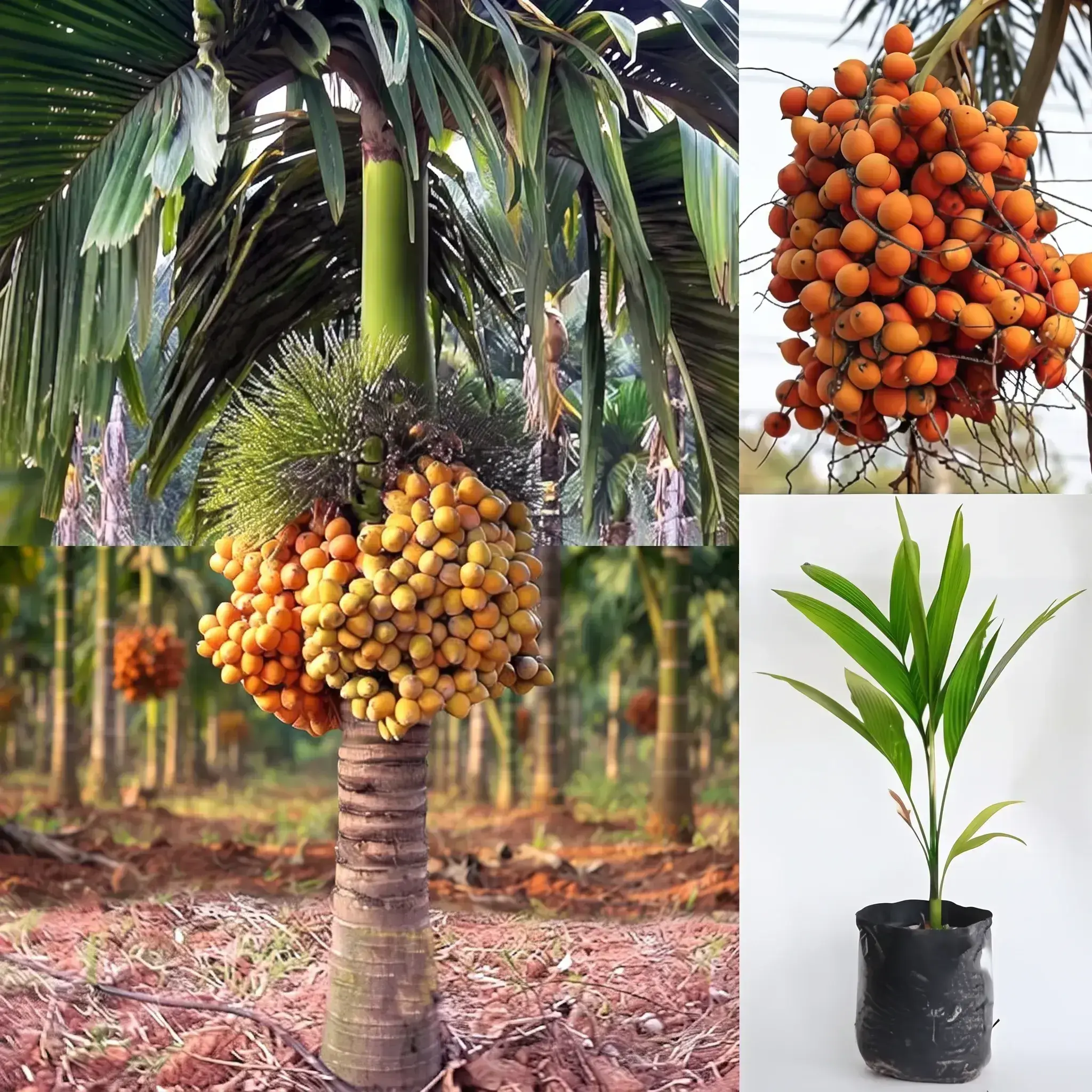
The Areca Nut Palm, botanically known as Areca catechu and widely recognized across India as the Betel Nut Plant or Supari Tree, is a graceful, slender, single-trunked tropical palm prized for both its architectural beauty and its culturally significant nuts. Native to humid tropical Asia and cultivated extensively across coastal, southern, and eastern India, this evergreen palm brings clean vertical elegance to home gardens, farmhouses, and courtyard landscapes.
Note that Areca catechu is distinct from the clumping indoor ornamental Areca Palm (Chrysalidocarpus lutescens); true Areca Nut Palm grows with a single ringed trunk topped by a neat crown of arching feather-like fronds and clusters of bright orange-red nuts. While young saplings can be grown in large containers for the first few years, planting in open garden soil gives this palm the root depth and space it needs to mature.
Plant Highlights
- Product Name: Areca Nut Palm | Betel Nut Plant (Areca catechu) Plant for Home Garden
- Common Name: Areca Nut Palm, Betel Nut Palm, Supari (Hindi/Bengali/Marathi), Adike (Kannada), Kamugu / Pakku (Tamil/Malayalam), Tamul (Assamese)
- Botanical Name: Areca catechu
- Family: Arecaceae (Palm family)
- Plant Type: Evergreen perennial monoecious palm tree
- Origin: Tropical Asia and Indo-Malesia (widely naturalized and cultivated across South and Southeast Asia)
- Flower Colour: Creamy-white to pale yellow small flowers on branched panicles
- Flower Fragrance: Lightly sweet and pleasant
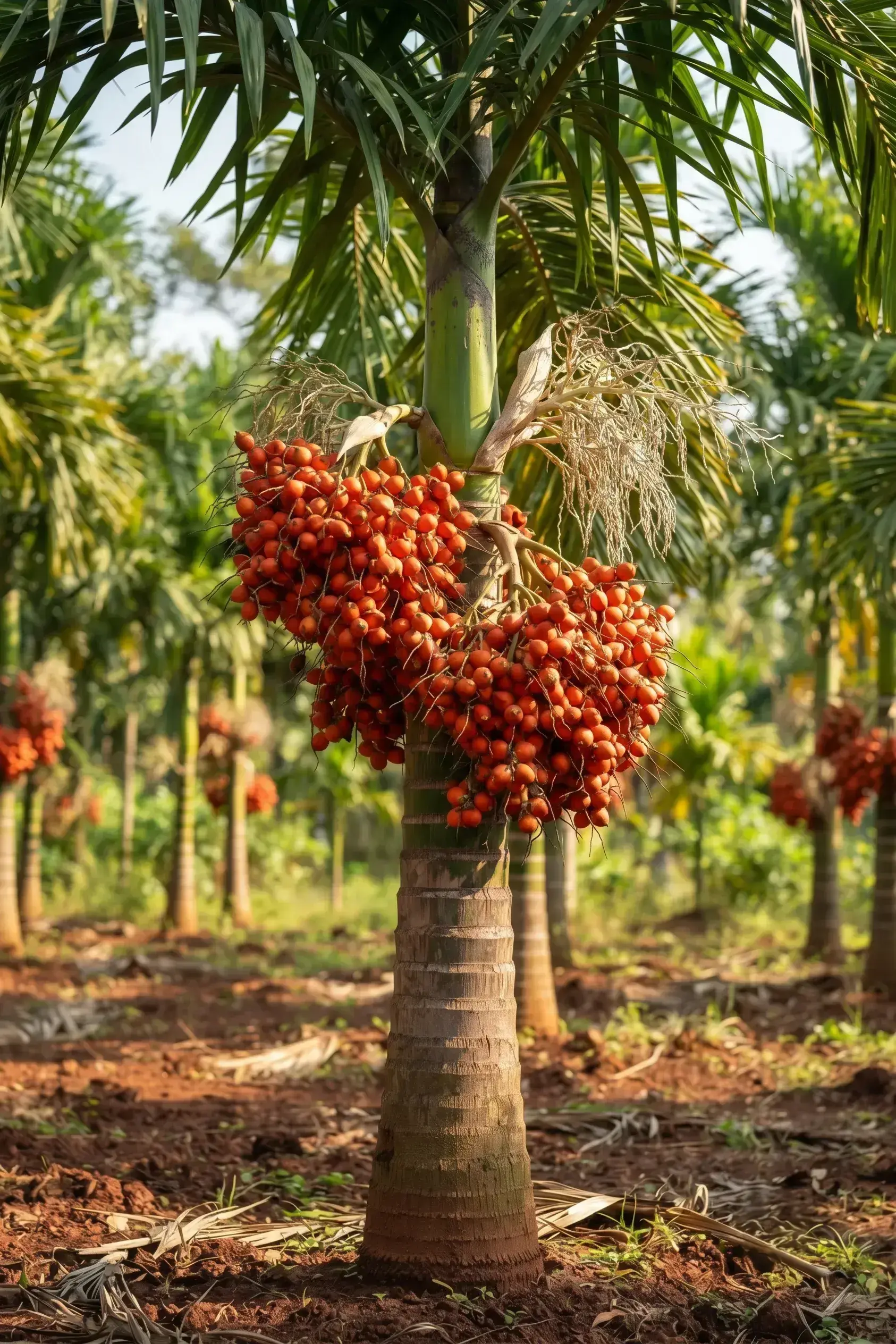
- Fruit Colour: Green when developing, ripening to bright yellow, orange, or scarlet-red with a fibrous husk enclosing a single hard, marbled brown seed (areca nut)
- Foliage: Arching, pinnate (feather-shaped) glossy medium-to-dark green fronds (1.5 to 2 meters long) with a smooth green crownshaft
- Growth Habit: Upright, slender, single-trunked palm marked with distinct horizontal leaf-scar rings
- Mature Height: Typically 12 to 20 meters (40 to 65 feet) in open ground over many years; stays compact only while young in containers
- Sunlight: Bright filtered sun when young, transitioning to full sunlight (at least 6 hours daily) as the palm establishes
- Watering: Moderate to high; prefers consistently moist, well-drained soil and does not tolerate prolonged drought or stagnant waterlogging
- Suitable For: Open home gardens, farmhouses, plantation borders, coastal and humid landscapes, and large containers while young
About the Areca Nut Palm
Areca catechu is the type species of the palm family Arecaceae and has been cultivated for millennia across India, Sri Lanka, Bangladesh, Myanmar, and Southeast Asia. In India, states such as Karnataka, Kerala, Assam, Meghalaya, West Bengal, Maharashtra, and Tamil Nadu are major hubs for arecanut cultivation.
Beyond its traditional role in Indian ceremonies, rituals, and cultural customs, the Betel Nut Plant is valued in home gardens for its tidy, narrow canopy footprint—which takes up minimal horizontal space while casting light, filtered shade beneath its crown.
Appearance and Growth Habit
The Areca Nut Palm grows with a remarkably straight, slender, unbranched trunk (typically 10 to 20 cm in diameter) marked with neat, pale grey horizontal rings left by fallen leaf bases. Just below the crown of leaves sits a smooth, cylindrical green crownshaft formed by tightly overlapping leaf sheaths.
At the top of the trunk, 8 to 12 arching pinnate fronds spread gracefully outward, each carrying numerous glossy green, lance-shaped leaflets. Because it does not produce basal suckers like clumping palms, Areca catechu maintains a clean, sculptural silhouette.
Flowers and Flowering Season
Areca catechu is monoecious, meaning both male and female flowers are borne on the same branched flower cluster (spadix) emerging just below the green crownshaft once an older leaf sheath drops.
Tiny, creamy-white, mildly fragrant male flowers line the upper branches of the panicle, while larger female flowers sit near the base. In warm Indian climates, mature palms typically begin flowering 5 to 7 years after planting and can produce multiple flower flushes across the year, pollinated by wind and insects.
Fruits and Harvest
After pollination, ovoid fruits develop in heavy hanging bunches beneath the crownshaft, taking roughly 7 to 9 months to mature. As the nuts ripen, the smooth outer husk turns from green to bright golden-yellow, orange, or scarlet-red, enclosing a fibrous layer and a single hard, conical-to-rounded seed (the areca nut / supari).
Harvesting Notes
In Indian gardens and plantations, nuts are harvested either at the tender green stage or when three-quarters to fully ripe (orange-red), depending on traditional curing and drying preferences. Fruiting depends on palm maturity, warm humid climate, regular irrigation, and balanced nutrition.
Sunlight Requirements
Young Areca Nut Palm saplings (under 2 years old) prefer bright, filtered sunlight or morning sun with light afternoon shade, as intense southwestern afternoon sun can scorch tender leaves or young bark.
Once established and gaining height, Areca catechu thrives in full outdoor sunlight for at least 6 hours daily, developing a sturdy trunk and healthy frond crown.
Watering Requirements
Unlike desert date palms, the Betel Nut Plant originates in high-rainfall tropical regions and is sensitive to moisture deficit, requiring consistently moist yet well-drained soil.
Watering During Establishment and Summer
Keep the root zone evenly moist after planting so roots establish well. During hot Indian summers, water ground-planted palms deeply every 3 to 4 days and potted saplings every 1 to 2 days whenever the top 3 cm of soil feels dry.
Watering During Monsoon and Winter
During the monsoon, pause manual watering when rainfall is regular and ensure rainwater drains quickly away from the base—prolonged waterlogging causes root and foot rot. In winter, reduce watering to once every 6 to 8 days, checking soil moisture before watering.
Soil and Potting Requirements
Areca catechu grows best in deep, fertile, well-draining loamy, alluvial, or red lateritic soil rich in organic matter, with a slightly acidic to neutral pH between 5.5 and 7.0. Heavy, waterlogged clay soils or shallow hardpan layers restrict root health.
Suggested Potting Mixture for Young Palms
This is a suggested potting mixture for starting a young sapling in a container rather than a rigid scientific formula: blend 45% fertile garden soil, 30% well-decomposed cow dung manure or vermicompost, 15% cocopeat (to retain steady moisture), and 10% coarse river sand or perlite, mixed with a handful of neem cake powder. Ensure the container has multiple unobstructed drainage holes.
Growing the Plant in the Indian Climate
The Areca Nut Palm is naturally suited to warm, humid, frost-free tropical and subtropical parts of India, performing best in Kerala, Karnataka, Assam, West Bengal, Kolkata, Meghalaya, Odisha, coastal Maharashtra, and Tamil Nadu.
Summer Care
Dry summer heat and hot winds can scorch young fronds. Apply a 4 to 5 cm layer of organic mulch (dry leaves, coconut husk, or compost) around the root zone—keeping it clear of the trunk base—to keep roots cool and conserve soil moisture.
Monsoon Care
In high-rainfall regions such as Kolkata, West Bengal, Assam, and the Western Ghats, monsoon is the fastest growth season for Areca catechu. Ensure the planting spot is slightly mounded or well-drained so rainwater never pools around the trunk collar.
Winter Care
Areca Nut Palm is strictly a tropical palm and is sensitive to cold and frost. While mature palms handle mild Indian winters easily, growth slows below 15°C, and the palm is unsuitable for cold northern plains or hills that experience winter frost.
Temperature and Humidity
Areca catechu thrives in warm temperatures between 20°C and 35°C and prefers high relative humidity (65% to 85%) with generous annual rainfall or regular irrigation. Temperatures below 10°C–12°C chill the palm and slow growth, while frost is harmful.
Fertilizer and Nutrition
Regular organic nutrition builds a sturdy ringed trunk and lush green fronds.
Apply 5 to 10 kg of well-rotted farmyard manure, compost, or green leaf mulch around the root basin of ground-planted palms once or twice a year—ideally at the onset of the monsoon (May to June) and again after heavy rains subside (September to October). For young potted palms, top-dress with 250 to 400 grams of vermicompost every 45 to 60 days during warm growing months, supplemented with organic potassium and magnesium inputs if older fronds show yellowing.
Growing the Plant in Pots
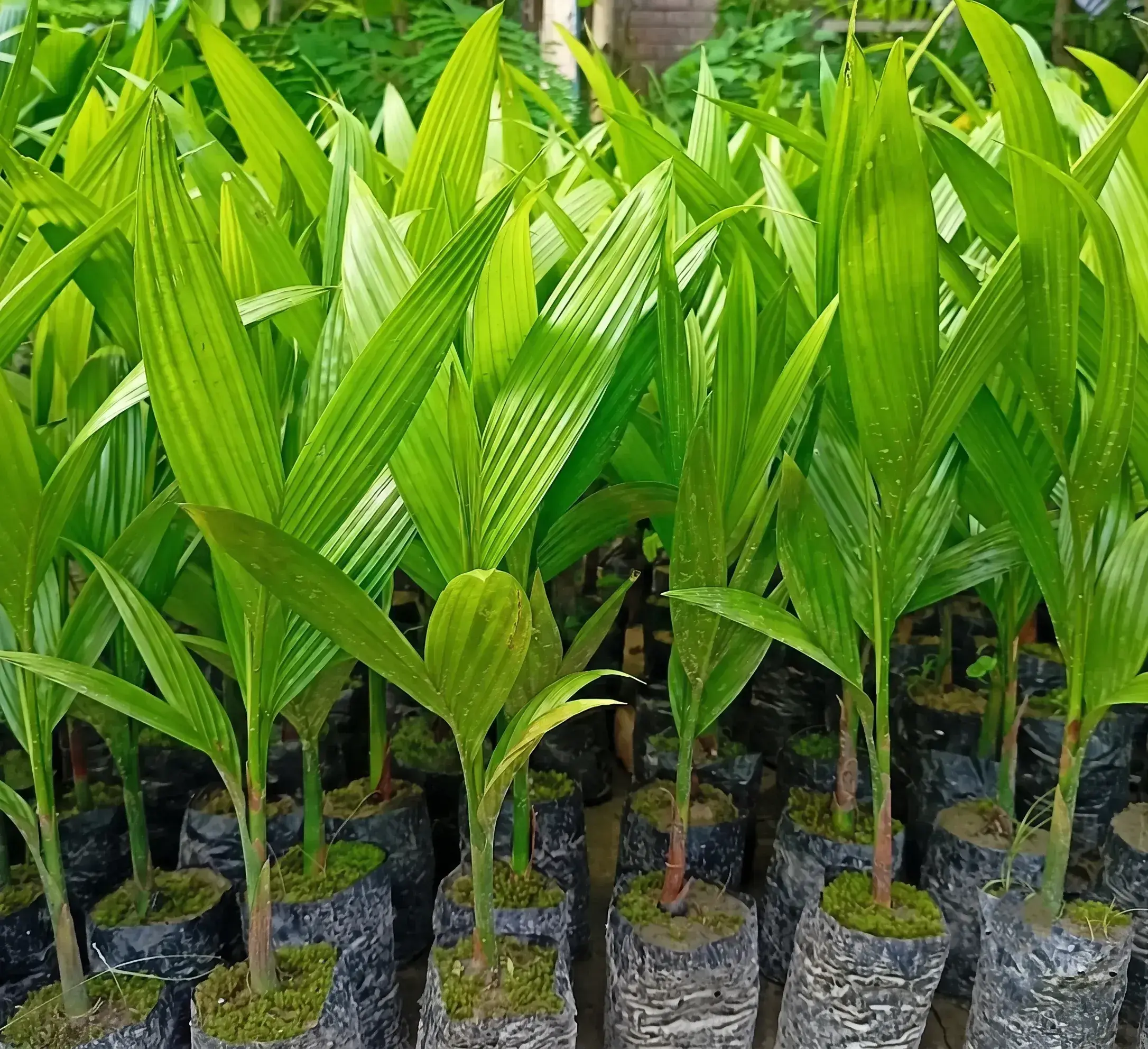
A young Areca Nut Palm can be grown in a large 16-to-20-inch pot or grow bag on a bright, sheltered patio or terrace for its first 2 to 3 years. Because Areca catechu eventually grows into a tall, single-trunked palm reaching 12 to 20 meters, container growing is a temporary nursery stage before transplanting into open ground or a spacious farmhouse garden.
Pruning and Maintenance
Areca catechu is naturally self-cleaning: as older lower fronds turn yellow and brown, their tubular leaf sheaths dry and drop away cleanly from the trunk on their own.
Never pull off green or semi-green fronds prematurely, as tearing live leaf sheaths can expose tender crownshaft tissue to fungal infection. Simply clear fallen dried fronds from the garden floor and keep the soil basin free of weeds.
Propagation
Because Areca catechu is a single-trunked palm that does not produce basal offshoots, it is propagated exclusively from fully mature, heavy orange-red seed nuts selected from healthy, high-yielding mother palms. Seeds are sown upright with the stalk end facing up in shaded, moist sand beds, germinating in roughly 60 to 90 days.
Common Problems and Plant Care
Good soil drainage, steady moisture, and morning sun prevent most common arecanut issues.
1. Sun Scorch on Young Fronds
Yellowish or bleached patches on leaves of young saplings usually result from sudden exposure to intense southwestern afternoon sun. Provide light shade netting during peak summer until the palm establishes.
2. Foot Rot or Bud Rot in Waterlogged Soil
Stagnant water during heavy monsoon rains can cause root decay or crown bud rot. Always plant in well-draining soil on slightly raised ground and avoid overhead watering into the crown during cool, wet weather.
3. Yellowing Lower Fronds
While the lowest frond naturally yellows and drops as new fronds emerge at the top, premature yellowing of multiple older fronds can indicate dry soil stress or magnesium/potassium deficiency. Maintain steady watering and feed with organic compost.
4. Mites or Scale Insects on Leaf Undersides
During dry summer spells, red spider mites or scale insects may cause fine stippling or yellowing on leaflets. Rinse fronds with clean water and spray diluted neem oil (3 to 5 ml per liter of water) in the evening if needed.
Suitability for Home Gardens
The Areca Nut Palm is best suited for open home gardens, farmhouses, sunny-to-part-shaded courtyards, coastal landscapes, and large outdoor containers while young. Because it eventually grows into a tall 12-to-20-meter outdoor palm tree, it is not suitable for permanent indoor cultivation or small balconies.
Safety and Important Information
The Areca Nut Palm is safe to grow as an ornamental and traditional garden palm, with no thorns or irritating sap. However, important health and pet safety precautions apply to the mature seeds (areca nuts / supari): areca nuts contain natural alkaloids (such as arecoline) and are classified by public health authorities as an addictive, harmful substance associated with oral health risks when chewed—keep harvested or fallen nuts away from young children and pets (dogs and cats), as ingesting areca nuts can cause gastrointestinal and neurological symptoms.
Live Plant Delivery Information
Live palm saplings vary naturally in height, stem thickness, and frond count. Mild transit stress can occur during shipping, and a few lower leaflet tips may turn slightly dry or yellow upon arrival.
Upon receiving your Areca Nut Palm, place it in bright, shaded outdoor light out of harsh direct sun for 4 to 5 days to recover. Check the soil moisture immediately and water gently so the root ball is evenly damp. Avoid applying fertilizers, repotting right away, or cutting green fronds during the first 10 to 14 days while the sapling acclimates.
Why Choose the Areca Nut Palm for Your Garden?
Slender, clean-trunked, and deeply woven into Indian cultural heritage, the Areca Nut Palm brings timeless tropical structure to home gardens and farmhouses without crowding nearby plants. Given warm humidity, steady moisture, and well-drained soil, Areca catechu grows gracefully for decades.
Botanical Information and Further Reading
- Kew Science – Plants of the World Online: Areca catechu L.
- Royal Horticultural Society (RHS) – Areca catechu Plant Details
- ICAR – Central Plantation Crops Research Institute (CPCRI), Kasaragod (Arecanut Research)
- eFlora of India – Areca catechu Botanical Reference
- India Biodiversity Portal – Areca catechu L. Species Profile
Frequently Asked Questions (FAQs)
1. What is the botanical name of the Areca Nut Palm or Betel Nut Plant?
The accepted botanical name of the Areca Nut Palm is Areca catechu, and it belongs to the palm family Arecaceae.
2. Is Areca Nut Palm the same as the indoor ornamental Areca Palm?
No, they are different palms. The indoor clumping ornamental palm is Chrysalidocarpus lutescens (formerly Dypsis lutescens), whereas Areca catechu is a tall, single-trunked tropical palm that produces betel nuts (supari).
3. Can I grow an Areca Nut Palm in a pot at home?
You can grow a young sapling in a large 16-to-20-inch container for its first 2 to 3 years, but because Areca catechu grows 12 to 20 meters tall, it will eventually need to be planted in open garden soil.
4. How much sunlight does a Betel Nut Plant need?
Young saplings grow best in bright filtered light or morning sun with afternoon shade, while established palms thrive in full outdoor sunlight for at least 6 hours daily.
5. How long does an Areca Nut Palm take to bear nuts?
Under warm, humid tropical conditions with regular watering and organic feeding, Areca catechu typically begins flowering and bearing nuts 5 to 7 years after planting.
6. Do I need two Areca Nut Palms for pollination and nut set?
No, Areca catechu is monoecious—bearing both male and female flowers on the same flower panicle—so a single mature palm can set nuts on its own.
7. How often should I water my Areca Nut Palm?
Keep the soil consistently moist without waterlogging. Water every 3 to 4 days in open ground (every 1 to 2 days in pots) during hot summer weather, and reduce watering during rainy monsoon spells and cool winter months.
8. What is the best soil for growing Areca catechu?
Deep, fertile, well-draining loamy, alluvial, or red lateritic soil rich in organic matter (pH 5.5 to 7.0) is ideal. Avoid heavy, waterlogged clay soils.
9. Is the Areca Nut Palm suitable for West Bengal and Kolkata?
Yes, Areca catechu (locally called Supari) grows very well across West Bengal, Kolkata, Assam, Kerala, Karnataka, and coastal India where warmth and humidity are abundant.
10. Should I cut off yellow lower leaves on my Betel Nut Palm?
Wait until older lower fronds turn completely brown and dry, at which point their sheaths release cleanly from the trunk on their own without damaging the green crownshaft.
11. How big does an Areca Nut Palm grow?
In open ground under favorable tropical conditions, Areca catechu typically grows 12 to 20 meters tall with a slender ringed trunk.
12. Can I keep an Areca Nut Palm indoors permanently?
No, it is a tall outdoor tropical palm that requires high humidity, deep root space, and outdoor light, making it unsuitable for permanent indoor rooms.
For More Information
Visit: krisikart.com
For Contact Visit:Contact Us
For Shopping Visit: Shop Page


Lobsang lama –
Order process bahut simple tha.
Everything was smooth Amazing quality, amazing service.