 Plastic Plant pot | Plastic Garden Pot for Plants
 Self Watering Planters | Self Watering Plant Pots For Plants
Shami Plant | Khejri Plant (Prosopis cineraria) Plant – Shami Ka Paudha
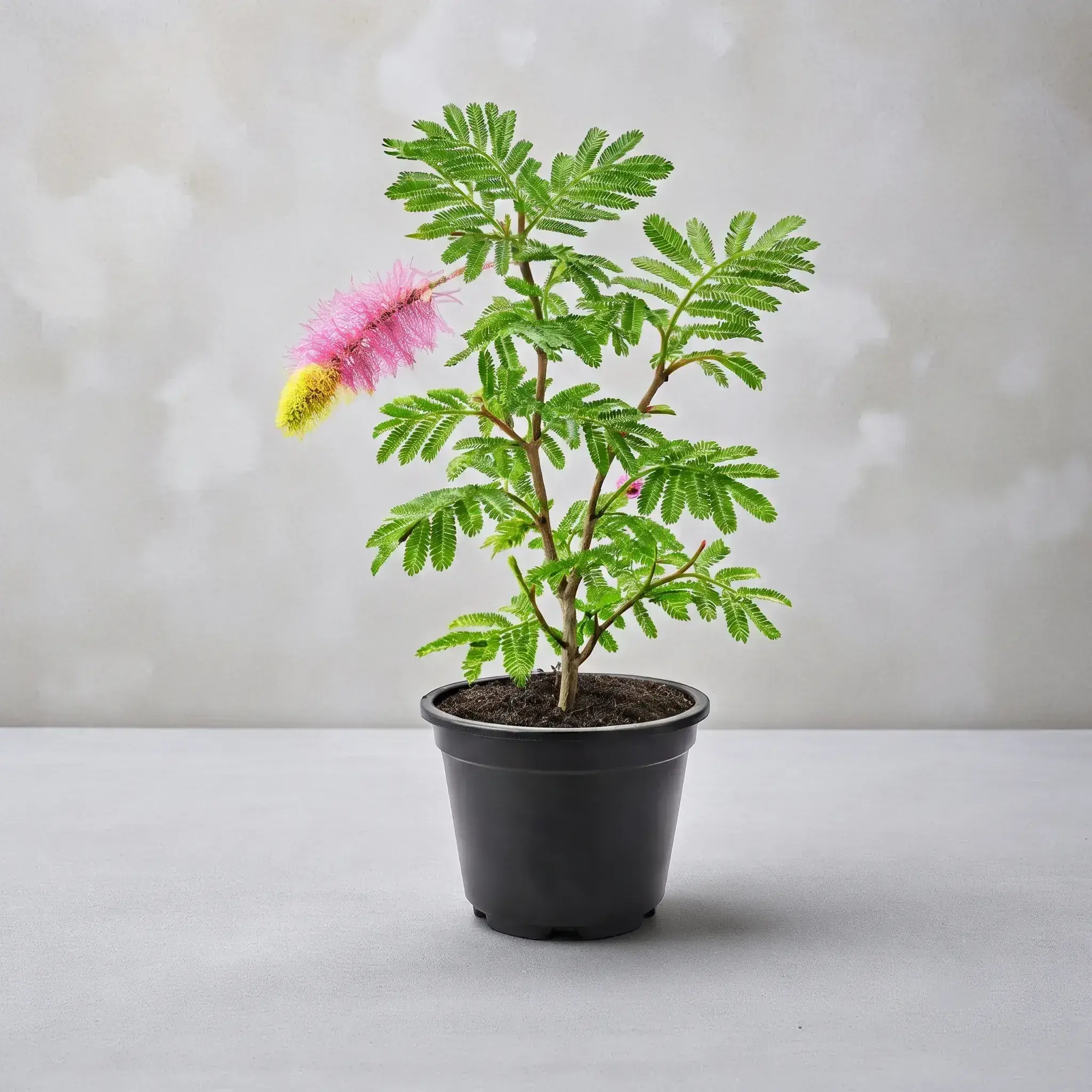
The Shami Plant, botanically known as Prosopis cineraria and revered across western and northern India as the Khejri Plant or Shami Ka Paudha, is a hardy, drought-tolerant evergreen-to-semi-evergreen leguminous tree celebrated for both its sacred cultural significance and its remarkable ecological resilience. Native to the arid and semi-arid plains of the Indian subcontinent, this graceful tree features delicate, feathery bipinnate foliage and slender drooping branches.
Widely planted in Indian home gardens, courtyards, and balcony pots for Vastu and traditional worship—particularly on Saturdays and during Vijayadashami (Dussehra)—the Shami Plant is extraordinarily tough once established. With bright direct sunlight, fast-draining sandy soil, and minimal watering, Prosopis cineraria thrives effortlessly in Indian home gardens and containers.
Plant Highlights
- Product Name: Shami Plant | Khejri Plant (Prosopis cineraria) Plant – Shami Ka Paudha for Home Garden
- Common Name: Shami, Shami Ka Paudha (Hindi/Bengali), Khejri (Rajasthani), Janti (Haryanvi/Punjabi), Jammi Chettu (Telugu), Vanni Maram (Tamil), Banni Mara (Kannada), Sami (Marathi/Gujarati)
- Botanical Name: Prosopis cineraria (older synonyms: Prosopis spicigera, Mimosa cineraria)
- Family: Fabaceae (Legume / Pea family)
- Plant Type: Hardy evergreen-to-semi-evergreen perennial tree or pruned container shrub
- Origin: Native to the arid and semi-arid regions of India (Thar Desert, Rajasthan, Gujarat, Haryana, Punjab, Deccan), Pakistan, Afghanistan, and the Arabian Peninsula
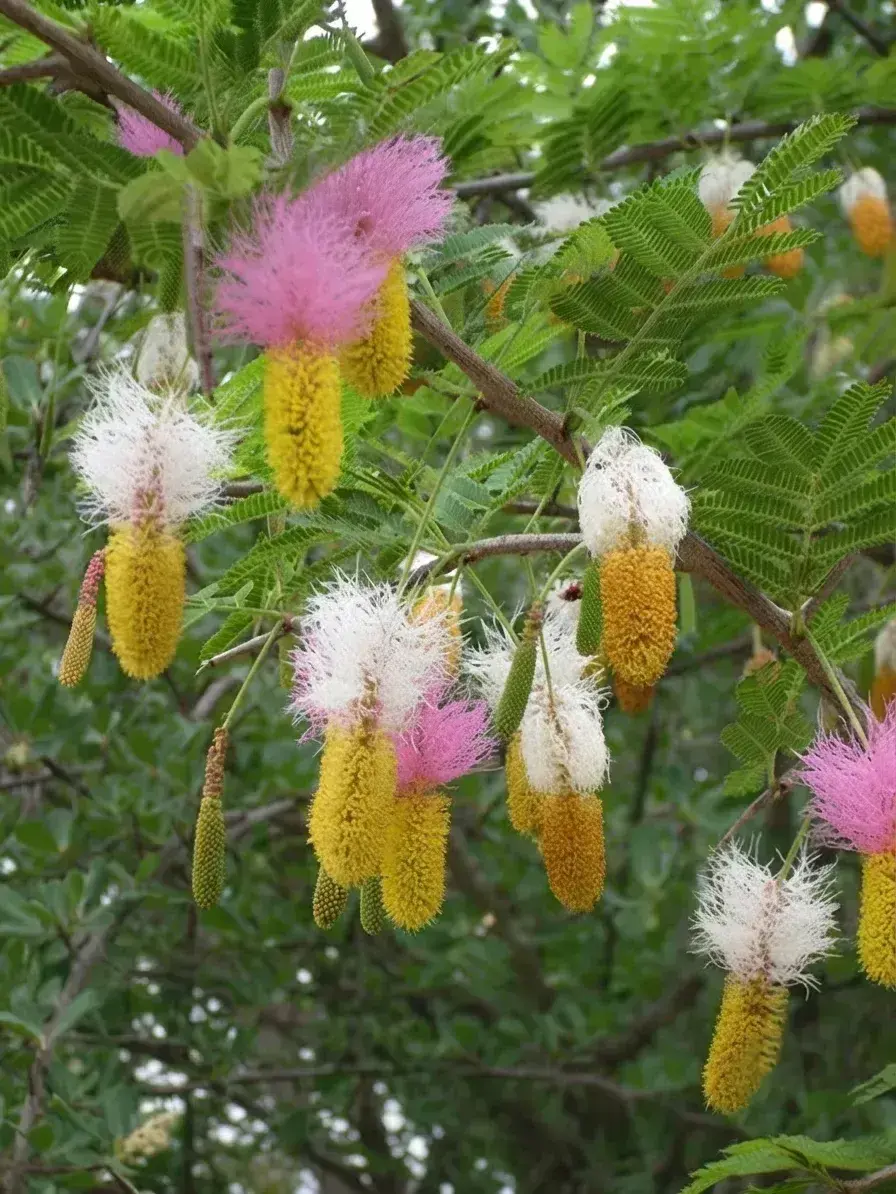
- Flower Colour: Tiny golden-yellow to creamy-yellow flowers arranged in slender cylindrical spikes
- Flower Fragrance: Lightly sweet, attractive to honeybees
- Fruit Colour: Slender, cylindrical green pods (locally called sangri) maturing to yellowish-brown, containing brown seeds embedded in sweetish dry pulp
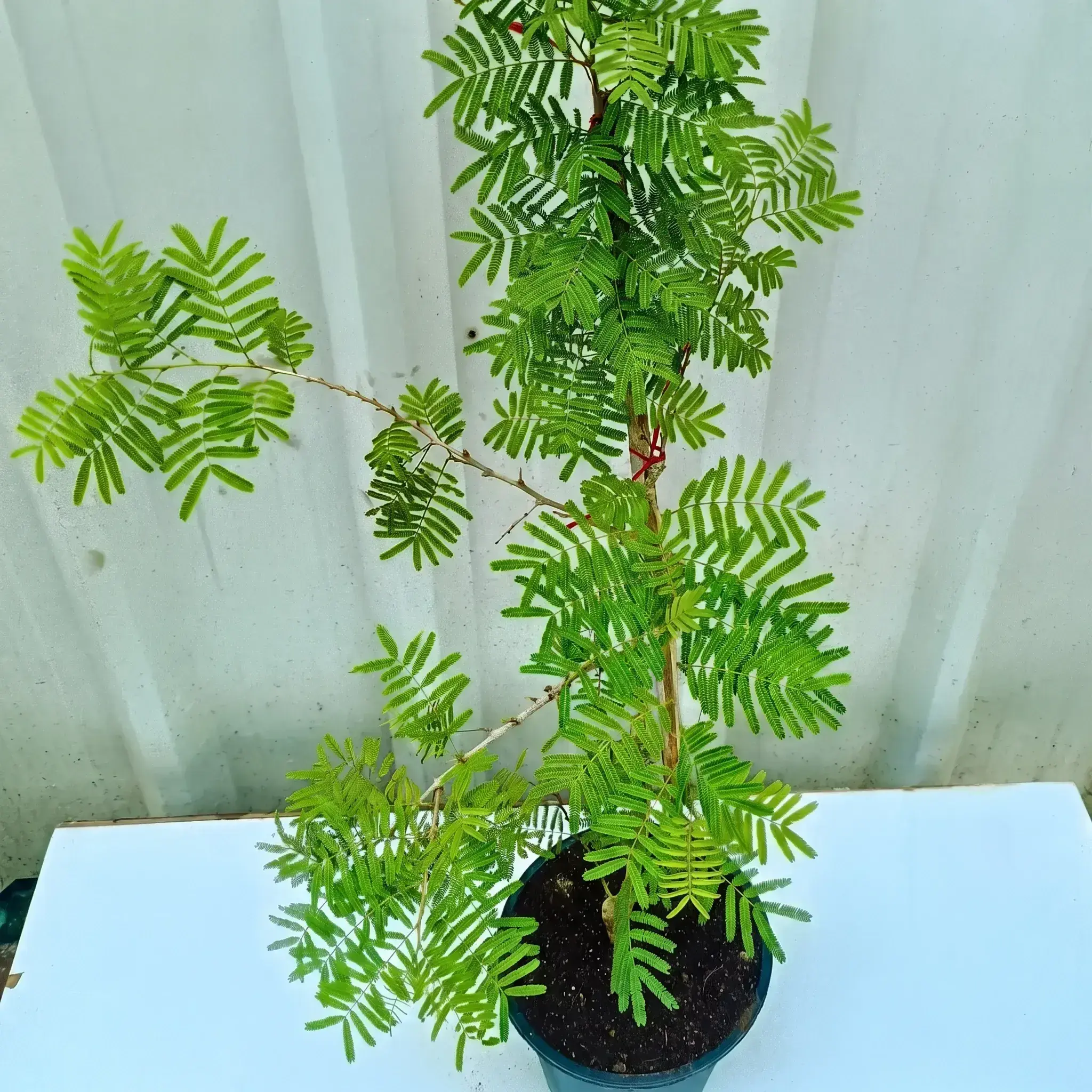
- Foliage: Alternate, delicate bipinnate (twice-feathered) greyish-green to bright green leaves with small, narrow oblong leaflets
- Growth Habit: Open-crowned, spreading, lightly thorny tree with drooping outer branchlets and rough grey fissured bark
- Mature Height: Typically 5 to 10 meters (16 to 33 feet) in open ground over many years; easily maintained at 1 to 2 meters (3 to 6.5 feet) in pots with light pruning
- Sunlight: Full direct sunlight (at least 6 hours daily)
- Watering: Low once established; deeply drought-tolerant and sensitive to overwatering or stagnant wet soil
- Suitable For: Sunny balconies, terrace gardens, courtyard pots, open home gardens, farmhouses, and Vastu or sacred plant corners
About the Shami Plant
Prosopis cineraria belongs to the legume family Fabaceae and is one of India’s most iconic native trees, officially designated as the state tree of both Rajasthan and Telangana. As a nitrogen-fixing legume with a remarkably deep taproot system, Khejri enriches poor sandy soils rather than competing aggressively with nearby crops, earning its reputation as the “Kalpavriksha” (wonder tree) of arid India.
Gardeners should note a common regional distinction: authentic Khejri / Shami is Prosopis cineraria, whereas in parts of southern and western India, Acacia ferruginea is also sometimes called Shami in local traditions. True Prosopis cineraria is recognizable by its small, scattered, straight or slightly curved prickles along the internodes and its fine greyish-green bipinnate leaves.
Appearance and Growth Habit
The Shami Plant grows with a slender, slightly crooked trunk covered in rough, ash-grey, deeply fissured bark and an open, airy canopy of slender drooping twigs. Its bipinnate leaves consist of 1 to 3 pairs of pinnae, each bearing 7 to 14 pairs of tiny, oblong, smooth grey-green leaflets that give the plant a soft, fern-like appearance.
Young shoots carry small, scattered prickles along the stems. In open ground, Prosopis cineraria grows at a slow-to-moderate pace into a 5-to-10-meter tree, while in pots it remains compact and responds well to light shaping.
Flowers and Flowering Season
In India, mature Shami trees typically flower during spring and early summer (March to May), producing slender, axillary cylindrical spikes (5 to 12 cm long) packed with tiny golden-yellow blossoms.
The flowers are rich in nectar and attract honeybees and beneficial garden pollinators. Seed-grown trees generally take 5 to 7 years to reach flowering maturity in open ground; potted plants kept compact for home worship focus primarily on healthy leafy foliage.
Pods and Traditional Uses
Following spring flowering, slender, pendulous cylindrical pods (10 to 20 cm long) develop during early summer (May to June). In Rajasthan and western India, the tender green pods—famous as sangri—are harvested, dried, and cooked into the traditional delicacy ker-sangri, while the foliage and pods also serve as valued fodder in dryland agroforestry.
Sunlight Requirements
The Shami Plant is a sun-loving dryland native that requires full, unobstructed direct sunlight for at least 6 hours every day. Abundant sunlight keeps the bipinnate foliage dense, healthy, and vibrant green.
Keeping Shami Ka Paudha in dark indoor rooms or deep shade causes leaflets to yellow, drop prematurely, and produce weak, leggy stems.
Watering Requirements
Because Prosopis cineraria is adapted to arid regions and develops a deep taproot, it needs very little water once established and is easily harmed by soggy, overwatered soil.
Watering During Establishment and Summer
During the first 2 to 3 weeks after planting, water lightly every 3 to 4 days so the root ball stays gently moist while roots anchor. Once established, allow the top 3 to 5 cm of soil to dry out completely between waterings—in hot Indian summers, potted plants generally need watering every 3 to 5 days, while ground-planted trees need watering only once every 10 to 15 days.
Watering During Monsoon and Winter
During the monsoon, pause manual watering completely when rainfall is regular and protect potted plants from sitting in prolonged downpours. In winter, water sparingly once every 12 to 15 days when the soil dries out.
Soil and Potting Requirements
Prosopis cineraria thrives in light, sandy, well-draining loamy or alluvial soil with a neutral to slightly alkaline pH between 6.5 and 8.2. Heavy, waterlogged clay soils or peat-heavy mixes that stay constantly wet cause root rot and leaf yellowing.
Suggested Potting Mixture for Containers
This is a suggested potting mixture for growing a Shami Plant in a pot rather than a rigid scientific formula: blend 45% sandy garden soil, 35% coarse river sand or perlite (for fast drainage), and 20% well-decomposed cow dung manure or vermicompost, mixed with a small handful of neem cake powder. Make sure the pot has multiple unobstructed drainage holes at the base.
Growing the Plant in the Indian Climate
Native to India, Prosopis cineraria adapts across almost all Indian plains—from arid Rajasthan, Gujarat, Haryana, and Punjab to central, southern, and eastern states including Uttar Pradesh, Maharashtra, Telangana, and West Bengal.
Summer Care
Peak Indian summer heat above 42°C–45°C is completely natural for the Khejri Plant. Keep potted plants in full sun and water deeply only when the topsoil dries out.
Monsoon Care
In high-rainfall, humid regions such as Kolkata, West Bengal, and coastal India, excessive monsoon rain is the main challenge for this desert-adapted tree. Grow potted Shami Plants in a gritty, fast-draining sandy mix, elevate containers on pot feet or bricks, and keep them sheltered from continuous heavy downpours so roots never waterlog.
Winter Care
Established Shami trees tolerate cold Indian winters easily, including near-freezing winter nights in northern plains, though growth slows during December and January and some older leaves may shed naturally before spring.
Temperature and Humidity
Prosopis cineraria tolerates extreme temperature swings from 0°C–2°C in winter up to 45°C+ in summer, performing best in warm, sunny weather with low to moderate relative humidity.
Fertilizer and Nutrition
Because Prosopis cineraria is a nitrogen-fixing legume adapted to nutrient-lean sandy soils, it requires minimal fertilization.
Feed potted plants lightly once every 60 to 90 days during spring and early monsoon with a small handful (100 to 150 grams) of well-rotted vermicompost or cow dung manure. Avoid heavy synthetic nitrogen fertilizers, which can burn the roots or cause soft, floppy growth.
Growing the Plant in Pots
A Shami Plant grows neatly in a 12-to-16-inch clay (terracotta) or well-drained plastic pot on a sunny balcony, terrace, or courtyard entrance. Unglazed clay pots are especially effective because their porous walls allow excess soil moisture to evaporate quickly, mimicking the dry soil conditions Prosopis cineraria loves.
Because Shami develops a long taproot, avoid disturbing or bare-rooting the root ball unnecessarily when repotting every 2 to 3 years.
Pruning and Maintenance
Light pruning keeps a potted Shami Ka Paudha compact, bushy, and well-shaped.
During spring or early monsoon, lightly trim overly long or straggly shoot tips with clean secateurs to encourage denser lateral branching. Always watch out for small prickles along the woody stems when pruning.
Propagation
Prosopis cineraria is propagated primarily from seeds harvested from mature dry pods; soaking seeds in warm water for 12 to 24 hours before sowing softens the hard seed coat and speeds germination within 1 to 2 weeks. In nurseries and forestry programs, root suckers and air layering are also used to propagate selected mother trees.
Common Problems and Plant Care
Providing full sun and fast-draining soil prevents nearly all Shami Plant issues.
1. Yellowing and Dropping of Tiny Leaflets
Sudden yellowing and shedding of fine leaflets is most commonly caused by overwatering, soggy soil during the monsoon, or keeping the plant indoors without direct sunlight. Let the soil dry out between waterings and move the plant into full outdoor sun.
2. Slow Growth
Prosopis cineraria naturally grows slowly during its first 1 to 2 years while establishing a deep root system. Be patient—steady sun and fast-draining soil will build strong, woody branches over time.
3. Mealybugs or Scale Insects on Stems
In humid weather, small white mealybugs or scale insects occasionally settle along woody twigs. Wipe them off with a damp cloth or spray diluted neem oil (3 to 5 ml per liter of water) in the cool evening hours.
4. Leaf Gall Insects
Small bumps (galls) on leaves or twigs can occasionally be caused by tiny gall midges. Prune off affected twig tips cleanly and dispose of them away from the garden.
Suitability for Home Gardens
The Shami / Khejri Plant is ideal for sunny balconies, terrace gardens, courtyard pots, open home gardens, farmhouses, and traditional Vastu or sacred garden corners. Because it requires at least 6 hours of direct outdoor sunlight daily, it is not suitable for indoor living rooms or shaded areas.
Safety and Important Information
The Shami Plant is non-toxic to humans—its tender pods (sangri) are traditionally eaten as a cooked vegetable in western India—and is generally considered safe around pets. Take normal physical care around the small sharp prickles present along the stems and branches when handling or pruning.
Live Plant Delivery Information
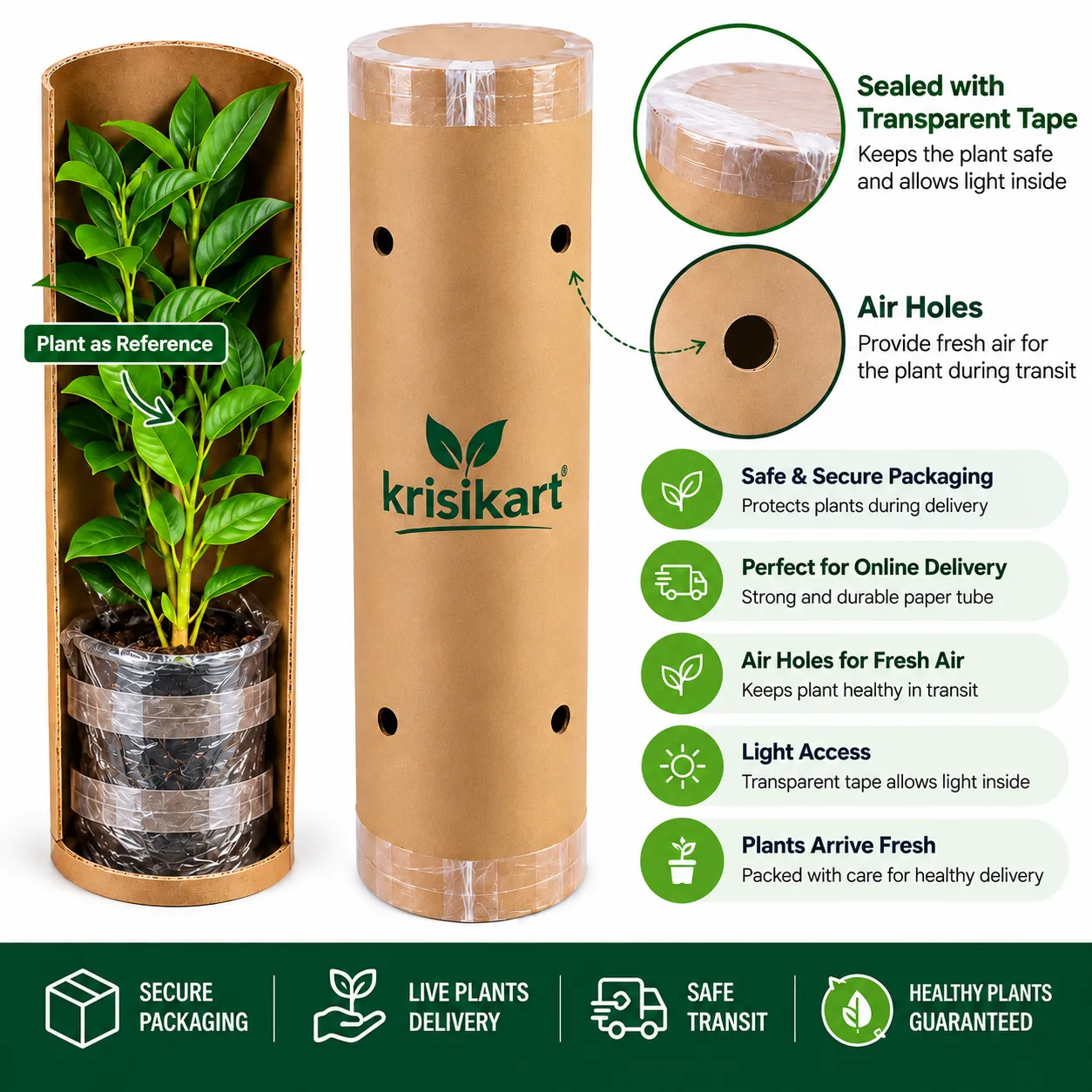
Live saplings vary naturally in height, stem thickness, branching, and leaf density. Because Prosopis cineraria has delicate feathery leaflets, mild transit stress—including temporary folding, yellowing, or shedding of some leaflets—can occur during shipping.
Upon receiving your Shami Plant, place it in bright, filtered outdoor light for 3 to 4 days to recover before moving it into full direct sunlight. Check the soil moisture immediately—water gently only if the soil is dry, as overwatering a newly arrived sapling causes root stress. Avoid applying fertilizers or pruning healthy shoots during the first 10 to 14 days while the plant acclimates.
Why Choose the Shami Plant for Your Garden?
Deeply cherished in Indian culture, remarkably drought-hardy, and graceful with its feathery green foliage, the Shami / Khejri Plant is a timeless, low-maintenance addition to any sunny balcony or home garden. Given full direct sun, sandy fast-draining soil, and restrained watering, Prosopis cineraria thrives for decades.
Botanical Information and Further Reading
- Kew Science – Plants of the World Online: Prosopis cineraria (L.) Druce
- ICAR – Central Arid Zone Research Institute (CAZRI), Jodhpur (Khejri Research)
- eFlora of India – Prosopis cineraria Botanical Reference
- India Biodiversity Portal – Prosopis cineraria (L.) Druce Species Profile
- Flowers of India – Shami / Khejri (Prosopis cineraria)
Frequently Asked Questions (FAQs)
1. What is the botanical name of the Shami or Khejri Plant?
The accepted botanical name of the Shami / Khejri Plant is Prosopis cineraria (older synonyms: Prosopis spicigera and Mimosa cineraria), and it belongs to the legume family Fabaceae.
2. What are the regional common names of Prosopis cineraria in India?
It is widely known as Shami or Shami Ka Paudha in Hindi and Bengali, Khejri in Rajasthan, Janti in Haryana and Punjab, Jammi Chettu in Telugu, Vanni Maram in Tamil, and Banni Mara in Kannada.
3. Can I grow a Shami Plant in a pot on my balcony or terrace?
Yes, a Shami Plant grows very well in a 12-to-16-inch pot (especially an unglazed clay pot) placed in full direct sunlight with fast-draining sandy soil.
4. How much sunlight does a Shami Plant need?
It requires full, direct outdoor sunlight for at least 6 hours every day to keep its feathery leaves lush and prevent leaflet drop.
5. How often should I water my Shami Ka Paudha?
Once established, water sparingly—only when the top 3 to 5 cm of soil dries out completely (typically every 3 to 5 days in pots during summer, and much less in monsoon and winter). Overwatering causes leaf drop and root rot.
6. What is the best soil mix for growing a Shami Plant in containers?
A fast-draining, sandy mix of 45% sandy garden soil, 35% coarse river sand or perlite, and 20% vermicompost or well-decomposed manure works best.
7. Why are the tiny leaves of my Shami Plant turning yellow and falling off?
Yellowing and dropping of leaflets is most commonly caused by overwatering, poor pot drainage during the monsoon, or lack of direct outdoor sunlight.
8. Does the Shami Plant have thorns?
Yes, young branches and stems carry small, scattered prickles along the internodes, so handle carefully when pruning.
9. Is the Shami Plant suitable for West Bengal, Kolkata, and humid regions?
Yes, it can grow well in West Bengal and other humid parts of India when planted in full direct sun using a gritty, fast-draining sandy soil mix and sheltered from continuous heavy monsoon rain.
10. How fast does a Shami Plant grow?
Prosopis cineraria is naturally a slow-to-moderate grower, especially in its first 1 to 2 years while establishing its deep root system, and easily stays compact in pots with light pruning.
11. Does the Shami Plant require heavy fertilizer?
No, because it is a nitrogen-fixing legume adapted to lean desert soils, it needs only a small handful of vermicompost once every 2 to 3 months.
12. Can I keep a Shami Plant indoors?
No, it is a sun-loving outdoor tree that will quickly shed its leaves and decline if kept inside dark indoor rooms.
For More Information
Visit: krisikart.com
For Contact Visit:Contact Us
For Shopping Visit: Shop Page


Kabita saha –
Very happy with all 10 plants.
Healthy, fresh, and well packed.