 Plastic Plant pot | Plastic Garden Pot for Plants
 Self Watering Planters | Self Watering Plant Pots For Plants
Devil’s Backbone Plant | Zigzag Plant (Euphorbia tithymaloides)
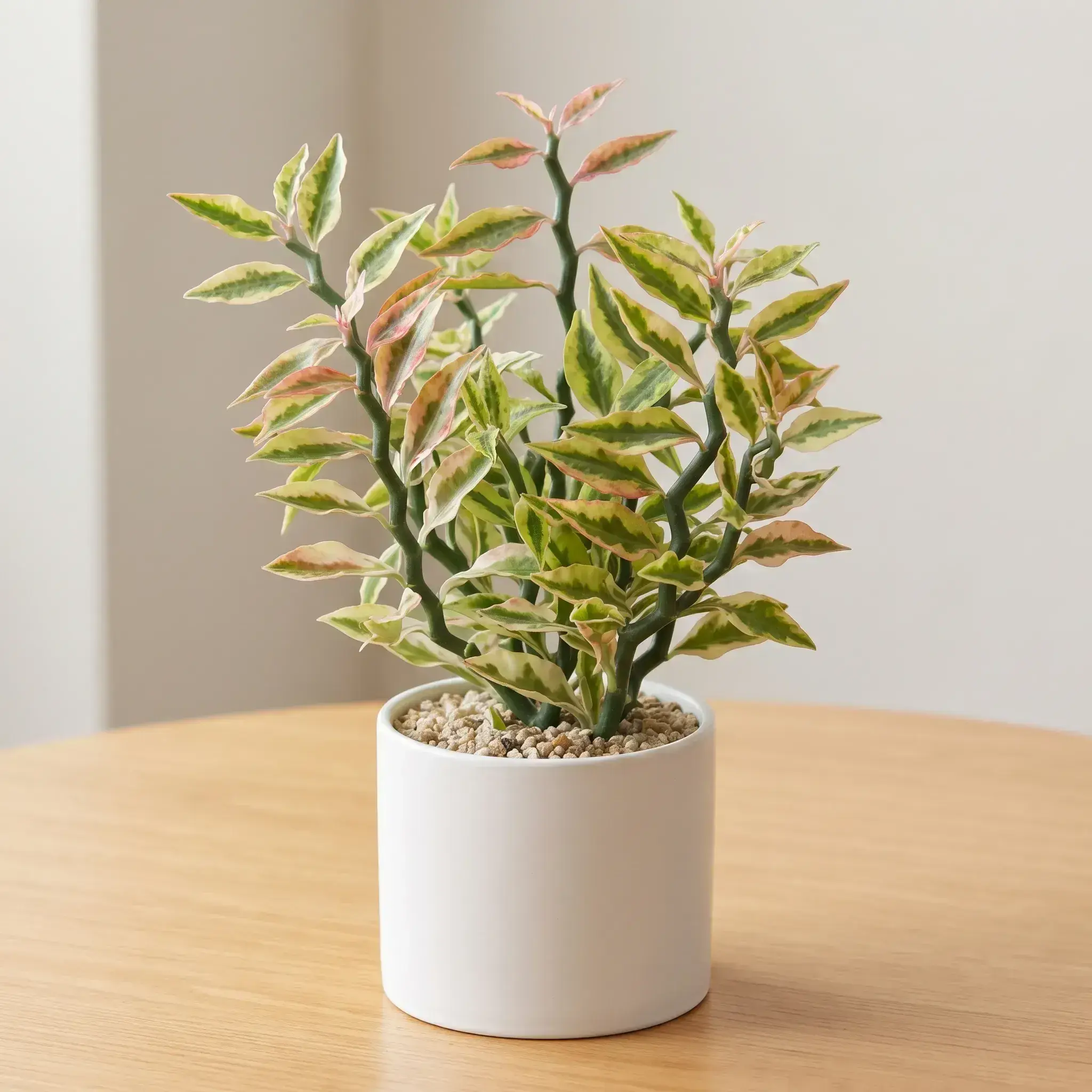
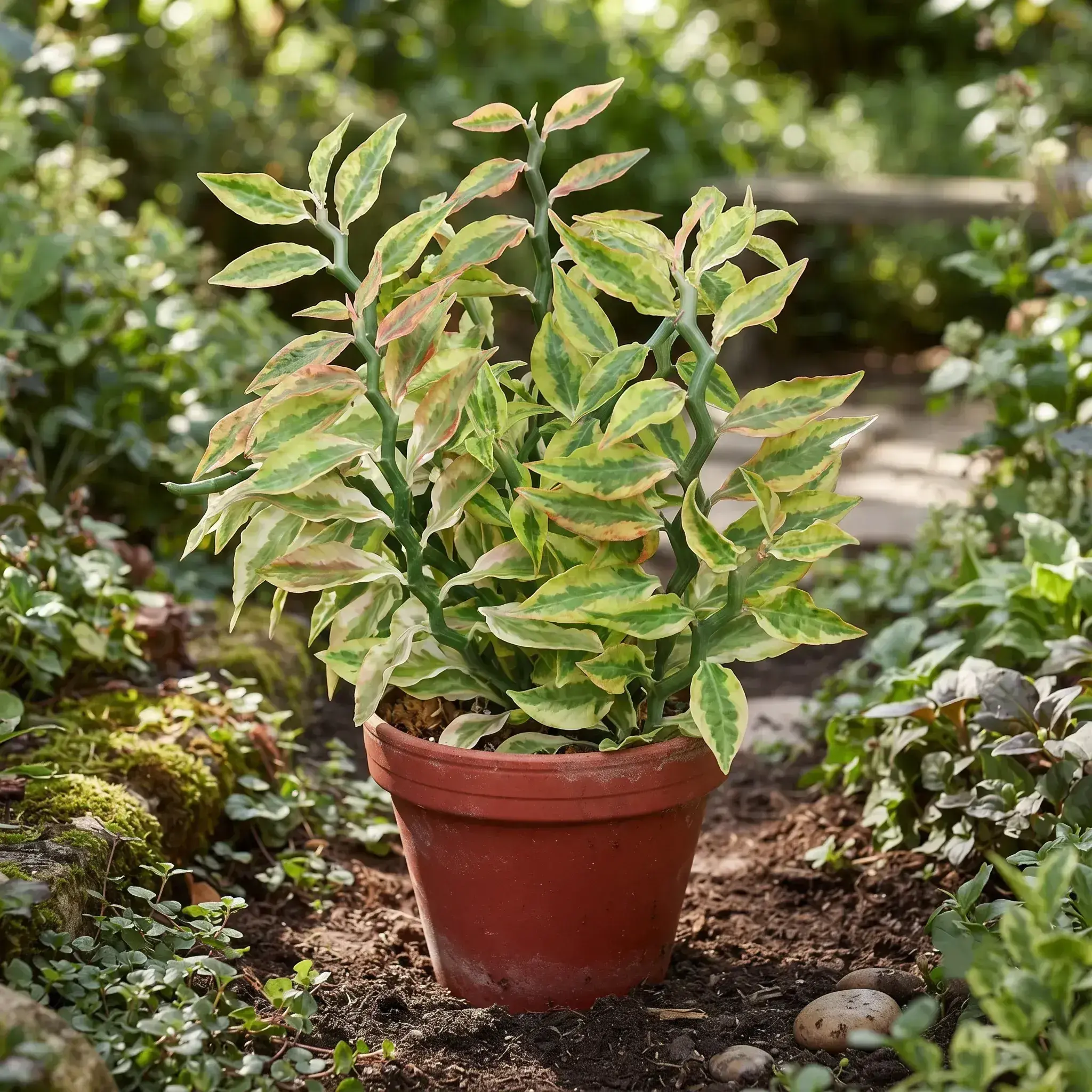
The Devil’s Backbone Plant, popularly known as the Zigzag Plant or Redbird Cactus, is a distinctive, semi-succulent ornamental shrub prized for its architectural zigzag stems and crisp green or variegated foliage. Botanically accepted as Euphorbia tithymaloides (and widely known in Indian nurseries under its classic synonym Pedilanthus tithymaloides), this hardy tropical perennial adds lively texture and structure to balconies, terrace gardens, courtyards, and bright indoor spaces.
Drought-tolerant, heat-loving, and remarkably easy to maintain, the Zigzag Plant adapts effortlessly to container gardening across India. Whether grown as a neat tabletop accent, a lush balcony planter, or an outdoor garden border shrub in frost-free regions, Euphorbia tithymaloides rewards simple care with year-round visual interest.
Plant Highlights
- Product Name: Devil’s Backbone Plant | Zigzag Plant (Euphorbia tithymaloides) for Home Garden
- Common Name: Devil’s Backbone Plant, Zigzag Plant, Redbird Cactus, Slipper Flower, Jacob’s Ladder
- Accepted Botanical Name: Euphorbia tithymaloides (commonly sold in nurseries under the synonym Pedilanthus tithymaloides)
- Family: Euphorbiaceae (Spurge family)
- Plant Type: Evergreen to semi-deciduous perennial succulent subshrub
- Origin: Tropical and subtropical Americas (from Mexico and Central America to northern South America and the Caribbean)
- Flower Colour: Reddish-pink to coral-red slipper-shaped bracts (cyathia) on mature outdoor plants
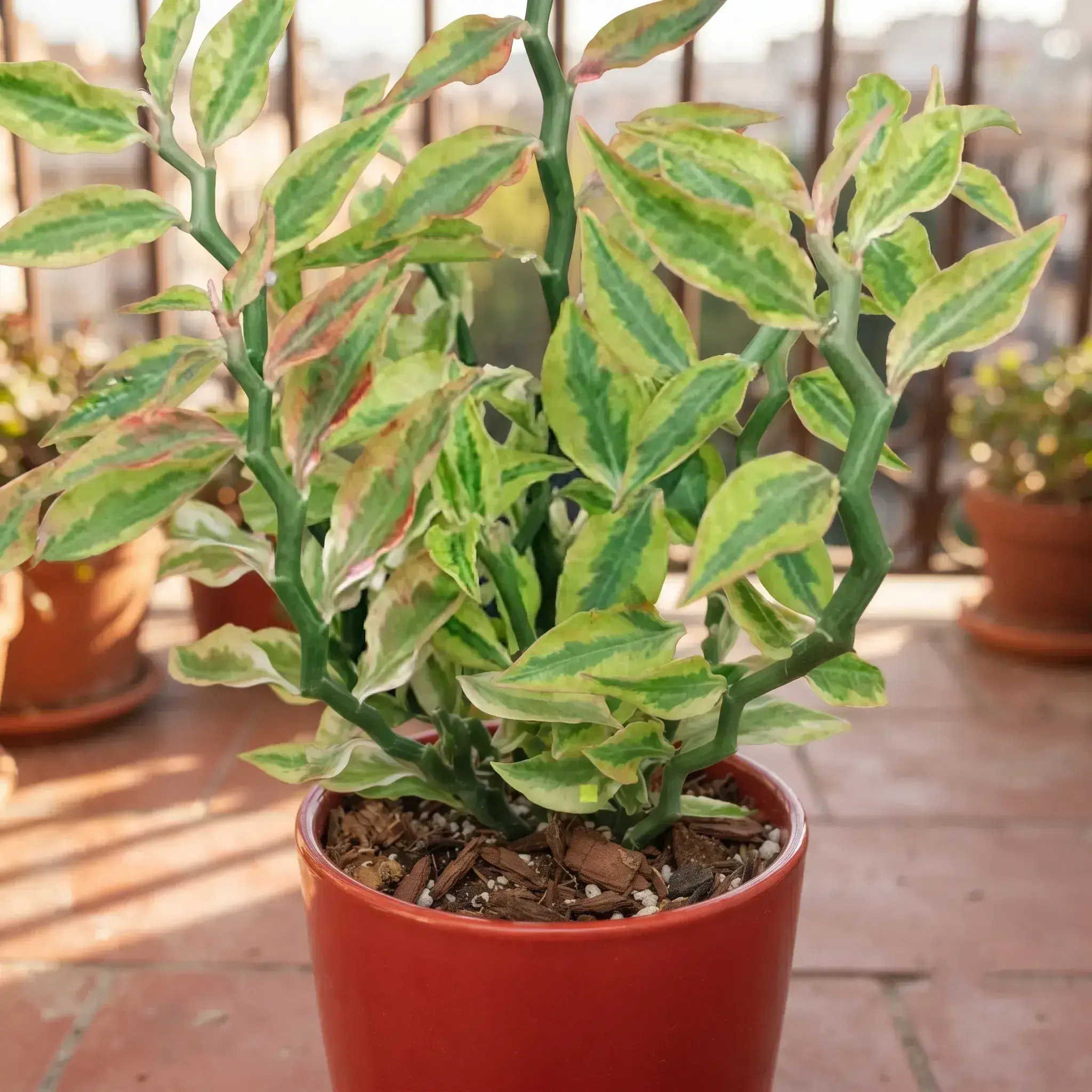
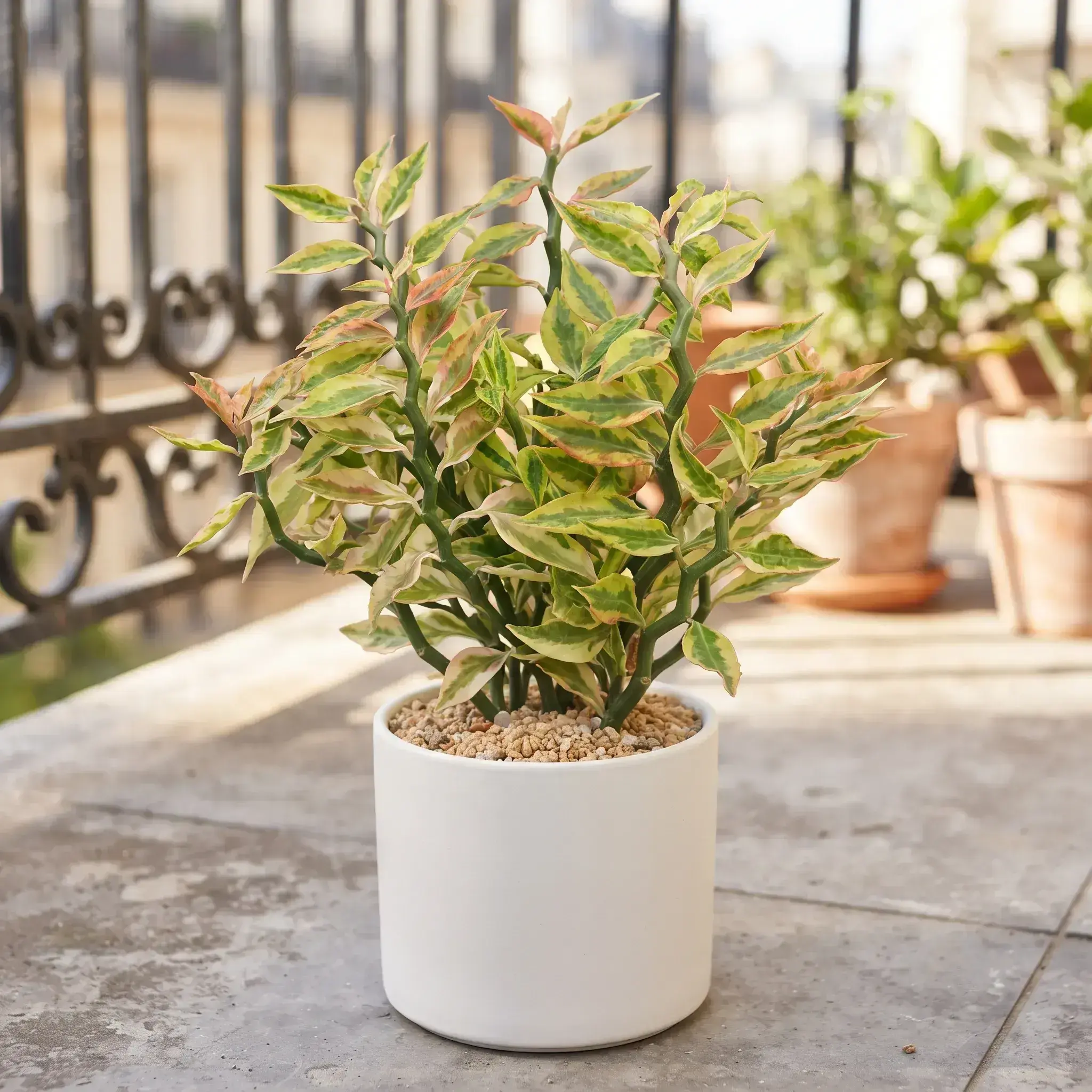
- Foliage: Waxy, oval to lance-shaped leaves arranged alternately along distinctive zigzagging green stems (commonly available in solid green or cream-and-pink variegated forms)
- Growth Habit: Upright, bushy, multi-stemmed succulent shrub with characteristic angular, bending stems
- Mature Height: Typically 45 cm to 1.2 meters (1.5 to 4 feet) in containers; up to 1.8 to 2.5 meters in warm outdoor ground beds
- Sunlight: Bright indirect light to 4 to 6 hours of direct morning sunlight daily
- Watering: Low to moderate; allow the top layer of potting mix to dry out between waterings
- Suitable For: Sunny balconies, terrace gardens, courtyard borders, bright windowsills, and patio containers
About the Devil’s Backbone Plant
Euphorbia tithymaloides belongs to the spurge family Euphorbiaceae and is native to tropical and subtropical regions of the Americas. Following modern molecular botanical revisions (recognized by Kew Science and the Royal Horticultural Society), the former genus Pedilanthus was merged into Euphorbia, though Indian nurseries and gardeners still frequently use the name Pedilanthus tithymaloides.
Its common names come directly from its unusual anatomy: each fleshy green stem bends sharply left and right at every leaf node, creating a rhythmic zigzag pattern resembling a spine or staircase. In Indian home gardens, variegated selections (such as Euphorbia tithymaloides subsp. smallii ‘Variegatus’) are especially popular for their green leaves edged in creamy white that blush bright pink in strong sunlight.
Appearance and Growth Habit
The Devil’s Backbone Plant grows as an upright, densely clumping shrub composed of smooth, cylindrical, succulent green stems that zig and zag from node to node. At each bend grows a waxy, pointed oval leaf measuring 4 to 10 cm long.
In containers, the plant forms a tidy, bushy clump around 45 cm to 1.2 meters tall, sending up fresh zigzag shoots from the base as it matures. Because its fleshy stems store water, the plant maintains a firm, upright posture even during warm dry spells.
Foliage and Flowering Characteristics
The Zigzag Plant is grown primarily for its architectural stems and attractive, waxy foliage. Mature, well-established plants grown outdoors in abundant sunlight can occasionally produce unusual, slipper-shaped bright red or coral-pink flower bracts (cyathia) near the stem tips during warmer months, though container plants kept indoors or in partial shade rarely bloom.
Sunlight Requirements
Bright light keeps the Devil’s Backbone Plant compact, sturdy, and richly colored. Place it where it receives 4 to 6 hours of bright indirect light or gentle direct morning sunlight each day—such as an east- or south-facing balcony, open terrace, or bright sunny window.
In Indian regions experiencing scorching summer afternoon heat above 38°C to 40°C, light afternoon shade helps prevent leaf scorching, especially on cream-and-pink variegated varieties. Growing the plant in deep indoor shade causes long, weak stems with wide gaps between leaves and loss of variegation.
Watering Requirements
Because Euphorbia tithymaloides stores moisture inside its succulent stems, moderate watering with good drainage is key.
Watering During Summer and Active Growth
Check the soil with your finger before watering—water thoroughly when the top 3 to 5 cm of potting mix feels dry. Let excess water drain freely out of the bottom holes and empty standing water from the saucer. During hot summer weather, potted plants generally need watering once every 4 to 7 days depending on pot size and sun exposure.
Watering During Monsoon and Winter
During the humid Indian monsoon, protect potted plants from continuous heavy rainfall so the roots do not sit in waterlogged soil, watering only when the top layer dries out. In winter, when growth slows and some leaves may naturally drop, reduce watering frequency to once every 10 to 14 days.
Soil and Potting Requirements
A fast-draining, porous potting mix prevents root and stem rot while supporting healthy root growth. Heavy garden clay holds excess moisture and suffocates the roots.
Suggested Potting Mixture for Devil’s Backbone Plant
Prepare an airy, well-draining mix using 40% well-draining garden loam, 35% coarse river sand or perlite, and 25% well-decomposed vermicompost or leaf mold. Always plant in a terracotta or sturdy plastic pot with multiple drainage holes at the base.
Growing the Plant in the Indian Climate
The Devil’s Backbone Plant thrives across most of India’s warm tropical and subtropical regions.
Summer Care
It loves warm Indian summers and grows vigorously in heat. Water whenever the top layer of soil dries out and provide light afternoon shade during intense May and June heatwaves.
Monsoon Care
In high-rainfall, humid regions such as Kolkata, Mumbai, Bengaluru, and coastal states, excess rain can cause stem or root rot if pots lack sharp drainage. Keep potted plants under a covered balcony edge or ensure water drains immediately after rain.
Winter Care
Mild Indian winters are comfortable for Euphorbia tithymaloides, though cooler night temperatures below 12°C may cause some older leaves to yellow and shed naturally—new foliage will flush back in spring. Protect the plant from frost and cold drafts in northern plains.
Temperature and Humidity
Euphorbia tithymaloides prefers warm temperatures between 18°C and 35°C and adapts easily to both dry indoor air and humid coastal weather without needing misting. It is sensitive to frost and prolonged temperatures below 10°C.
Fertilizer and Nutrition
This adaptable succulent shrub has modest nutrient needs and grows steadily with light, seasonal feeding.
During the active growing period from spring through early autumn (March to September), feed once every 4 to 6 weeks with a balanced liquid fertilizer diluted to half strength, or top-dress with a handful of vermicompost in spring. Avoid fertilizing during winter rest periods or right after repotting.
Growing the Plant in Pots
The Devil’s Backbone Plant is ideally suited for long-term container cultivation on balconies, terraces, patios, and bright windowsills. Choose a sturdy pot with clear drainage holes only 2 to 4 cm wider than the root ball so the soil dries evenly. Repot every 2 years in spring into a container just one size larger.
Pruning and Maintenance
Occasional pruning keeps your Zigzag Plant bushy, compact, and well-shaped.
In early spring, trim back overly tall or bare stems just above a node using clean, sterilized pruning shears—new zigzag side shoots will branch out below the cut. Always wear gloves when pruning, and mist the cut tips lightly with cool water or dab with a damp cloth to stop the milky sap from dripping.
Propagation
Euphorbia tithymaloides is remarkably easy to propagate from stem cuttings during spring or summer.
Propagation by Stem Cuttings
Wearing protective gloves, cut a healthy 10 to 15 cm stem section with clean shears and remove the lowest leaves. Rinse the cut base briefly in cool water to stop the milky latex sap from flowing, then leave the cutting in a dry, shaded spot for 3 to 5 days until the cut end dries and forms a callus. Plant the calloused stem into slightly moist, gritty potting mix and keep in bright indirect light; roots typically develop within 2 to 3 weeks.
Common Problems and Plant Care
Monitoring sunlight and soil moisture prevents almost all common issues with the Zigzag Plant.
1. Yellowing and Dropping Leaves
A few yellow lower leaves are normal as stems age or when temperatures drop in winter. However, sudden heavy leaf drop usually indicates overwatering, poor pot drainage, or a sudden move to a much darker spot.
2. Soft, Mushy Stems or Base Rot
Caused by waterlogged soil during monsoon or frequent overwatering. Stop watering immediately, improve drainage, or take healthy upper stem cuttings to re-root in fresh dry potting mix.
3. Leggy Stems and Faded Variegation
Occurs when the plant receives too little light. Gradually move the pot to a brighter balcony or sunny window with gentle morning sun, and trim back stretched tips.
4. Mealybugs or Scale Insects
Occasionally, white cottony mealybugs or small scale bumps appear along stem joints. Dab visible insects with a cotton swab dipped in 70% rubbing alcohol or spray diluted neem oil (3 ml per liter of water) in the evening.
Suitability for Home Gardens
The Devil’s Backbone Plant is ideal for sunny balconies, terrace gardens, courtyard borders, outdoor rockeries, and bright windowsills receiving morning sun. It is not suited for dark, windowless indoor rooms or frost-prone outdoor areas without winter protection.
Safety and Important Information
Like other members of the genus Euphorbia, the Devil’s Backbone Plant contains a white, milky latex sap inside its stems and leaves. This sap can irritate skin and eyes upon contact and is toxic to humans, cats, and dogs if ingested, causing mouth irritation, drooling, or stomach upset.
Always wear gloves when pruning or propagating and wash your hands thoroughly afterward. Keep potted plants placed out of reach of young children and curious pets.
Live Plant Delivery Information
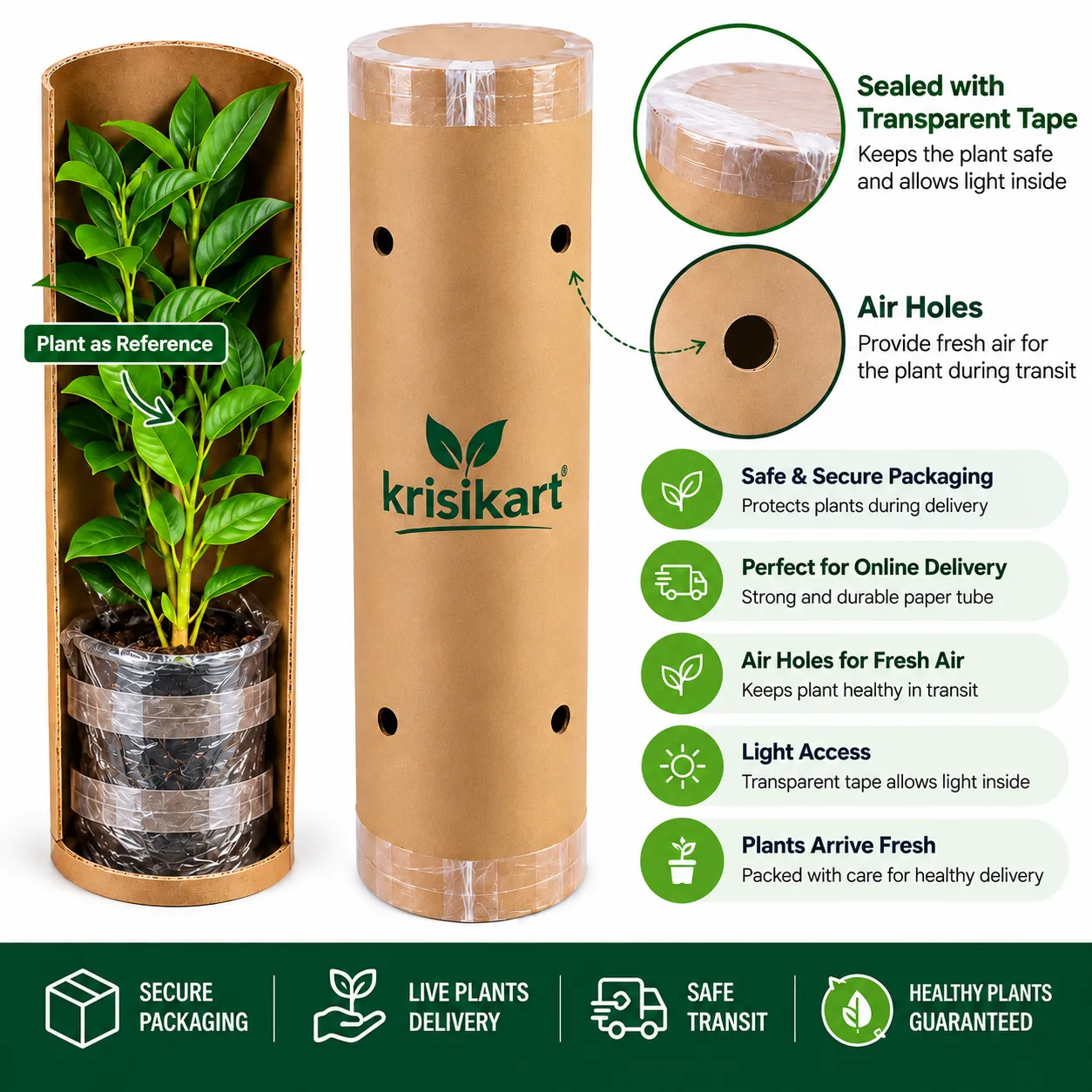
Live Devil’s Backbone plants vary naturally in height, stem count, zigzag branching pattern, and variegation intensity. During shipping, mild transit stress may occur, and a few lower leaves may yellow or drop upon arrival—this is a normal response to temporary darkness and movement.
After unboxing, place your Zigzag Plant in bright indirect light for 2 to 3 days before moving it into brighter morning sun. Check soil moisture before watering—water thoroughly only if the top layer of soil is dry. Avoid repotting or applying fertilizer for the first 1 to 2 weeks while the plant adjusts to its new home.
Why Choose the Devil’s Backbone Plant for Your Garden?
With its playful zigzagging stems, crisp waxy foliage, and low-maintenance drought tolerance, the Devil’s Backbone Plant adds unmistakable architectural character to Indian balconies, terraces, and bright indoor corners. It is a hardy, easy-to-propagate succulent shrub that thrives with minimal upkeep.
Botanical Information and Further Reading
- Kew Science – Plants of the World Online: Euphorbia tithymaloides L.
- Royal Horticultural Society (RHS) – Euphorbia tithymaloides Plant Profile
- Missouri Botanical Garden – Euphorbia tithymaloides (Pedilanthus tithymaloides) Guide
- ASPCA Animal Poison Control – Devil’s Backbone Pet Safety Information
Frequently Asked Questions (FAQs)
1. What is the botanical name of the Devil’s Backbone Plant or Zigzag Plant?
The accepted botanical name is Euphorbia tithymaloides in the spurge family Euphorbiaceae, and it is also widely sold in nurseries under its former synonym Pedilanthus tithymaloides.
2. Why is it called the Devil’s Backbone or Zigzag Plant?
Its succulent green stems bend sharply back and forth at each leaf node, forming a distinctive zigzag pattern that resembles a backbone or staircase.
3. How much sunlight does a Devil’s Backbone Plant need?
It thrives in 4 to 6 hours of bright indirect light or gentle direct morning sunlight daily. Protect it from harsh summer afternoon sun in very hot regions.
4. How often should I water my Zigzag Plant?
Water thoroughly when the top 3 to 5 cm of potting soil feels dry—typically once every 4 to 7 days in summer and every 10 to 14 days during monsoon and winter.
5. What soil mix is best for growing Euphorbia tithymaloides in pots?
Use a fast-draining potting mix made with well-draining garden loam, coarse river sand or perlite, and organic compost so excess water drains quickly and prevents root rot.
6. Can I grow a Devil’s Backbone Plant indoors?
Yes, it can be grown indoors right beside a bright, sunny window receiving several hours of natural light, though it also performs wonderfully on covered balconies and terraces.
7. Why are the leaves on my Zigzag Plant dropping in winter?
Cooler winter temperatures below 12°C to 15°C naturally cause the plant to slow down and shed some older lower leaves. Reduce watering in winter, and fresh leaves will emerge in spring.
8. How do I propagate the Devil’s Backbone Plant?
Cut a 10 to 15 cm stem tip wearing gloves, rinse the cut end briefly in cool water to stop the milky sap, let it dry in the shade for 3 to 5 days until calloused, and plant it in gritty, slightly moist soil.
9. Is the Devil’s Backbone Plant safe for pets and children?
No, its stems and leaves contain a milky white latex sap that irritates skin and eyes and is toxic to cats, dogs, and humans if ingested. Keep it out of reach of children and pets.
10. How big does a potted Devil’s Backbone Plant grow?
In home containers, it typically grows 45 cm to 1.2 meters tall and can easily be kept compact with light spring pruning.
For More Information
Visit: krisikart.com
For Contact Visit:Contact Us
For Shopping Visit: Shop Page


Anita sehera –
Fresh green plants with healthy roots.
Very satisfied with my order. thank krisikart