Organic Dry Harsingar (Parijat, Night Jasmine) Leaves | Nyctanthes arbor-tristis
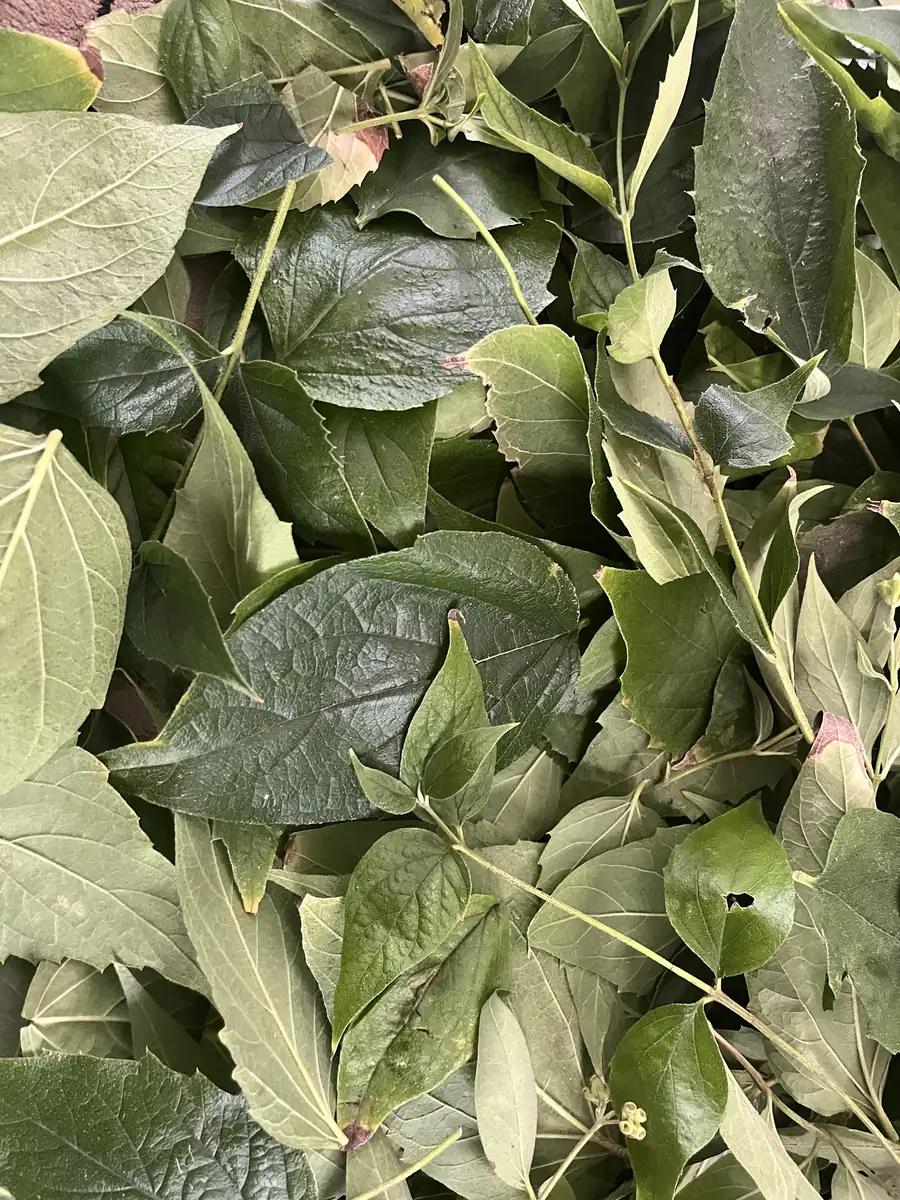
Organic Dry Harsingar (Parijat, Night Jasmine) Leaves are naturally dried leaves of the traditional Indian plant commonly known as Harsingar, Har Singar, Parijat, Parijatak, Shefali and Night-flowering Jasmine.
The botanical name of Harsingar is Nyctanthes arbor-tristis L., belonging to the Oleaceae family. Kew recognizes Nyctanthes arbor-tristis as the accepted species name and records its native range from the Himalaya and Indo-China through parts of Southeast Asia.
Harsingar is traditionally valued in India for its fragrant flowers and leaves and has a long history of use in Ayurveda and other traditional practices. Dried leaves are convenient to store and can be used for traditional household purposes where appropriate.
🌿 About Harsingar / Parijat
Harsingar is a deciduous shrub or small tree with characteristic rough-textured green leaves and fragrant white flowers with an orange-red centre.
It is commonly called:
- Harsingar / Har Singar
- Parijat / Paarijat
- Parijatak
- Shefali / Sephali
- Night Jasmine
- Night-flowering Jasmine
- Coral Jasmine
Indian Biodiversity records Nyctanthes arbor-tristis as a common ornamental species and documents several of these regional names.
Unlike true jasmine species in the genus Jasminum, Harsingar belongs to the genus Nyctanthes.
🍃 About the Dried Leaves
These leaves are naturally plant-derived dried Harsingar leaves.
Fresh Harsingar leaves are typically:
- Dark green
- Rough-textured on the upper surface
- Hairier and paler underneath
- Oppositely arranged on the stem
- Broadly ovate in shape
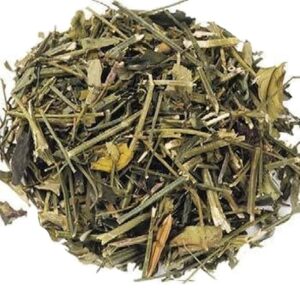
After drying, the leaves naturally become darker, lighter brown or green-brown depending on drying conditions and storage.
Natural differences in colour, size and texture are therefore expected in a dried botanical product.
Kew’s botanical description records the leaves as ovate and up to approximately 15 cm long, with a rough upper surface and fine hairs or a less hairy lower surface depending on the specimen.
🌱 Traditional Use of Harsingar Leaves
Harsingar has a long history in Ayurveda, folk medicine and other traditional systems.
Traditional literature and modern reviews report the use of different parts of the plant, including the leaves, in various preparations. Research specifically documents traditional use of Harsingar leaves in preparations such as decoctions and juices.
However, traditional use should not automatically be interpreted as proof of a medical benefit.
Modern research has investigated extracts of Nyctanthes arbor-tristis for several biological activities, but much of the evidence remains based on laboratory or animal studies, and further research is needed to establish clinical effectiveness and safety.
🏡 Suitable for Traditional Household Use
Dried Harsingar leaves are convenient for customers interested in traditional Indian botanicals.
They may be kept as part of:
- 🌿 Traditional herbal collections
- 🌱 Home botanical collections
- 🪔 Cultural and traditional practices
- 📚 Botanical study and identification
- 🌿 Traditional preparation practices where appropriate
The dried leaves are supplied as a botanical raw material, not as a guaranteed medicine or pharmaceutical product.
🍃 Natural Appearance of Dried Leaves
Because this is a natural dried plant product, the appearance can vary.
You may naturally find:
- Whole leaves
- Smaller leaf pieces
- Slightly curled leaves
- Green-brown or brown leaves
- Minor stem fragments
- Natural variation in leaf size
- Different degrees of dryness
These variations do not necessarily indicate a problem with the botanical material.
🌿 Botanical Identity
For authenticity and correct identification, the botanical name is particularly important because common names such as Parijat, Harsingar and Night Jasmine can vary between regions.
Botanical Name: Nyctanthes arbor-tristis L.
Family: Oleaceae
Plant Type: Deciduous shrub or small tree
Kew currently accepts this botanical name.
🌸 Harsingar Flowers & Plant Background
Although this product contains dried leaves, the plant itself is famous for its flowers.
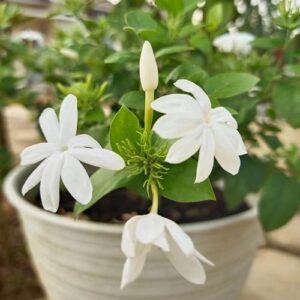
Harsingar produces small, highly fragrant flowers with:
- White petals
- Orange-red central tube
- Strong fragrance
- Night-opening habit
Indian Biodiversity describes the flowers as sweet-scented and records the species as a commonly planted ornamental plant.
The flowers often open during the night and fall by morning, which explains the English name Night-flowering Jasmine.
🇮🇳 Indian Traditional Importance
Harsingar has a particularly strong place in Indian traditional culture and gardening.
The plant is commonly grown around homes and gardens, and its fragrant flowers are also associated with worship and cultural practices.
Different parts of the plant have been documented in traditional Indian systems of medicine. Scientific reviews continue to examine its phytochemistry and possible biological activities.
⚠️ Important Health & Safety Information
Harsingar leaves are associated with traditional medicinal use, but this product should not be described as a treatment or cure for arthritis, fever, malaria, diabetes, liver disease, sciatica or any other medical condition.
Research has reported biological activity from Harsingar leaf extracts, but much of the available evidence comes from laboratory and animal studies rather than well-established human clinical evidence.
A published pharmacovigilance study also notes that safety information for medicinal use of Nyctanthes arbor-tristis remains limited and recommends caution.
If you intend to consume or prepare the leaves as a herbal remedy, consult a qualified healthcare professional or Ayurvedic practitioner first, particularly if you are pregnant, breastfeeding, taking medicines, have a chronic medical condition, or are preparing the product for a child.
Do not use this product as a replacement for prescribed medical treatment.
🧪 Research on Harsingar Leaves
Scientific research has investigated extracts from Harsingar leaves for several biological properties.
For example, laboratory and animal studies have investigated anti-inflammatory and other pharmacological activities of leaf extracts.
A recent review published in Planta Medica in 2026 summarizes phytochemical and pharmacological research on Nyctanthes arbor-tristis and emphasizes that additional research is required to establish its therapeutic applications.
Therefore, this product description uses “traditional use” and “research interest” rather than making medical treatment claims.
📦 Storage Instructions
Proper storage is important for dried botanical leaves.
For best storage:
- Keep the leaves in a clean, dry container.
- Protect them from moisture.
- Keep away from direct sunlight.
- Avoid humid locations.
- Close the package securely after each use.
- Do not store together with strongly scented chemicals or household products.
- Keep out of reach of children.
Moisture exposure can reduce the quality of dried plant material and may encourage mould growth.
🌱 Natural Product Variation
Dried leaves are a natural agricultural/botanical product, so every batch may naturally differ slightly.
Variations may occur in:
- Leaf size
- Leaf colour
- Dryness
- Texture
- Shape
- Small leaf fragments
These are natural characteristics rather than indications of a standardized pharmaceutical product.
📌 Important Note About “Organic”
This listing uses “Organic” as the product description supplied for the item.
An organic claim should only be understood as a certified organic claim when the product has the applicable organic certification/documentation. This description does not independently certify the cultivation or processing method.
⭐ Why Choose Dry Harsingar Leaves?
- 🌿 Traditional Indian botanical
- 🇮🇳 Commonly known as Harsingar and Parijat
- 🍃 Convenient dried-leaf form
- 🌱 Botanical identity clearly specified
- 📚 Useful for botanical and traditional plant collections
- 🪔 Associated with Indian cultural traditions
- 🌿 Suitable for traditional household botanical use
- 📦 Easy to store when kept dry
- 🌸 Derived from the fragrant Night-flowering Jasmine plant
🔬 Botanical Information
| Feature | Information |
|---|---|
| Botanical Name | Nyctanthes arbor-tristis L. |
| Family | Oleaceae |
| Common Names | Harsingar, Har Singar, Parijat, Parijatak, Shefali, Night Jasmine, Coral Jasmine |
| Plant Type | Deciduous shrub or small tree |
| Product Form | Dried leaves |
| Leaf Type | Simple, opposite, ovate |
| Flower Colour | White with orange-red tube |
| Flower Character | Fragrant, night-flowering |
| Traditional Use | Documented in Ayurveda and folk/traditional practices |
| Native Range | Himalaya to Indo-China; Sumatera to Java |
| Product Category | Dried botanical plant material |
📚 Botanical Information & Further Reading
- Kew – Plants of the World Online: Nyctanthes arbor-tristis
- Kew – General Information for Nyctanthes arbor-tristis
- India Biodiversity Portal – Nyctanthes arbor-tristis
- PubMed – Recent review of Nyctanthes arbor-tristis
- PubMed – Phytochemical and safety review
- PMC – Anti-rheumatic activity and pharmacovigilance research
- PubMed – Research on anti-inflammatory activity of Harsingar leaves
Store your Harsingar leaves carefully in a dry place and enjoy this traditional Indian botanical product with an understanding of its cultural history, botanical identity and the current limits of scientific evidence.







Reviews
There are no reviews yet.