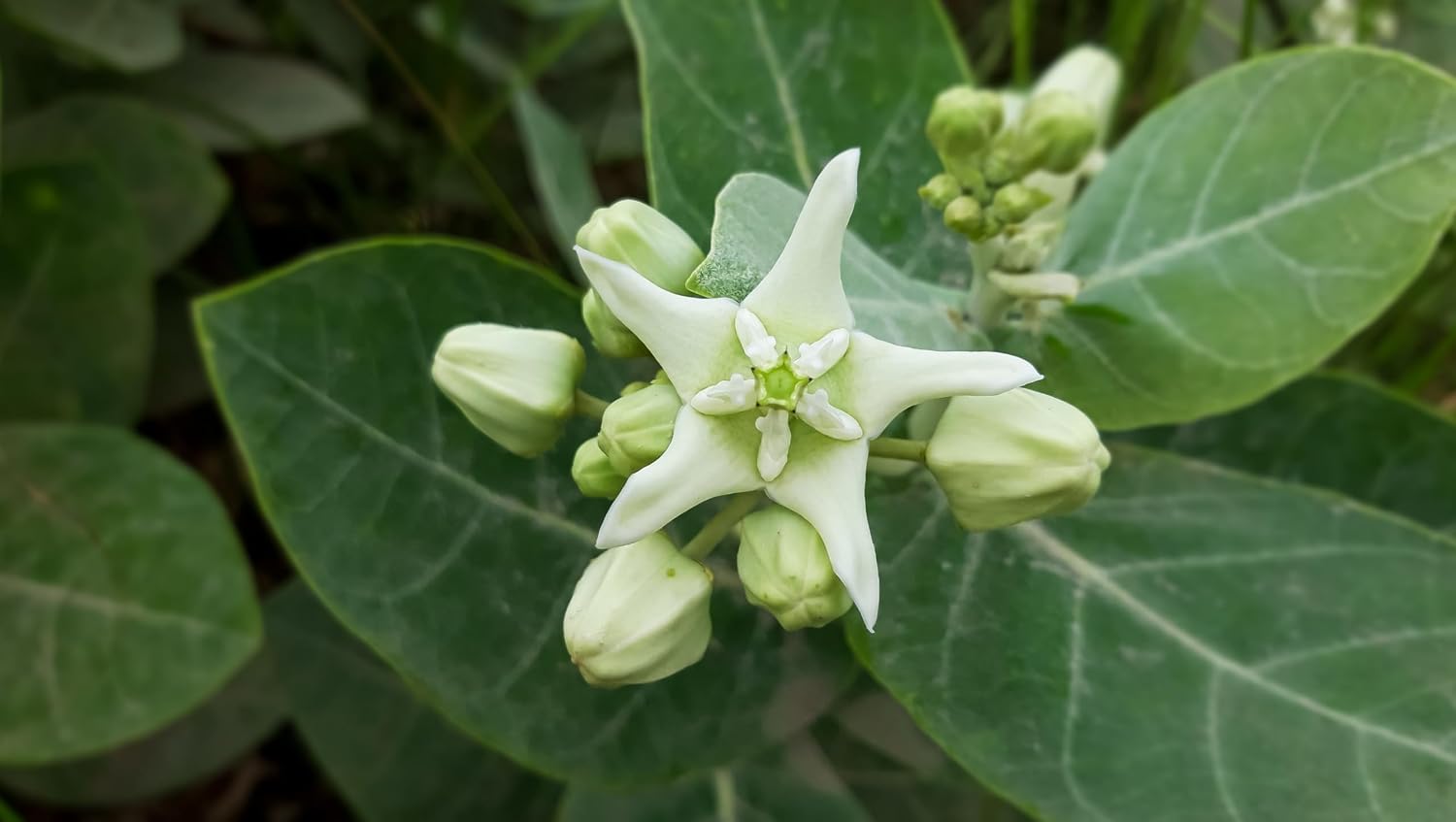
Mandar Rui Plant , Aak Plant, Toolaphala Plant – Purple & White Flowering Plant
Bring a distinctive traditional Indian flowering shrub into your garden with the Mandar Rui / Aak / Arka / Mandar plant (Calotropis gigantea), supplied as a live plant with pot for planting and home gardening.
Known by several regional names including Aak, Ak, Akand, Arka, Rui, Madar, Mandara and Mandaramu, this hardy woody shrub is well known throughout India. Indian botanical sources describe its flowers as pale purple or greenish-white, making it an attractive choice for gardeners looking for a traditional flowering plant with an unusual appearance.
The accepted botanical name is Calotropis gigantea (L.) W.T.Aiton, and Kew places it in the Apocynaceae family. Its native range extends from southern China through tropical Asia, including India.
🌿 About the Mandar Rui / Aak Plant
Calotropis gigantea is a woody flowering shrub that can grow naturally in warm, seasonally dry tropical environments.
In India, the plant is commonly recognized by different names depending on the region and language:
- Mandar / Mandara
- Rui / Rui plant
- Aak / Ak
- Akand
- Arka
- Madar
- Mandaramu
- Erukkam in Tamil
- Jilledu in Telugu
- Akanda in Bengali
Indian government and botanical references document these regional names for Calotropis gigantea.
This listing specifically refers to Calotropis gigantea and not the closely related Calotropis procera.
🌱 Plant Characteristics
Mandar is a woody shrub with thick stems and large, leathery-looking leaves.
Typical characteristics include:
- 🌿 Woody perennial shrub
- 🍃 Large opposite leaves
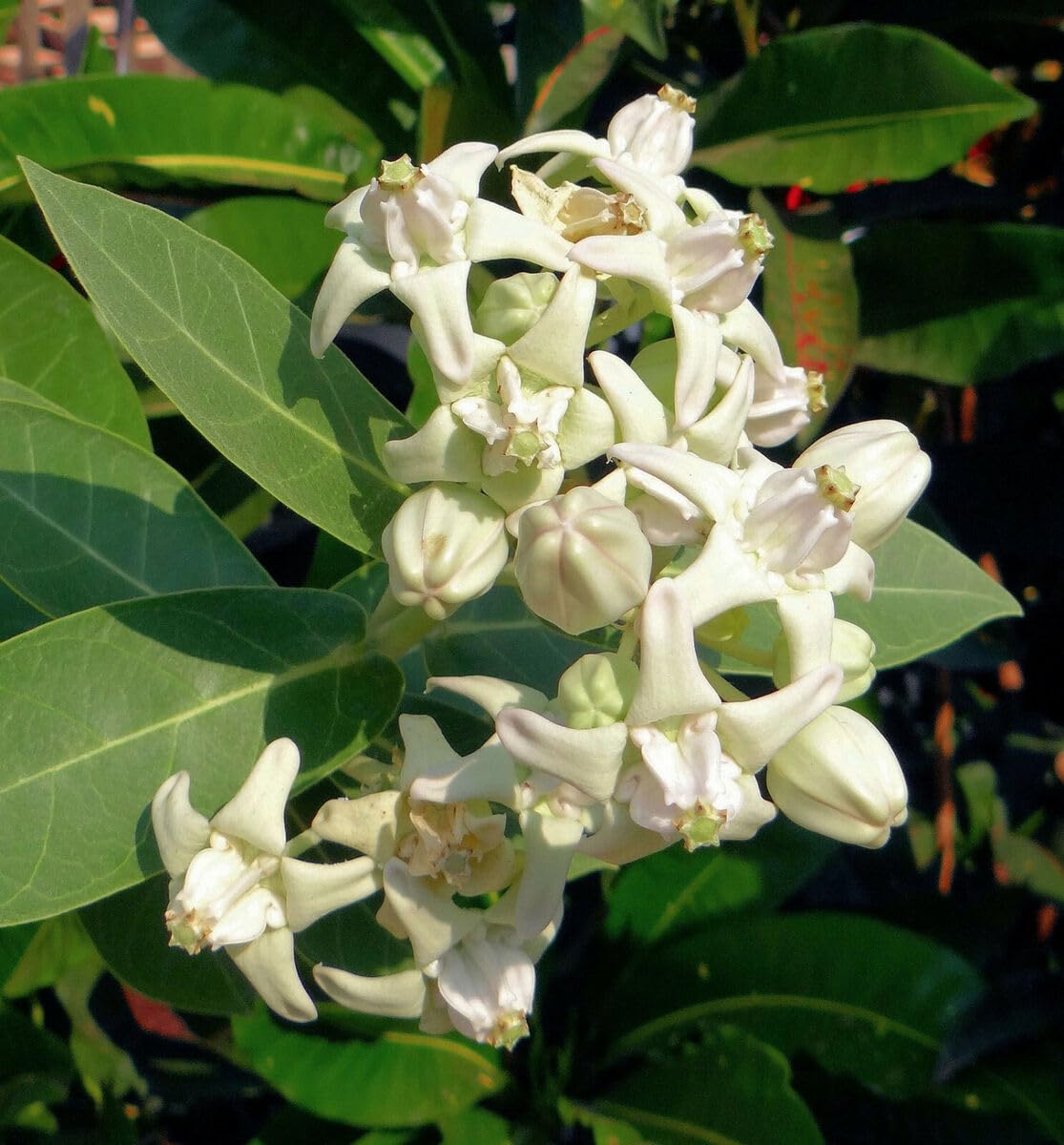
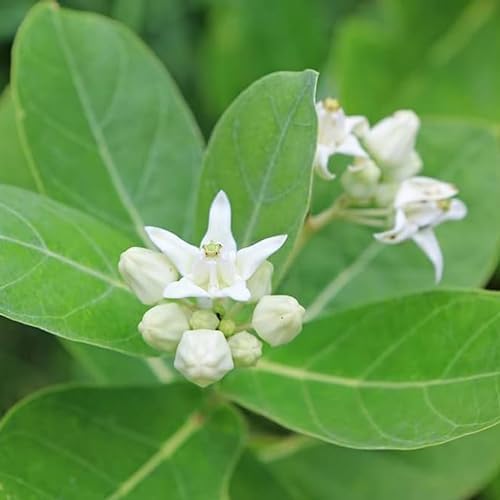
- 🌸 Purple-white to pale purplish flowers
- 🌱 Upright branching growth
- ☀️ Performs well in warm outdoor conditions
- 🪴 Can be initially grown in a container
- 🇮🇳 Widely known as a traditional Indian plant
Kew describes Calotropis gigantea as a shrub or tree primarily associated with seasonally dry tropical environments.
🌸 Purple & White Flowers
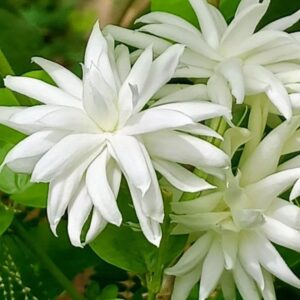
One of the most attractive features of the Mandar plant is its unusual flower structure.
Indian botanical information describes the flowers as pale purple or greenish-white, while pharmacopoeial descriptions note a creamy-white to purplish-white corolla.
The flowers have a distinctive crown-like appearance and can make an interesting addition to a collection of traditional Indian flowering plants.
Flower colour and intensity can naturally vary with growing conditions, plant maturity and individual plant characteristics.
☀️ Sunlight Requirements
Mandar is best grown outdoors in bright sunlight.
For healthy growth:
- Provide several hours of direct sunlight.
- A sunny balcony, terrace or garden location can be suitable.
- Avoid keeping the plant permanently in a dark indoor room.
- If the plant has been raised under nursery shade, gradually expose it to stronger sunlight.
- Good ventilation is beneficial.
A bright, warm location generally helps maintain compact growth and supports flowering.
💧 Watering
Mandar is relatively adaptable once established, but container plants still require proper watering.
Follow this simple approach:
- Check the upper layer of the potting mix.
- Water when the soil begins to dry.
- Water thoroughly rather than giving only a few drops.
- Allow excess water to drain through the pot.
- Avoid continuously waterlogged soil.
- Reduce watering during prolonged rainy periods.
Because this plant is adapted to seasonally dry tropical conditions, constant standing water should be avoided.
🪴 Soil & Potting
Use a well-draining potting mixture.
A suitable home-garden mixture can contain:
- Garden soil
- Compost or well-decomposed organic matter
- Coarse sand
- Cocopeat or another aerating material in a moderate amount
The pot should always have sufficient drainage holes.
Do not use an excessively small pot for long-term growth. As the plant becomes established, move it into a larger container when necessary.
🌱 Fertilizer & Nutrition
Mandar generally does not require excessive feeding.
For container-grown plants:
- Add compost or vermicompost periodically.
- Use a balanced fertilizer at the recommended dosage when active growth requires additional nutrition.
- Avoid excessive nitrogen, particularly when the plant is already producing vigorous leafy growth.
- Do not apply concentrated fertilizer directly against the stem.
Good sunlight, suitable soil and correct watering are more important than heavy fertilizer application.
🌸 Flowering & Development
Flower production depends on plant maturity, sunlight, climate and growing conditions.
A healthy plant receiving sufficient sunlight can develop its characteristic flower clusters.
Do not rely on fixed claims such as “flowers within X days” because flowering time can vary considerably between plants and growing environments.
🏡 Home Garden Suitability
Mandar is an interesting choice for gardeners who enjoy traditional Indian flowering plants and medicinal-herb collections.
It can be grown in:
- 🏡 Home gardens
- 🌿 Outdoor plant collections
- 🪴 Large containers
- 🌞 Sunny terraces
- 🏢 Suitable sunny balconies
- 🌱 Traditional medicinal-plant gardens
- 🌸 Flowering shrub collections
Because it is a woody shrub rather than a small herb, give it adequate space as it develops.
🏢 Balcony & Terrace Gardening
A young Mandar plant can be maintained in a pot on a sunny balcony or terrace.
For balcony cultivation:
- Use a stable, reasonably large pot.
- Give the plant direct sunlight.
- Keep it away from areas where children may accidentally handle the plant.
- Avoid placing it where branches will obstruct walkways.
- Prune carefully if necessary to maintain a manageable shape.
- Upgrade the container as the root system and plant increase in size.
A spacious terrace is generally more convenient than a very narrow balcony for long-term cultivation.
✂️ Pruning & Maintenance
Light pruning can help maintain the plant’s shape and remove:
- Dead branches
- Damaged shoots
- Weak growth
- Unwanted branches
Always use gloves when handling the plant because it produces milky latex.
Do not unnecessarily cut stems or leaves just to collect latex.
🌿 Traditional Medicinal Plant Background
Mandar/Aak/Arka has a long history of traditional use in Indian systems of medicine and other traditional practices. Kew records medicinal use for Calotropis gigantea, and Indian government sources document the plant and its traditionally used parts.
However, traditional use does not mean that the plant is proven to treat or cure a medical condition.
This product is supplied as a live ornamental/traditional plant for cultivation. It should not be consumed or used as a home remedy without qualified medical guidance.
⚠️ Important Safety & Latex Warning
This plant requires careful handling.
Calotropis gigantea produces a milky latex, and an Indian Botanical Survey publication identifies the latex as poisonous and reports that it can be particularly harmful to the eyes.
Therefore:
- ⚠️ Do not consume the plant.
- ⚠️ Do not intentionally ingest the latex, leaves, flowers or other plant parts.
- ⚠️ Keep the plant away from young children.
- ⚠️ Keep pets away from chewing the plant.
- ⚠️ Avoid contact between latex and eyes.
- 🧤 Wear gloves when pruning or handling damaged stems.
- 🚿 Wash hands thoroughly after handling.
- 👁️ If latex enters the eyes, seek appropriate medical attention promptly.
This is especially important for a balcony or home garden where children or pets may have easy access to the plant.
🌱 Planting Instructions
When your live Mandar plant arrives:
- Carefully unpack the plant.
- Place it in a bright outdoor location.
- Allow the plant to adjust after transportation.
- If necessary, transplant it into a larger pot with good drainage.
- Keep the root ball intact during transplanting.
- Water thoroughly after planting.
- Gradually provide strong direct sunlight if the plant was previously kept under shade.
- Keep the plant away from children and pets.
🚚 Live Plant Delivery & Natural Variation
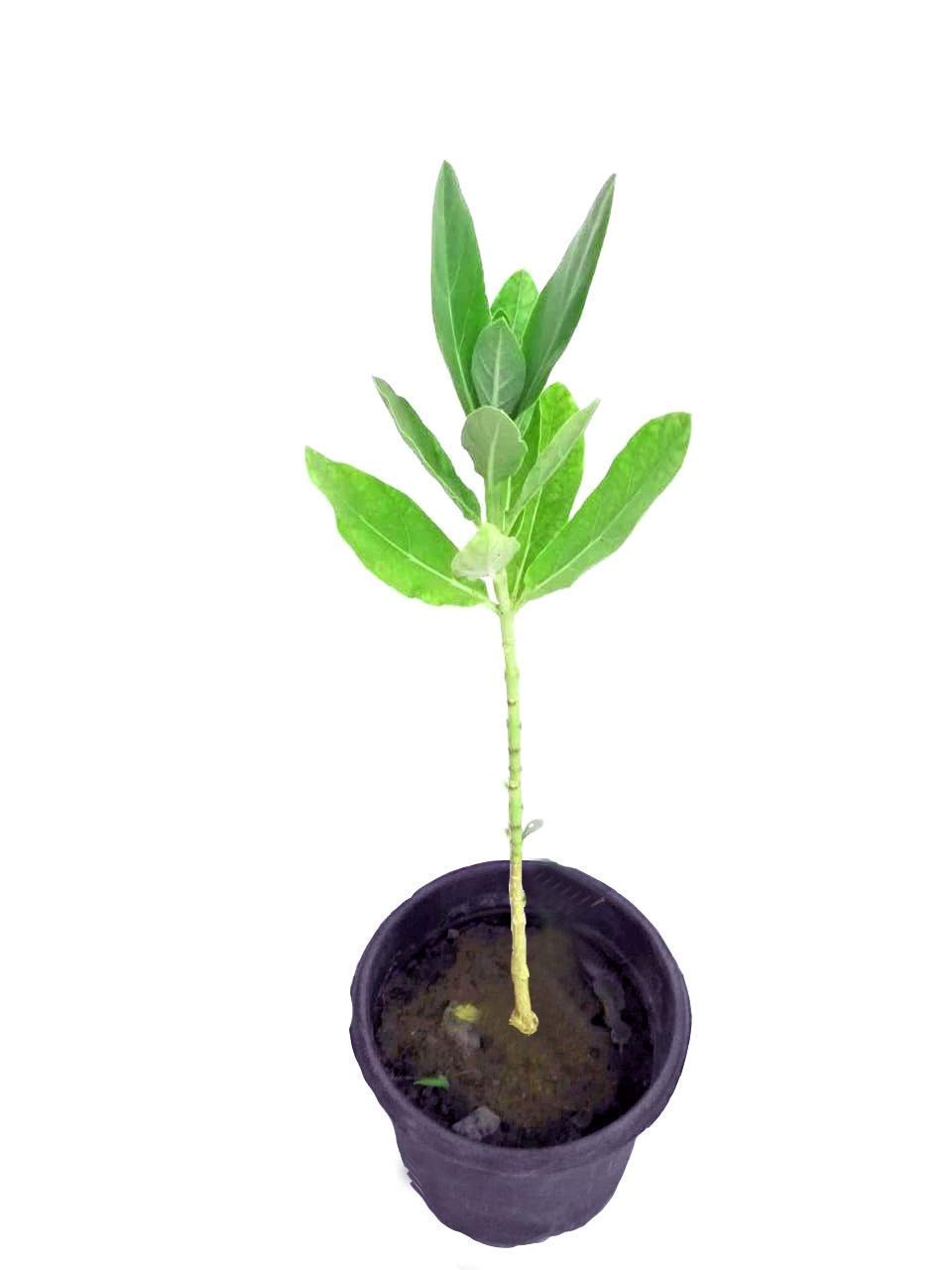
This product is supplied as a live Mandar/Rui/Aak flowering plant with pot for planting.
Because plants are living products, natural differences are expected:
- Plant height may vary.
- Number of leaves may vary.
- Branching can differ between plants.
- Flowering may not be present at the time of delivery.
- Leaves can temporarily droop after transportation.
- Minor leaf marks may occur during transit.
- Seasonal conditions can change the plant’s appearance.
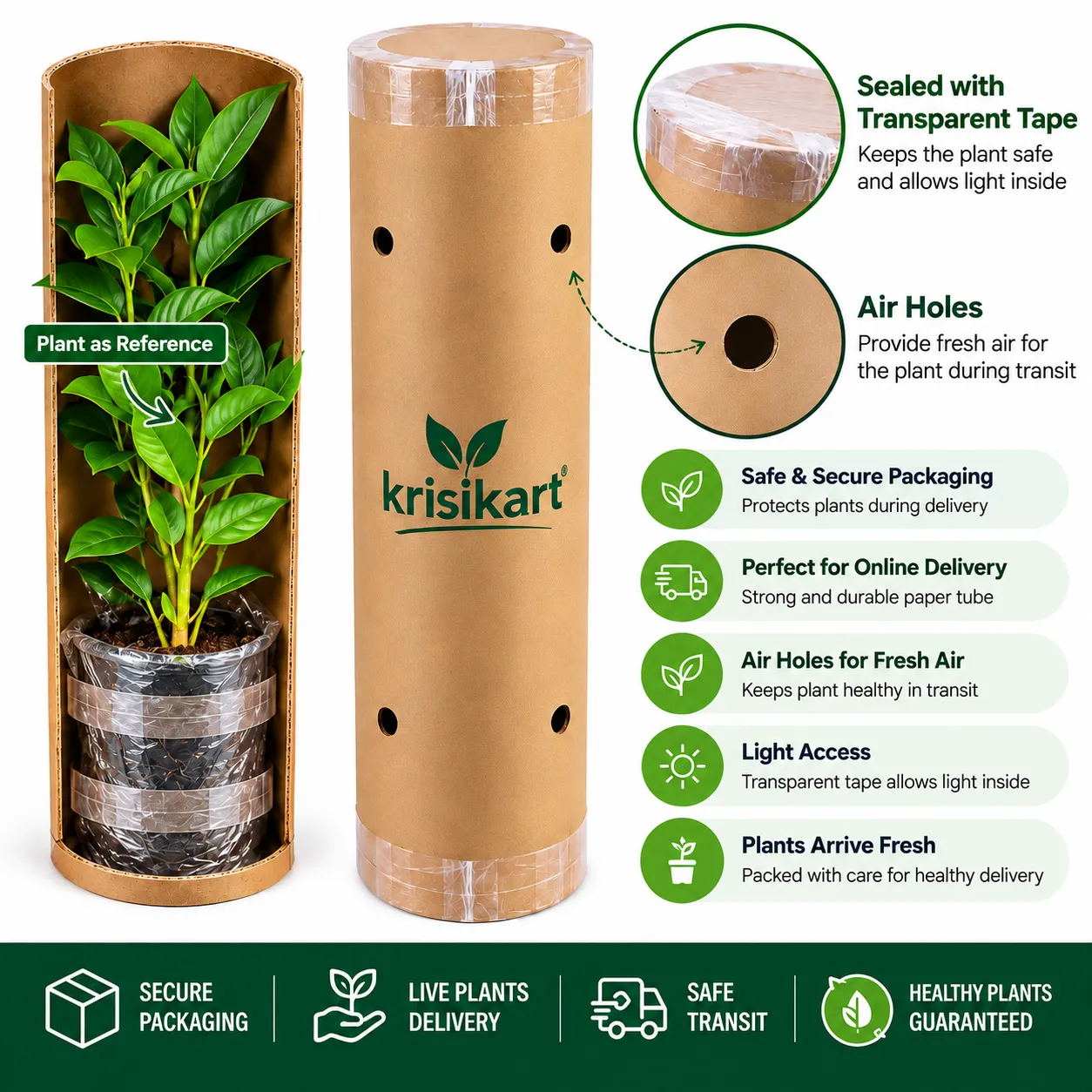
First delivery is planned through Blue Dart Air/express courier where the service is available for the destination pincode, helping reduce transportation time for the live plant.
After receiving the parcel, unpack the plant carefully and provide suitable light, water and ventilation.
📌 Important Note About the Common Names
Several traditional names are used for different Calotropis species in India.
This product specifically refers to:
Mandar / Rui / Aak / Arka = Calotropis gigantea (L.) W.T.Aiton
The exact local name can vary by region and language. Government sources list names including Ak, Akand, Ark, Madar, Rui, Mandaramu and Arka-gida for this species.
🌸 Why Choose Mandar Rui / Aak Plant?
- 🌸 Distinctive purple-white flowering plant
- 🌿 Traditional Indian plant with many regional names
- 🪴 Supplied with pot for convenient planting
- ☀️ Suitable for sunny outdoor locations
- 🏡 Suitable for home gardens
- 🏢 Can be grown as a young container plant
- 🌱 Interesting addition to traditional medicinal-plant collections
- 🇮🇳 Familiar and culturally significant Indian plant
- 🍃 Attractive large foliage
- 🌸 Unusual crown-like flowers
🔬 Botanical Information
| Feature | Information |
|---|---|
| Botanical Name | Calotropis gigantea (L.) W.T.Aiton |
| Family | Apocynaceae |
| Common Names | Mandar, Rui, Aak, Ak, Arka, Madar |
| Bengali Name | Akanda |
| Hindi Names | Aak, Ak, Akand, Arka, Madar |
| Tamil Name | Erukkam |
| Telugu Name | Jilledu |
| Plant Type | Woody flowering shrub |
| Flower Colour | Pale purple, purplish-white, creamy-white |
| Light | Bright sunlight / full sun |
| Growing Habit | Upright woody shrub |
| Container Growing | Suitable when provided adequate space |
| Garden Use | Flowering shrub, traditional plant collection, home garden |
The accepted botanical name and family are supported by Kew’s Plants of the World Online, while Indian government sources document the regional names and flower description.
📚 Botanical Information & Further Reading
- Kew – Plants of the World Online: Calotropis gigantea
- Kew – Calotropis gigantea General Information
- Department of Biotechnology, Government of India – Calotropis gigantea information
- Botanical Survey of India – Selected Poisonous Plants from the Tribal Areas of India
- Pharmacopoeial Laboratory for Indian Medicine – Calotropis gigantea monograph
Grow this traditional Indian flowering shrub responsibly, enjoy its distinctive purple-white flowers, and always handle its milky latex with appropriate care.
![[New Stock] 100ml Pasura Exodus Plant Bio Simulant , Organic Pesticide for Insects](https://krisikart.com/wp-content/uploads/2026/01/71GyR4G1LTS-300x300.jpg)







Reviews
There are no reviews yet.