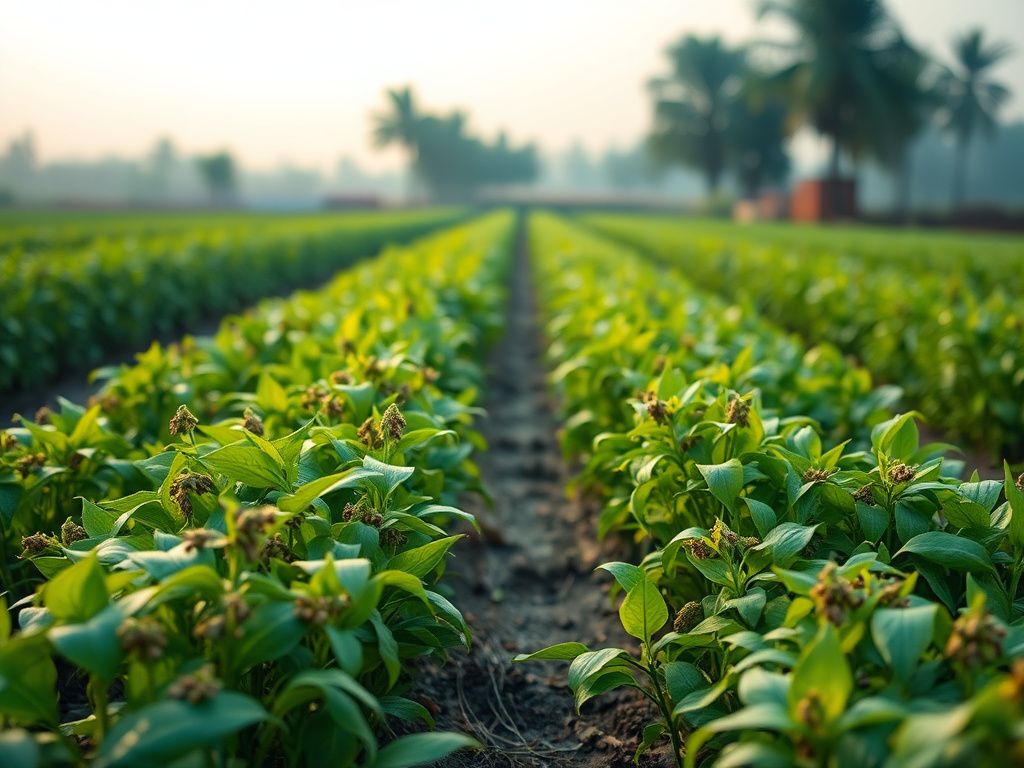
Agriculture has always been the backbone of India’s economy, employing nearly half the nation’s workforce and contributing significantly to its GDP. Yet, for decades, the sector has faced persistent challenges—climate change, water scarcity, unpredictable weather, pest infestations, and low yields—that threaten food security and farmer livelihoods. In recent years, a new player has entered the fields: artificial intelligence. AI is poised to revolutionize Indian agriculture, bringing precision, efficiency, and sustainability to an age-old practice. This blog explores the transformative impact of AI on farming in India and how it is shaping the future of food production.
One of the most significant ways AI is making a difference is through **precision farming**. By leveraging data from sensors, drones, and satellite imagery, AI-powered systems analyze soil health, moisture levels, and crop conditions in real time. Farmers receive actionable insights—such as optimal planting times, precise fertilizer recommendations, and irrigation schedules—tailored to their specific plots of land. This not only boosts productivity but also reduces waste, conserves resources, and minimizes environmental impact. For instance, companies like CropIn and Ninjacart are already deploying AI-driven solutions that help farmers increase yields by up to 30% while cutting input costs.
AI is also tackling the age-old problem of **pest and disease management**. Traditional methods often rely on broad-spectrum pesticides, which can harm ecosystems and human health. With AI, farmers can use smartphone apps to take pictures of affected crops; machine learning algorithms then identify diseases or pests and recommend targeted treatments. Early detection helps prevent widespread damage, saving crops and reducing chemical usage. In states like Maharashtra and Punjab, such tools are empowering farmers to make informed decisions quickly, mitigating losses during critical growth stages.
Another area where AI shines is **predictive analytics for weather and market trends**. Erratic monsoons and volatile market prices have long plagued Indian agriculture. AI models process vast datasets—historical weather patterns, market demand, global commodity prices—to forecast conditions weeks or months in advance. This allows farmers to plan harvests, choose suitable crops, and time sales for maximum profit. Organizations like AgNext and IBM’s Watson are collaborating with agricultural boards to provide these predictive insights, helping farmers mitigate risks and improve income stability.
**Supply chain optimization** is another critical application. From farm to fork, AI streamlines logistics, reducing food spoilage and ensuring fresher produce reaches consumers. Intelligent algorithms optimize storage, transportation routes, and inventory management, addressing India’s alarming rates of post-harvest waste—estimated at 30–40% for some crops. Startups such as DeHaat are using AI to connect farmers directly with buyers, cutting out middlemen and ensuring fairer prices. This not only benefits farmers but also enhances food security by minimizing losses.
Despite its promise, the widespread adoption of AI in Indian agriculture faces hurdles. **Digital literacy** remains low in rural areas, and many smallholder farmers lack access to smartphones or reliable internet. Infrastructure gaps, high initial costs, and data privacy concerns also pose challenges. However, government initiatives like Digital India and partnerships between tech firms and agricultural universities are bridging these gaps. Subsidies on AI tools, training programs, and vernacular app interfaces are making technology more accessible to the farming community.
Looking ahead, the integration of AI with other emerging technologies like IoT, blockchain, and robotics will further accelerate innovation. Autonomous tractors, AI-powered harvesters, and drone-based seeding are no longer distant dreams—they are becoming realities on progressive farms. As India strives to double farmers’ incomes and achieve sustainable agricultural growth, AI will be a cornerstone of this vision.
In conclusion, AI is not just a tool but a catalyst for a new agricultural era in India. By enabling data-driven decisions, enhancing resource efficiency, and empowering farmers with knowledge, it holds the key to overcoming longstanding challenges. While barriers to adoption persist, collaborative efforts between government, private sector, and farming communities can pave the way for an inclusive and intelligent farming future. The fields of India are waking up to the power of AI—and the harvest has only just begun.